

Select Language:
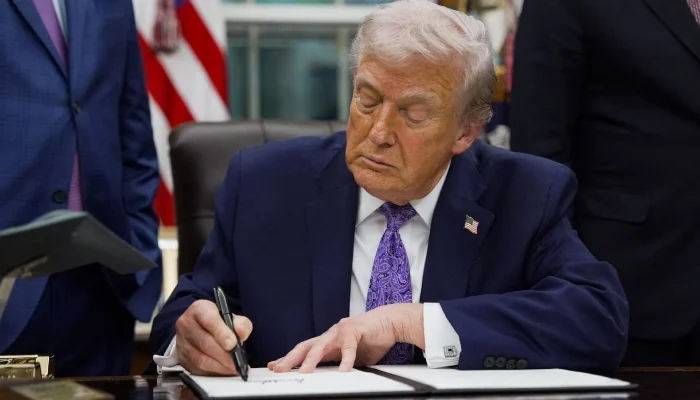
President Trump has issued an executive order establishing a voluntary framework that encourages AI developers to share their most advanced models with the government prior to public release. The key element of this order grants companies like OpenAI, Google, and Anthropic a window of up to 30 days to provide the government access to their top-performing models before they are officially launched.
This measure was largely prompted by concerns over Anthropic’s Mythos model, which the startup has withheld from public viewing due to its potential to expose vulnerabilities in critical systems such as financial institutions, government agencies, and hospitals. The 30-day period serves as a compromise; initial proposals suggested up to 90 days of pre-release access, while tech firms advocated for just 14 days.
OpenAI CEO Sam Altman welcomed the order, stating it “strikes the right balance.” He emphasized the importance of America’s leadership in AI development, safety, and cybersecurity tools. Google’s Public Affairs Director, Kent Walker, called the move “a significant step forward” to ensure defenders have the necessary AI tools to maintain national security. Anthropic also praised the order, viewing it as an important move to reinforce America’s leadership in artificial intelligence.
The announcement follows a period of uncertainty when the White House initially seemed poised to introduce the measure but then retracted it. Reports indicated that Silicon Valley venture capitalist David Sacks, who previously served as Trump’s AI and crypto adviser, warned the president that such regulation could hinder U.S. innovation and weaken its competitive edge against China in the AI race. Sacks expressed this view publicly, arguing that excessive bureaucracy and “woke” politics threaten American progress in AI.
In addition, the order directs agencies like the Treasury, NSA, and CISA to establish a voluntary “AI cybersecurity clearinghouse” in partnership with industry and infrastructure operators. The goal is to identify and address vulnerabilities in AI software.
This approach marks a departure from Biden’s 2023 order, which relied on voluntary safety disclosures from AI firms without enforceable regulations. In contrast, the European Union’s AI Act, enacted in 2024, mandates strict safety testing, transparency, and reporting requirements for high-risk AI systems.
Experts, including Anthony Aguirre, CEO of the Future of Life Institute, regarded the move as positive but underscored the need for the government to have authority to block the deployment of systems that pose significant security risks.
 ChatGPT
 Perplexity
 Gemini AI
 Grok AI