
Select Language:
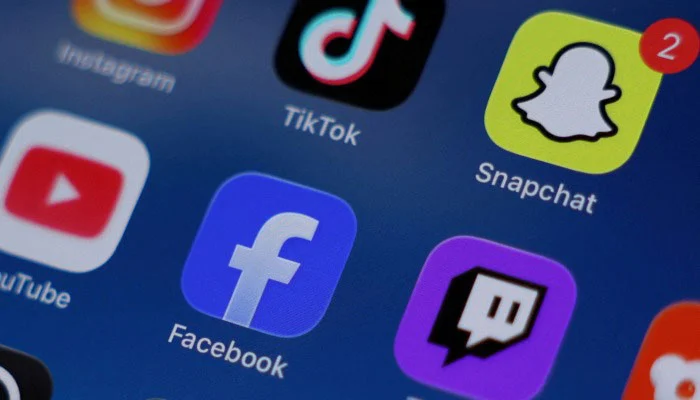
The Canadian government unveiled a digital safety bill on Wednesday, proposing to prohibit social media access for children under 16, with exceptions for platforms that meet specific safety criteria. This move follows Australia’s recent enactment of the world’s first social media ban targeting minors.
The legislation also seeks to enhance the safety of AI-powered chatbots by establishing a digital regulator responsible for creating safety standards, according to a government representative.
Non-compliance could result in penalties reaching 3% of a company’s global revenue or up to CAD 10 million (approximately $7.2 million), whichever amount is greater.
“Social media platforms and AI chatbots are engineered to grab attention. They don’t promote healthy childhood development and have become sources of anxiety, loneliness, depression, and other mental health issues among many young Canadians,” stated Marc Miller, Minister of Canadian Identity and Culture.
“This legislation will create a safer online environment for young Canadians and encourage them to engage in face-to-face interactions, develop friendships, stay focused on school, and acquire real-world skills to succeed,” he added.
The bill’s presentation to Parliament occurs just weeks after families impacted by one of the country’s deadliest mass shootings sued OpenAI, alleging that the company knew the suspect was planning the attack on ChatGPT but failed to alert authorities.
OpenAI has not responded to requests for comment.
In December, Australia became the first nation to ban social media from children under 16. Following the law’s passage, social media companies collectively deactivated nearly 5 million teenagers’ accounts within a month.
Officials have indicated that it may take up to a year for the bill to pass and approximately 18 months to establish the digital regulator after approval.
A Google spokesperson, which owns YouTube, stated the company is committed to collaborating with the federal government to develop higher safety standards across all platforms, giving parents more confidence and control over their children’s online experiences.
A Meta representative mentioned, “Like policymakers, we aim for safe, positive online environments for youth. We are reviewing the details of the Digital Safety Act.” Meta owns Facebook and Instagram.
Neither Elon Musk’s X (formerly Twitter) nor Snapchat responded to inquiries.
Other countries, including France, Denmark, and Poland, are also considering stricter social media regulations for minors, while Greece announced in April that it would prohibit access for under-15s starting in January 2027.
Canadian Prime Minister Mark Carney’s government holds a narrow majority in Parliament, which is scheduled to go on summer recess soon.
Brett Caraway, an associate professor specializing in technology and privacy at the University of Toronto, noted that Canada’s proposal appears more comprehensive than Australia’s law.
“Canada’s plan involves a more intricate set of platform obligations,” he explained. “Its goal is to overhaul the social media landscape to make it safer for children, unlike Australia’s focus on restricting access.”
He also highlighted that the Canadian legislation has a broader scope, addressing not only social media but also AI technology.
 ChatGPT
 Perplexity
 Gemini AI
 Grok AI