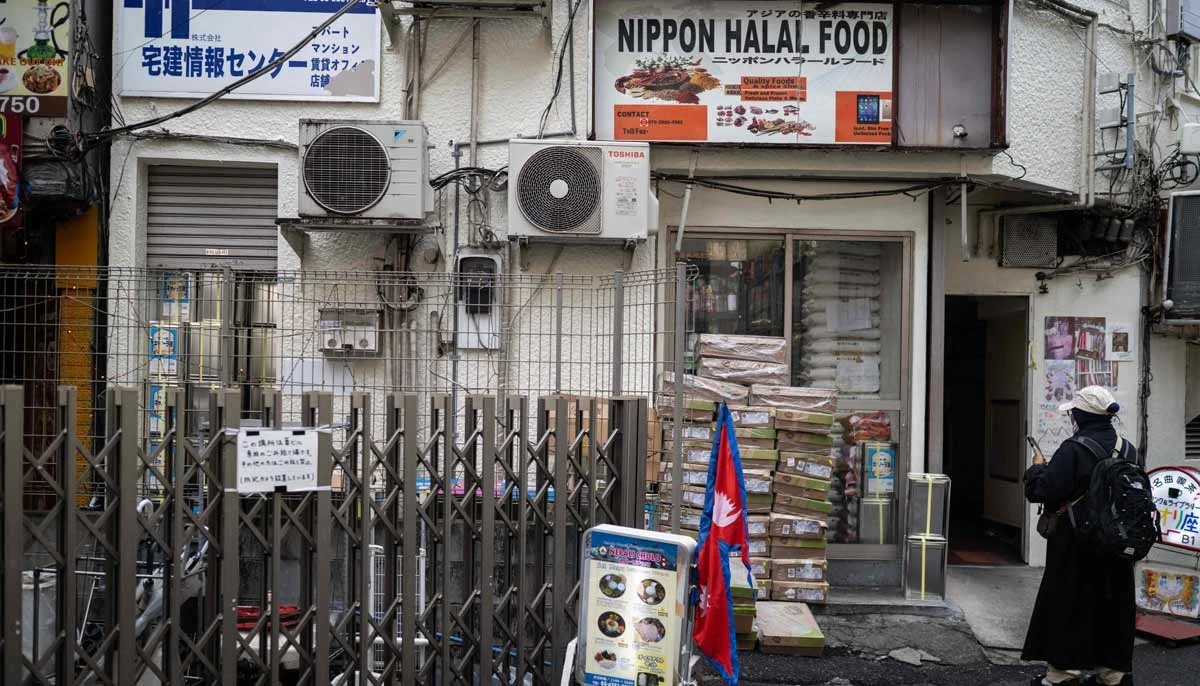
In a small Tokyo eatery filled with the aroma of Nepalese dumplings, Budhathoki Samjhana reflects on the business she built from the ground up, now facing the possibility of closure as Japan implements stricter visa regulations.
Though Japan’s population is aging rapidly and many industries grapple with labor shortages, opposition to immigration is on the rise. In late 2025, the ruling Liberal Democratic Party introduced new requirements for business manager visas, prompting concern among immigrant entrepreneurs.
Budhathoki, a Nepalese national, spent ten years away from her young daughter, working to create a new life in Tokyo. Now, she risks deportation because she might not meet the new criteria.
“I always wanted to serve as a bridge between Japan and Nepal… but now my dream is shattered,” the 38-year-old said from her restaurant in Tokyo’s Okubo neighborhood, a lively area filled with Vietnamese cafes, Indian curry spots, and Korean barbecue joints.
The tighter regulations come amid complaints from locals about overtourism and rising land prices driven in part by foreign investment, leading Prime Minister Sanae Takaichi to push for more restrictive policies on foreign residents.
Last month, the government announced a significant increase in visa fees for some tourists—raising the costs five times for single and multiple-entry permits—marking the first such hike in nearly half a century.
While existing business manager visa holders have a three-year window to comply with the new rules, many successful small businesses, including popular eateries in Okubo, fear they won’t be able to meet the new financial requirements.
“The main obstacle is the rise in the investment minimum from ¥5 million ($30,000) to ¥30 million ($185,000),” said Budhathoki, flipping through receipts as the scent of freshly made momos perfumes the air from her kitchen.
“It’s just impossible.”
Budhathoki arrived in Japan as a student in 2016 and spent years saving to open her first restaurant in 2023. After launching her third establishment in January, she finally managed to bring her 14-year-old daughter from Nepal, where she had been separated for a decade. Her daughter is now attending a Japanese school.
“I’m extremely worried—not for myself, but for my daughter,” she admitted. “What did I do to her?” Her voice trembles as she thinks about the upcoming visa renewal.
—
Indian restaurateur Manish Kumar, who has resided in Japan for thirty years, has already been notified that his business manager visa will not be renewed, despite the grace period.
He’s unsure of the exact reasons but notes that immigration authorities have become more stringent, demanding extensive documentation such as tax receipts and proof of social insurance payments.
“All my children speak Japanese… and now they’re being told to return to India,” Kumar said tearfully during a recent gathering about his visa issues.
More than 67,800 people have signed a petition calling for the suspension of the new immigration rules.
“What happened to him is shocking,” said Taro Tsurugashima, the petition’s organizer. “He’s my friend and a trusted member of our local business community.”
This crackdown follows last year’s declaration by Japan’s Justice Ministry of a “zero illegal foreign residents” plan, aiming to address public concerns over immigration.
As Japan faces a dwindling birthrate and an aging population—one of the lowest in the world—many see increased immigration as a way to reverse demographic decline. However, immigration remains a contentious political issue, especially after the rise of the “Japan-first” Sanseito party, which criticizes immigration as a “silent invasion.”
Since taking office in October, Takaichi has promised tighter screening processes. The business manager visa, originally designed to attract entrepreneurs, has become a route for individuals with little intention of running a genuine business, say officials.
The visa’s popularity surged, with approximately 46,000 holders as of mid-2025—an increase of 70% from 2020. Nearly half were Chinese nationals, according to government figures.
Some unscrupulous real estate agents have begun promising that purchasing property in Japan can secure a visa, added Kazuki Yuda, an administrative advisor.
Daisuke Komori, another expert in administrative affairs, warned that the tougher policies are hurting small restaurant owners and young entrepreneurs, as well as targeting system abusers.
In an April parliamentary session, Justice Minister Hiroshi Hiraguchi stated there were no plans to overhaul the rules but indicated that the government would review individual cases as needed.
New requirements also mandate that business manager visa holders employ a Japanese national or long-term resident—an increasingly challenging demand in a country with a shrinking workforce.
A 30-year-old Bangladeshi businessman in Tokyo remarked, “With the decreasing population, there aren’t enough Japanese workers. Who’s going to apply for a job at a company led by a manager with an unstable visa that requires renewal every year?”