
Select Language:
Top Countries Restricting Internet Access in 2025
Afghanistan Tightens Internet Control by Banning Major Platforms and Content
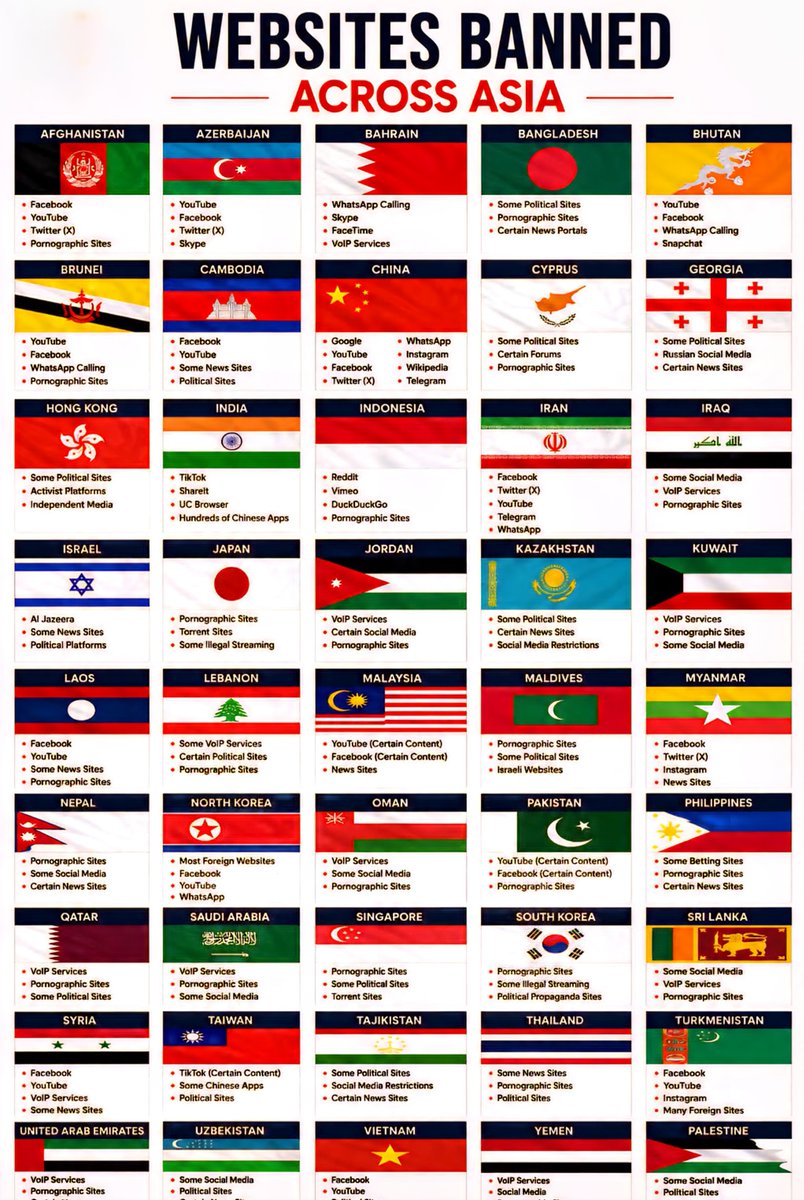
In 2025, Afghanistan continues its strict online policies, blocking widely used platforms including Facebook, YouTube, and Twitter (now known as X). The government has also imposed restrictions on pornographic websites, reflecting the country’s conservative approach to internet content. Citizens face significant barriers in accessing global social media and video-sharing platforms, limiting their ability to communicate and access diverse information.
Azerbaijan Implements Social Media and Communication Restrictions
Azerbaijan has increased control over online communication, shutting down access to YouTube, Facebook, Twitter (X), and Skype. These restrictions are part of broader efforts to monitor and regulate online activity, especially concerning political discourse and social mobilization. The move impacts both everyday users and political activists, who now find it more difficult to organize or share information freely.
Bahrain Bans Popular VoIP Services and Messaging Apps
Bahrain’s government has prohibited WhatsApp Calling, Skype, FaceTime, and other VoIP (Voice over Internet Protocol) services. This policy aims to curb dissent and monitor communication channels more effectively. While these restrictions limit free expression, they also restrict personal and professional communication for residents, forcing many to seek alternative methods for connectivity.
Bangladesh Targets Sensitive Content and Political Sites
In Bangladesh, authorities have blocked access to specific political websites, pornographic content, and some news portals. The measure appears aimed at controlling political narratives and maintaining social stability, but it also diminishes freedom of press and access to diverse information sources for the public.
Bhutan Follows a Similar Pattern of Social Media Restrictions
Bhutan has restricted access to YouTube, Facebook, WhatsApp Calling, and Snapchat, further constraining its internet landscape. These bans are part of broader measures to regulate online content, emphasizing social harmony and cultural preservation while limiting exposure to potentially disruptive digital content.
Brunei Tightens Online Content Regulations by Blocking Major Platforms
Brunei continues to restrict YouTube, Facebook, WhatsApp Calling, and pornographic websites, reflecting a conservative stance on internet usage. These policies impact both users’ online entertainment options and their ability to freely access information.
Cambodia Restricts Access to Political and News Websites
Cambodian authorities have blocked several political websites, news portals, and social media platforms like Facebook and YouTube. Such restrictions raise concerns about censorship, especially during politically sensitive periods, impacting citizens’ access to balanced news and political discourse.
China’s Strictest Internet Censorship in the Region
China remains the most heavily censored country in Asia, blocking Google, YouTube, Facebook, Twitter (X), WhatsApp, Instagram, Wikipedia, and Telegram. The government employs a vast censorship apparatus, often referred to as the “Great Firewall,” to control domestic access to international content and monitor online activities meticulously.
Key Access Limitations in Other Countries
- Cyprus & Georgia: Some political and news websites are restricted, limiting access to certain debates and political discussions.
- Hong Kong: Political activist platforms and independent media face bans, especially since increased governmental control.
- India: Several Chinese apps like TikTok, ShareIt, UC Browser, and other popular services have been banned to curb foreign influence.
- Indonesia: Reddit, Vimeo, DuckDuckGo, and adult content sites are among those restricted, affecting online freedoms.
- Iran: A comprehensive ban on Facebook, Twitter (X), YouTube, Telegram, and WhatsApp severely limits free communication.
- Iraq: Certain social media platforms, VoIP services, and adult sites are off-limits, reflecting ongoing political and social tensions.
- Israel: Restrictions target Al Jazeera, some news outlets, and political forums, impacting the diversity of viewpoints.
- Japan: Pornographic, torrent, and illegal streaming sites are blocked, aiming to enforce content regulations.
- Jordan & Kuwait: VoIP services and adult content companies are heavily restricted.
- Laos & Lebanon: Facebook, YouTube, and news sites face restrictions, shaping the social and political dialogue.
- Malaysia: Restrictions apply to some YouTube and Facebook content, especially politically sensitive material.
- Maldives: Pornographic, political, and Israeli websites are blocked, influencing cultural and religious norms.
- Myanmar: Military-led restrictions target Facebook, Twitter, Instagram, and numerous news sites, controlling information flow amid ongoing conflict.
- Nepal: Pornographic sites and social media platforms face bans, often linked to moral and cultural concerns.
- North Korea: Nearly all foreign websites are inaccessible, with bans on Facebook, YouTube, and WhatsApp, underscoring total government control.
- Oman & Pakistan: VoIP and adult content restrictions persist, with Pakistan also targeting some YouTube and Facebook content.
- Philippines & Qatar: Betting, adult, and political sites are heavily restricted, reflecting regulatory measures.
- Saudi Arabia & Singapore: VoIP, adult content, and political sites face blocks, shaping digital consumption.
- South Korea: Pornographic, illegal streaming, and propaganda sites are censored, balancing entertainment and information control.
- Sri Lanka & Syria: Social media, VoIP, and news platforms are restricted, with Syria’s bans linked to political stability efforts.
- Taiwan & Tajikistan: Restrictions target certain social media, apps, and political sites, often amid regional tensions.
- Thailand & Turkmenistan: Political, adult, and foreign websites are restricted to maintain governmental control.
- United Arab Emirates & Uzbekistan: VoIP services and political content face restrictions, affecting both social interaction and information access.
- Vietnam: Facebook and YouTube restrictions persist, with additional limits on political content.
- Yemen & Palestinian Territories: VoIP, social media, and political content are heavily restricted, often reflecting ongoing conflicts and security concerns.
Conclusion
While the global digital landscape becomes more interconnected, many countries in Asia continue to implement stringent internet restrictions. These measures often reflect political, cultural, or security priorities, but they also significantly impact freedom of expression, access to information, and the everyday lives of citizens. As digital censorship evolves in 2025, it remains crucial to monitor these developments for their broader implications on human rights and freedom of speech.
Note: The list above highlights some of the prominent restrictions across Asian nations in 2025. Many countries have additional, less-publicized bans and content controls that further shape their digital environments.
 ChatGPT
 Perplexity
 Gemini AI
 Grok AI