
Select Language:
India’s Political Landscape in 2025: The Major Parties Shaping the Nation
As India continues to evolve as a global power in 2025, its political landscape remains dynamic, marked by the influential roles of its major parties. Here’s a comprehensive overview of the prominent political entities currently shaping the nation:
The Bharatiya Janata Party (BJP)
The Bharatiya Janata Party has solidified its position as the dominant political force in India. Since its rise to prominence in the early 2010s, BJP has maintained leadership over the central government through successive elections. Under the leadership of Prime Minister Narendra Modi, the party has propelled numerous policy initiatives focused on economic development, infrastructure modernization, and strengthening India’s international stature.
BJP’s core ideology revolves around nationalism, cultural pride, and economic reform. In 2025, the party continues to push forward its agenda, emphasizing digital innovation, sustainable development, and national security. Its influence extends beyond the national level, with substantial support in several states, influencing local governance and policymaking.
The Indian National Congress (INC)
The Indian National Congress has historically been the cornerstone of Indian politics, playing a pivotal role in the country’s fight for independence. Although its dominance waned in the early 2000s, the Congress remains a key opposition party and a symbol of India’s secular and democratic fabric.
In the 2025 political landscape, the Congress is undertaking a significant rebuilding phase. Under new leadership, the party aims to reconnect with a diverse voter base by promoting inclusive development, social justice, and rural empowerment. The party continues to challenge BJP policies on issues of minority rights, farmers, and social equality. Despite facing stiff competition, Congress maintains a substantial grassroots presence and continues to appeal to the progressive segments of Indian society.
Rising Political Forces and Regional Parties
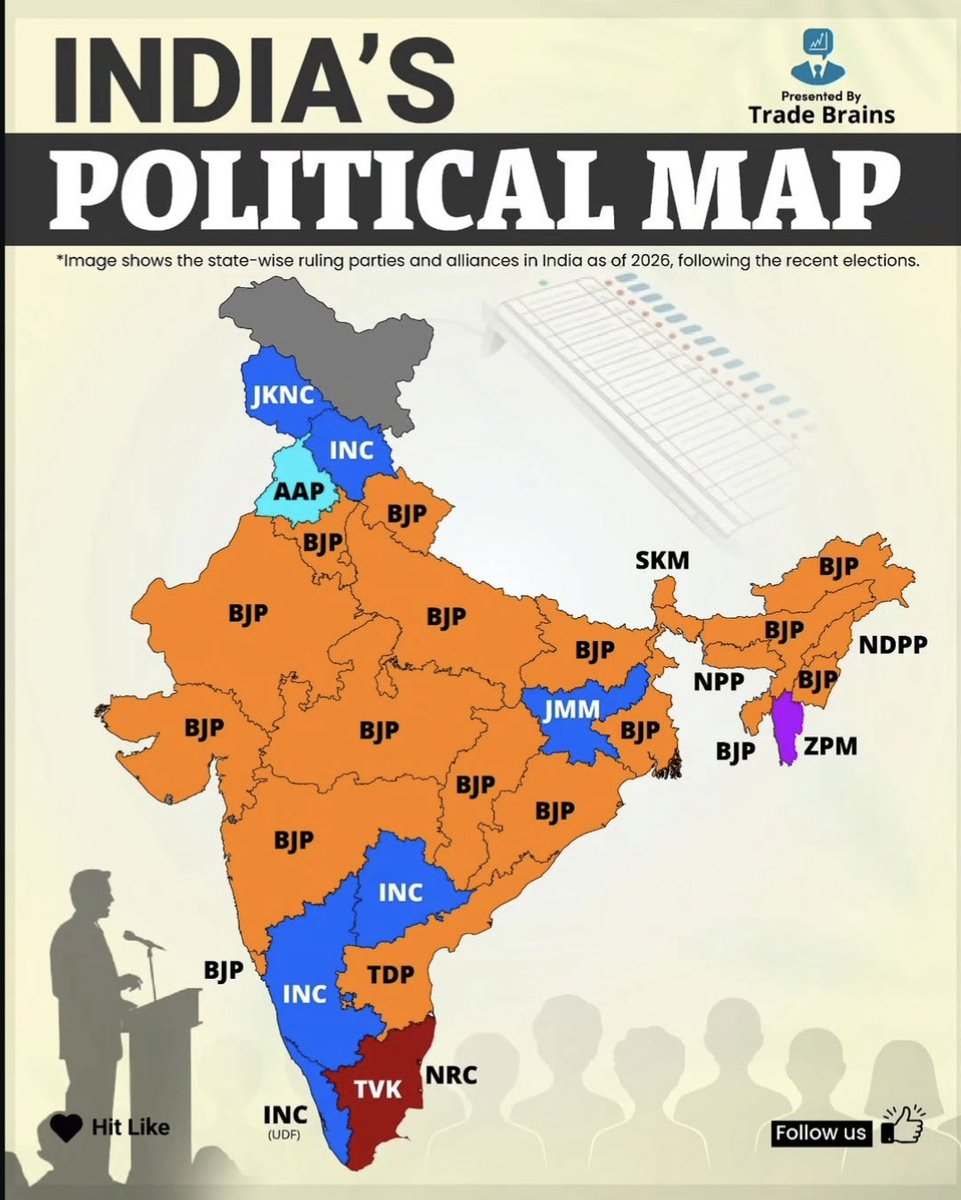
While BJP and Congress continue to dominate national affairs, an array of regional parties are gaining traction in various states, reflecting India’s regional diversity. Parties like the Trinamool Congress in West Bengal, the DMK in Tamil Nadu, and the AAP in Delhi are increasingly influential, often shaping national narratives through their regional platforms.
These regional parties focus heavily on state-specific issues, from local development projects to language and cultural rights. Their growing prominence underscores the trend towards federalism and regional autonomy, making Indian politics increasingly complex and multifaceted.
The Impact of Recent Electoral Trends
The 2025 elections revealed a shifting electoral landscape. While BJP maintained a majority in the Parliament, the Congress and regional parties secured key victories in pivotal states, indicating a more fragmented but resilient political environment. These results have prompted party strategists to reassess alliances and campaign priorities, emphasizing grassroots engagement and technology-driven outreach.
Moreover, voter demographics are changing rapidly, with a younger population increasingly participating in elections. Issues like employment, climate change, and digital access are now at the forefront of political debates, pushing parties to adapt their platforms accordingly.
The Role of Technology and Social Media
In 2025, technology continues to revolutionize Indian politics. Social media platforms are central to campaign strategies, allowing parties to connect directly with voters across urban and rural areas. Innovative digital campaigning, data analytics, and targeted messaging have become standard tools for political parties, enhancing their outreach and voter engagement.
The rise of online platforms has also increased transparency and facilitated real-time feedback from citizens, influencing policy formulation. However, this digital shift also raises concerns about misinformation, cyber security, and privacy, prompting authorities to implement stricter regulations.
India’s Political Outlook in 2025
Despite ongoing challenges, India’s political scene in 2025 remains vibrant and diverse. The major parties are adapting to changing voter expectations, technological advancements, and regional aspirations. As the nation navigates complex issues like economic reforms, social justice, and environmental sustainability, political engagement continues to be the cornerstone of India’s democratic journey.
The upcoming years are poised to see further evolution within this landscape, ultimately shaping India’s policies and global standing for generations to come.
 ChatGPT
 Perplexity
 Gemini AI
 Grok AI