
Select Language:
Largest Cities in the Americas in 2025: A Closer Look at Urban Giants
Mexico City, Mexico – The Largest Urban Center in the Western Hemisphere
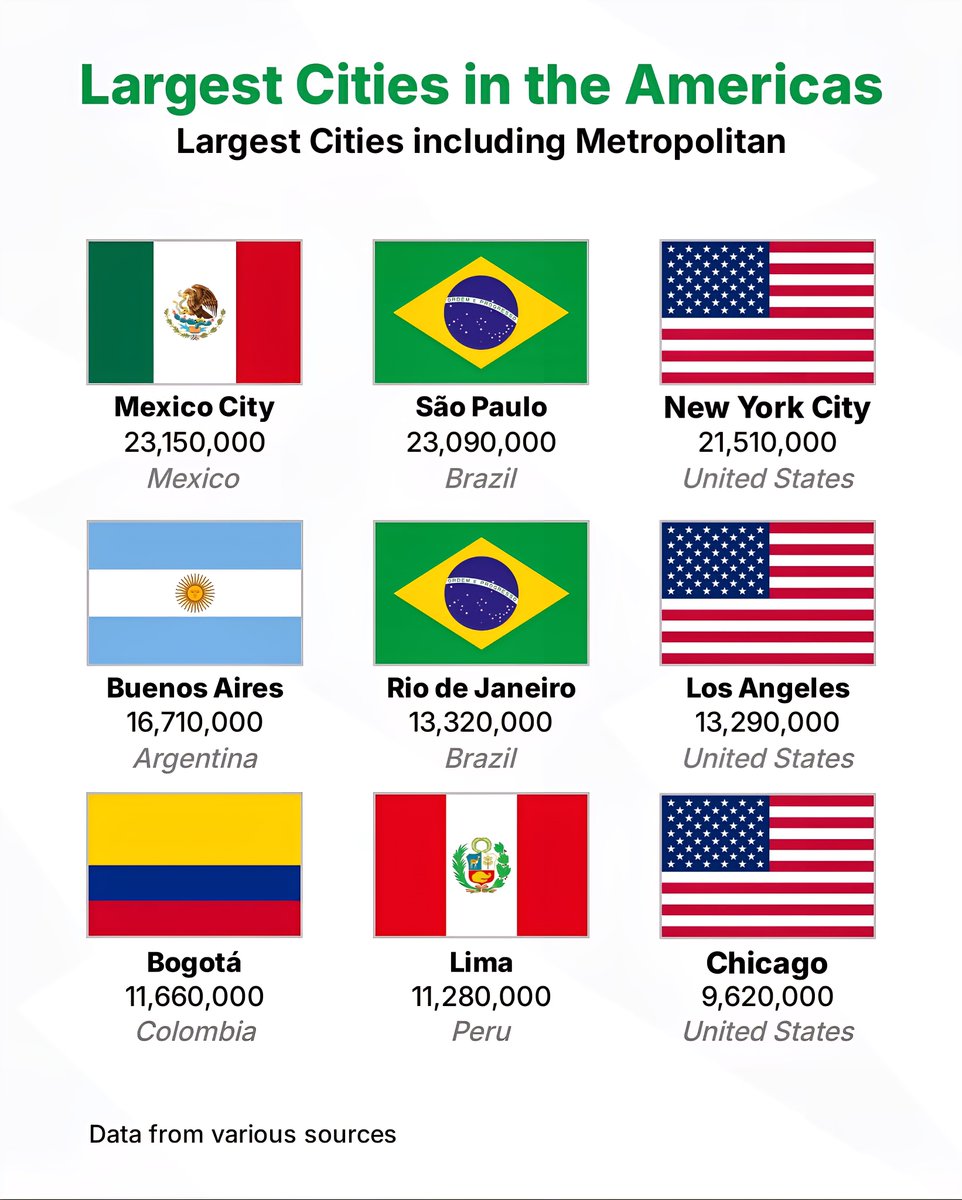
Standing as the crown jewel of the Americas in 2025, Mexico City boasts a staggering population of approximately 23.15 million people. As the political, cultural, and economic hub of Mexico, this sprawling metropolis continues to grow, driven by rural-to-urban migration and a vibrant economy. Its extensive metro area encompasses a diverse blend of historic sites, modern business districts, and bustling neighborhoods, making it a critical hub for both the country and the continent.
São Paulo, Brazil – A Powerhouse of Commerce and Culture
Just shy of Mexico City’s population, São Paulo holds its position as the largest city in Brazil with an estimated 23.09 million residents. Known for its towering skyscrapers, thriving financial district, and dynamic arts scene, São Paulo is often referred to as the economic engine of Brazil. Its diverse population and international influence have solidified its role as a key player in regional politics and global commerce.
New York City, USA – The Financial Capital of the World
With approximately 21.51 million inhabitants, New York City remains the leader among U.S. cities in terms of metropolitan population. As a global financial hub, NYC’s influence extends into industries such as media, technology, art, and fashion. Its iconic skyline, diverse neighborhoods, and cultural institutions continue to attract millions from across the globe, reinforcing its reputation as a city that never sleeps.
Buenos Aires, Argentina – South America’s Cultural Pulse
Home to roughly 16.71 million residents in its metropolitan area, Buenos Aires stands out as Argentina’s largest city and a vibrant cultural epicenter. Renowned for its European-style architecture, lively tango scene, and rich history, Buenos Aires remains a magnet for tourists and locals alike. Its economic importance and cultural influence ripple through South America, making it an essential city on the continent.
Rio de Janeiro, Brazil – The City of Wonders
With an estimated population of 13.32 million, Rio de Janeiro continues to captivate residents and visitors with its stunning landscapes and vibrant energy. Famous for its breathtaking beaches, carnival celebrations, and the iconic Christ the Redeemer statue, Rio is Brazil’s cultural and tourist powerhouse. Its dynamic urban environment and natural beauty make it a standout among the continent’s largest cities.
Los Angeles, USA – The Entertainment Capital
Home to about 13.29 million people, Los Angeles has cemented its reputation as the entertainment capital of the world. Hollywood, the epicenter of the film and television industry, attracts talent and visitors from around the globe. The city’s diverse communities, thriving tech scene, and iconic beaches keep Los Angeles at the forefront of urban development and cultural innovation.
Bogotá, Colombia – Colombia’s Administrative and Commercial Hub
Boasting an estimated population of 11.66 million in its metropolitan region, Bogotá is Colombia’s political and commercial heart. The city offers a blend of historical sites, vibrant markets, and modern infrastructure. Its strategic location in the Andes makes it a key logistics hub for regional commerce, further fueling its growth.
Lima, Peru – Gateway to the Andes
Lima’s metropolitan area hosts around 11.28 million residents, making it the largest city in Peru. As a historic port city with a rich colonial legacy, Lima also serves as the country’s economic and political center. Its expanding infrastructure, culinary scene, and coastal attractions continue to draw both residents and tourists.
Chicago, USA – The Windy City’s Continual Growth
With an estimated 9.62 million residents, Chicago remains a vital U.S. urban center. Known for its architecture, diverse neighborhoods, and influential finance, technology, and manufacturing sectors, Chicago’s economy continues to grow and adapt. Its central location and connection to key transportation routes sustain its prominence in the Midwest and beyond.
Source: Various sources, including metropolitan area population estimates for 2025.
 ChatGPT
 Perplexity
 Gemini AI
 Grok AI