

Select Language:
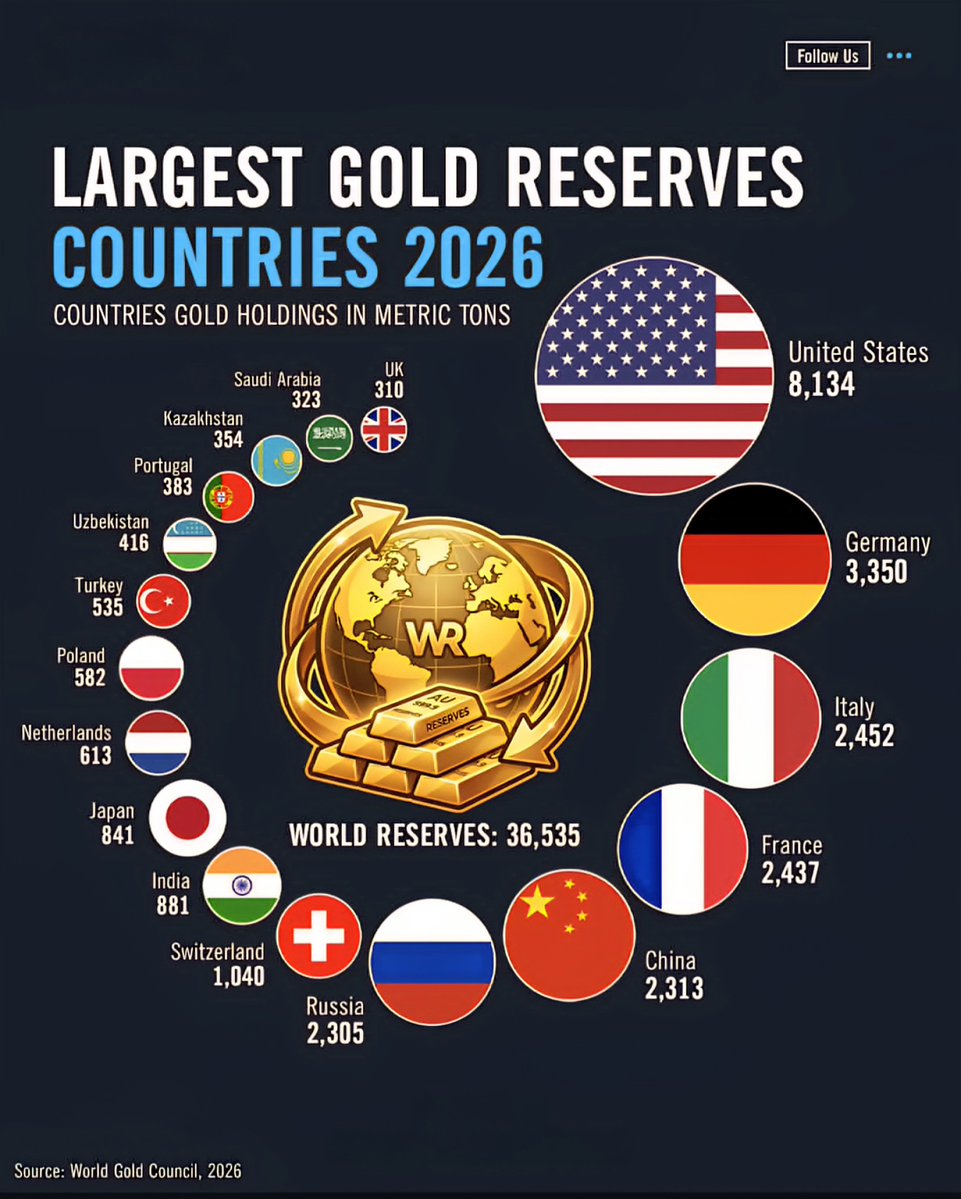
The Top Countries with the Largest Gold Reserves in 2026
1. United States Dominates With Over 8,100 Tonnes
The United States continues its longstanding leadership in gold reserves, maintaining a staggering 8,134 tonnes. This figure underscores America’s position as a global economic powerhouse, with its reserves serving as a vital financial buffer in times of economic stability or turmoil. The U.S. Federal Reserve’s extensive gold holdings are stored primarily at Fort Knox and other secure vaults, symbolizing resilience and stability for decades.
2. Germany Holds the Second Spot with Over 3,350 Tonnes
Germany ranks as the second-largest holder of gold reserves globally, boasting approximately 3,350 tonnes. The Bundesbank actively manages this significant reserve, which not only backs the country’s currency but also enhances its international economic credibility. Germany’s piggyback on gold is often seen as a hedge against future economic uncertainties.
3. Italy and France Maintain Strong Reserves
Italy and France hold substantial gold reserves, with Italy possessing around 2,452 tonnes, and France holding approximately 2,437 tonnes. These reserves reflect their status as key economic players in Europe and symbolize their financial stability. Both countries have increased their holdings in recent years as a safeguard amid fluctuating global economic conditions.
4. China and Russia — Rising Giants in Gold Accumulation
China’s gold reserves have reached 2,313 tonnes, making it a prominent player in the global gold scene. Russia closely follows with 2,305 tonnes, reflecting its strategic approach to diversify national reserves. Both countries have ramped up buying over the past couple of decades, signaling their intent to bolster economic independence and prepare for potential geopolitical shifts.
5. Switzerland, India, and Japan Signify Diverse Economic Strategies
Switzerland maintains a reserve of about 1,040 tonnes, benefiting from its long-standing reputation as a financial hub. India holds approximately 881 tonnes, aligning with its goal to increase foreign exchange stability and gold imports as a part of its economic planning. Japan’s gold holdings stand at 841 tonnes, reflecting cautious diversification amid global economic uncertainties.
6. Top European and Middle Eastern Reserves
The Netherlands and Poland have substantial reserves, with 613 and 582 tonnes respectively, playing key roles within their regions. Turkey’s gold holdings have grown to 535 tonnes, driven by government policies encouraging citizens to purchase gold as an alternative investment. Saudi Arabia, with 323 tonnes, continues to leverage gold reserves as part of its economic diversification strategy.
7. Emerging Economies and Smaller Reserve Holders
Uzbekistan at 416 tonnes, Portugal with 383 tonnes, and Kazakhstan at 354 tonnes demonstrate increased interest among emerging economies in gold as a form of economic insurance. These countries have been steadily increasing their gold reserves over recent years to bolster their financial security.
8. The United Kingdom Rounds Out the Top 15 with 310 Tonnes
The UK’s reserve of 310 tonnes signifies its enduring financial stature. Despite Brexit and other economic changes, the UK continues to manage its gold assets to maintain stability and serve as a hedge against currency fluctuations.
Final Thoughts
The global landscape of gold reserves in 2026 reveals a fascinating mix of longstanding economic giants and emerging players. From the United States’ dominant holdings to China’s rising accumulation, these reserves reflect each nation’s economic priorities, stability strategies, and geopolitical considerations. As the world navigates current and future economic challenges, gold remains a vital asset for countries seeking resilience and financial security amid a dynamic global environment.
Source: World Gold Council, 2026
 ChatGPT
 Perplexity
 Gemini AI
 Grok AI