
Select Language:
25 Largest Countries in the World in 2025: An Updated Overview
Russia Dominates the Globe as the Largest Country
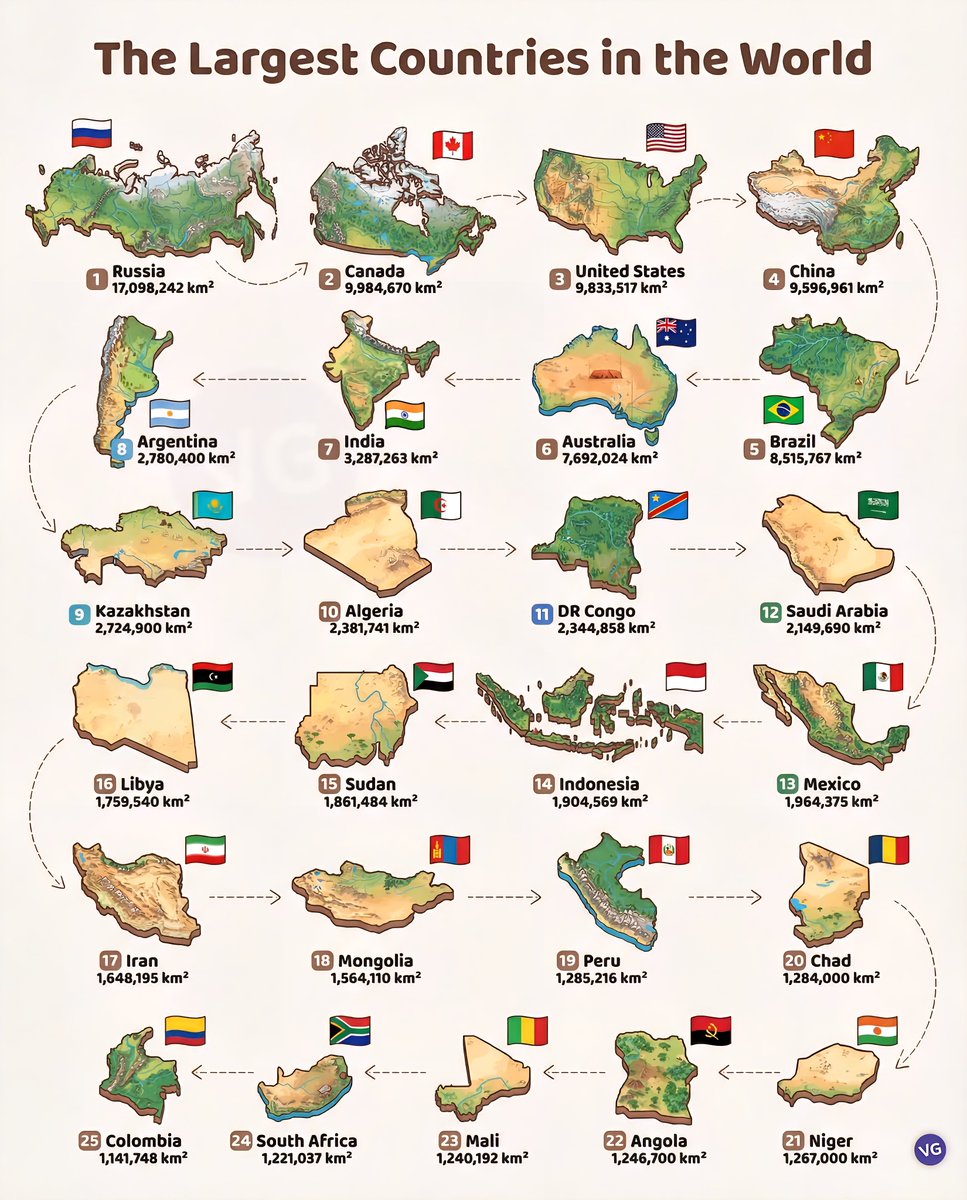
Topping the list, Russia spans over 17 million square kilometers, making it the largest country on Earth. Its vast landmass covers multiple time zones, diverse climates, and a rich array of landscapes—from icy Siberian tundra to lush forests and mountain ranges. Russia’s extensive territory plays a crucial role in global geopolitics, natural resource reserves, and cultural diversity.
Canada Maintains Its Second-Place Position
Canada, with approximately 9.98 million square kilometers, remains the second-largest country globally. Known for its breathtaking natural beauty, including expansive forests, pristine lakes, and Arctic tundra, Canada continues to be a hub for wildlife conservation, outdoor recreation, and resource extraction.
The United States Ranks Third
Covering approximately 9.83 million square kilometers, the United States maintains its position as the third-largest country. Its diverse geography includes deserts, mountains, plains, and coastlines, making it a nation with a wide array of climates and ecosystems. The U.S. also remains a leader in economy, technology, and cultural influence worldwide.
China’s Expansive Landmass
China, spanning roughly 9.60 million square kilometers, is the fourth-largest country. Its immense size encompasses deserts, mountains, river valleys, and urban centers, fueling its economic growth and geopolitical clout on the global stage. China’s rich history and rapid modern development continue to shape its global role.
Brazil Standing Tall in South America
Brazil ranks fifth with just over 8.5 million square kilometers. It is renowned for its Amazon Rainforest—the world’s largest tropical rainforest—and diverse ecosystems. Brazil’s cultural vibrancy and natural resources bolster its position in the international arena.
Australia: The Largest Island Continent
Spanning approximately 7.69 million square kilometers, Australia is the sixth-largest country. Its unique biodiversity, large deserts like the Outback, and vibrant cities make Australia both ecologically significant and culturally distinctive.
India’s Growing Influence
India, covering approximately 3.29 million square kilometers, is the seventh-largest country. Its rapidly expanding economy, diverse cultures, and expanding urbanization make India a prominent global player. The country’s varied geography includes mountains, plains, and coastal areas.
Argentina’s Large Land Area
Argentina encompasses about 2.78 million square kilometers, ranking eighth. Known for the Andes Mountains and pampas plains, Argentina’s agricultural economy and natural beauty attract tourists and investors alike.
Kazakhstan: The Heart of Central Asia
Kazakhstan covers nearly 2.72 million square kilometers, making it the ninth-largest country. It features vast steppes, mountains, and deserts, playing a strategic role in regional politics and energy resources.
Algeria’s Vast Deserts
In North Africa, Algeria holds approximately 2.38 million square kilometers. Its Sahara Desert landscapes dominate, with potential oil and gas reserves fueling its economy and geopolitical significance.
Democratic Republic of the Congo: Central Africa’s Largest
The DRC spans over 2.34 million square kilometers. Rich in mineral resources and rainforests, the country faces challenges and opportunities rooted in its vast natural wealth.
Saudi Arabia: The Desert Kingdom
Covering around 2.15 million square kilometers, Saudi Arabia’s expansive deserts, oil fields, and religious sites influence regional stability and global oil markets.
Mexico’s Diverse Terrain
Mexico, with approximately 1.96 million square kilometers, features mountains, coastlines, and deserts. Its cultural heritage and strategic position make it influential in North America.
Indonesia: An Archipelagic Nation
Indonesia, with about 1.9 million square kilometers, is the world’s largest island country. Its many islands host diverse cultures, ecosystems, and volcanic activity.
Sudan’s Desert Landscapes
Sudan spans approximately 1.86 million square kilometers. Its deserts and historical sites highlight its unique regional identity, despite ongoing conflicts.
Libya and Its Desert Plains
Covering around 1.76 million square kilometers, Libya’s expansive desert landscapes hold significant oil resources and strategic geopolitical importance in North Africa.
Iran: Persia’s Modern Landmass
Iran occupies roughly 1.65 million square kilometers. Its diverse geography includes mountains, deserts, and coastlines, influencing regional politics and cultural history.
Mongolia: The Land of Steppes
Mongolia, at about 1.56 million square kilometers, is known for its vast steppes and nomadic traditions. Its strategic location links China and Russia.
Peruvian Riches
Peru covers approximately 1.29 million square kilometers, featuring the Amazon rainforest, Andes mountains, and rich archaeological sites like Machu Picchu.
Chad and Its Deserts
Chad’s roughly 1.28 million square kilometers are dominated by desert terrain and the Sahara, playing a critical role in regional security and environmental issues.
Niger: The Sahelian Corner
At about 1.27 million square kilometers, Niger is heavily desertified, with ongoing challenges related to climate change, security, and development.
Angola’s Coastline and Resources
Covering just over 1.24 million square kilometers, Angola boasts significant oil reserves and a lengthy Atlantic coast, vital to its economy.
Mali’s Historic Heartland
Mali spans around 1.24 million square kilometers. Its ancient cities and desert landscape are central to West African history and culture.
Niger and Sahel Challenges
With approximately 1.27 million square kilometers, Niger struggles with desertification and security issues amidst its vast territory.
Final Highlights
- South Africa’s land面积 of around 1.22 million square kilometers makes it Africa’s most developed nation and a regional leader.
- Colombia, with about 1.14 million square kilometers, features diverse ecosystems—rainforests, mountains, and coastlines—making it a vital South American nation.
This list illustrates how these countries’ vast land areas shape their economies, cultures, and geopolitical relevance in 2025. The diversity among these nations continues to influence global dynamics, environmental conservation efforts, and regional development strategies.
Note: The above list is based on the latest available data as of 2025 and reflects the ongoing geopolitical and environmental changes affecting these nations.
 ChatGPT
 Perplexity
 Gemini AI
 Grok AI