
Select Language:
Top 24 Cuisine Styles Across Asia in 2025: What’s Cooking?
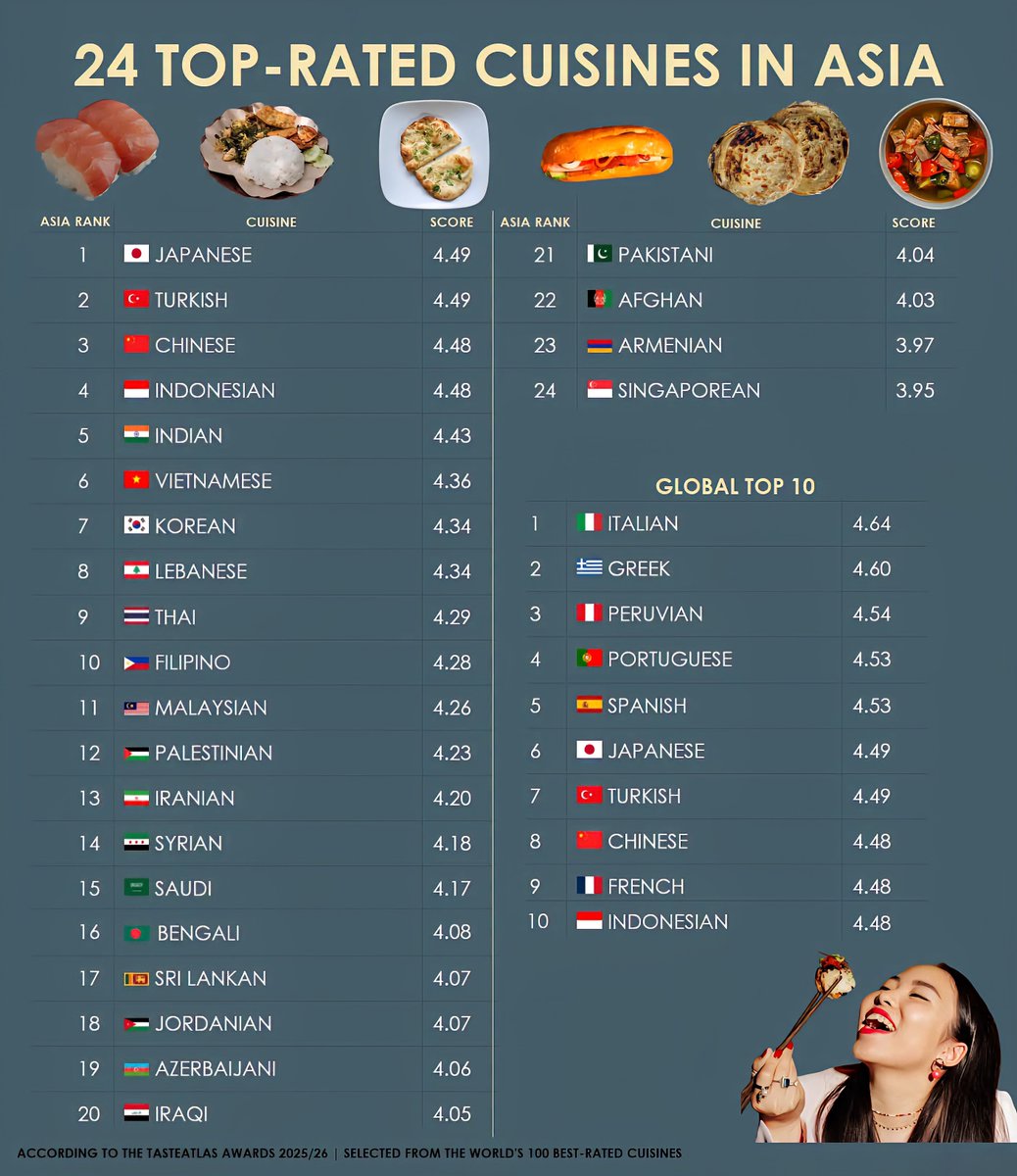
Asia continues to be a vibrant tapestry of flavor, cultural heritage, and culinary innovation. The latest TasteAtlas Awards for 2025 reveal which cuisines are capturing the palates of travelers and food lovers worldwide. Here’s a detailed breakdown of the top-rated Asian cuisines based on expert and consumer reviews, along with insights into what makes each one special.
1. Japanese Cuisine – The Pinnacle of Culinary Precision
With a stellar rating of 4.49 stars, Japanese cuisine leads the pack. Known for its meticulous preparation, delicate flavors, and emphasis on fresh ingredients, dishes such as sushi, sashimi, tempura, and ramen exemplify a perfect balance of taste and artistry. Visitors praise Japan’s culinary scene for its consistency and innovation, blending tradition with modern gastronomy.
2. Turkish Cuisine – A Crossroads of Flavors
Also scoring a 4.49-star rating, Turkish food draws from Middle Eastern, Mediterranean, and Balkan influences. Its rich offerings include kebabs, baklava, and mezes, celebrated for their bold spices and comforting textures. Tourists often cite Turkish cuisine for its hearty, flavorful dishes and hospitable dining experiences across Istanbul and beyond.
3. Chinese Cuisine – An Ever-Evolving Culinary Powerhouse
Close behind, with a 4.48-star average, Chinese cuisine remains a global icon. From Sichuan’s fiery dishes to Cantonese dim sum and Peking duck, Chinese food’s diversity is unmatched. Food enthusiasts appreciate the complex layers of heat, sweetness, and umami that define Chinese culinary techniques, whether enjoyed in street stalls or upscale restaurants.
4. Indonesian Cuisine – A Tropical Flavor Explosion
Matching China’s rating at 4.48 stars, Indonesian cuisine features an intriguing mix of spices, herbs, and ingredients indigenous to the archipelago. Dishes like nasi goreng, satay, and rendang showcase their mastery of bold flavors. Visitors often highlight the rich use of coconut, turmeric, and chili that evoke the region’s vibrant cultural tapestry.
5. Indian Cuisine – A Festival of Spices
Securing a 4.43-star rating, Indian cuisine stands tall for its aromatic, complex dishes. From spicy curries and biryanis to flavorful naan bread and countless regional specialties, India’s culinary diversity is celebrated worldwide. Food lovers praise the depth of flavor, innovative vegetarian options, and its hearty, soul-satisfying nature.
6. Vietnamese Cuisine – Fresh, Light, and Bright
With a 4.36-star rating, Vietnamese food captures the essence of balance—fresh herbs, crisp vegetables, and subtle spices. Pho, banh mi, and fresh spring rolls exemplify the country’s culinary finesse. Visitors value its healthy profile and vibrant street food culture that offers a quick, delicious taste of Vietnam.
7. Korean Cuisine – A Fusion of Tradition & Trend
Enjoying a 4.34-star rating, Korean cuisine continues to evolve, integrating traditional flavors with contemporary global trends. Signature dishes like kimchi, bulgogi, and bibimbap are celebrated for their fermentation methods and bold flavors. Korean barbecue experiences are also highly praised by travelers seeking interactive dining.
8. Lebanese Cuisine – Middle Eastern Flavors on a Plate
Matching Korea’s score with 4.34 stars, Lebanese food is renowned for its fragrant, spice-infused dishes. Hummus, falafel, tabbouleh, and kebabs are staples that visitors frequently mention. The cuisine’s emphasis on fresh herbs, olive oil, and communal dining adds to its worldwide appeal.
9. Thai Cuisine – A Taste of Serenity and Spice
With a 4.29-star average, Thai food is famous for its harmonious balance of sweet, sour, salty, and spicy elements. Tom yum soup, Pad Thai, and green curry are prime examples. Tourists often rave about the vibrant street food scenes in Bangkok and Chiang Mai, which deliver complex flavors at accessible prices.
10. Filipino Cuisine – A Melting Pot of Influences
Holding a 4.28-star rating, Filipino cuisine reflects Spanish, Chinese, American, and indigenous influences. Dishes like adobo, sinigang, and lechon are celebrated for their comforting and hearty flavors. Visitors often praise the welcoming food culture and diverse offerings across the Philippine islands.
11. Malaysian Cuisine – A Cultural Blend
Scoring 4.26 stars, Malaysian cuisine is a flavorful fusion that combines Malay, Chinese, Indian, and indigenous ingredients. Iconic dishes include nasi lemak, laksa, and satay. Tourists appreciate its rich, aromatic profile and the country’s street food vibrancy.
12. Palestinian Cuisine – Middle Eastern Traditions
With a 4.23-star rating, Palestinian food features hearty, spice-laden dishes, including maqluba, musakhan, and hummus. The cuisine reflects longstanding cultural traditions, and visitors often mention its authentic flavors and communal dining style.
13. Iranian Cuisine – Rich and Aromatic
Holding a 4.20-star rating, Iranian dishes like kebabs, stews, and saffron-infused rice showcase Persian culinary sophistication. Food lovers value the subtle spice blends, balanced flavors, and the history-rich cooking techniques that have persisted for centuries.
14. Syrian Cuisine – Timeless and Comforting
With a 4.18-star average, Syrian cuisine offers flavorful offerings such as muhammara, kebabs, and baklava. Despite recent challenges, its rich, aromatic flavors continue to delight travelers seeking authentic Middle Eastern fare.
15. Saudi Cuisine – Traditional and Modern
Rated at 4.17 stars, Saudi food blends Bedouin traditions with contemporary tastes. Dishes like kabsa and dates are central to social and religious gatherings, with visitors often impressed by the cuisine’s hearty, aromatic qualities.
16. Bengali Cuisine – Spicy and Soulful
Earning a 4.08-star rating, Bengali dishes are known for their robust flavors, including fish curries, bhajas, and sweets like rasgulla. Food enthusiasts appreciate its bold spices and the diverse seafood options endemic to the region.
17. Sri Lankan Cuisine – Spices and Coconut
With a 4.07-star score, Sri Lankan food features fiery curries, hoppers, and seafood delicacies. The use of coconut and local spices adds depth and richness, making it a notable flavor destination for adventurous eaters.
18. Jordanian Cuisine – Heartfelt and Historic
Matching Sri Lanka with a 4.07-star rating, Jordanian fare includes mansaf, falafel, and za’atar bread. Visitors often comment on its comforting flavors rooted in Bedouin traditions and Middle Eastern hospitality.
19. Azerbaijani Cuisine – A Crossroads of Flavors
Holding a 4.06-star rating, Azerbaijani dishes like plov, kebabs, and dolma blend Persian, Turkish, and Russian influences. Tourists admire its aromatic spices and hearty, rice-based dishes that reflect a nuanced culinary history.
20. Iraqi Cuisine – A Heritage of Flavors
Rated at 4.05 stars, Iraqi food features stews, kebabs, and flatbreads that tell stories of ancient Mesopotamian roots. Visitors praise its flavorful, spiced, and filling dishes that have withstood the test of time.
21. Pakistani Cuisine – Rich and Hearty
With a 4.04-star rating, Pakistani food offers spicy biryanis, kebabs, and rich curries. Its shared culinary traditions with North Indian cuisine are celebrated for their robust flavors and depth of seasoning.
22. Afghan Cuisine – Mountain Flavors
Holding a 4.03-star rating, Afghan dishes like kabuli pulao and mantu showcase fragrant rice, dried fruits, and seasoned meats. Travelers value its hearty, comforting qualities amid rugged mountain landscapes.
23. Armenian Cuisine – Old World Flavors
Though slightly lower at 3.97 stars, Armenian cuisine offers dishes like khorovats (barbecue) and dolma, reflecting its historic crossroads position. Food lovers find its balance of tangy, smoky flavors compelling.
24. Singaporean Cuisine – The Global Melting Pot
Scoring 3.95 stars, Singaporean cuisine integrates Chinese, Malay, Indian, and Western influences. Iconic dishes like chili crab, laksa, and Hainanese chicken rice showcase its multicultural culinary identity. Visitors often highlight its vibrant street food culture and innovative flavors.
Conclusion
The diverse tapestry of Asian cuisines reflects centuries of history, migration, and cultural exchange. In 2025, these 24 culinary styles continue to captivate food enthusiasts around the world, each offering unique flavors and stories. Whether you seek the minimalist finesse of Japan or the spicy richness of India, Asian cuisine promises an unforgettable food journey.
Source: TasteAtlas Awards 2025/26
 ChatGPT
 Perplexity
 Gemini AI
 Grok AI