
Select Language:
The Changing Landscape of Global Population Distribution
1. The Orange Zone: A Minority in the Global Population
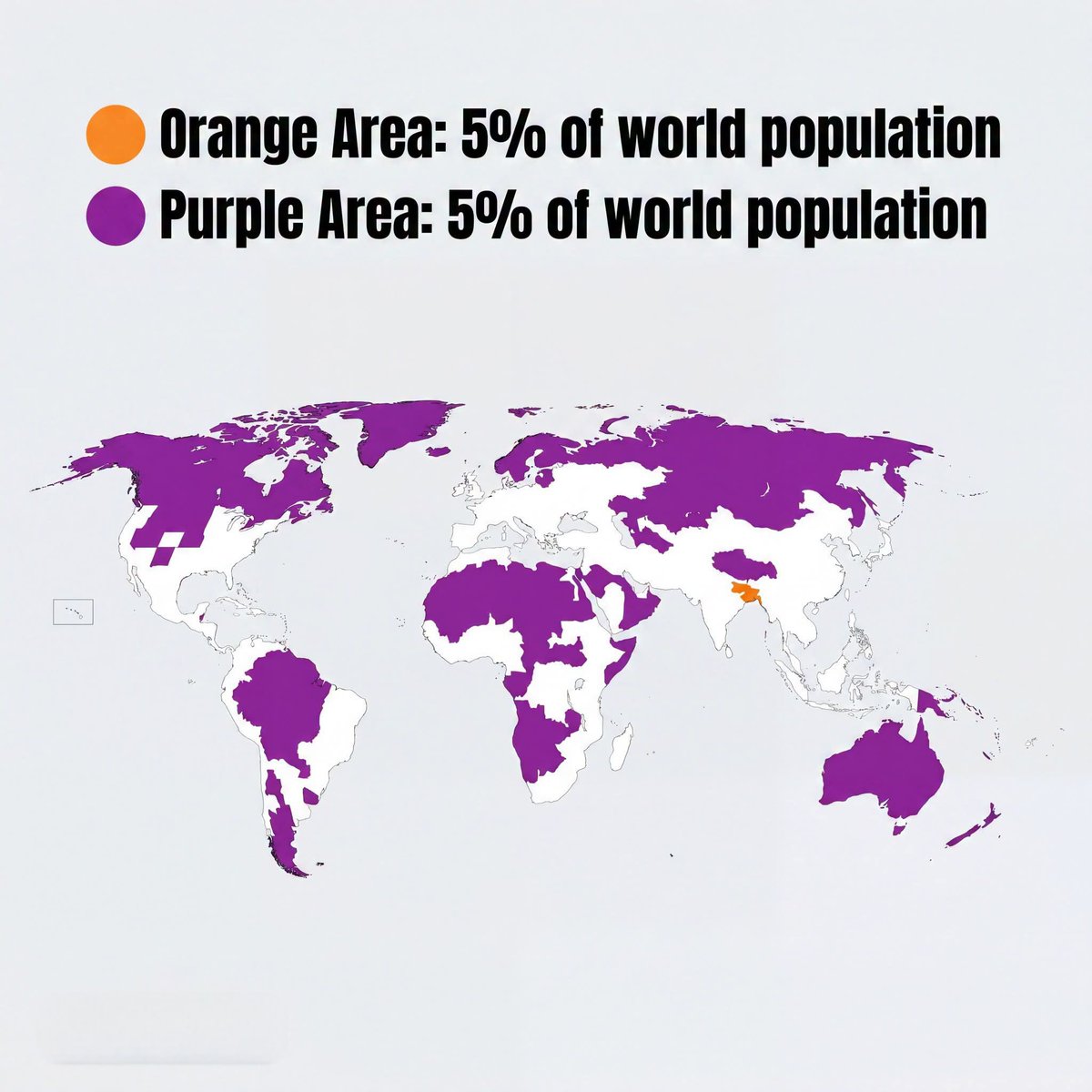
The orange region on the latest global population map highlights a surprisingly small segment—approximately 5% of the world’s population. Despite their relatively low numbers, this group holds significant cultural, economic, and social influence in various parts of the globe. Often concentrated in specific regions or countries, these individuals tend to belong to highly developed nations with advanced technological infrastructure and unique socio-political dynamics. Their lifestyle, economic power, and cultural impact often set trends that ripple worldwide, making this demographic a key player in the international landscape.
2. The Purple Zone: The Other 5% and Its Distinct Characteristics
The purple area on the map also comprises roughly 5% of the global population. This segment is distinguished by its unique cultural pluralism, often representing minority communities within larger nations or indigenous populations that have maintained their traditional practices despite modern influences. The purple zone serves as a vital reminder of the world’s rich diversity, hosting populations with distinctive languages, customs, and ways of life that are sometimes overlooked in mainstream narratives. Their resilience and cultural uniqueness add depth to the tapestry of global society, shaping ongoing debates about identity, sovereignty, and cultural preservation.
3. Population Trends and Future Projections for Both Zones
Recent data from 2025 reveal that both the orange and purple zones are experiencing markedly different population trends. The orange zone, primarily comprising wealthy and highly urbanized regions, continues to stabilize or even decline slightly due to low birth rates and aging populations. Conversely, the purple zone, often situated in developing regions, exhibits rapid growth, driven by higher birth rates and improving healthcare infrastructure. These contrasting trends will significantly influence global economics, geopolitics, and migration patterns in the coming decade, reshaping power dynamics and resource distribution worldwide.
4. Impact of Urbanization and Technology on These Regions
Technological advancements and urbanization are transforming both these zones in unprecedented ways. In the orange zone, cutting-edge technologies foster innovation, automation, and increased quality of life, but also pose challenges like labor displacement and social inequality. Meanwhile, the purple zone benefits from mobile technology, improved healthcare, and educational initiatives, boosting local economies and improving living standards. As digital connectivity becomes more pervasive, these regions are likely to experience accelerated social changes, influencing everything from employment to cultural identity.
5. Challenges and Opportunities on the Horizon
Looking forward, the orange and purple zones face distinct set of challenges and prospects. The orange zone must grapple with issues such as economic stagnation, aging populations, and environmental sustainability. Innovative policies and international cooperation will be pivotal in addressing these concerns. Meanwhile, the purple zone’s rapid population growth and developmental needs demand sustainable resource management, infrastructure expansion, and education. Both zones present unique opportunities for global collaboration, cultural exchange, and economic partnerships that could foster a more interconnected and resilient world.
 ChatGPT
 Perplexity
 Gemini AI
 Grok AI