10 Busiest Train Stations in the World in 2025
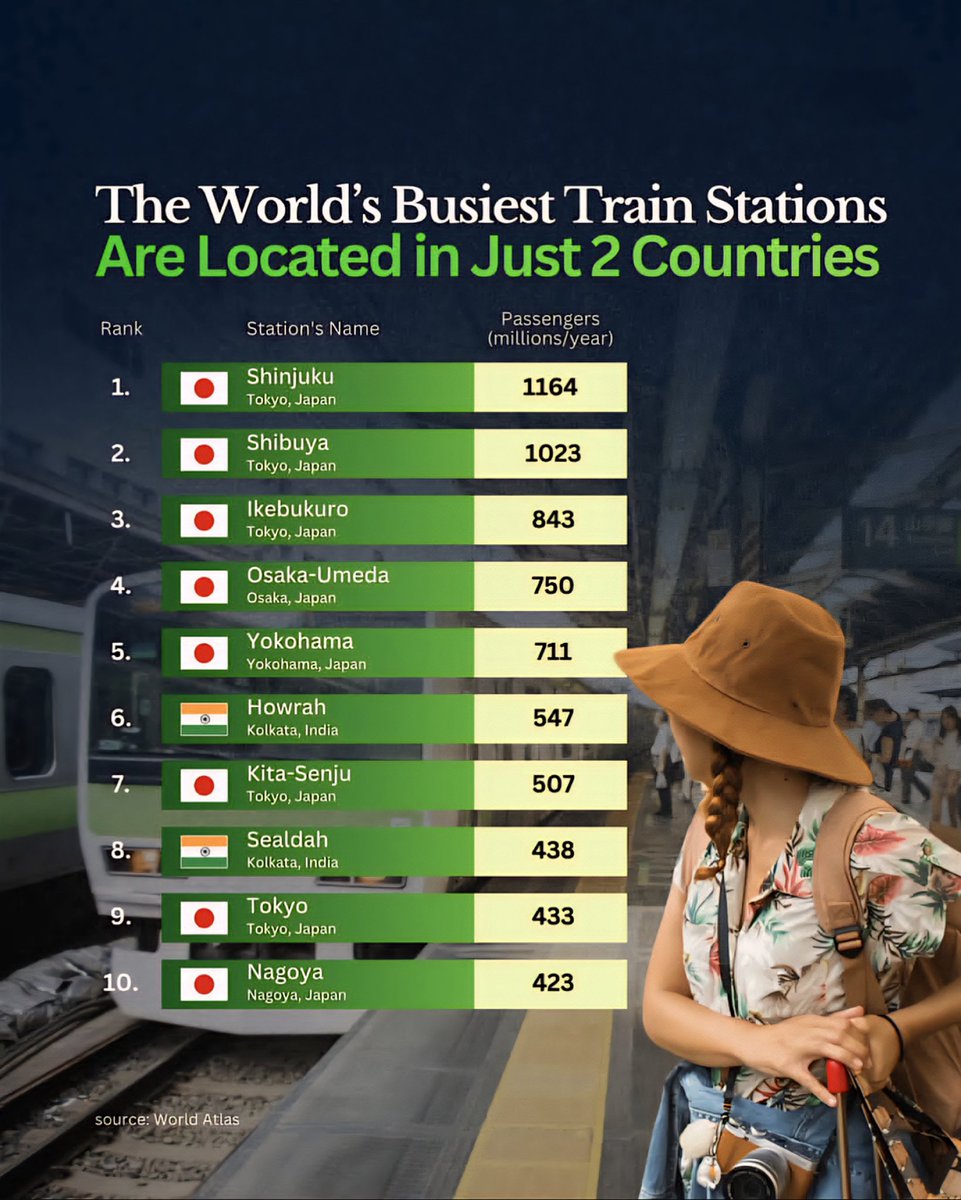
1. Shinjuku Station, Tokyo – Over 1.16 Billion Passengers Annually
Topping the list is Shinjuku Station in Japan’s capital, which continues to hold its title as the world’s busiest railway hub. Located in Tokyo’s bustling Shinjuku ward, this station handles an astonishing 1.164 billion passengers every year. Famous for its complex maze of platforms and connections, Shinjuku is not just a transit point but a city within a city, featuring shopping malls, restaurants, and office buildings, making it a vital artery in Tokyo’s transportation network.
2. Shibuya Station, Tokyo – Surpassing 1 Billion Riders
Just a short distance from Shinjuku, Shibuya Station serves as a gateway to one of Tokyo’s most iconic districts. With over 1.023 billion passengers annually, it’s famous worldwide for its bustling scramble crossing and vibrant nightlife. The station’s strategic location near shopping, entertainment, and fashion districts ensures it remains one of the most frequently visited transit hubs on the planet.
3. Ikebukuro Station, Tokyo – Over 843 Million Passengers
Ikebukuro Station in Tokyo’s northwestern suburbs sees approximately 843 million travelers each year. It functions as a major hub connecting various train lines, including the JR Yamanote Line, and is surrounded by large shopping centers like Sunshine City. Its popularity continues to grow, driven by retail, entertainment, and commuter demand.
4. Osaka-Umeda Station, Osaka – Nearly 750 Million Riders Annually
As the beating heart of Osaka’s North district, Osaka-Umeda Station welcomes roughly 750 million passengers annually. Known for its intricate network of underground walkways and connections to key subway lines, Umeda functions as a critical transit zone supporting both daily commuters and leisure travelers heading to shopping districts or transportation hubs.
5. Yokohama Station, Yokohama – Over 711 Million Passengers
Located in Japan’s second-largest city, Yokohama Station sees about 711 million people each year. It acts as a central hub connecting local and regional train lines, offering seamless access to the city’s waterfront, shopping districts, and business centers. Its high passenger volume reflects Yokohama’s status as a vibrant port city with a dynamic urban landscape.
6. Howrah Station, Kolkata – Over Half a Billion Travelers
Moving to India, Howrah Station in Kolkata caters to approximately 547 million passengers annually, making it the busiest train station in the country. As a critical transportation node, Howrah connects West Bengal to neighboring states and serves as a gateway to eastern India, with a bustling atmosphere filled with vendors and travelers.
7. Kita-Senju Station, Tokyo – Over 507 Million Commuters
Kita-Senju Station, nestled in the northern part of Tokyo, handles around 507 million passengers per year. Its strategic position connects several JR lines and subway routes, making it a pivotal station for commuters heading into the city’s core. Its vibrant surroundings include shopping centers and local eateries, reflecting its integral role in Tokyo’s transit culture.
8. Sealdah Station, Kolkata – Almost 440 Million Passengers
Sealdah Station, another major hub in Kolkata, manages nearly 438 million riders annually. Primarily serving suburban networks, Sealdah is essential for daily commuters traveling between the city center and outer suburbs, supporting Kolkata’s bustling urban environment.
9. Tokyo Station, Tokyo – Around 433 Million Travelers
Tokyo Station, located in Chiyoda ward, moves approximately 433 million travelers each year. It functions as a key connecting point for the Shinkansen (bullet trains) and numerous commuter lines. With historic architecture and modern amenities, Tokyo Station remains a critical juncture for business and leisure travel.
10. Nagoya Station, Nagoya – Over 423 Million Passengers
Completing the top ten, Nagoya Station transports over 423 million people annually. As a central hub in Japan’s third-largest city, it connects numerous JR lines, subway routes, and bus services. Its expansive complex features shopping, dining, and office spaces, making it a significant southern gateway in Japan’s transportation network.
Source: WorldAtlas, 2025 Annual Passengers Data