
Select Language:
The Complexities of International Sports in the British and Irish Isles
1. The Intricacies of National Identity in Sports
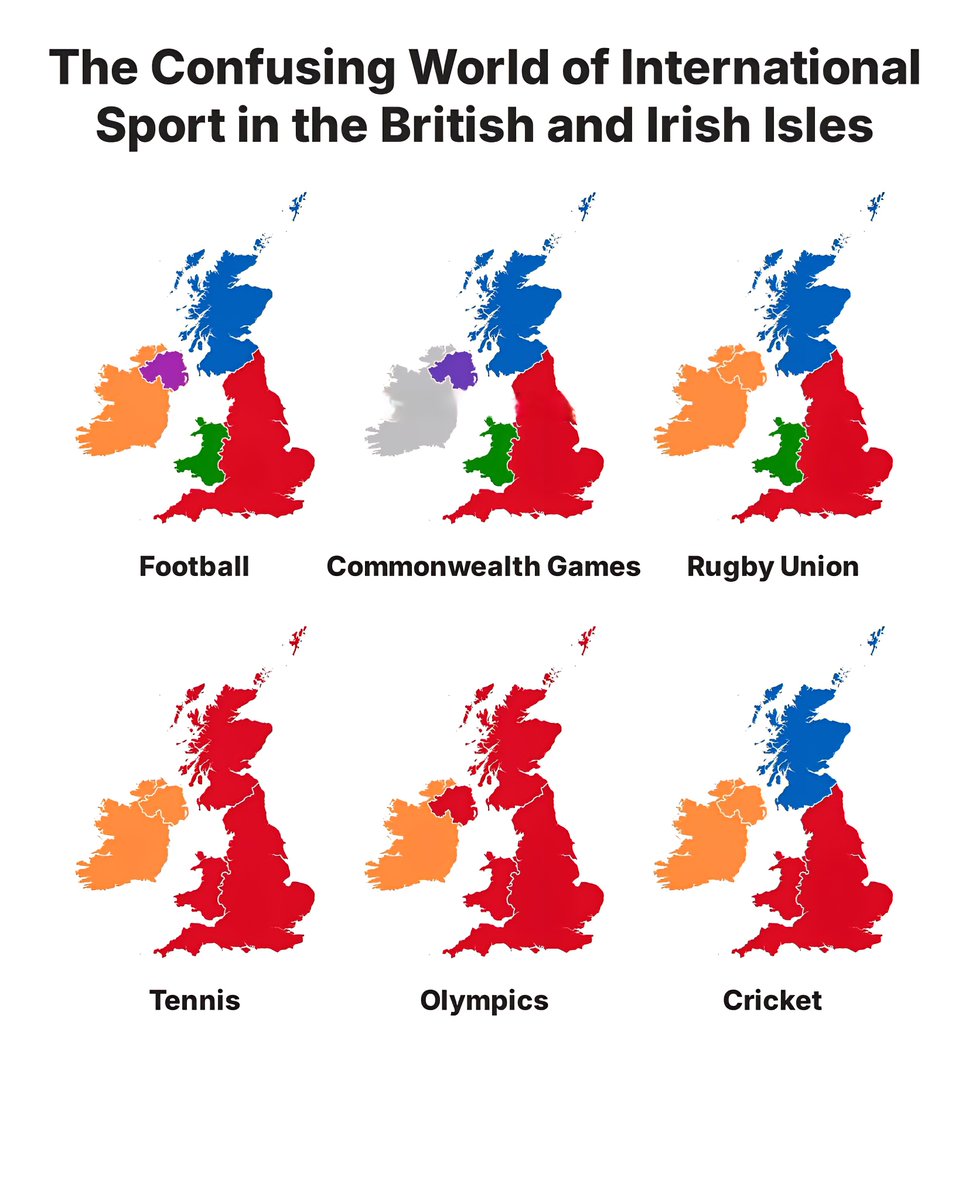
In the British and Irish Isles, the question of national identity is intertwined deeply with sport. For instance, athletes from Scotland, Wales, Northern Ireland, and England compete both for the United Kingdom and their respective nations, depending on the competition. This duality often leads to confusion among fans and casual spectators, especially with the Olympics and Commonwealth Games. While England, Scotland, Wales, and Northern Ireland each field their own teams in many sports, they unite under the UK banner for global events like the Olympics. This unique arrangement reflects the complex political and cultural landscape of the region.
2. The Unique Status of the Island of Ireland in Sports
Ireland’s sporting arrangements are equally layered. The Irish Rugby Football Union (IRFU) governs rugby in both the Republic of Ireland and Northern Ireland, leading to a unified team that represents the entire island, known as Ireland. Conversely, Northern Ireland has its own football association and competes separately from the Republic in soccer, which can spur confusion among international sports fans. This dual setup emphasizes how historical and political divisions influence sporting governance and team representations in surprising ways.
3. The Role of Queen’s Honours and Sporting Symbols
In recent years, sporting symbols and honors have been sources of controversy. For example, some athletes and teams display symbols associated with their national identities, which can sometimes provoke political debates. The use of medals, crests, and jerseys often bears political significance, illustrating the deep ties between sport and national pride in the region. Notably, discussions about whether athletes should compete under certain flags reflect ongoing debates about sovereignty and national representation.
4. Governance and Recognition in International Sports Bodies
The governance of sports in the British and Irish Isles often involves overlapping authorities, creating a maze of regulations. Different countries are members of various international federations, each with its own criteria for recognition. For example, the British Olympic Association governs Team GB at the Olympics, but constituent nations have their own governing bodies for other sports. This fragmentation sometimes complicates international competitions, as athletes may face hurdles concerning eligibility and representation.
5. The Impact of Brexit on Sports Agreements
The United Kingdom’s departure from the European Union in 2020 had widespread implications, including in the world of sports. With new trade and travel arrangements, teams faced increased administrative hurdles for competitions across Europe. Athletes and teams had to navigate new visa processes, which affected uniformity and participation in tournaments. Furthermore, Brexit has enhanced discussions about regional autonomy, further complicating the sporting landscape in the Isles.
6. The Defining Influence of the Commonwealth Games
The Commonwealth Games remain a significant sporting event for the British and Irish Isles, especially for the UK nations and some Caribbean territories. These Games offer a platform for athletes from former colonies and territories to compete under their national banners, often fostering a sense of cultural pride and international camaraderie. However, the Games also underscore the regional differences within the British Isles network, reflecting a broader spectrum of political identities.
7. Athletic Success and National Pride
Despite political differences, sports achievements often unify the region. For instance, athletes from Wales and Scotland regularly outperform expectations on the international stage, boosting regional pride. The 2024 Olympics saw record medal counts from several UK nations, highlighting the talent and resilience of local athletes. Such successes help reinforce regional identities while also fostering national pride across the Isles.
8. Fan Engagement and Cultural Festivals
Sporting events often turn into cultural celebrations, with fans engaging passionately in their local traditions. Rugby matches between England and Wales, or football rivalries like Celtic versus Rangers in Scotland, are more than games—they’re expressions of regional culture. These events draw thousands of spectators, turning stadiums into lively festivals that reinforce local identities amid a complex political landscape.
9. Future Challenges and Opportunities
Looking forward, the British and Irish Isles must navigate challenges like political disagreements, governance issues, and the push for greater regional autonomy. Conversely, there’s potential for greater collaboration, fostering an integrated sporting future that respects regional identities while promoting international success. Initiatives such as cross-border tournaments and joint training programs could serve as bridges in this intricate sporting world.
10. The Power of Sport in Promoting Dialogue and Unity
In the face of political complexities, sport has historically been a force for unity. Irrespective of political boundaries and rivalries, events that bring the region together can serve as platforms for dialogue, understanding, and shared pride. As the sporting landscape continues to evolve, nurturing these unifying powerhouses could help bridge divides, making sports not just games but tools for social cohesion.
With the continued evolution of sport governance, regional pride, and international recognition, the British and Irish Isles remain a fascinating tapestry of tradition, politics, and athletic excellence—ever-changing and deeply rooted in the fabric of their diverse identities.
 ChatGPT
 Perplexity
 Gemini AI
 Grok AI