
Select Language:
The Largest Religion in Each African Country: A 2025 Overview
-
Islam Dominates in North and West Africa
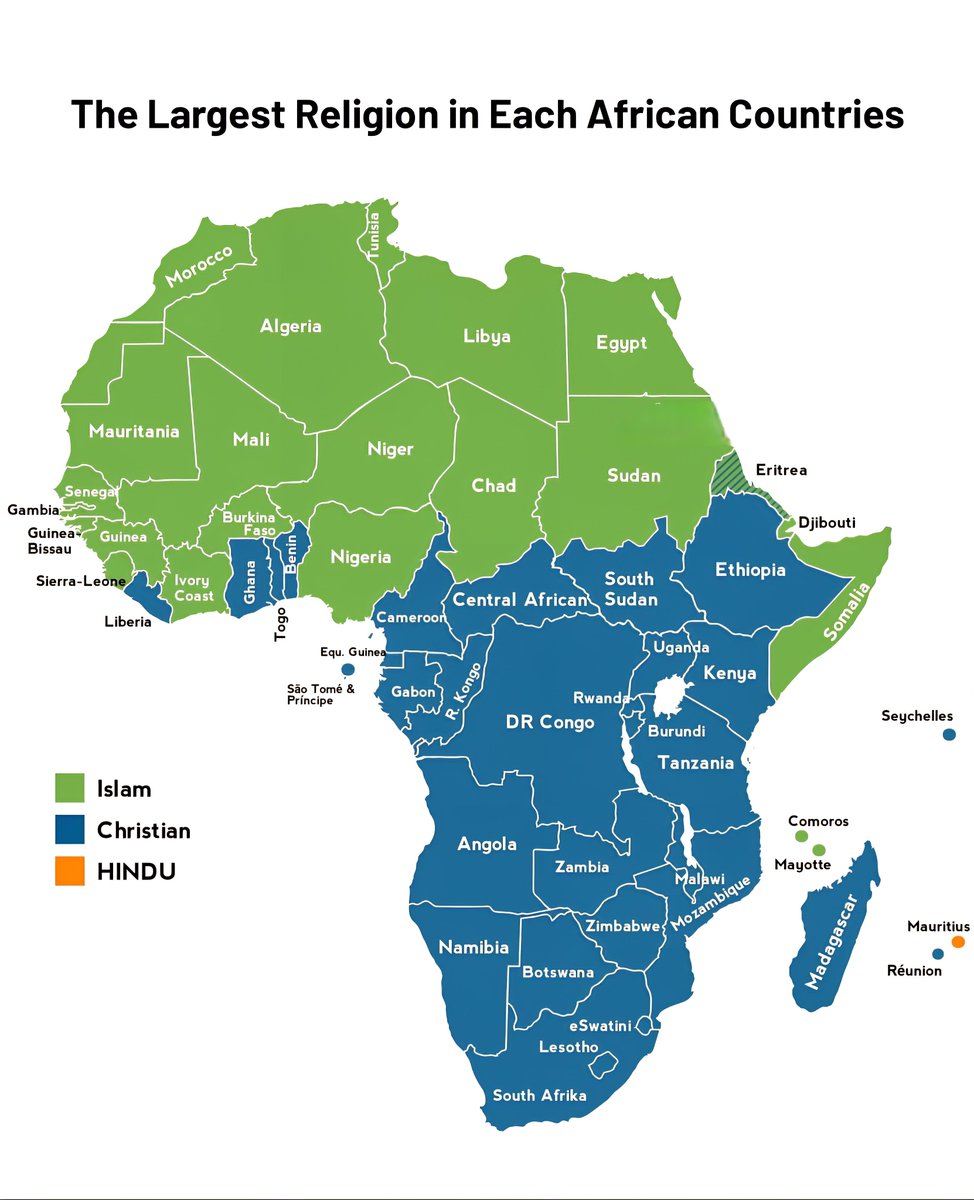
Across the northern part of the continent, Islam continues to be the predominant faith. Countries like Egypt, Libya, Algeria, Morocco, and Tunisia are majority Muslim nations, reflecting centuries of historical, cultural, and political influences from the Arab world and Islamic empires. West African nations such as Nigeria (northern regions), Mali, Senegal, and Niger also report high Muslim populations, with Islam deeply ingrained in local traditions and daily life. This widespread adherence highlights the enduring legacy of Islamic civilizations in shaping the region’s cultural identity. -
Christianity Leads in Central and Southern Africa
In many parts of Sub-Saharan Africa, Christianity has experienced significant growth and remains the most practiced religion. Countries like South Africa, Angola, Kenya, Uganda, and Zimbabwe have predominantly Christian populations, including a mix of Protestant, Catholic, and independent Christian denominations. The influence of European colonization, missionary activities, and indigenous Christian movements have contributed to the widespread acceptance and integration of Christianity throughout these regions. -
Hinduism Has a Notable Presence in Selected Regions
While Hinduism is less widespread across the continent, it holds a significant place in specific areas, particularly in countries with Indian diaspora communities. In South Africa, for instance, Hinduism is practiced by a sizable minority, primarily among the Indo-African population. Mauritius, an African island nation, boasts a Hindu majority, reflecting Indian immigration histories. Although Hinduism is not the largest religion in most African countries, its cultural footprint remains prominent in these regions. -
Religious Diversity and Overlaps in Africa
Many African nations are known for their religious diversity, with significant populations practicing multiple faiths. South Africa, Nigeria, and Kenya are examples where Christianity and Islam coexist, sometimes leading to shared cultural traditions or religious festivals. Additionally, indigenous spiritual practices often intertwine with major religions, creating a unique syncretic religious landscape that varies profoundly from country to country. -
The Impact of Urbanization and Globalization on Religious Trends
As African cities grow rapidly and global influences intensify, religious affiliations continue to evolve. Some countries report increasing conversions, interfaith marriages, and the spread of new religious movements. The 2025 data suggests a steady increase in the visibility of religious diversity, with younger generations exploring different spiritual paths and community-based faith practices gaining prominence. -
Religion and Political Identity
In several African countries, religious identity plays a crucial role in national politics. Leaders often leverage religious affiliations to garner support or promote national unity. In countries like Nigeria and Kenya, political discourse frequently emphasizes religious considerations, shaping policies and social dynamics. Understanding these religious landscapes is essential for grasping the complex socio-political fabric of the continent. -
Challenges and Opportunities in Religious Relations
Religious differences can sometimes lead to tensions or conflicts; however, they also present opportunities for dialogue and cooperation. Many African nations promote interfaith initiatives aimed at fostering peace, social cohesion, and economic development. The religious landscape in 2025 shows both the potential for unity and the need for ongoing efforts to address religious intolerance.
In summary, Africa’s religious landscape in 2025 reflects a continent marked by profound diversity and historical depth. Islam remains dominant in the north and west, Christianity continues to flourish across central and southern regions, while Hinduism makes notable contributions in specific areas. Recognizing these patterns offers insight into Africa’s evolving cultural identity amid ongoing social and political changes.
 ChatGPT
 Perplexity
 Gemini AI
 Grok AI