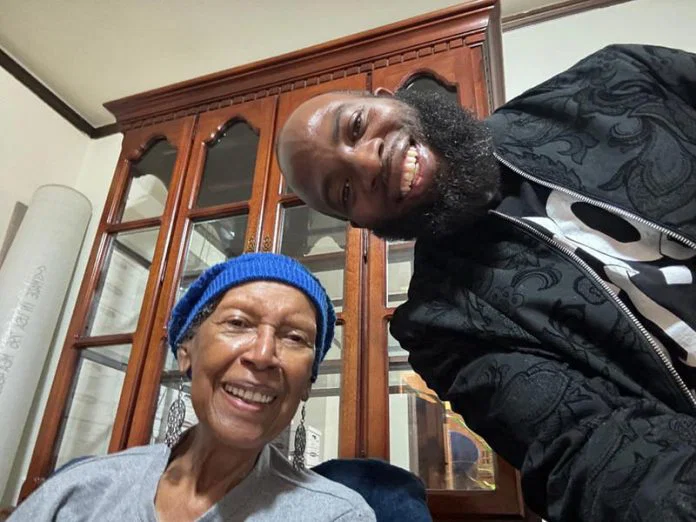
During a lunch break at his shoe sales job, 18-year-old Julian Nelson reached for a chicken wing and suddenly experienced a tingling sensation on the right side of his lip. Shortly after, the tingling spread to his fingertips on that hand, and then his entire hand went numb, making it impossible to hold his food. Julian realized this wasn’t caused by the spicy wings—something was seriously wrong, something “super weird,” unlike anything he had ever felt before.
He quickly told his boss and then called his girlfriend. Moments after hanging up, he lost control of the entire right side of his body. Julian was rushed to a hospital in Oakland, California, where doctors diagnosed him with a stroke and arranged for his transfer to a more specialized hospital in Redwood City, about 35 miles away.
The cause of his stroke was a brain arteriovenous malformation (bAVM) on the left side of his brain. These malformations are tangled clusters of abnormal blood vessels that typically stay silent until they cause bleeding, seizures, or headaches. Though bAVMs are rare, they often occur in young adults when they do.
When Julian regained consciousness, he was surrounded by family. His grandmother, Gloria Nelson, couldn’t understand how such a young man, just 18, could have experienced a stroke. Prior to the incident, Julian was active—jogging, cycling, hiking, and working out regularly. The stroke left him needing physical, occupational, and speech therapy. His goal was to recover enough to walk and talk again, and he was able to leave the hospital walking with a cane and talking.
Alongside working at the shoe store, Julian attended community college and planned to resume his studies the following year. But then he faced another challenge. One day, as he arrived at his grandparents’ house and was about to get out of his car, he had a seizure. His grandfather happened to walk outside at that moment and saw him collapse, immediately calling an ambulance. The stroke occurred in 2005, and seizures began about a year later. Julian estimates he’s had around 15 seizures since then. He now takes medication to help control them. In 2008, he underwent brain surgery to remove damaged tissue around an aneurysm.
Julian continues to experience weakness in his right hand and struggles with fine motor skills in his right foot. He remains dedicated to strengthening and improving both. Over the years, he’s also survived being shot multiple times during mugging attempts and the loss of his wife.
His grandmother, Gloria, credits his resilience to unwavering faith: “He’s faced many heartbreaking events, but his faith has always been what gets him through.”
In March 2025, Julian remarried, and he and his wife are expecting their baby girl in November. He takes pride in his perseverance and shares his story to inspire others to push through their own challenges.
“People often underestimate what they’re capable of,” Julian says. “Believing in yourself can turn that into reality.”
For those interested in stroke prevention, studies suggest that diets high in flavonoids might help lower stroke risk, and the MIND diet could slow cognitive decline after a stroke. Additional research indicates that antioxidants might reduce the risk of dementia, and consuming tea and coffee may help lower the chances of stroke and cognitive issues.
Written by Cathy Cassata, American Heart Association.