

Select Language:
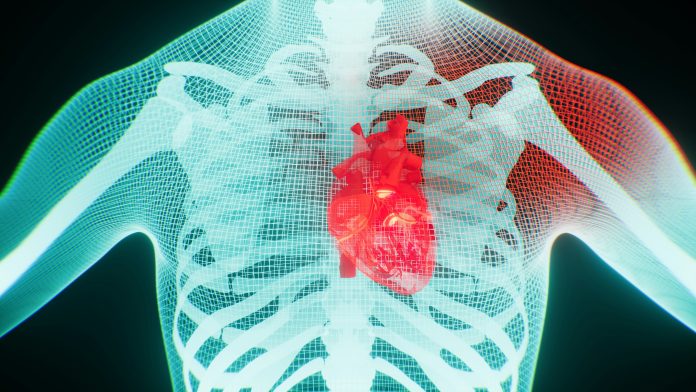
Heart failure ranks among the top reasons older adults end up in the hospital. But that doesn’t always mean the heart has completely stopped functioning.
Rather, it indicates the heart isn’t effectively pumping blood throughout the body.
One prevalent type is called heart failure with preserved ejection fraction, or HFpEF. In this condition, the heart still ejects a normal percentage of blood with each beat, but the heart muscle becomes stiff and cannot relax properly.
This stiffness makes it harder for the heart to fill with blood, leading to symptoms like fatigue, shortness of breath, leg swelling, and difficulty with physical activity. As populations age, HFpEF has become more common, yet diagnosing and managing it remains a challenge.
Most research has concentrated on the left side of the heart, which pumps oxygen-rich blood to the body. However, scientists are discovering that the right side of the heart plays an equally vital role.
The right ventricle sends blood to the lungs to pick up oxygen. When this chamber weakens—a condition known as right ventricular dysfunction (RVD)—patients often become sicker and face a less favorable prognosis.
A recent study conducted at Xiamen Humanity Hospital in China revealed that RVD is more prevalent among people with HFpEF than many clinicians realize. The findings were published on June 10 in BMC Cardiovascular Disorders.
Researchers, led by Xin Du, analyzed medical records from 163 patients diagnosed with HFpEF between January 2022 and January 2024. All underwent detailed echocardiograms, which are ultrasound scans of the heart, and their levels of NT-proBNP, a blood marker that rises when the heart is under stress, were measured.
The study found that 41.7% of these patients already exhibited RVD. Those with RVD also had significantly elevated NT-proBNP levels, indicating greater cardiac strain.
Multiple ultrasound measurements worked together to detect RVD, including assessments of right ventricular motion, pulmonary artery pressure, left atrium size, and heart muscle relaxation. Among individual tests, right ventricular free wall strain proved to be most accurate.
Combining six echocardiographic parameters with NT-proBNP significantly improved the ability to identify RVD. This suggests that using a comprehensive set of measurements could help doctors diagnose right-sided heart issues earlier.
Early identification is crucial because treating the condition before severe damage occurs generally leads to better outcomes. Detecting hidden right-sided heart weakness might enable healthcare providers to monitor patients more closely, tweak treatments, advise lifestyle changes, and minimize future complications.
This study also emphasizes that HFpEF is a complex disease involving both sides of the heart. Exploring beyond the left ventricle may provide insights into why some patients decline faster than others.
It’s important to note that this was a retrospective analysis from a single hospital involving a relatively small sample size. It does not establish that these measurements improve survival rates or reduce hospitalizations. Larger, multi-center studies are needed to validate these findings before such testing becomes routine. Nonetheless, the impressive performance of the combined measurement approach indicates that further research could make it a valuable tool for tailored patient care.
If heart health interests you, consider exploring studies on how vitamin D impacts cholesterol, as well as the relationship between egg consumption and heart disease.
For additional health insights, check out recent research on the best supplements for preventing heart disease, and learn how wild blueberries can benefit both your heart and brain.
Source: Xiamen Humanity Hospital.
 ChatGPT
 Perplexity
 Gemini AI
 Grok AI