The 2026 Global Economic Powerhouses: A Closer Look at the World’s Largest Economies
1. The United States Continues to Lead with Unmatched Economic Strength
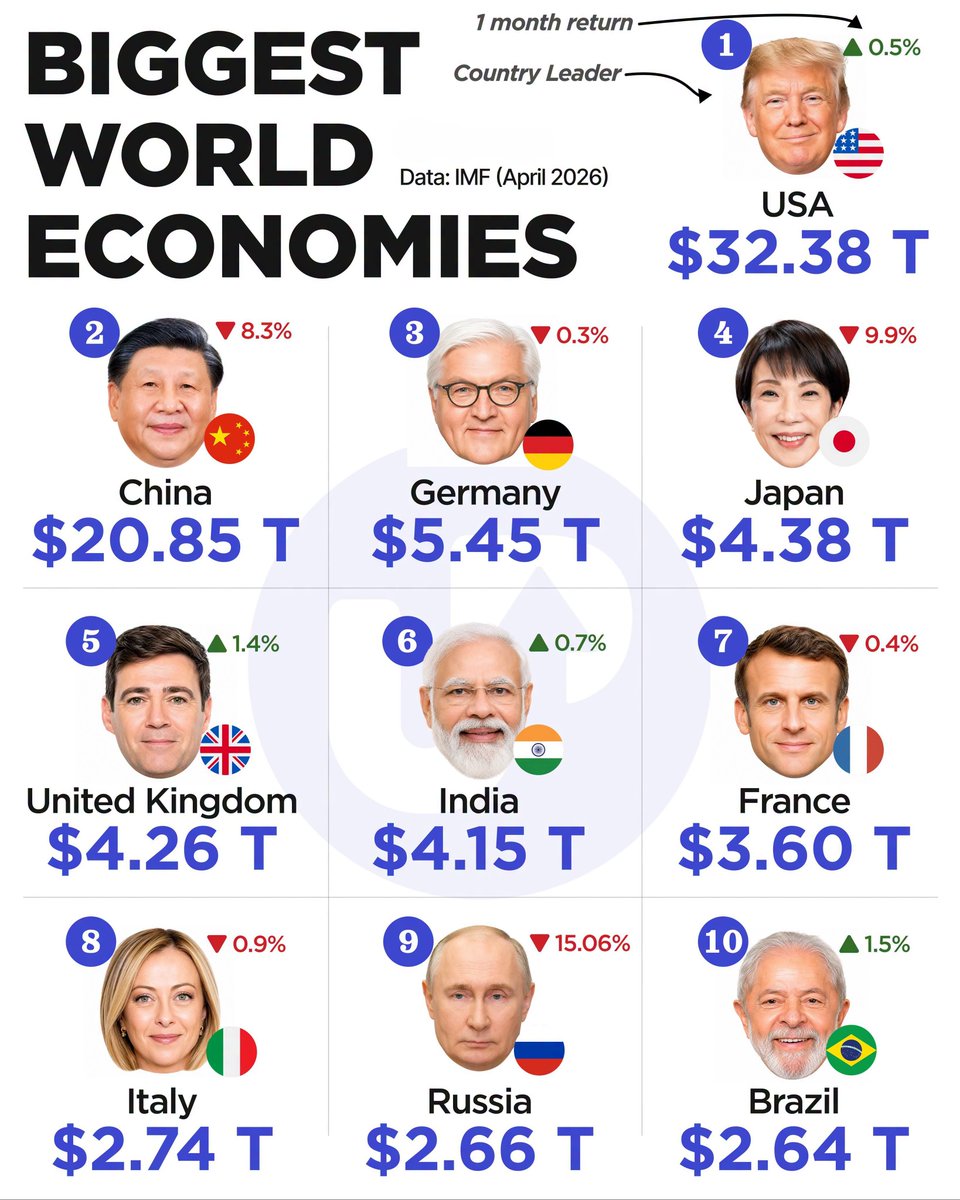
America remains at the top, boasting a staggering total GDP of $32.38 trillion. This robust figure highlights the country’s diverse economy, spanning technology, finance, healthcare, and consumer goods. The U.S. economy’s resilience is driven by technological innovation and a strong consumer market, reinforcing its position as the world’s economic powerhouse.
2. China Holds Its Ground as the Second Largest Economy
China’s economy has grown substantially, reaching $20.85 trillion in 2026. Its rapid industrialization and export-driven growth strategies have cemented its status as a global manufacturing hub. Additionally, China’s focus on technological advancements and infrastructure investments continue to fuel its economic ascent.
3. Germany Maintains Its Leadership Role in Europe
With a GDP worth $5.45 trillion, Germany remains Europe’s largest economy. The country’s strength lies in its engineering, automotive, and export sectors. German industries are known worldwide for their efficiency and innovation, contributing significantly to the European economic landscape.
4. Japan’s Economy Remains Resilient
Japan’s economy is valued at $4.38 trillion. Despite facing demographic challenges, its leadership in robotics, electronics, and automotive manufacturing helps sustain its hefty GDP. Japan’s focus on technology and research continues to make it a vital economic player in Asia.
5. The United Kingdom’s Economy Slightly Edges Higher
Reaching $4.26 trillion, the UK maintains its position among the top economies. Financial services, technology, and creative industries drive growth. Post-Brexit adjustments have positioned the UK as a global financial hub and innovation center.
6. India’s Rapid Economic Expansion Boosts Its Ranking
India’s GDP reached $4.15 trillion, reflecting its fast-paced growth trajectory. Emphasizing technology, manufacturing, and service industries, India continues to attract foreign investment. Urbanization and digital Transformation are key to its economic development.
7. France’s Steady Economic Performance
France’s economy is valued at $3.60 trillion. Its diversified sectors include luxury goods, aerospace, and tourism. Continued investment in innovation and sustainability initiatives bolster its economic standing.
8. Italy’s Economy Remains Steady
With a GDP of $2.74 trillion, Italy remains a vital European economy. Its strengths lie in fashion, design, and manufacturing. Italy’s focus on quality and innovation sustains its influence in global markets.
9. Russia’s Economy Shows Signs of Stability
Russia’s economy, valued at $2.66 trillion, is heavily reliant on energy exports. Strategic diversification efforts are underway to reduce dependency on oil and gas, aiming to stabilize and grow its economy in the long term.
10. Brazil Rounds Out the Top Ten Economies
Brazil’s GDP stands at $2.64 trillion. As Latin America’s largest economy, Brazil benefits from abundant natural resources and a growing agricultural sector. Infrastructure development and reforms aim to promote sustainable growth.
Summary
In 2026, these economic giants highlight a shifting global landscape, with emerging markets like India and Brazil tightening their grip on the world stage, while established economies like the US and China continue to lead. The global economy is intricately interconnected, and these rankings reflect ongoing technological advancements, demographic shifts, and geopolitical developments shaping the future economic order.
Source: IMF – World Economic Outlook, April 2026