Designers have tailored her appearance to reflect the quintessential Saudi beauty, giving her a strong virtual presence.
Saudi Arabia has recently been focusing on robotics and artificial intelligence. Following the creation of the first Saudi robots, Sarah and Mohammed, which were enhanced by AI, the Kingdom has now introduced Lamia Abdullah, an AI-generated model.
Lamia is depicted as a 26-year-old active on Instagram, where she shares her daily activities such as shopping, salon visits, and modeling traditional Saudi abayas. She engages with her followers, fostering a deep connection with Saudi Arabia’s heritage, culture, and distinctive desert landscape.
In one of her posts, she writes, “I find myself among the desert sands,” highlighting Saudi Arabia’s commitment to technological advancements while staying rooted in its cultural heritage.
The creators have also paid attention to the diverse Saudi dialects, announcing that Lamia will soon speak in the Najdi Saudi dialect. This blend of modern technology and cultural tradition aims to resonate deeply with the Saudi audience.
With her captivating beauty and unique cultural ties, Lamia is expected to participate in AI beauty pageants, and there is growing excitement and demand for her presence on social media platforms.
Google’s greenhouse gas emissions have surged by nearly 50 percent over the past five years, driven by the energy demands of data centers powering artificial intelligence, according to the company’s 2024 Environmental Report.
This spike poses a significant challenge to Google’s goal of becoming carbon neutral by 2030.
AI features, including model training, are highly energy-intensive. A 2023 study by researchers at AI startup Hugging Face and Carnegie Mellon University found that generating a single image using AI consumes as much energy as charging a smartphone.
Google’s extensive AI initiatives include projects like Gemini, generative AI tools, and the addition of over 100 languages to its translation services, as well as rumored AI chatbots.
The report indicates that Google anticipates its total greenhouse gas emissions will rise before eventually decreasing towards its absolute emissions reduction target, although it does not specify the factors that will lead to this eventual drop.
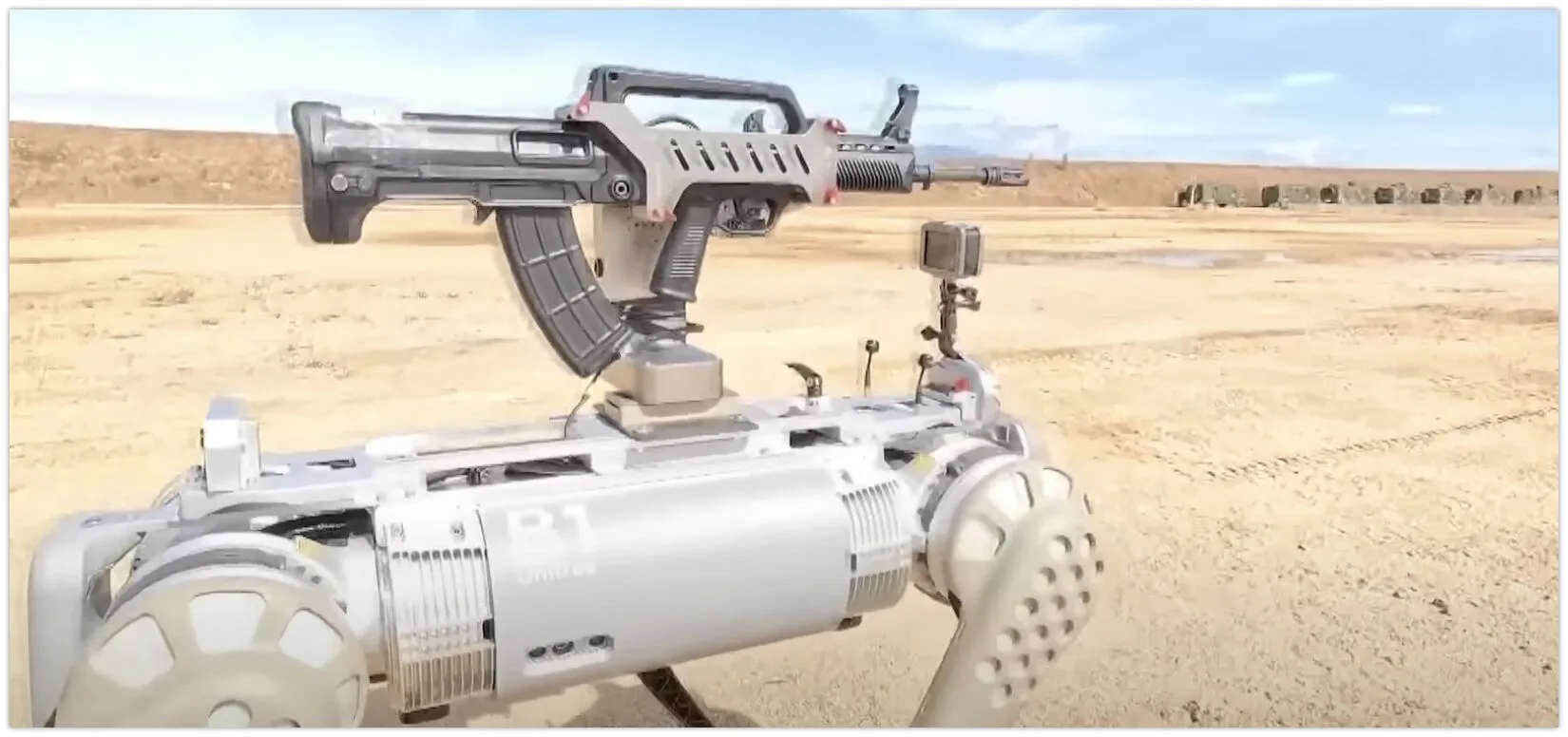
China recently unveiled two robot dogs—one equipped with a machine gun and the other driven by AI. State broadcaster China Central Television (CCTV) shared the news earlier this week.
The robots look very similar to Boston Dynamics’s “Spot” robot. The larger of the two, which weighs about 50kg (110 pounds), was shown carrying a machine gun. It moved forward under remote control by a Chinese soldier who also fired the weapon.
“It can serve as a new member in our urban combat operations, replacing our members to conduct reconnaissance and identify enemies and strike the target during our training,” explained Chen Wei, a Chinese soldier.
The other robot dog, which weighs about 15kg (30 pounds), uses AI to navigate battlefields. It’s designed to “transmit information about on-site obstacles such as wire fences, discarded tires, and tire spikes.”
This lightweight model can also jump, move forward and backward, and even lie down—maybe to avoid incoming fire or, more humorously, to ask for a belly rub.
Here’s the video of the robotic dog, along with some drones that the Chinese military has started using for other tasks.
China’s machine-gun-toting robot dogs aren’t a new concept; the US military has also been exploring similar ideas. Like China, the US prefers to have a human in control of the trigger rather than allowing the robot dogs to operate the machine guns autonomously.
That approach aligns both nations with current international views that fully autonomous weapons are too risky. An error by an AI-controlled weapon could escalate conflicts and cause greater harm to people.
China’s military hasn’t said if its robot dogs are ready for frontline use, but their participation in joint military exercises with Cambodia suggests this possibility is being actively explored.
The practicality of these robot dogs remains uncertain. China Central Television noted that the batteries mounted on their undersides can power the machines for only two to four hours, which isn’t much time for actual combat situations.
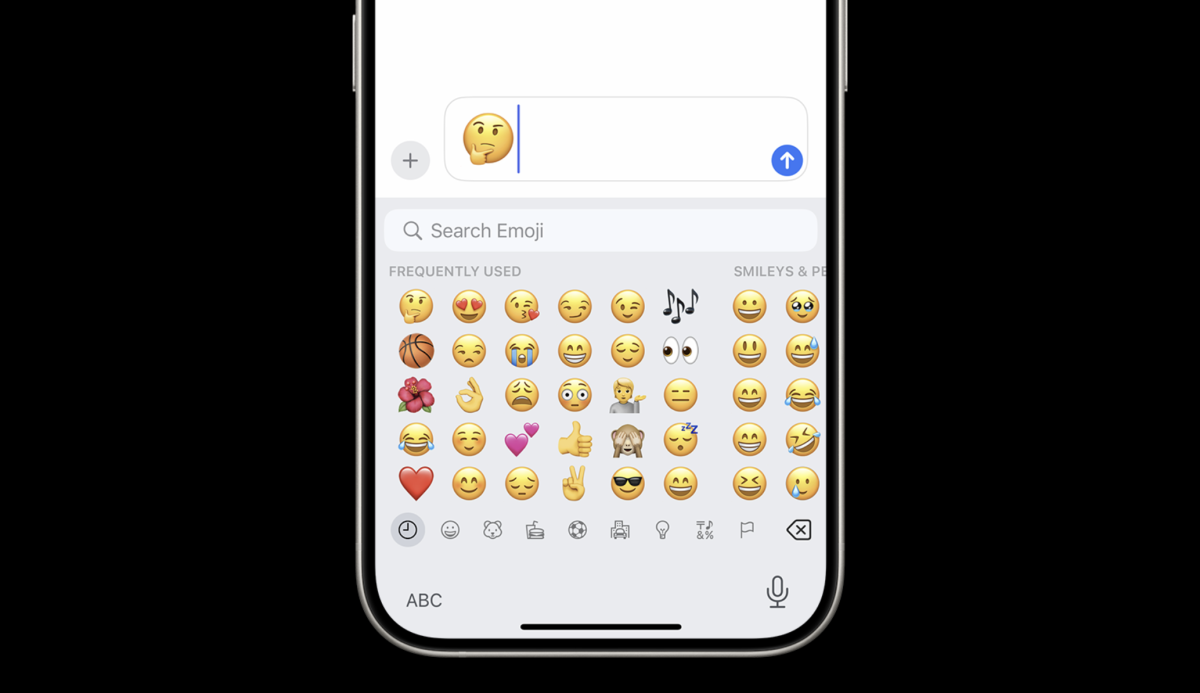
One of the coolest new features will let users create custom emojis instantly based on text input.
Custom Emoji Creation
Apple’s upcoming generative AI tool for making custom emojis is all about giving users a more personal and expressive way to communicate.
This feature will craft unique emojis based on what you type and the tone of your message, giving you way more options than what’s available in the current emoji catalog. This cool new approach aims to make expressing your feelings quicker and easier, so you won’t have to wait for yearly updates to get new emojis.
Concerns About Misuse
While Apple’s new tool for creating custom emojis opens up exciting ways for personal expression, there are some worries about how it might be misused. Similar AI-generated sticker features from companies like Meta have sometimes led to inappropriate or offensive graphics.
To address these risks, Apple is likely to put in filters and blocks to prevent the creation of offensive emojis and make sure the tool is used appropriately. Finding the right balance between letting users be creative and keeping harmful content in check will be key to this feature’s success and adoption.
Generative AI in iOS 18
In its upcoming iOS 18 and macOS 15 updates, Apple is set to introduce several impressive AI-driven features. Here’s what you can look forward to:
Automatic Transcription of Voice Memos: Easily convert your voice memos to text.
Enhanced Photo Retouching: Improve your photos with advanced editing capabilities.
AI-Powered Summaries: Get quick summaries for Safari, Messages, notifications, webpages, articles, documents, and notes.
More Natural Siri Interactions: Enjoy a more conversational experience with Siri, thanks to Apple’s AI models.
Most of these on-device AI features should work with iPhones, iPads, and Macs that have been released in the last year or so. However, some features might need the latest processors due to the expected boost in AI processing power.
Additionally, Apple is rumored to be in discussions with OpenAI, Google, and Anthropic to enhance its operating systems with more advanced chatbot interaction capabilities.
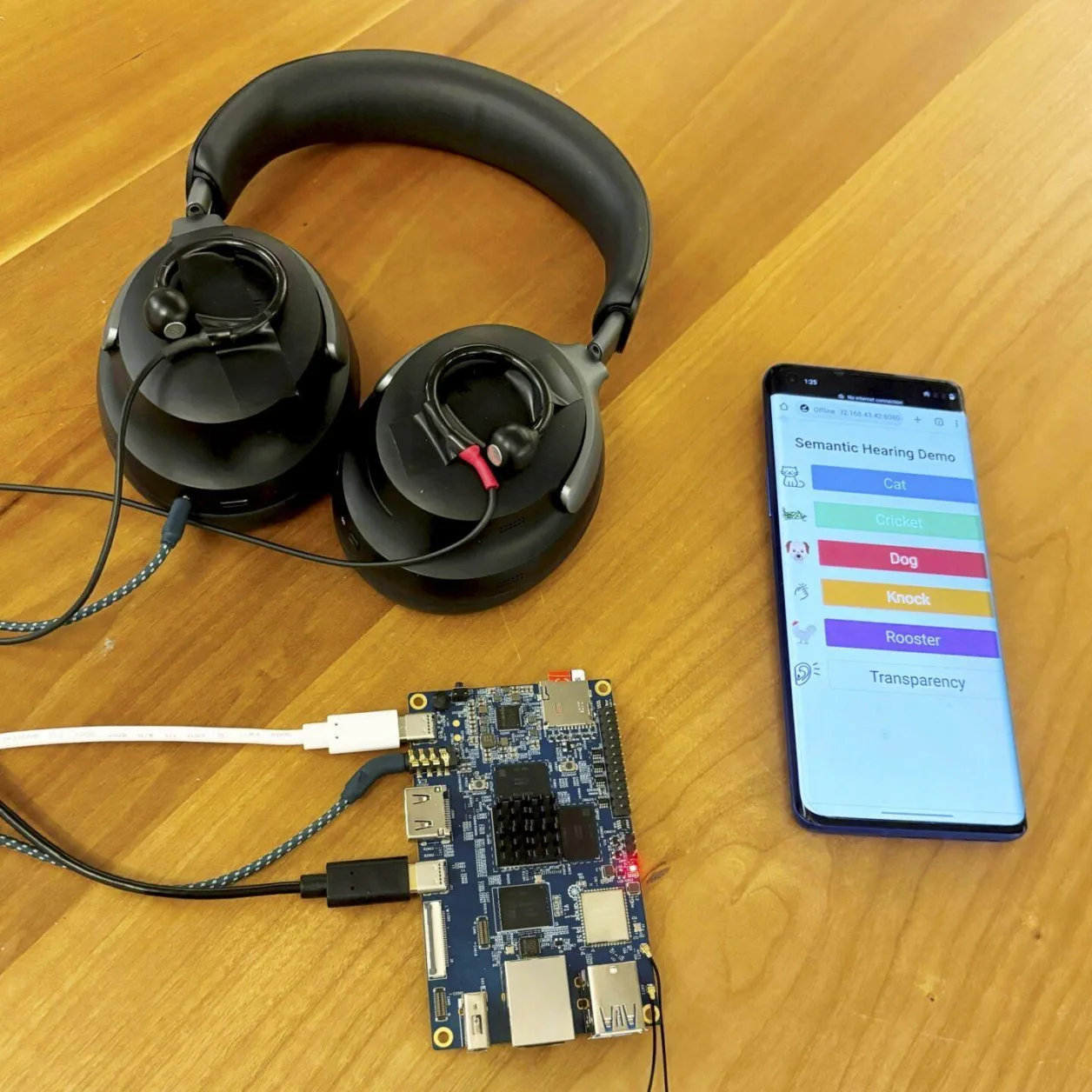
This system can zero in on and boost a single person’s voice in a noisy setting, just by having the user look at that person. So, if you’re trying to listen to someone in a crowd, these headphones will help you focus on that specific person’s voice.
Target Speech Hearing System
Scientists have enhanced noise-canceling headphones using a neural network on a smartphone. This setup allows the headphones to recognize and retain surrounding sounds while eliminating all other noise. (Source: Shyam Gollakota via SWNS)
University of Washington researchers have developed the Target Speech Hearing (TSH) system, an AI-powered device that adjusts headphone audio based on user preferences.
This groundbreaking technology was showcased at the ACM CHI Conference on Human Factors in Computing Systems, though it’s not yet available for purchase. The team has, however, made the code available on GitHub for others to explore and develop further.
Building on earlier work in “semantic hearing,” the TSH system allows users to focus on specific sounds while blocking out others.
Currently, the system can only enroll one speaker at a time and requires that speaker to be the loudest during the enrollment process. The researchers are now aiming to extend this technology to earbuds and hearing aids in the future.
How TSH Technology Works
The TSH system enhances regular headphones by adding microphones and an AI neural network. Here’s how it works:
To lock onto a specific speaker’s voice, just look at the person for three to five seconds and press a button on the headphones. This starts the “enrollment” phase, where the headphones capture the speaker’s sound.
The AI then analyzes these captured signals in real-time to recognize the speaker’s unique vocal characteristics. This information is passed to another neural network, which continuously isolates the speaker’s voice from background noise.
Once the system is set up, it can maintain focus on the speaker’s voice, letting you hear them clearly even if you move around or look away.
User Testing and Feedback
Researcher testing AI Headphones. (Photo: University of Washington)
Researchers at the University of Washington put the TSH system to the test with 21 participants. On average, these users found that the clarity of the targeted speaker’s voice nearly doubled compared to unfiltered audio. While the current setup requires the target speaker to be the loudest in the room during enrollment, users can re-enroll to enhance sound quality if needed.
This technology could revolutionize communication in diverse environments like museums, city streets, and potentially in popular headphones and earbuds.
Future Enhancements and Applications
The TSH system could be a game-changer for people with partial hearing loss or anyone who often deals with noisy environments where having a conversation is tough.
Researchers are hopeful about future updates that could tackle current limitations, like allowing the system to enroll multiple speakers at once and isolate voices in more complicated audio settings.
They’re also planning to adapt this technology for earbuds and hearing aids, which would make it even more accessible and useful for a lot more people.
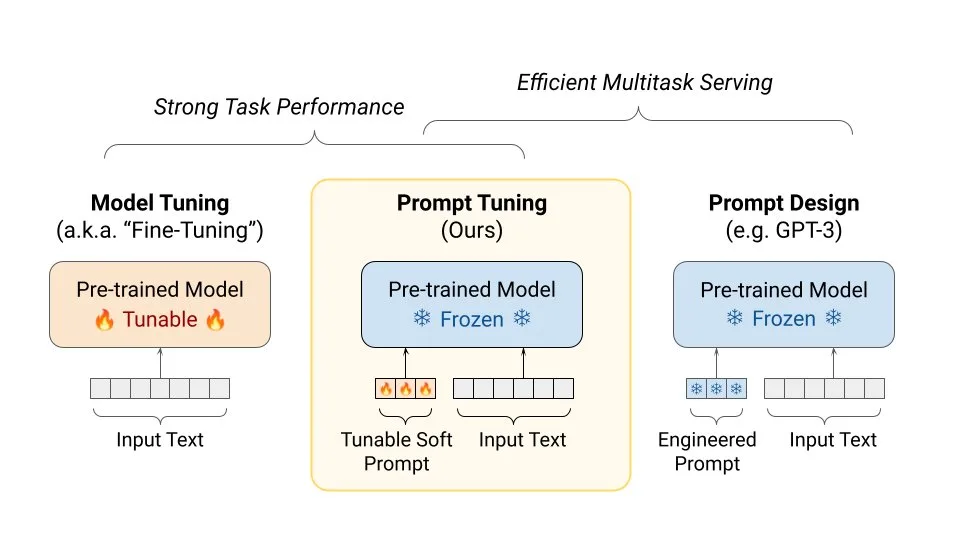
Prompt tuning is a fascinating aspect of working with AI language models, enhancing their performance on specific tasks by adjusting the input prompts. We will guide you through what prompt tuning is, its importance, and how to implement it using soft prompts and OpenAI fine-tuning.
Understanding Prompt Tuning
(Photo: Jeff Dean)
Prompt tuning involves modifying the input prompts given to AI language models to achieve better performance on particular tasks. Instead of changing the model’s parameters, you tweak the way questions or statements are presented to the model. This process helps in aligning the AI’s responses more closely with desired outcomes.
The Importance of Prompt Tuning
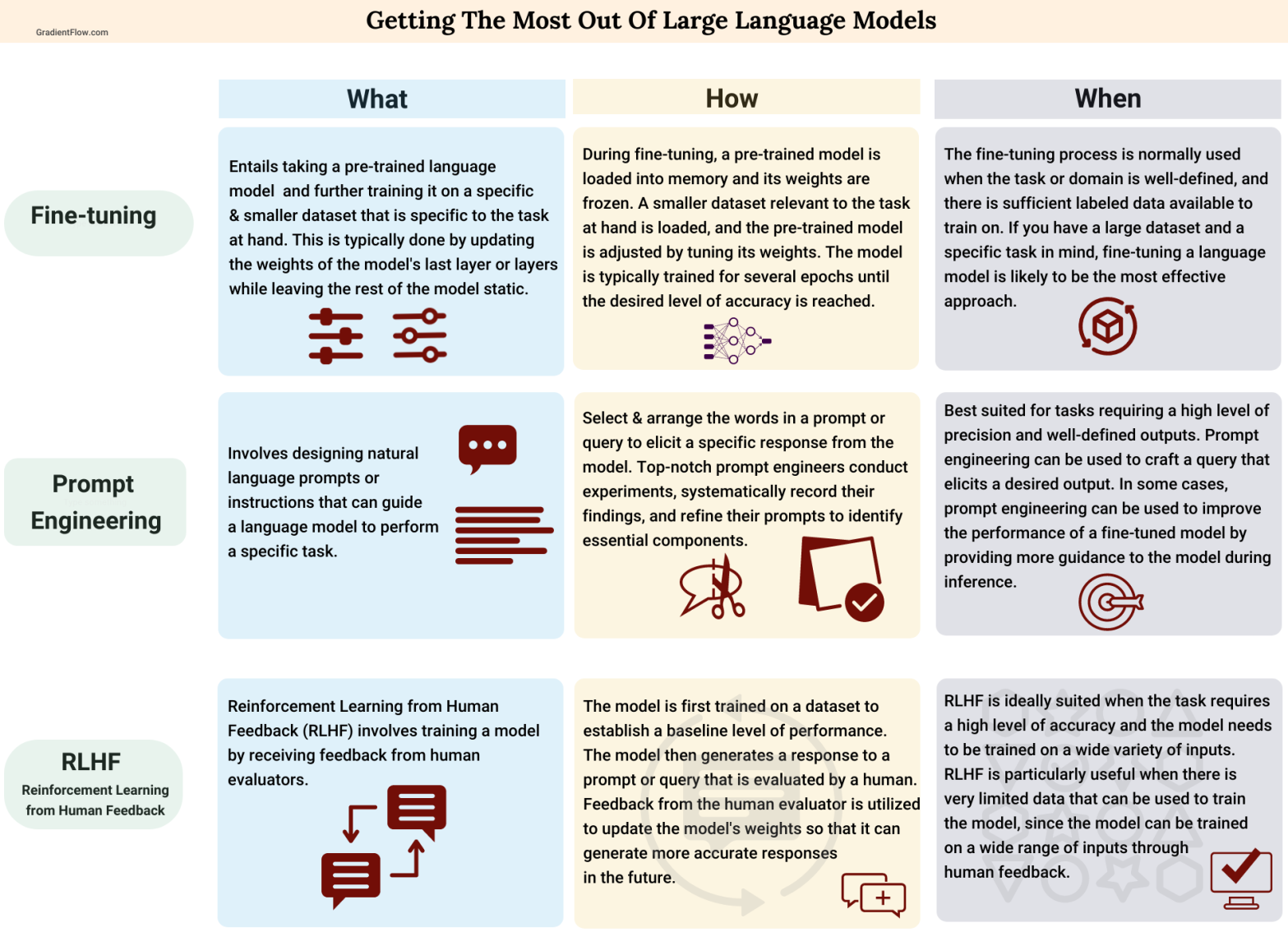
(Photo: Gradient Flow)
Prompt tuning is crucial for several reasons. It enhances the accuracy and relevance of the AI’s responses without requiring extensive computational resources. By refining prompts, you can:
Improve the model’s performance on specific tasks.
Ensure more accurate and contextually relevant outputs.
Customize the AI for various applications without modifying the underlying architecture.
What Are Soft Prompts?
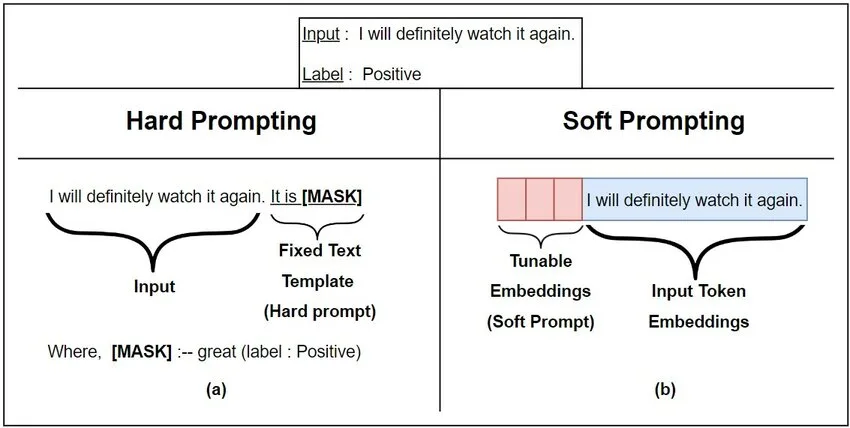
Soft prompts are continuous embeddings that are optimized to guide the model towards producing desired outputs. Unlike traditional hard prompts, which are static text-based instructions, soft prompts are learned representations that can be more effective in steering the model.
(Photo: ResearchGate)
How to Use Soft Prompts
Using soft prompts involves a few key steps:
1. Identify the Task
First, clearly define the task you want to improve. This could be anything from generating creative content to answering specific types of questions accurately.
2. Generate Initial Prompts
Create a set of initial prompts that are likely to guide the model towards the desired outputs. These can be simple text prompts related to your task.
3. Embed the Prompts
Convert these text prompts into embeddings using the AI model. These embeddings will serve as the initial soft prompts.
4. Optimize the Prompts
Use a training process to optimize these embeddings. The goal is to adjust the soft prompts so that they better align with the desired task outcomes. This involves:
Feeding the model a combination of inputs and observing the outputs.
Adjusting the embeddings to minimize errors and improve performance.
5. Evaluate and Iterate
After optimizing, evaluate the performance of the model with the new soft prompts. If the results are not satisfactory, iterate the process to further refine the prompts.
OpenAI Fine Tuning
OpenAI fine-tuning takes this process a step further by allowing adjustments to the model’s parameters. Here’s how you can fine-tune an OpenAI model:
1. Prepare Your Dataset
Gather and preprocess a dataset that reflects the tasks you want the AI to perform better. Ensure that your data is clean, well-organized, and representative of the desired outputs.
2. Use the OpenAI API
Leverage the OpenAI API for fine-tuning. This involves uploading your dataset and specifying the desired configurations for the tuning process.
3. Train the Model
Initiate the training process through the API. The model will adjust its parameters based on your dataset to improve its performance on the specified tasks.
4. Test and Refine
After training, test the fine-tuned model with real-world inputs to assess its performance. Make any necessary adjustments and repeat the fine-tuning process if needed.
Combining Soft Prompts with OpenAI Fine Tuning
For optimal results, you can combine soft prompts with OpenAI fine-tuning. This hybrid approach ensures that you leverage both the immediate contextual benefits of soft prompts and the deeper, parameter-based improvements from fine-tuning.
Steps to Combine Both Methods:
Initial Soft Prompt Tuning:
Start with creating and optimizing soft prompts as described earlier.
Fine-Tune the Model:
Use the optimized soft prompts and your dataset to fine-tune the model via the OpenAI API.
Evaluate Combined Results:
Test the model’s performance using the optimized soft prompts post-fine-tuning to ensure the best possible outcomes.
Iterate as Needed:
Continuously evaluate and refine both the soft prompts and fine-tuned model based on real-world performance.
Practical Applications
Customer Support
By tuning prompts, AI models can provide more accurate and helpful responses in customer support scenarios, leading to higher customer satisfaction.
Content Creation
Prompt tuning helps in generating more relevant and creative content, making AI a useful tool for writers and marketers.
Data Analysis
In data analysis, prompt tuning ensures that the AI provides precise and contextually appropriate insights, aiding better decision-making.
Prompt tuning, especially when combined with soft prompts and OpenAI fine-tuning, is a powerful method to enhance the performance of AI language models. By following the steps outlined above, you can tailor the outputs of these models to better suit your specific needs, improving accuracy and relevance across various applications.
OpenAI, a leading artificial intelligence research organization, recently unveiled its newest flagship model, GPT-4o, which has been making waves in the tech community.
This advanced multimodal model boasts capabilities that go beyond its predecessors, offering enhanced performance in various aspects. One of the most significant questions surrounding GPT-4o is whether it is free or not.
GPT-4o Pricing
GPT-4o is not entirely free, but it does offer a free tier for users. According to OpenAI’s official pricing page, the model is available in different tiers, each with varying pricing structures.
For instance, the 128K context model, which includes GPT-4o, is priced at $5.00 per 1 million tokens. This pricing model is based on the number of tokens used in requests to the model, with tokens being pieces of words, approximately 750 words per 1,000 tokens.
Free Tier Availability
GPT-4o is available in the free tier of ChatGPT starting today, and it is also accessible to subscribers of OpenAI’s premium ChatGPT Plus and Team plans.
The free tier comes with usage limits, but Plus users will have a message limit that is up to 5x greater than free users. Team and Enterprise users will have even higher limits.
Future Plans and Availability
OpenAI has announced plans to roll out GPT-4o to ChatGPT Free users with usage limits today. Additionally, the company is set to launch a new Voice Mode with GPT-4o’s advanced capabilities in alpha in the coming weeks, with early access for Plus users as the feature rolls out more broadly.
The pricing structure is based on the number of tokens used in requests to the model, with varying tiers available for different levels of usage. For those interested in accessing the advanced capabilities of GPT-4o, the free tier and premium plans offer a range of options to suit different needs and budgets.
In the rapidly evolving landscape of artificial intelligence, the quest for efficiency and cost-effectiveness is unending. Today, we’re comparing two heavyweights in the field: GPT-4 and its optimized version, GPT-4o.
Speed and Efficiency
GPT-4o has revolutionized the AI world with its speed. It’s not just faster than its predecessor, the GPT-4, but it’s also twice as fast as the GPT-4 Turbo. This significant speed difference makes GPT-4o a game-changer, leaving GPT-4 in the dust.
In real-world applications, the speed of GPT-4o is evident. For instance, it can generate a CSV file in less than a minute, while GPT-4 takes nearly as long to generate the cities being used in the example. This speed makes GPT-4o much more usable for a variety of use cases, from data analysis to content generation.
Cost-Effectiveness
But GPT-4o isn’t just about speed. It’s also about cost. GPT-4o is 50% cheaper for developers to implement and has much higher rate limits. This makes it a more economical choice for developers looking to implement AI in their applications. Whether you’re a startup on a tight budget or a large corporation looking to cut costs, GPT-4o offers a cost-effective solution.
Performance and Hallucinations
Performance is a crucial factor in selecting the right model. While GPT-3.5-Turbo is effective for general-purpose tasks, it may encounter difficulties with highly complex queries.
GPT-4o offers a balanced solution. It minimizes hallucinations more effectively than GPT-3.5-Turbo and approaches the reliability of GPT-4. This makes it suitable for applications requiring a blend of high performance and cost efficiency.
GPT-4o is a faster, better successor to GPT-4. It combines the advanced functionality of GPT-4 with optimized efficiency, resulting in reduced costs. If you’re looking for high accuracy and reliability without the full expense of GPT-4, GPT-4o is the way to go.
So, whether you’re a developer looking to implement AI in your app or a business looking to leverage AI for growth, GPT-4o is a worthy contender to consider. It’s not just about the cost and speed; it’s about getting the most out of your AI investment.
Scalability and Integration
The architecture of GPT-4o is designed with scalability in mind. It can handle an increasing number of requests without a drop in performance, making it ideal for businesses that are scaling up. Its compatibility with various programming languages and frameworks also means that integration into existing systems is smoother and less time-consuming.
Environmental Impact
Another aspect where GPT-4o shines is its reduced environmental footprint. Due to its efficiency, it requires less computational power, which translates to lower energy consumption. This is a step forward in making AI more sustainable and environmentally friendly.
Future-Proofing
With the pace of technological advancement, future-proofing is essential. GPT-4o’s design anticipates future developments, ensuring that it remains relevant and adaptable to upcoming changes in AI technology. This foresight protects investments and ensures that applications remain cutting-edge.
GPT-4o stands out as a robust, efficient, and cost-effective AI model. Its impressive speed and performance, coupled with lower costs and an eye toward sustainability, make it an attractive option for anyone looking to harness the power of AI. As the AI landscape continues to grow, GPT-4o is poised to be at the forefront, driving innovation and efficiency.
The successful test flight of an AI-controlled F-16 fighter jet is a new step in aviation. This initiative has been done by the US Air Force.
This step is incredible in the future of aerial combat. This test flight shows the potential of AI. This is a very huge thing in aviation technology.
AI-Controlled F-16 Test Flight
The AI-controlled F-16 fighter jet was named as Vista. It soared in the sky of Edward’s Air Force Base. The base was located in California. The advanced capabilities were beautifully showcased during the test flight.
High-level supervision was provided during the test flight. This was done by Frank Kendall. He is the Air Force Secretary with a huge level of experience. The test flight was of 1 hour. Frank observed the extraordinary flying maneuvers exceeding 550 miles per hour performed by the AI. The forces were up to five times the force of gravity.
This AI-controlled fighter jet was applauded for one more reason as well. To prove its ability to handle complex situations his AI-controlled fighter jet took part in a mock battle. This battle was with a human-piloted F-16 jet. The AI jet was successful in proving its marvels.
Air Force Ambitious AI Plans
With the successful completion of the test flight, the Air Force’s goals have been announced. The US Air Force aims to prepare 1000 at least unmanned jets. These will be controlled by AI. This development is planned to be completed by 2028.
After recently receiving a new look and modifications at the Ogden Air Logistics Complex, the NF-16D known as VISTA (Variable stability In-flight Test Aircraft), departs Hill Air Force Base, Utah, Jan 30, 2019. This aircraft is the only one of its kind in the world and is the flag-ship of the United States Air Force Test Pilot School. This F-16 has been highly modified, allowing pilots to change the aircraft flight characteristics and stability to mimic that of other aircraft. (U.S. Air Force photo by Alex R. Lloyd)
The dedication of the Air Force to using AI in aviation is second to none. This will bring a revolution to the military flight system. This will be the same way as stealth technology changed in the 1990s.
Benefits
The AI-controlled fighter jets are a cheaper option. They are safer in comparison with manned planes like the F-35.
The use of manned fighters can be vulnerable. This is because space and electronics have changed. This has resulted in advanced air defense systems.
The use of AI-controlled plans will provide the following benefit
Enhanced Security
Cost saving
Improved Military Strategy
Concerns
The use of AI fighter jets has posed questions. Experts have expressed their concerns about the ethical practices while operating such planes. As these planes will use AI to make decisions it can be dangerous. Making decisions completely without human input can also lead to mistakes. Humanitarian organizations and the International Committee of the Red Cross have asked for caution will using autonomous weapons.
They have called to impose high restrictions and present a detailed set of rules on the use of such things. These planes they claim can result in loss of lives too.
Testing AI in Dogfights
Keeping the concerns in line the Air Force and DARPA are testing the AI. The use of AI in simulated battles is in the testing phase. Dogfighting tests are being conducted with X-62A Vista Aircraft. This will build the trust and reliability of the AI.
The test is conducted properly. The AI practises first in the computer. It learns different flying moves and fighting moves etc. It then controls the plane to do the same as in the simulation. The AI keeps on learning from its progress.
This is done to improve the flying skills. These tests will ensure that AI-controlled planes can be trusted to handle challenges.
The use of AI-controlled jets can be a revolution in aviation. It offers numerous benefits. However, the ethical questions raised are concerning too. Careful consideration is necessary as the technology advances.
The AI Safety Bill will ensure the protection of identity online.
A new law for AI has been introduced in California. The law is called the Senate Bill 1047.
Thus keeping in view the potential risks of AI technologies California has taken this proactive Stance. This will reduce the harms of AI and will make it secure for everyone.
Safety: The bill states that AI developers must be careful. They must rigorously test new models. They must protect it from hackers. The developers were asked to adopt security protocols. They must identify if any risk is left and must take all cybersecurity measures. In case of unauthorized access, the model should be able to fully shut down.
Legal Liability: The developer of the AI model will be responsible for the harm caused if any. As safety is the utmost priority thus in case of the creation or use of chemicals or weapons developers will be legally liable.
Penalty will be given in case of any threat to public safety or any economic damage exceeding $500 million.
AI companies are compliant with the billing requirements. However, the government can check compliance at any instant. To do this an office has been set up within the California Department of Technology. The office is named as the Frontier Model Division. The office is responsible for cross-checking compliance.
The Bill states that the companies that offer cloud computing should know about their customers.
In case AI acts up there must be proper reporting.
The Bill also discusses introducing a Public Computer Cluster. This is named as the CalCompute.
Despite all the measures the bill has received severe criticism. Individuals argue that the bill would hinder AI development. It will slow down the growth of technology. As per the critics, the bill has impractical compliance burdens.
Moreover, the safety incidents mentioned in the bill are not clear. Added to this the liability could confuse the AI developers. This statement was supported by the California Chamber of Commerce.
However many people have claimed the bill is essential. They state that this bill will ensure that developers responsibly make use of AI. This bill balances the advancements and the safety together. This they argue can be a model for other countries too. The bill can influence international policies for AI.
California’s SB 1074 has received criticism and praise equally. It is a significant step toward promoting a safe AI revolution. The bill balances innovation and accountability thus preventing any potential harms.
Apple has recently announced a new open-source LLM (Large Language Models) known as OpenELM (Open-source Efficient Language Models).
In Short
Apple has released a new open-source LLM known as OpenELM.
OpenELM will run locally on devices, improving processing speed with enhanced privacy.
OpenELM is anticipated to underpin a variety of on-device AI features, including more powerful versions of Siri and other AI-powered applications.
Apple’s LLM will run locally on devices, making a great shift from costly cloud-based processing to on-device processing. Apple’s main focus for this LLM is to improve processing speed with enhanced privacy.
OpenELM models use a layer-wise scaling technique, that effectively allocates parameters with every layer of the transformer model to increase accuracy. For example, with a budget of around one billion parameters, OpenELM achieved a 2.36% gain in accuracy over its predecessor model, OLMo but using half the amount of pre-training tokens.
This method not only increases speed but also decreases the computational burden on devices, which is critical for running AI applications directly on consumer hardware.
Features and Capabilities
The OpenELM project has several major elements that set it apart from past AI models:
Open-source availability: Apple has made OpenELM available on the Hugging Face Hub, allowing developers and researchers to access and participate in its development.
Comprehensive Training Framework: Unlike traditional models, which simply supply model weights and inference code, the OpenELM release contains the entire infrastructure for training and evaluating publicly available datasets. This features training records, many milestones, and pre-training setups.
Enhanced privacy and speed: Because OpenELM runs on-device, there is no need to send data to cloud servers, which improves user privacy. Furthermore, local processing minimizes latency, resulting in quicker reaction times for AI-powered features on device
.
Integration with iOS
Apple intends to include OpenELM in the future iOS 18 version, which is likely to include several new AI features. The integration of OpenELM is anticipated to underpin a variety of on-device AI features, including more powerful versions of Siri and other AI-powered applications.
Nothing earbuds will now have ChatGPT integration, which will revolutionize the way users see AI.
Users can activate ChatGPT on their earbuds with a simple pinch gesture for an effortless and hands-free experience.
The integration is optional and will not disrupt the current user interface.
Nothing is a tech company known for its innovation. The company has announced that its earbud will now have ChatGPT integration.
With these advancements, the company aims to revolutionize the way users see AI. Moreover, they have also announced a more advanced integration. This involved smartphones as well. The company stated that this integration will bring ChatGPT closer to consumers.
The Nothing OS has also been updated. Nothing Smartphones with ChatGPT installed can gain benefit. These smartphones will have the ability to communicate with AI via their Nothing earbuds.
A simple pinch gesture on the earbuds will activate ChatGPT. This will allow for an effortless and hands-free experience.
Jane Nho, a spokesperson for Nothing, has confirmed that this rollout will begin on April 18th. He further stated that this integration will start with Phone 2, and will subsequently extend to Phone 1 and Phone 2A in the following weeks.
This update will enable users to make queries to ChatGPT directly through the earbuds. This will potentially set ChatGPT as the go-to digital assistant for Nothing devices.
The company’s ambition doesn’t end with just a pinch-to-speak feature. Plans are in place to enhance the Nothing smartphone user experience further.
This will be done by incorporating system-level access to ChatGPT. This includes the ability to share screenshots and use unique Nothing-styled widgets. This advancement will enrich the overall functionality of the devices.
This announcement follows the mixed reception of new AI gadgets. These include the Humane AI Pin and the upcoming Rabbit R1, priced at $199.
However, Nothing’s approach focuses on leveraging its existing hardware rather than introducing new devices. Carl Pei’s company emphasizes that this integration is optional.
This will ensure that users without ChatGPT on their phones will not see any change in their experience. The strategy indicates a user-centric approach. This will aim to provide added value without disrupting the current user interface.
YouTube has implemented a new policy from March 18, 2024, which will force users to mention if their video is AI-generated, such as AI-generated people, places, or events.
The policy is to ensure transparency and to stop the spread of misinformation or confusion among viewers. Recently, a lot of users have users have been uploading AI videos that looked real to spread misinformation. After the release of OpenAI’s SORA, netizens were concerned about differentiating between what is real and what is generated by an AI.
Creators on YouTube will be using a new option in the Creator Studio to disclose if their content is assisted by an AI or not. If someone ticks AI-assisted content, a declaimer will show on the video player informing the viewer that some parts or the entire video are being generated by AI.
Currently, YouTube is focusing more on topics such as health, news, elections, and finance.
Type of Videos Requires AI-Labeling on YouTube
Videos that contain a real-life person or show something that never happened or has never been captured on the camera.
Altered footage of real events and places (such as creating an image of people dancing during World word 2 etc).
Real-looking scenes that never happened (such as snow falling in a desert in Dubai).
YouTube doesn’t require the disclosure for something that looks AI-generated such as Anime or anything related to cartoons or 3D footage.
Penalties
Creators who do not label their AI-generated video as AI-video will face penalties from Google such as:
Removal of videos
Suspension of account
Demonetization
To make sure your YouTube’s Partner Program stays intact, creators will need to start labeling their AI-generated videos.
Above all of this, YouTube also allows individuals to initiate the request to remove any video that contains their face or voice without their approval.
Google is also de-indexing several websites that are actively using AI-generated content on search, months after declaring that AI is safe to use. To make sure your content stays relevant and you continue making money out of your content, you need to avoid excessive use of AI.
Qatar Airways has introduced the world’s first AI cabin crew, named Sama 2.0. Qatar Airways also announced the increase of flight frequencies to 15 destinations around the world next year.
The world’s first AI cabin crew was announced in a holographic display at Qatar Airways’ new innovative stand in ITB Berlin 2024.
Sama 2.0 is capable of interacting with passengers to give them a customized in-flight experience through the airline’s built-in platform, QVerse.
Qatar Airways Group CEO, Engr. Badr Mohammed Al-Meer said that the company always believed in Innovation and with Sama 2.0 they’re taking a huge step towards in-flight experience.
Joe Biden’s address last night several tech things, like AI voice cloning. The president of the U.S. said he wants to stop “AI Voice cloning” because an unknown person used his voice to change an election this year.
“Here at home, I have signed over 400 bills that both parties agree on. There’s more to pass my plan for unity,”
President Biden
He then went on to say he would punish those who are guilty, “Make the punishment harder for fentanyl selling, pass a bill that both parties like to keep our kids safe online, use the power of AI to protect us from danger, stop AI voice faking, and more.”
The Reason
Why Biden wants to stop AI voice cloning is a good question, here is why! In January 2024, a phone call went to the New Hampshire voters telling them not to vote in their first election, and to “save their votes” for the last election.
The voice used in that phone call was Joe Biden’s cloned voice which was made by ElevenLabs, an online application that turns text into speech.
FCC also agreed that AI-made voices are not allowed in robocalls under the 1991 law that protects phone users. FCC further said AI voices can trick people into scams and other lies because the the voices of famous people.
The use of AI to make actors’ voices and faces again was one of the problems that made the actors’ group strike. It ended after they agreed that actors say yes and get paid well when their AI copies are used, but not everyone liked the deal.
Artificial Intelligence (AI) and data centers are affecting water assets in Arizona, especially concerning cooling needs for these offices. Microsoft’s information center in Arizona alone is anticipated to expend approximately 56 million gallons of drinking water annually, identical to the water utilization of around 670 families. This comes at a time when Arizona is confronting serious dry spell conditions and waning water levels within the Colorado River.
Despite these challenges, AI is additionally being harnessed to upgrade water administration and preservation endeavors within the state. For occurrence, the city of Phoenix has started a wastewater treatment pilot program in collaboration with AI firm Kando to screen wastewater and identify inconsistencies, supporting in avoiding harm to significant wastewater framework. In addition, AI calculations are being created to optimize water utilization in buildings, contributing to general water preservation endeavors.
Arizona is additionally utilizing AI to streamline information collection and robotize investigations of water assets, empowering more educated decision-making concerning water utilization and preservation. The city of Phoenix has set yearning objectives to guarantee a solid and clean 100-year water supply by 2050, with a critical parcel of wastewater being reused for different purposes.
As innovation companies look for to diminish their water utilization, a few information centers are transitioning to plans that minimize or dispose of water utilization, picking imaginative cooling arrangements such as monster fans instep. Microsoft has committed to getting to be carbon-negative and water-positive by recharging more clean water than it devours by the conclusion of the decade.
Whereas the development of AI and information centers in Arizona poses challenges to water resources, AI presents opportunities to enhance water management and conservation strategies. This dynamic underscores the delicate balance between the demands of technology and sustainability efforts to mitigate environmental impacts effectively.
Various content creators, including authors, songwriters, and media outlets like The New York Times, are taking legal action, claiming that generative AI, trained on copyrighted content, produces identical copies without permission.
Before ChatGPT was introduced, Copyleaks, an artificial intelligence text analysis company, had already offered plagiarism detection services to companies and educational institutions for some time.
When ChatGPT first launched, it used the GPT-3.5 model, but OpenAI has now upgraded to the more advanced and powerful GPT-4.0 for its operations.
Plagiarism can manifest in various ways beyond just directly copying and pasting entire sentences and paragraphs.
Copyleaks aims to transform the subjective judgment of spotting plagiarism into a precise and scientific process.
The company employs a unique scoring system that combines measures of identical text, minor modifications, paraphrased content, and other elements to generate a “similarity score” for each piece of content.
According to the report, for GPT-3.5, approximately 45.7% of outputs featured identical text, 27.4% included minor alterations, and 46.5% contained paraphrased content.
According to the report, a score of 0% indicates that all the content is original, while a score of 100% signifies that none of the content is original.
Copyleaks requested approximately a thousand outputs from GPT-3.5, each consisting of about 400 words, covering 26 different subjects.
Among the GPT-3.5 outputs analyzed, the one with the highest similarity score was in computer science (100%), with physics (92%) and psychology (88%) following closely behind.
The subjects with the lowest similarity scores were theater (0.9%), humanities (2.8%), and English language (5.4%).
“Our models were created and trained to understand concepts to aid in problem-solving. We have implemented safeguards to prevent unintentional memorization, and our terms of service forbid the deliberate use of our models to reproduce content.“
OpenAI spokesperson Lindsey Held stated in a communication to Axios,
In the legal case filed by The New York Times against Microsoft and OpenAI, it is alleged that the AI systems’ extensive replication of content amounts to copyright infringement.
In response to the lawsuit, OpenAI contended that “regurgitation” is an uncommon issue and accused The New York Times of manipulating prompts.




![Prompt Tuning: What Is It and How to Do It? [With Soft Prompts + OpenAI Fine Tuning]](https://digitalphablet.com/wp-content/uploads/2024/05/prompt-tuning-scaled.webp)