Category: AI

  • China Mobile Research Institute Launches AIR Training Platform

    China Mobile Research Institute Launches AI-driven Network Operation Training and Open Platform

    BEIJING – The China Mobile Research Institute has officially launched its new Artificial Intelligence-driven Network Operation Training and Open Platform. This innovative platform is designed to enhance network management and optimize operational efficiency through the integration of advanced AI technologies.

    The new initiative aims to provide training resources and tools for network operators to adapt to the rapidly changing telecommunication landscape. By leveraging machine learning and data analytics, the platform enables users to simulate various network scenarios, improving their ability to respond to challenges and streamline operations.

    Officials from the China Mobile Research Institute expressed their confidence that this platform will facilitate the development of smarter network management practices, ultimately leading to improved service quality for consumers. The open nature of the platform also encourages collaboration among industry professionals, fostering a community focused on innovation and shared knowledge.

    With the ongoing advancements in telecommunications technology, the launch of this AI-centric platform is expected to play a pivotal role in shaping the future of network operations in China and beyond.

  • Top Note-Taking Tools: Which One Reigns Supreme?

    Top Note-Taking Tools: Which One Reigns Supreme?

    Quick Links

    • Summarization Capabilities
    • Final Verdict: Which Tool is Right for You?

    Key Takeaways

    • Notion comes out on top due to its superior user-friendliness, customizable notes, diverse third-party integrations, and a variety of non-AI features.
    • NotebookLM outshines Notion in summarization capabilities, offering clear, concise overviews of key topics and quick summaries.
    • While Notion provides extensive customization and integrations, its non-AI features give it a significant advantage over NotebookLM.

    Artificial intelligence has transformed the note-taking landscape, making it smarter, quicker, and more intuitive. Two leading contenders in this arena are Notion and NotebookLM, both equipped with cutting-edge AI features aimed at boosting your productivity. But when it comes to choosing the best option, which one truly stands out?

    AI Power

    NotebookLM relies on Google Gemini as its large language model, and although it was still in beta at the time of this writing, its potential is significant. Gemini can be utilized in various other applications, and I’ve tested its performance in Google Sheets to determine if it offers more than just surface-level benefits.

    In contrast, Notion claims to utilize a variety of large language models (LLMs) hosted internally and through organizations like Anthropic and OpenAI. This diverse foundation equips Notion AI with extensive knowledge, adding to its functionality.

    While both platforms feature impressive AI, Notion takes the lead for its broader integration of AI capabilities, though it doesn’t diminish the strengths of Google Gemini, which remains a powerful tool within the Google ecosystem.

    Winner: Notion

    User Experience

    I was drawn to Notion initially for its ease of use, and my opinion has only solidified after three years. I’ve experienced challenges with other note-taking apps across different devices, but my usage of Notion has been seamless on mobile, desktop, and tablet. The web application also performs well across most browsers.

    Conversely, NotebookLM was adequate after I got accustomed to it, but I initially found its navigation frustrating. This might be an unfair comparison since Notion feels more polished, while NotebookLM is still in its beta phase and has room for improvement. The sidebar navigation could benefit from more streamlining, and the settings menu’s responsiveness needs enhancement.

    Winner: Notion

    Summarization Capabilities

    NotebookLM efficiently summarized documents, providing clear and concise overviews. However, when I sought additional insights through various questions, the app fell short, requiring more comprehensive documents for detailed summaries.

    What impressed me about NotebookLM is how clearly it identified the essential topics within my documents, presenting them well in the toolbar for easy note-taking. It also quickly condensed my documents into summaries.

    On the other hand, Notion AI’s summarization tool left me disappointed due to its sluggish performance. It took longer than expected to load summaries on various platforms. Though Notion AI’s layout was more organized—the ability to see points and expandable sections was a plus—it still lagged behind NotebookLM in terms of stability.

    Winner: NotebookLM

    Note Customization

    When it comes to customizing notes, NotebookLM and Notion are worlds apart. While I could change the titles of my notes in NotebookLM, further adjustments were minimal.

    In contrast, Notion is one of the best apps for note customization. You can add comments, highlight text, and format your notes in a variety of ways—like creating tables or embedding external documents. Notion also simplifies collaboration by allowing you to mention others in your notes.

    Another bonus is the ability to choose from different fonts for your notes. Overall, Notion excels in customization, not just for notes but also for tailoring your entire workspace.

    Winner: Notion

    Third-Party Integrations

    Notion boasts numerous integrations with apps like Google Drive, Asana, and GitHub. If you prefer not to pay for Notion AI (for unlimited access), you can connect with several AI tools, including Nightfall AI and Cloudeagle.ai.

    One of the features I appreciate about Notion is how effortlessly you can access integrated apps. For instance, embedding a Google Doc is instantaneous. Notion can also be integrated with tools like Miro, ClickUp, and Trello, enhancing your note-taking experience.

    NotebookLM, on the other hand, mainly integrates with Google Workspace tools. If you’re already using Google Workspace, you might find NotebookLM useful. However, it lacks the ability to integrate with non-Google applications. For broader integration needs, Notion is the clear choice.

    Winner: Notion

    Non-AI Features

    Notion and NotebookLM significantly differ in their non-AI offerings. NotebookLM focuses solely on AI functions, which can lead to frustration if you’re looking to perform other tasks, as the app requires you to upload a source document, website, or other material to function.

    In contrast, Notion isn’t solely built around its AI feature, which was introduced in early 2023. The app offers a wealth of non-AI functionalities that I have found invaluable over the years, including the ability to create notes from scratch, multiple workspaces, templates, Gantt charts, calendars, and much more. Notion’s versatility here solidifies its strength.

    Winner: Notion

    Final Verdict

    While Notion takes the overall win, NotebookLM is still a valuable tool. Notion’s breadth of use cases makes it the ideal choice for those who want to create detailed notes and then summarize them using NotebookLM.

    I recommend Notion if you need to collaborate with others, as its commenting, highlighting, and mentioning features facilitate teamwork in both work and academic settings. Notion’s extensive integration options surpass those of NotebookLM, making it the better choice for users outside of the Google Workspace ecosystem.

    If your primary need is summarizing notes efficiently, then NotebookLM is a solid option. It performs faster and is similar to Notion in summarization features, but just ensure you provide it with sufficient content to work with!


  • China Mobile Launches Lingxi Home Smart Device

    China Mobile has launched a new smart home device named “Lingxi,” designed to enhance household connectivity and convenience. This innovative product features advanced capabilities, including smart search and conversational interaction, allowing users to engage with the device seamlessly.

    The Lingxi device is part of a growing trend in smart home technology, aimed at streamlining daily tasks and improving user experience. With its intelligent search functionality, users can quickly find information, control various smart home devices, and manage their household activities through voice commands.

    In addition to its search capabilities, Lingxi offers conversational interaction, making it easier for families to communicate with the device. This feature enables a more natural and intuitive user experience, allowing households to engage with technology in a way that feels familiar and user-friendly.

    As smart home technology continues to evolve, products like Lingxi represent a significant step forward in making homes not only more connected but also smarter and more efficient. China Mobile’s entry into the smart home market signals a commitment to innovation and a response to the growing demand for intelligent home solutions.

  • GPU Computing Takes Off! Who Remembers The GeForce 256?

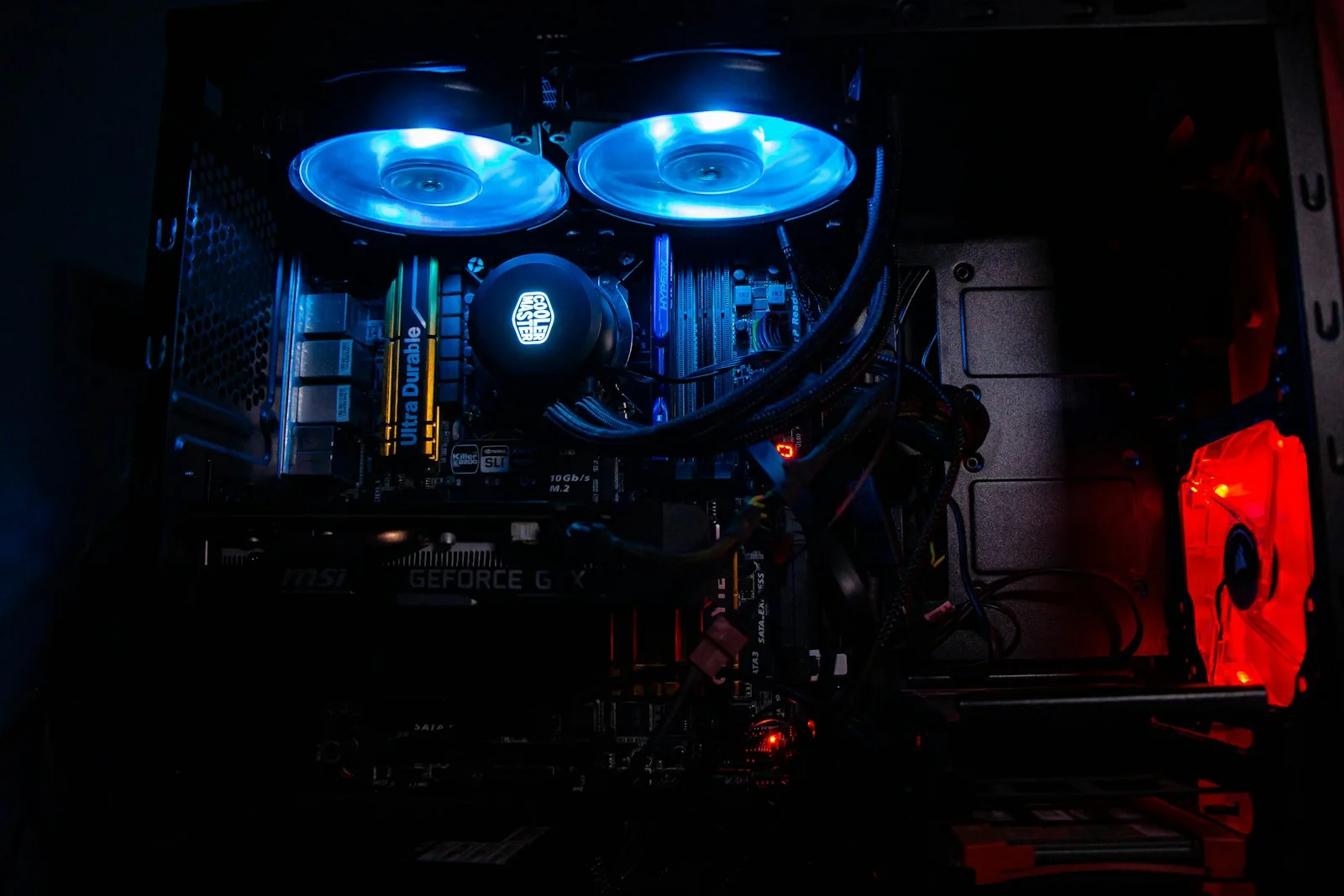
    In a remarkable resurgence of GPU computing, the tech world is reflecting on the legacy of one of the earliest graphics cards: the GeForce 256. Launched in 1999 by NVIDIA, the GeForce 256 is often credited with revolutionizing the gaming graphics industry and laying the groundwork for modern GPUs.

    The GeForce 256 was groundbreaking for its time, being the first graphics card to feature hardware transform and lighting, which allowed for more realistic 3D rendering in video games. This innovation not only enhanced the gaming experience but also set new standards for graphical performance, pushing developers to create more visually complex games.

    Fast forward to today, and the demand for powerful GPU computing has exploded, driven by advancements in artificial intelligence, machine learning, and high-performance gaming. Modern graphics cards have far surpassed the performance of the early GeForce models, but the impact of the GeForce 256 is still felt in the industry.

    As gamers and tech enthusiasts alike celebrate the evolution of graphics technology, many are taking a moment to remember the GeForce 256 and its role in shaping what we now consider standard in gaming graphics. The surge in popularity of GPU computing continues to highlight the importance of innovation in this space, with many industry leaders drawing inspiration from the groundbreaking work done by early pioneers like NVIDIA.

  • This Year’s Nobel Prize Boosts AI Field

    The recent Nobel Prize announcements have provided a significant boost to the field of artificial intelligence. As the world continues to witness rapid advancements in technology, the recognition of contributions to AI through prestigious awards emphasizes its growing importance and impact on society.

    Experts believe that this acknowledgment not only validates the hard work of researchers and developers but also encourages further investment and innovation in the AI sector. It highlights the transformative potential of artificial intelligence in various industries, from healthcare to finance, and signals a commitment to fostering developments that can benefit humanity.

    Analysts say this trend could lead to more collaboration between academia, industry, and policymakers, paving the way for breakthrough discoveries and ethical considerations surrounding AI. With the Nobel Prize serving as a catalyst, the expectation is that we will see an accelerated pace of advancements that could shape the future of technology and its role in everyday life.

  • Meta Uses AI To Generate Aurora Images, Faces Backlash

    In a recent incident that has stirred considerable controversy online, Meta, the parent company of Facebook, faced backlash after using artificial intelligence to generate images of the Northern Lights. Many social media users criticized the company, claiming that the AI-generated visuals failed to capture the true beauty and essence of this natural phenomenon.

    The criticism escalated after Meta shared the AI-generated images on its platform, with users expressing their disappointment and frustration. Many argued that relying on artificial intelligence undermines the authenticity of nature and diminishes the value of genuine photography.

    Supporters of traditional photography took to various social media channels, voicing their concerns about the implications of using AI in creative fields. They emphasized the importance of firsthand experiences and the artistry involved in capturing moments like the Northern Lights.

    In response to the uproar, Meta has yet to issue a statement addressing the concerns raised by users. As debates about the role of AI in art and photography continue, this incident highlights the ongoing tension between technological advancements and the appreciation of traditional creative practices.

  • OpenAI’s Journey From Nonprofit to $157 Billion Valuation

    OpenAI has seen a remarkable transformation from a nonprofit organization to a valuation of $157 billion, as revealed by recently released documents. Founded in December 2015, OpenAI began as a nonprofit aimed at advancing artificial intelligence in a way that would benefit humanity as a whole. Over the years, the organization has shifted its strategy to include for-profit initiatives, allowing it to attract substantial investments from tech giants like Microsoft and others.

    The documents highlight the strategic decisions that propelled OpenAI’s growth, including the launch of its popular AI models and partnerships that expanded its reach in the tech industry. The company has been at the forefront of AI innovation, developing tools that are already being integrated into various applications worldwide.

    As OpenAI continues to evolve, its mission remains focused on ensuring that artificial intelligence technologies are implemented safely and ethically, prioritizing benefits for society. The valuation milestone reflects not only the company’s financial success but also its significant impact on the AI landscape and broader technological advancements.

  • Claude Artifact vs. ChatGPT Canvas: Which Is Superior?

    Claude Artifact vs. ChatGPT Canvas: Which Is Superior?

    Quick Links

    Key Points to Remember

    • ChatGPT Canvas is superior in writing and offers more editing features compared to Claude Artifact.
    • Customizing ChatGPT Canvas for code generation is more user-friendly than Claude Artifact.
    • However, Claude Artifact excels over ChatGPT Canvas when it comes to explaining and creating graphs and charts.

    ChatGPT Canvas allows you to tackle a wide range of tasks, from drafting documents to generating code. But how does it stack up against Claude Artifact? I put both to the test to determine which one offers better performance.

    Writing

    I tasked ChatGPT Canvas with creating an article featuring a rye bread recipe. The platform provided numerous editing options, such as adjusting the reading level, adding emojis, and modifying sentence length. The editing features allow you to focus on specific sections you want to refine.

    While I preferred the interface of Claude Artifact, it proved limited in supporting my editing needs. I could specify what I wanted to change, but I didn’t enjoy as much control as I had with ChatGPT Canvas. Based on this experience, I have to give the edge to ChatGPT Canvas in this area.

    Outside of writing, ChatGPT is also useful for many other tasks, including language translation.

    Winner: ChatGPT Canvas

    Generating Code

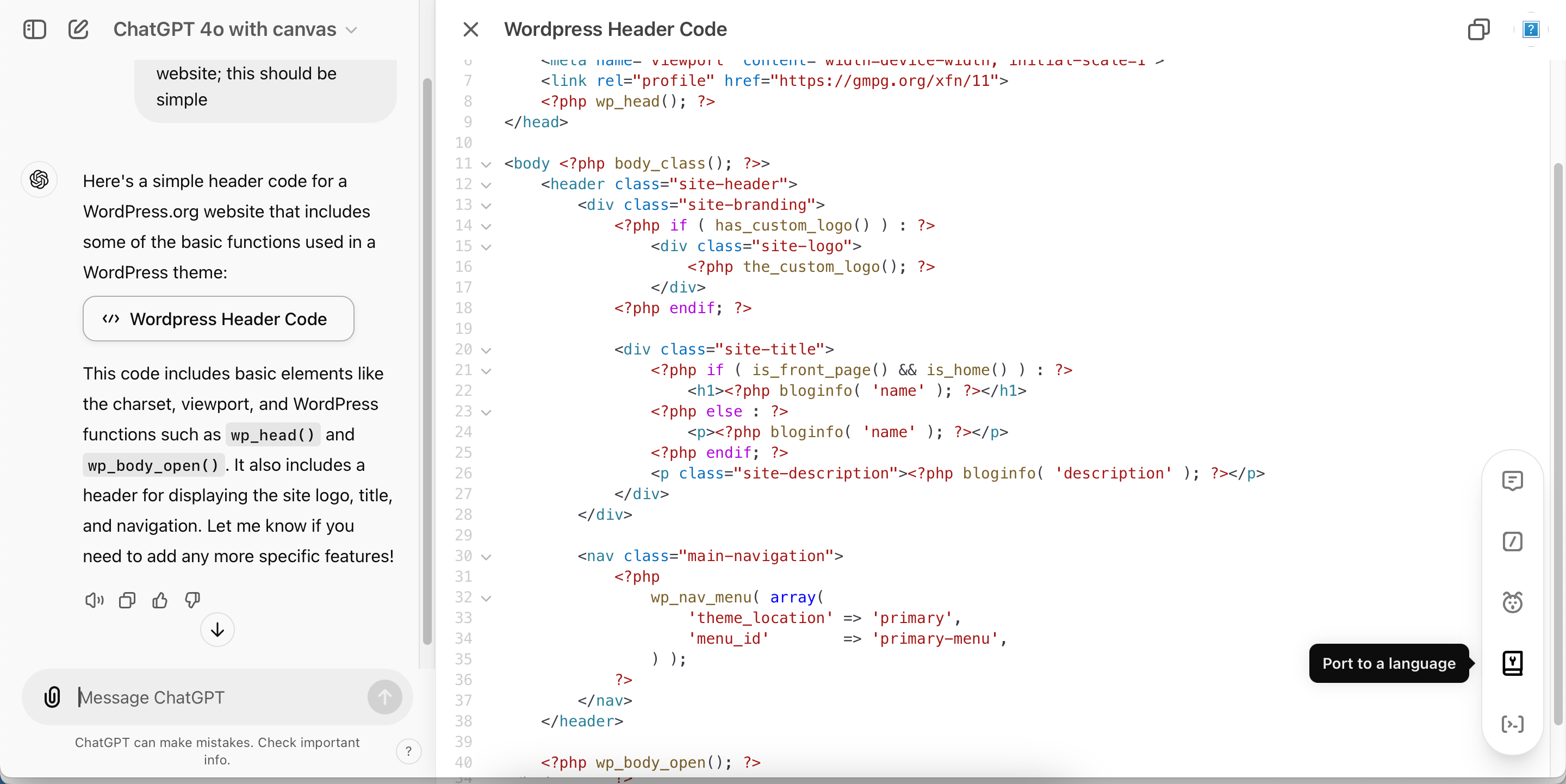
    Next, I assessed how both tools performed with code generation. I attempted to create a simple script suitable for use in a website’s header. ChatGPT Canvas made it easy for me to debug, add logs, and convert code to different programming languages like JavaScript and Python.

    In contrast, when I tried to do the same with Claude Artifact, I had to select the entire text and create a new prompt to specify the programming language (JavaScript in this case). Although the outcome was satisfactory, the extra steps were a bit frustrating.

    Editing code in ChatGPT Canvas

    For ease of customization, I have to give this round to ChatGPT Canvas.

    Winner: ChatGPT Canvas

    Solving Math Problems

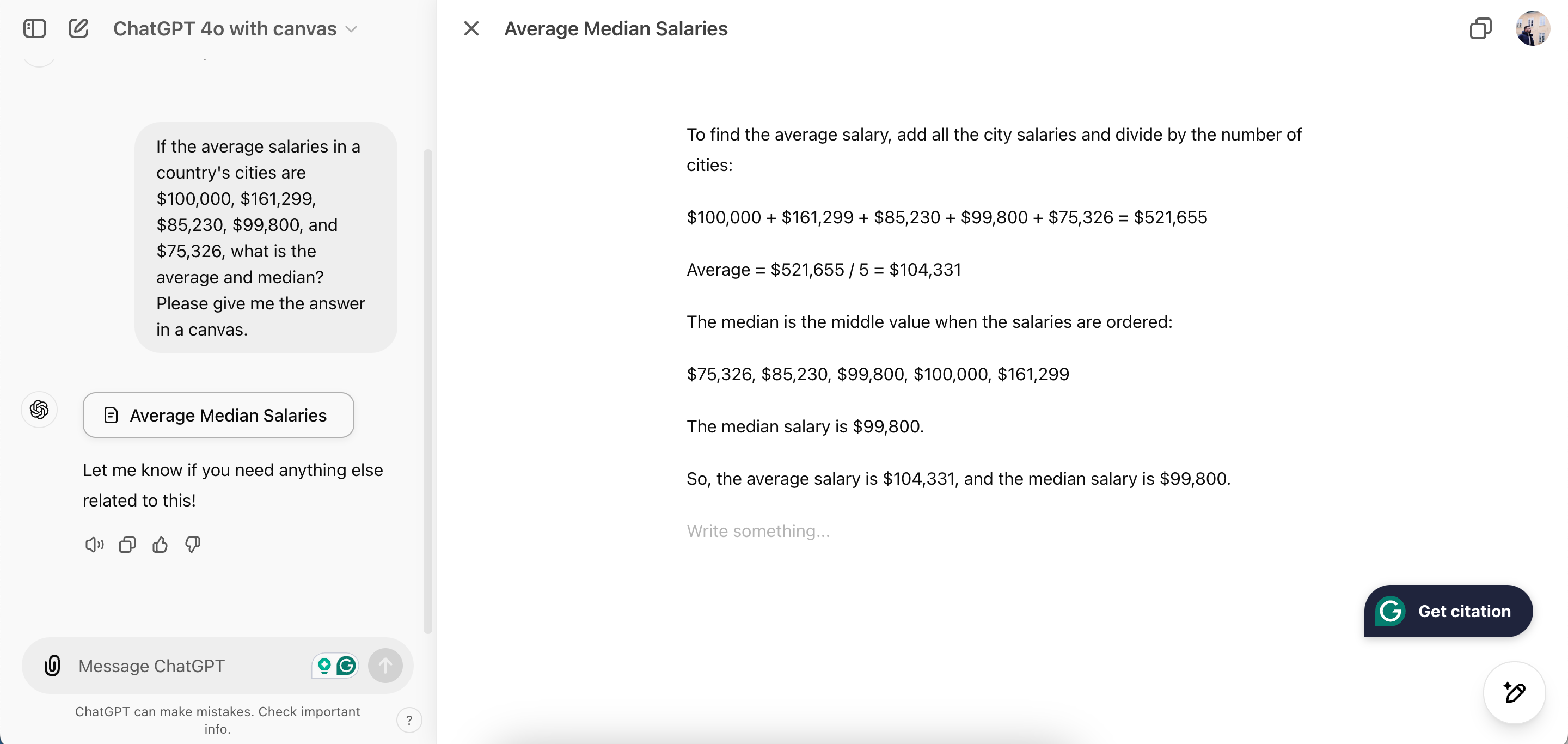
    Math is not my forte, but I decided to challenge both tools to see if they could assist me. I asked for the average and median salaries (which I fabricated). ChatGPT summarized my request with their standard editing tools.

    On the flip side, Claude Artifact did a much better job explaining the concepts and even offered to create graphs as part of its response. Considering the overall performance, Claude earns this point.

    Editing mathematical averages in ChatGPT Canvas

    Winner: Claude Artifact

    Designing Graphs and Charts

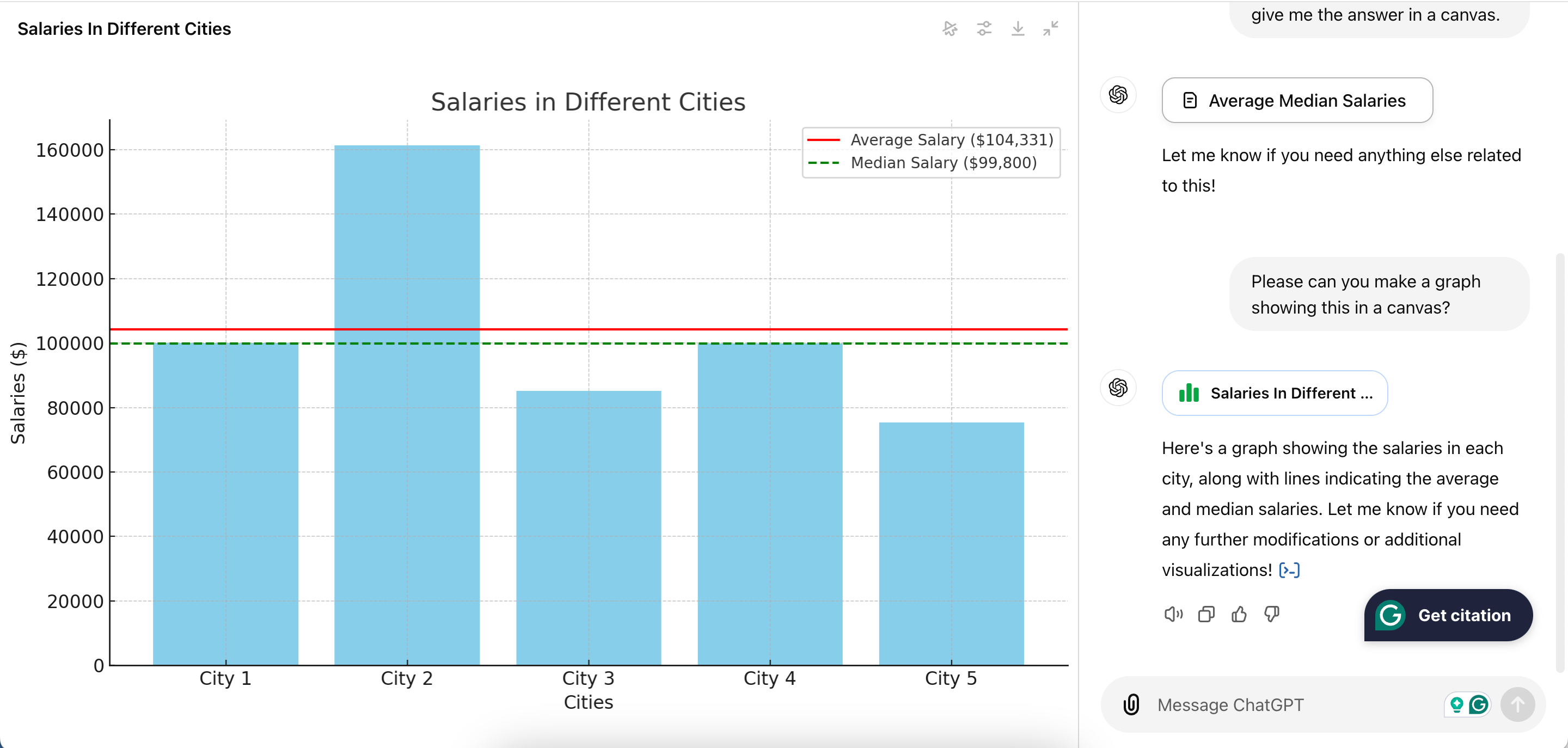
    For my final evaluation, I had both tools create graphs from the salary data I provided earlier. ChatGPT Canvas generated the graphs in about a minute, and the process was quite straightforward.

    Unfortunately, I ran into issues with Claude Artifact; the application crashed and informed me I had reached my limit for free messages. Although my experience could have varied with a paid plan, it ultimately didn’t meet my needs.

    Bar graph developed by ChatGPT Canvas

    Because of these frustrations, I’m awarding this point to ChatGPT Canvas too.

    Winner: ChatGPT Canvas


    Overall, ChatGPT Canvas came out on top in this comparison, but Claude Artifact definitely has potential. It performed exceptionally well when I requested improvements on specific tasks, even surpassing ChatGPT in that regard. However, the limitation on free messages was quite inconvenient.

    While I recommend trying both platforms, I find ChatGPT to be the superior choice for writing and coding tasks.

  • Musk’s Optimus Robot: Fully Autonomous or Controlled?

    In a recent discussion surrounding Elon Musk’s Optimus robot, questions are being raised about the extent of its autonomy. While Musk has touted the capabilities of the robot, critics are skeptical about whether it operates entirely independently or if it is largely controlled behind the scenes.

    The Optimus robot, designed to assist in various tasks ranging from manufacturing to providing companionship, has generated considerable excitement within the tech community. During a recent demonstration, Musk emphasized the robot’s potential to make a significant impact on industries and daily life, claiming it could eventually handle a wide range of jobs without human intervention.

    However, some experts point out that the technology may not be as advanced as Musk suggests. Concerns have been voiced that the robot may rely on pre-programmed tasks or remote control, raising doubts about its true level of independence. These critics caution that the impressive demonstrations, which showcase the robot navigating obstacles and performing tasks, could be misleading.

    As the discourse around autonomous robots continues to evolve, many are eagerly watching how Optimus will develop. The ongoing debates about its capabilities highlight a broader conversation about the future of robotics and artificial intelligence in society. Whether Optimus will emerge as a fully autonomous entity or operate under a veil of control remains to be seen, but the implications for industries and job markets are significant. As this story unfolds, it is clear that the fascination surrounding Musk’s creation is not just about technology, but also the critical discussions it ignites about autonomy and control in the digital age.

  • Familia.AI Launches “Rekindle Loved Ones” Software with Video Calls

    Familia.AI has launched a groundbreaking new software designed to “revive” loved ones, enabling users to engage in video calls with digital replicas of those who have passed away. This innovative application utilizes advanced artificial intelligence to create lifelike avatars, allowing families and friends to interact with these virtual representations in real time.

    The software aims to provide comfort to those grieving by allowing them to converse and share experiences with their departed relatives in a unique and personal manner. Users can input memories, stories, and personality traits of their loved ones, which the AI utilizes to generate a faithful digital likeness that can mimic speech and mannerisms.

    Familia.AI’s launch has sparked both interest and debate regarding the ethical implications of such technology. Advocates believe it could offer significant emotional support to individuals coping with loss, while critics raise concerns about the potential for a blurred line between reality and digital existence.

    As technology continues to evolve, Familia.AI’s software could represent a new frontier in how we memorialize and interact with our loved ones. The company has expressed its commitment to ensuring that the software is used respectfully and sensitively, creating a positive space for remembrance and healing.

  • Australia’s Intelligence Chief: Social Media and AI Fuel Online Extremism

    The head of Australia’s intelligence agency has announced that social media and artificial intelligence are increasingly fueling the rise of online extremism. During a recent press conference, the official highlighted the alarming trend of extremist groups leveraging these platforms to spread their ideologies and recruit followers.

    The agency has observed a significant uptick in the use of social media by various extremist groups, which are utilizing advanced AI technologies to amplify their messages and create more sophisticated propaganda. This development raises concerns about the ability of law enforcement and intelligence agencies to counteract these online threats.

    The agency’s director emphasized the importance of collaboration between government, tech companies, and community organizations to combat the spread of extremist content online. He called for stronger measures to monitor and regulate the use of social media and AI in order to safeguard communities from radicalization.

    As the digital landscape continues to evolve, the intelligence agency aims to stay ahead of the curve in identifying and addressing these challenges to ensure the safety and security of Australians.

  • AI Pioneer Yoshua Bengio: We’re Creating Monsters Stronger Than Humans

    In a recent interview, renowned artificial intelligence pioneer Yoshua Bengio expressed concerns about the rapid advancements in AI technology, suggesting that we are on the brink of creating entities more powerful than humans. Bengio, often regarded as one of the godfathers of AI, highlighted the potential risks associated with increasingly sophisticated models that are being developed.

    As AI continues to evolve, the implications for society could be profound. Bengio emphasized the need for caution and responsible development in the field, noting that while AI holds tremendous potential for good, it also poses significant challenges and threats if not managed properly. He warned that without appropriate oversight and ethical guidelines, we may inadvertently create “monsters” that surpass human capabilities in unpredictable and dangerous ways.

    The conversation surrounding the ethical implications of AI is becoming increasingly critical as technology advances at an unprecedented pace. Experts like Bengio are calling for a collaborative effort among researchers, policymakers, and industry leaders to establish frameworks that ensure AI is developed safely and for the benefit of all.

    As the world grapples with the future of AI, the insights of leaders like Yoshua Bengio are essential in steering the conversation towards a more responsible and sustainable path forward.

  • Understanding DALL-E: How It Transforms Text into Images

    Understanding DALL-E: How It Transforms Text into Images

    Key Insights

    • DALL-E is an AI system that generates lifelike images based on text descriptions, making it accessible and engaging.
    • The name “DALL-E” blends the renowned surrealist artist Salvador Dalí and the Pixar robot WALL-E, capturing its imaginative and artistic capabilities.
    • DALL-E has been trained on extensive datasets and is integrated within ChatGPT, offering a straightforward user experience for a variety of creative applications.

    DALL-E can create stunning visuals, but it’s neither a painter nor a photographer—it’s an AI model. For those of us who may not have artistic skills, it serves as an enjoyable tool worth exploring.

    What Is DALL-E?

    By providing a text prompt, you can specify exactly what you’d like to see, and DALL-E will generate an image for you in seconds. What seems like magic is actually a cutting-edge AI model developed by OpenAI to convert written prompts into images.

    Thanks to its user-friendly interface that only requires basic English proficiency, DALL-E has attracted a diverse group of users. People employ it for various creative projects, from crafting immersive scenes for tabletop games to generating eye-catching images for online articles.

    The name DALL-E is derived from the fusion of the iconic artist Salvador Dalí and the animated robot WALL-E, symbolizing its unique blend of creativity and technology.

    With its remarkable ability to illustrate objects, landscapes, and animals in various art styles—including oil painting and photorealism—DALL-E has given rise to an exciting new genre of art. It effectively captures and presents ideas with impressive accuracy.

    DALL-E debuted as one of the first generative AI models to gain global recognition in 2021 and continues to maintain its relevance amidst emerging competitors like Midjourney, which is also a robust AI art generator, along with several other alternatives.

    How Does DALL-E Work?

    To achieve its artistic capabilities, DALL-E underwent extensive training using vast datasets comprised of millions of images paired with descriptive captions. OpenAI categorizes DALL-E as a transformer language model, showcasing its complex yet fascinating mechanics.

    If interested, you can delve into a simplified explanation of artificial intelligence.

    How to Use DALL-E in ChatGPT

    The latest version of DALL-E is embedded in ChatGPT, an AI chatbot that can assist with various tasks. If you don’t have a ChatGPT account yet, that’s your first step.

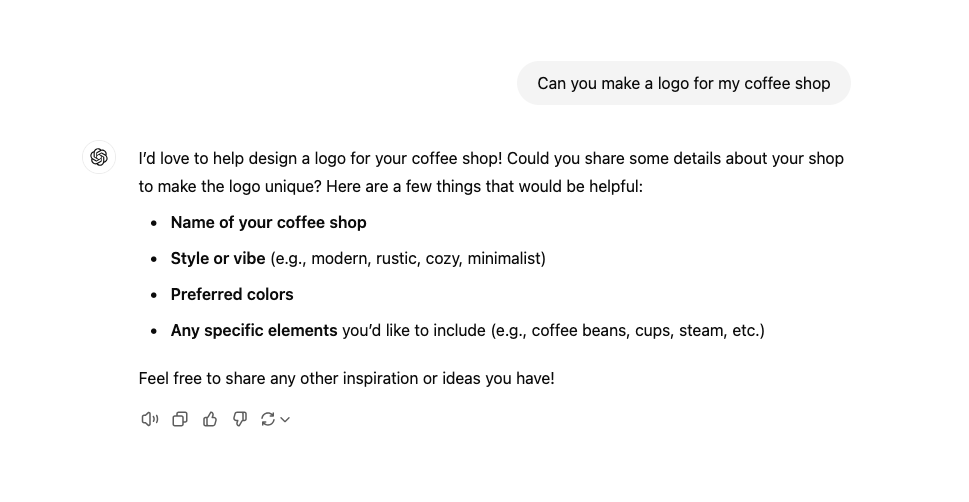
    Inside ChatGPT, the interface resembles a messaging app. You can initiate a creative conversation, treating it like you’re interacting with a graphic designer. A basic prompt, like “Can you design a logo for my coffee shop?” will kick things off.

    ChatGPT request for a coffee shop logo

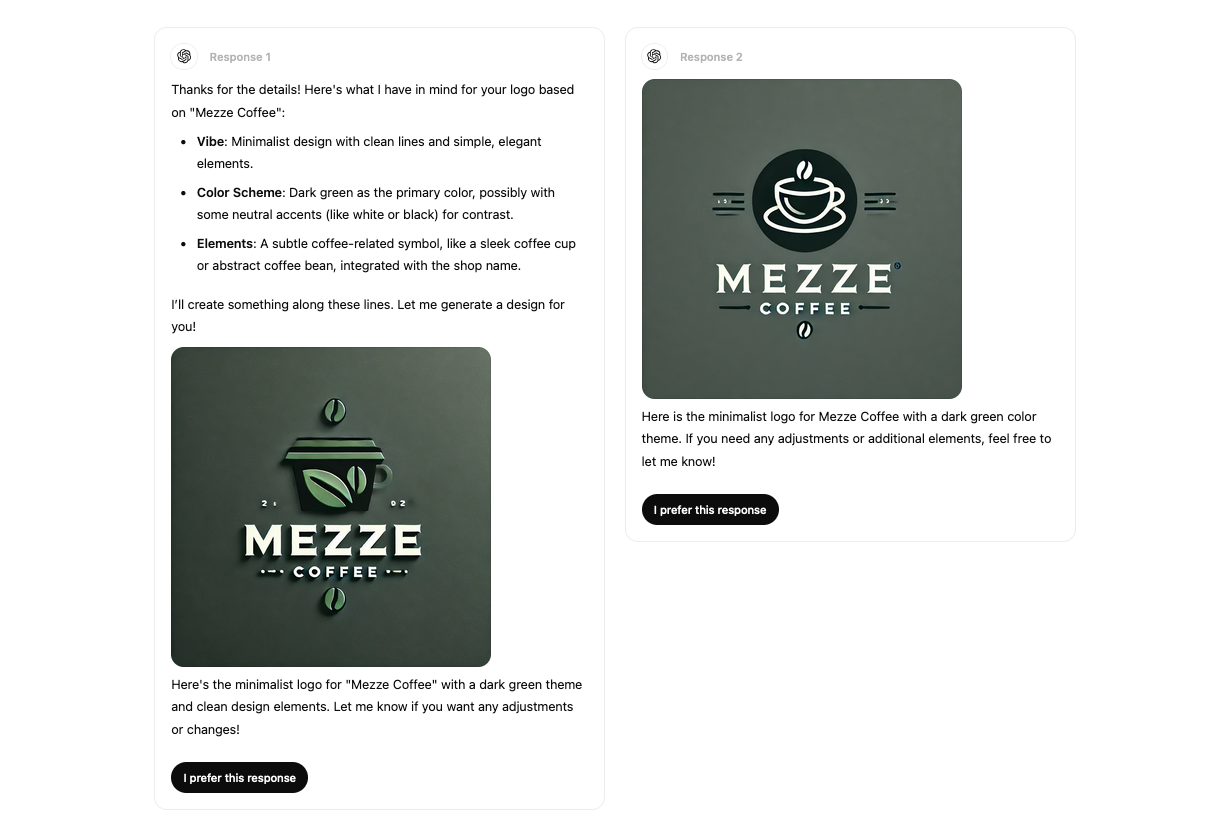
    ChatGPT will then request further specifics from you. After providing additional details, you’ll receive multiple images tailored to your requests. This back-and-forth dialogue can continue as often as needed to refine the image creation process.

    DALL-E in ChatGPT suggesting two different coffee shop logos

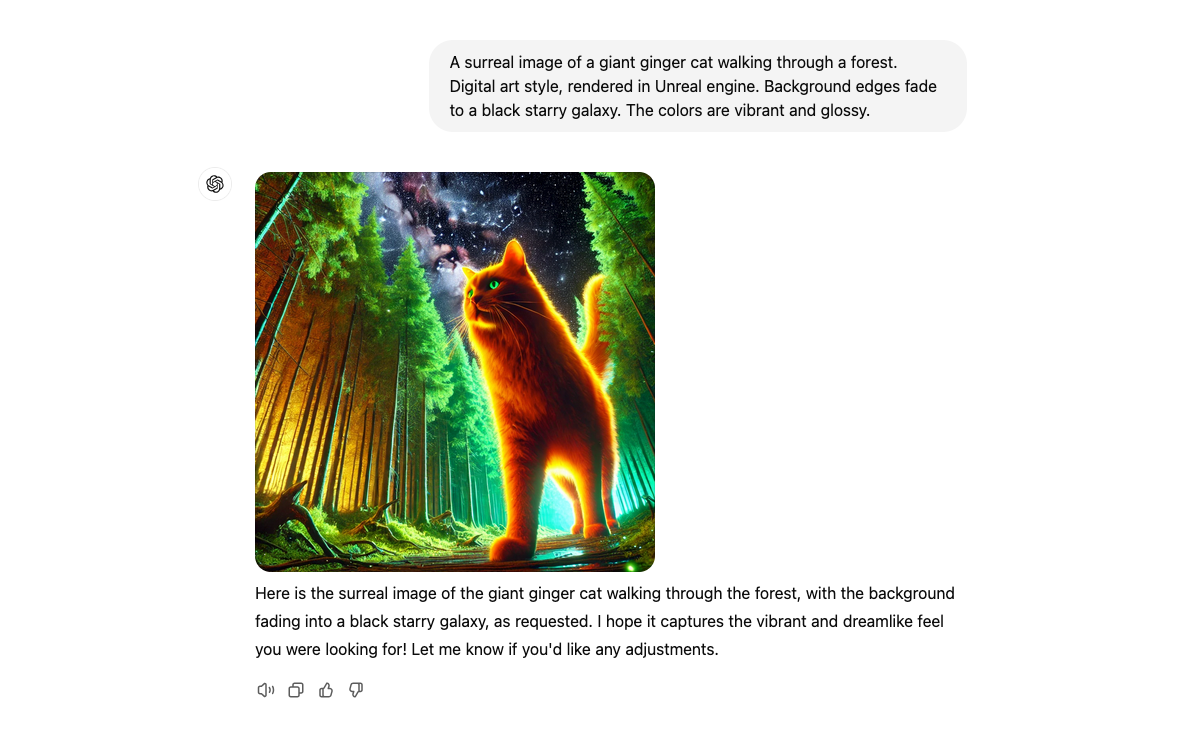
    You can also jump straight into a thorough description of the image you envision, detailing as much as possible.

    Refining your prompt is essential for producing excellent images with DALL-E. If certain features don’t turn out as expected, try experimenting with word choices and their placement. Expect a bit of trial and error as part of the creative process.

    Image of a ginger cat generated inside ChatGPT

    What Can You Do With DALL-E?

    Since the advent of AI image generators like DALL-E, there has been a thriving community of enthusiasts embracing these tools as a hobby. Part of the excitement lies in mastering the creation of impressive images, a skill often referred to as “prompt engineering.” As with any hobby, there are numerous ways to improve your technique.

    For others, DALL-E offers tangible benefits. It’s great for graphic design, logo creation, concept art, web design, and crafting visuals for newsletters, among other applications. For many, hiring a professional can be cost-prohibitive, making AI-generated images a practical and affordable solution.

    DALL-E stands out as a powerful AI image generator, being one of the pioneers in popularizing this innovative technology. Using it is incredibly straightforward—just type in what you want, and it generates the image for you. While it may not require traditional artistic skills, many have demonstrated that it can evolve into a fulfilling hobby if you invest time in mastering the art of creating stunning AI visuals.

  • Uber Launches AI Assistant Powered by OpenAI’s GPT-4o

    Uber Launches AI Assistant Powered by OpenAI’s GPT-4o

    Uber is set to launch a new AI assistant powered by OpenAI’s GPT-4o technology. This innovative feature aims to enhance the user experience for riders and drivers alike by providing improved communication and assistance throughout the ride-hailing process.

    The AI assistant will be integrated into Uber’s existing app, offering personalized support by answering questions, providing recommendations, and assisting with various tasks. The goal is to streamline the interaction between users and the platform, making it more intuitive and efficient.

    Uber officials stated that this advancement is part of the company’s ongoing efforts to leverage artificial intelligence to improve services and enhance customer satisfaction. By incorporating GPT-4o, Uber aims to provide timely and accurate responses, making the ridesharing experience smoother for everyone involved.

    The rollout of the AI assistant underscores Uber’s commitment to innovation and its willingness to adopt cutting-edge technology to meet the evolving needs of its users. As the launch date approaches, both riders and drivers are eager to see how this new feature will transform the Uber experience.

  • How AI Deeply Integrates with Smartphones: Vivo Exec Insights

    In a recent discussion, executives from vivo delved into the deep integration of artificial intelligence (AI) with smartphones, shedding light on the transformative potential of this technology in enhancing user experience.

    The executives highlighted how AI is not just a feature but a fundamental aspect of modern smartphones, enabling devices to learn from user behavior and adapt accordingly. This integration allows for personalized experiences, such as tailored app suggestions, optimized battery management, and improved camera functionalities that can analyze scenes and adjust settings automatically.

    Moreover, they addressed the increasing importance of AI in maintaining user privacy and security. By implementing advanced AI algorithms, vivo smartphones can enhance data protection and provide users with better control over their personal information.

    The vivo team emphasized their commitment to innovation and ensuring that their devices are equipped with cutting-edge AI capabilities. They believe that the future of smartphones lies in their ability to seamlessly integrate with AI, transforming how users interact with their devices and streamlining everyday tasks.

    As AI technology continues to evolve, vivo remains dedicated to staying at the forefront of this integration, promising to deliver smarter and more intuitive smartphones to consumers.

  • Kimi Responds: We Just Started, Couldn’t Handle The Excitement

    Kimi recently addressed the overwhelming response to his latest release, admitting that he struggled to meet the excitement from fans. “We just started ramping up our efforts, and I wasn’t prepared for the level of enthusiasm everyone showed,” he said. The artist has expressed gratitude for the support while acknowledging the challenges in keeping up with the demand. As Kimi continues to navigate this surge in popularity, he is committed to finding ways to better engage with his fanbase moving forward.

  • Nvidia’s AI GPU to Feature Slot Design Next Year for Modularity

    Nvidia’s AI GPU to Feature Slot Design Next Year for Modularity

    In a groundbreaking move for the technology industry, Nvidia is reportedly set to introduce a modular design for its AI GPUs next year. This innovative shift will involve the adoption of a slot-based architecture, a change that is expected to simplify both maintenance and upgrades for users.

    Sources indicate that the new design aims to streamline after-sales service, allowing for easier replacements and enhancements. This modular approach could significantly transform how AI GPUs are integrated within systems, providing flexibility for businesses and developers who rely on high-performance graphics processing units.

    As the demand for AI applications continues to surge, Nvidia’s decision to adopt a more user-friendly design could position the company as a leader in the evolving tech landscape. The anticipated changes represent not only a technical advancement but also a strategic move to cater to the increasing needs of customers for a more manageable and efficient hardware solution.

    Industry experts are keenly watching this development, which promises to reshape the way AI technologies are deployed and maintained. As the launch date approaches, further details are expected to be released, potentially setting a new standard for GPU design in the coming years.