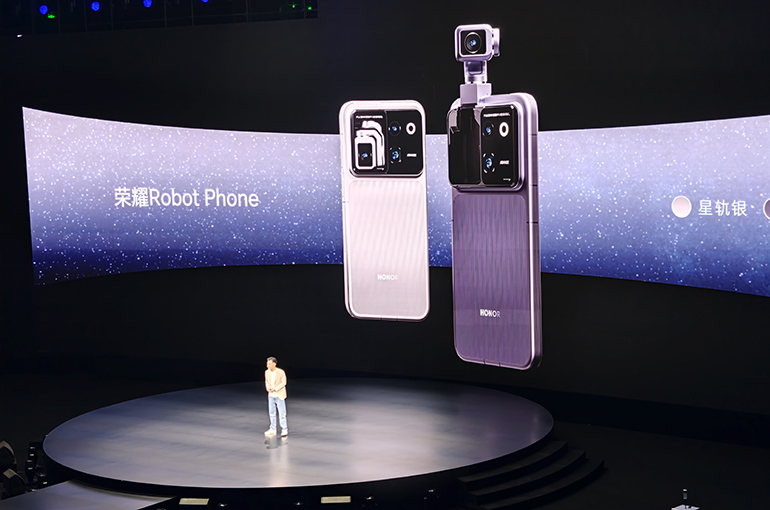
Honor has introduced the world’s first robot phone, marking the industry’s inaugural effort to integrate an AI agent directly controlling a device’s physical hardware. This innovative smartphone features a three-axis gimbal that extends from the device, allowing its camera to move freely—earning it the “robot phone” label and differentiating it from conventional smartphones.
Unlike typical phones where users manually operate the camera, this device’s AI can understand a user’s shooting intentions and adjust the camera and gimbal automatically, according to the CEO’s speech at the launch event. AI technology is now envisioned as more than just software; it acts as an intermediary layer linking AI models with sensors and physical components.
This breakthrough could spark a new wave of growth for AI-enabled gadgets, as hardware designs become more varied and market demand continues to expand. The company remains optimistic about this potential. However, transforming this concept into a commercially viable product involves considerable engineering hurdles.
When Shenzhen-based Honor embarked on the robot phone project, there was considerable skepticism. Incorporating mechanical parts meant recalibrating the balance among the device’s weight, thickness, power usage, dependability, and cost. The significance of this advancement for the wider industry may not depend solely on whether the gimbal becomes a standard feature in future phones. Instead, the key issue is whether hardware designs and user interaction models can support advanced AI capabilities — where machines understand intent, make decisions, and execute tasks autonomously.
If they cannot, the industry might face more profound shifts beyond simple feature upgrades, potentially prompting a reorganization of software and hardware, and shifting focus from standalone devices to collaborative multi-device ecosystems.
Looking ahead over the next two to three years, a variety of new devices are expected to emerge, not just from this company but across the entire market.