Those LED light strips that synchronize with your TV images? I’m not a fan. Sure, they’re eye-catching, but they come with a hefty price tag, can distort your picture’s color accuracy, and tend to be distracting—especially if they malfunction.
There’s a more affordable, effective alternative to enhance your TV picture, plus it helps reduce eye fatigue during long viewing sessions in a dark room. The product is the Scenic Labs LX1 Bias Lighting strip, which I’ve trusted and used for years. Similar options, like Govee’s LED strips on Amazon, are also available.
Although it’s just a simple light strip, this one differs from flashy color-matching variants. It’s a white LED strip calibrated to 6500 Kelvin, matching the daylight color temperature preferred by TV calibrators, video professionals, and filmmakers.
This “bias” light doesn’t blast vibrant colors; instead, it emits a gentle, steady glow at about 10-15% of your TV’s maximum brightness. When set correctly, the subtle light remains almost invisible during typical binge-watching sessions. Yet, that soft glow performs several key functions.
Ben Patterson/Foundry
First, since it’s calibrated to 6500K (as long as you select a properly tuned strip), your TV’s colors will appear more natural. For video professionals, 6500K is the baseline for “white,” used in color grading and film work. So, with a faint 6500K glow behind your screen, the colors are more likely to match the filmmaker’s original intent. Bright, color-shifting LED strips that sync with picture content can distort the image and deceive your perception.
Second, a well-tuned 6500K bias light can boost your TV’s contrast perception—especially on older LCDs. The soft halo shape makes dark or gray parts seem darker, mimicking a quasi-HDR effect. While OLEDs already have excellent contrast, this inexpensive upgrade can make a noticeable difference for non-OLED sets, enhancing depth and image quality.
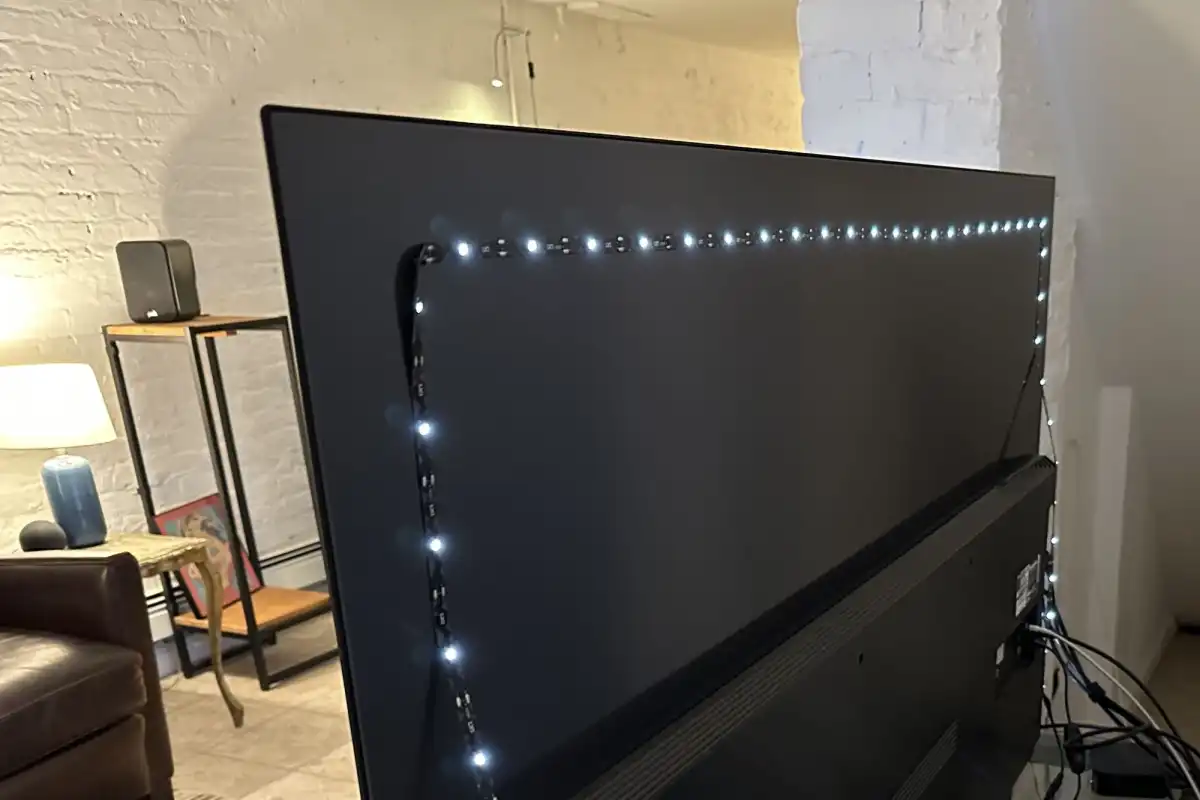
Ben Patterson/Foundry
Lastly, a white LED bias light can help lessen eye strain caused by watching bright images in a dark room for extended periods. Slightly increasing the ambient light reduces the contrast between the bright screen and dark surroundings, giving your pupils a much-needed break and preventing symptoms like soreness, watering, blurred vision, or headaches.
The Scenic Labs LX1 Bias Lighting strip can be purchased directly from the manufacturer, with prices starting at $21.95 for a one-meter length and reaching up to $46.95 for a six-meter strip. While slightly more expensive than alternatives on Amazon, this model is praised for its color accuracy and has served me reliably for over three years. You can also find budget-friendly options, like Govee’s 6500K LED strip, available for about $20 for 5 meters (16.4 feet).
I strongly recommend investing in a white LED bias lighting strip for your TV—and they’re equally effective for PC monitors. (I use a couple in my office.)