The 2025 List of the Most Populous Capital Cities in the World
Tokyo, Japan: The Largest Capital City Globally
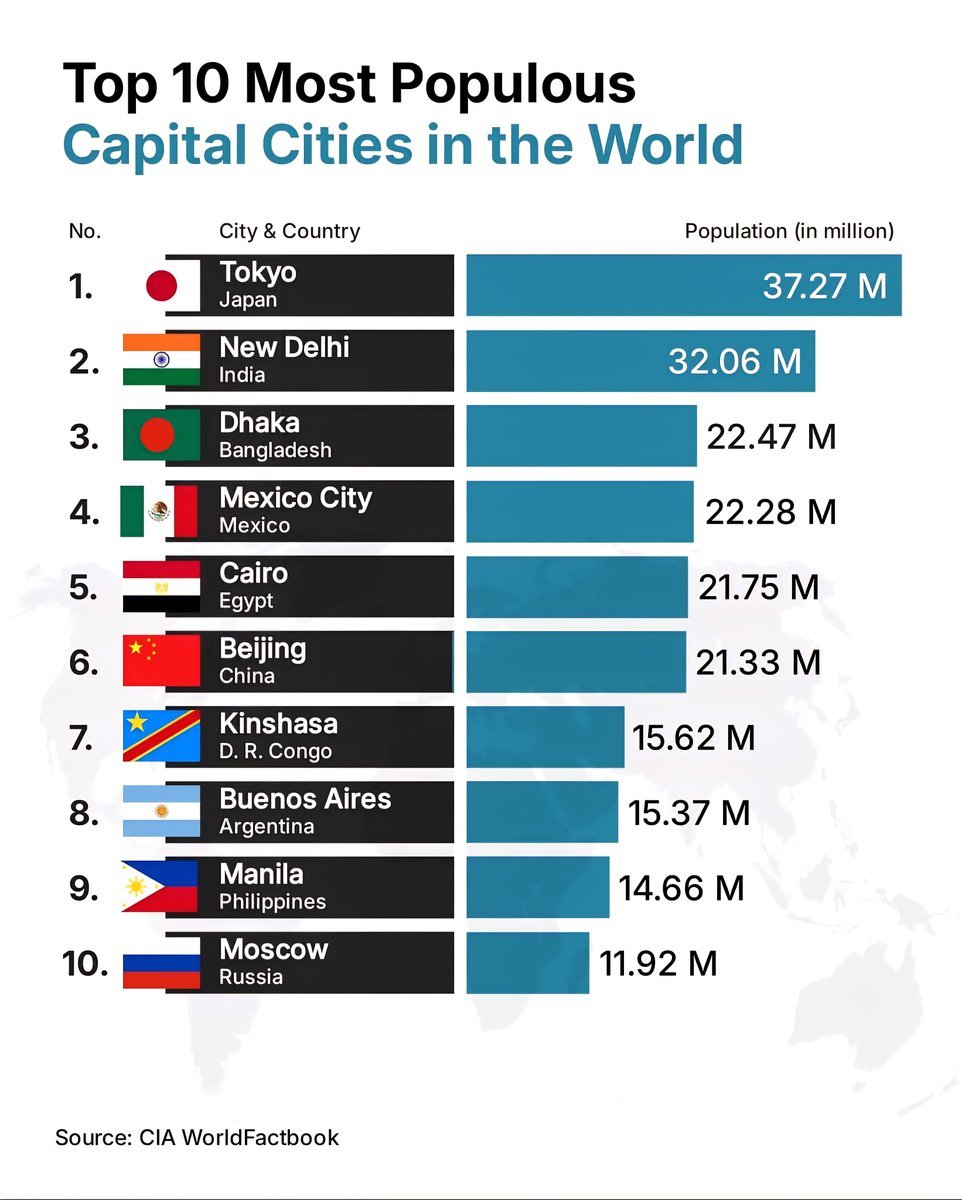
With an estimated population of 37.27 million residents, Tokyo remains the undisputed leader among the world’s most populous capital cities. This sprawling metropolis continues to thrive as an economic and cultural hub, blending cutting-edge technology with traditional Japan. Tokyo’s dense urban landscape reflects rapid urbanization over the decades, attracting people from rural areas and neighboring countries seeking opportunities. Its extensive public transportation network and vibrant neighborhoods like Shibuya and Shinjuku make it an iconic destination.
New Delhi, India: Surging Population and Rapid Growth
New Delhi’s metropolitan area has swelled to approximately 32.06 million inhabitants, cementing its position as India’s most populated capital. The city’s population growth is fueled by migration from rural regions and expanding economic prospects. As the seat of the Indian government, New Delhi features a mix of historic sites, modern infrastructure, and bustling markets. The city faces the ongoing challenge of managing urban congestion, pollution, and infrastructure development to sustain its growth.
Dhaka, Bangladesh: From Local Market to Mega City
Dhaka, home to around 22.47 million people, ranks as the third most populous capital city globally. It’s a city marked by a vibrant culture and resilient spirit amid urban congestion. Rapid migration from rural areas and high birth rates contribute to its explosive growth. Dhaka’s bustling streets, numerous markets, and historical sites shape its unique identity. However, challenges such as traffic congestion, pollution, and water management remain critical issues for city planners.
Mexico City, Mexico: An Evolving Urban Landscape
With a population nearing 22.28 million, Mexico City continues to grow as a central hub of culture, politics, and economy in Latin America. Its rich history spans Aztec origins through Spanish colonization to modern modernization efforts. The city’s high density presents challenges like air quality and infrastructure strain but also offers vibrant neighborhoods, world-class cuisine, and expanding public transportation systems.
Cairo, Egypt: Africa’s Largest Capital
Cairo has a population of approximately 21.75 million residents, making it Africa’s most populous capital city. As a city with thousands of years of history, Cairo combines ancient pyramids and mosques with contemporary life. Rapid urbanization has led to overcrowding, informal settlements, and environmental issues. Efforts to modernize infrastructure and improve living conditions are ongoing as Cairo seeks sustainable growth.
Beijing, China: Balancing Tradition and Modernity
Boasting a population of about 21.33 million, Beijing remains a global symbol of China’s economic ascent. The city’s skyline is dotted with modern skyscrapers alongside historic sites such as the Forbidden City and the Great Wall. Massive urban expansion, infrastructure projects, and environmental initiatives are part of Beijing’s ongoing transformation, aiming to accommodate its growing population and economic ambitions.
Kinshasa, Democratic Republic of the Congo: Africa’s Fast Grower
Kinshasa’s population has climbed to an estimated 15.62 million, reflecting rapid urban migration in Central Africa. The city has become a vibrant, if chaotic, cultural hub with a booming music scene and lively markets. Despite challenges like inadequate infrastructure and access to services, Kinshasa continues to expand, driven by rural-to-urban migration and high birth rates.
Buenos Aires, Argentina: South America’s Largest Capital
Home to approximately 15.37 million residents, Buenos Aires remains a center of culture, arts, and political activity in South America. Its diverse neighborhoods, historic architecture, and vibrant nightlife attract millions annually. Ongoing efforts focus on urban renewal, transport improvements, and social programs to support its extensive population.
Manila, Philippines: The Heart of Southeast Asia
With about 14.66 million inhabitants, Manila stands out as Southeast Asia’s most populous capital city. Its bustling streets, enormous shopping malls, and vibrant street life reflect the country’s cheerful resilience. Manila faces challenges in traffic management, flooding, and pollution but continues to develop infrastructure to support its growing population.
Moscow, Russia: The Capital of a Historic Powerhouse
Housing roughly 11.92 million, Moscow is Russia’s political, economic, and cultural heart. The city’s historic Kremlin, Red Square, and modern skyscrapers showcase its blend of tradition and innovation. Population growth has been steady, supported by efforts to modernize urban infrastructure and expand public services.
Source: CIA World Factbook, 2025
Note: Population figures are estimates based on the latest available data and are subject to change.