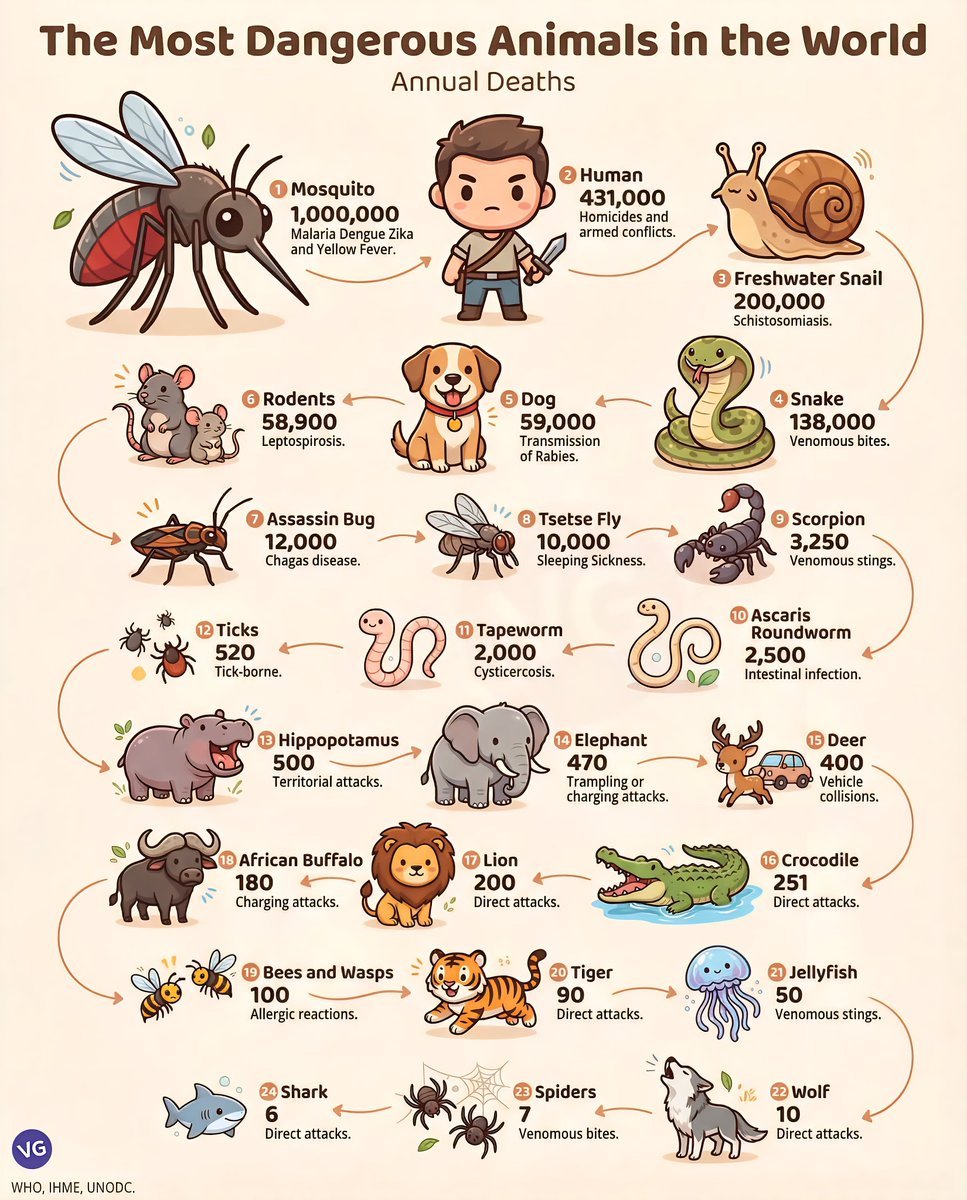
The Deadliest Creatures on Earth: A 2025 Rundown
1. Mosquitoes: Nature’s Silent Killers
Topping the list, mosquitoes are responsible for approximately 1 million deaths annually. These tiny insects are vectors for serious diseases such as malaria, dengue fever, Zika virus, and yellow fever. Despite ongoing global eradication efforts, their capacity to transmit deadly pathogens makes them the most dangerous animals to humans.
2. Humans: A Complex Threat
Surprisingly, humans themselves are responsible for around 431,000 deaths each year through violence, homicides, wars, and conflicts. This figure underscores the impact of social unrest, political instability, and weapon proliferation. Human conflict remains a leading cause of death on the planet, making us our own worst enemies in many ways.
3. Freshwater Snails: Disease Carriers in Quiet Waters
While less conspicuous, freshwater snails are linked to approximately 200,000 deaths annually due to schistosomiasis—a parasitic disease impacting millions worldwide. These snails act as intermediate hosts, releasing parasites that infect humans through contact with contaminated water.
4. Venomous Snakes: Deadly Bites
Snake bites cause roughly 138,000 deaths each year. Countries with limited access to antivenom treatments see higher fatality rates. Poisonous snakes like cobras, vipers, and taipans inject venom that can cause paralysis, tissue damage, and death if not treated promptly.
5. Domestic Dogs: Protectors Turned Threats
Dogs are responsible for about 59,000 deaths annually, primarily through the transmission of rabies. Despite widespread vaccination efforts, rabies remains a significant concern in parts of Africa and Asia, where dog populations remain unvaccinated.
6. Rodents: Disease Spread in Urban Environments
Rats and mice are linked to approximately 58,900 deaths, mainly through the transmission of leptospirosis—a bacterial disease spread via contaminated water or soil. Urban infestations continue to pose health risks worldwide.
7. Assassin Bugs: Hidden Dangers in Your Backyard
Responsible for around 12,000 deaths, assassin bugs transmit Chagas disease. This parasitic illness affects millions in Latin America, causing chronic health issues that can be life-threatening.
8. Tsetse Flies: Sleep Disruptors
Tsetse flies are vectors for sleeping sickness, causing about 10,000 fatalities annually. The disease affects both humans and animals, disrupting life and agriculture in affected regions.
9. Scorpions: Venomous Survivors
Venomous scorpion stings contribute to approximately 3,250 deaths each year. Their sting can be fatal, especially in children or in areas lacking access to antivenom.
10. Roundworms and Tapeworms: Intestinal Invaders
Parasites like Ascaris roundworms and tapeworms are linked to roughly 4,500 deaths combined, causing severe malnutrition and intestinal blockages, especially in areas with poor sanitation.
11. Ticks: Tiny but Dangerous
Ticks are responsible for around 520 deaths through diseases like Lyme disease and Rocky Mountain spotted fever. Their bites can transmit deadly bacteria and viruses.
12. Hippos: The Unexpected Rumblers
Despite their cute appearance, hippopotamuses cause about 500 deaths annually through territorial attacks. Their aggressive nature in water and on land makes them a significant hazard in African rivers.
13. Elephants: Gentle Giants with a Dangerous Side
Elephants, especially when threatened or disturbed, cause roughly 470 deaths each year through trampling and charging attacks—all compounded by their enormous size and strength.
14. Deer: Accidents in Disguise
Deer contribute to approximately 400 fatalities each year, mainly through vehicle collisions. These incidents are often tragic, especially during migration seasons.
15. Crocodiles: Masters of Ambush
Crocodiles account for about 251 deaths annually, usually through direct attacks on swimmers or fishermen in tropical regions.
16. Big Cats: Lions, Tigers, and More
Lions and tigers, responsible for around 290 combined deaths, attack humans mainly in their natural habitats, especially when humans venture too close.
17. Buffalos: Charging Beasts
African buffaloes cause about 180 deaths per year, primarily through aggressive charges that can be fatal to explorers or farmers venturing into wild areas.
18. Insect Stingers: Bees and Wasps
These insects are responsible for approximately 100 deaths annually, often due to allergic reactions, particularly in those with prior sensitivities.
19. Sharks: Ocean’s Predators
Shark attacks are relatively rare but deadly, causing about 6 fatalities yearly. Their iconic status often overshadows the fact that they are not the leading marine hazard.
20. Jellyfish: Elegant and Deadly
Venomous stings from jellyfish cause around 50 deaths each year. Encounters often occur during swimming or boating activities in coastal waters.
21. Wolves and Other Predators
Wolves lead to roughly 10 deaths annually through attacks, with most occurrences in isolated rural regions or wilderness areas.
22. Venomous Spiders: Small but Fearsome
Spiders, including species like black widows and brown recluses, account for about 7 deaths yearly due to venomous bites.
Source: WHO, IHME, UNODC, 2025