Tag: NASA

  • New Study Indicates Venus Might Still Be Geologically Active

    New Study Indicates Venus Might Still Be Geologically Active

    Many years ago, scientists thought Venus was a quiet, geologically dormant planet where major surface changes had long since ceased. However, recent research challenges that belief, indicating that Earth’s closest neighbor might still be tectonically active, with large rift valleys that formed relatively recently.

    This new study, led by researchers at ETH Zurich and published in Nature Geoscience, presents compelling evidence that Venus’s interior may still be dynamic, continually reshaping parts of its surface. Although often called Earth’s “sister planet” due to similarities in size and composition, Venus is vastly different. Its surface temperatures are hot enough to melt lead, its atmosphere is thick and mostly carbon dioxide, and the surface experiences immense pressure. Unlike Earth, Venus lacks oceans and plate tectonics—the moving continents that drive geological changes here.

    Yet, Venus displays prominent rift valleys—vast cracks in its crust that resemble Earth’s African Rift Valley, where the crust gradually pulls apart. Some of these rift systems extend up to 10,000 kilometers, making them among the planet’s largest geological features. Previously, most scientists believed these rifts formed over 100 million years ago and have remained unchanged since, leading to the assumption that Venus was largely inactive.

    To reevaluate that idea, the ETH Zurich team employed advanced computer simulations. Led by Professor Taras Gerya and graduate student Xi Yang, they developed detailed three-dimensional models that are far more accurate than earlier two-dimensional simulations, which relied on simplified assumptions about rock behavior. These newer models allowed scientists to understand better how rift valleys form and evolve over time.

    The simulations suggest that young, active rift valleys often develop steep, narrow mountain ridges—called rift flanks—along their edges. These features are most prominent when the rift is still opening or has only recently ceased moving. The team also discovered that these rifts might expand faster than previously thought, growing by roughly 3 to 10 centimeters each year. After movement stops, these ridges gradually flatten as the crust relaxes.

    Unlike Earth, where erosion from wind, rain, rivers, and ice continually reshapes landscapes, Venus lacks liquid water, so its surface modifications primarily result from slow crustal sinking and settling under the planet’s own weight.

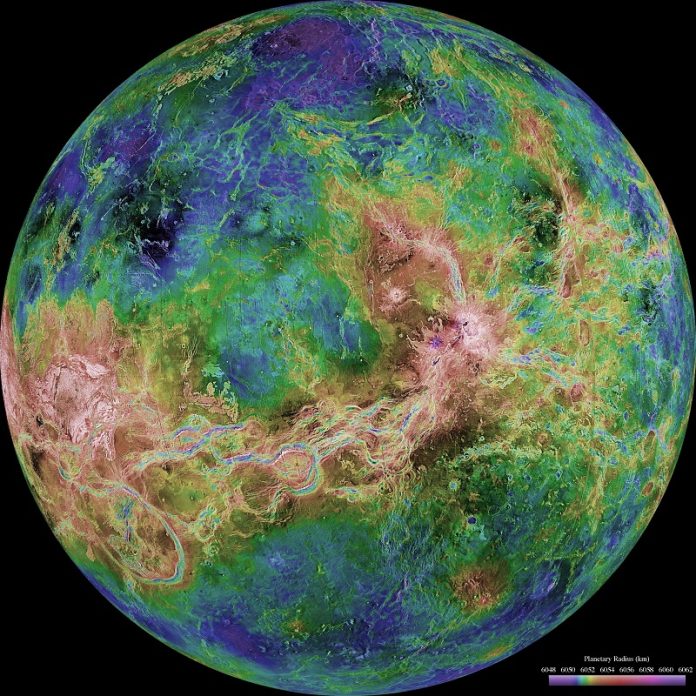
    To verify their models, the researchers compared their simulation results with images from NASA’s Magellan spacecraft, which mapped most of Venus during its 1990s mission. They observed that several Venusian rift valleys still display big, steep flanks, consistent with features of relatively young geological age. This correlation suggests that many of these giant cracks could have formed far more recently than once believed, supporting the idea that Venus’s interior is still active.

    With ongoing interest in Venus, NASA and the European Space Agency (ESA) are preparing new missions for the upcoming decade to explore the planet in greater detail. ESA’s EnVision, scheduled for launch in the early 2030s, will carry instruments developed with help from ETH Zurich researchers, aiming to study everything from surface features to internal processes and atmospheric conditions.

    These discoveries could help scientists identify the most geologically active regions for future exploration. Beyond helping us better understand Venus, this research offers insights into how rocky planets evolve across the universe, including Earth-like worlds orbiting distant stars.
  • NASA’s Juno Uncovers Hidden Heat Beneath Io’s Volcanic Surface

    NASA’s Juno Uncovers Hidden Heat Beneath Io’s Volcanic Surface

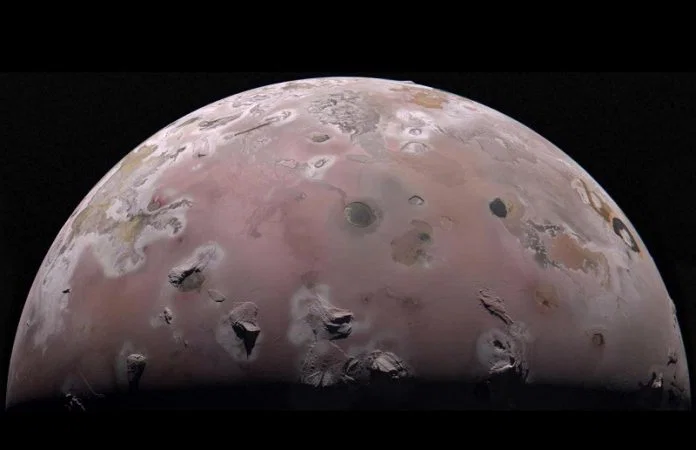
    NASA’s Juno spacecraft has made a groundbreaking discovery by measuring temperatures beneath the surface of Jupiter’s volcanic moon, Io—a feat never accomplished before. The new data shows that heat rises from deep within the moon across much of its surface, revealing that Io’s outer shell is surprisingly smooth and composed of lightweight materials.

    The findings, published in the Journal of Geophysical Research: Planets, give scientists a fresh perspective not only on volcanic worlds like Io but also on how volcanoes work here on Earth.

    Io is the most volcanically active body in our solar system. Unlike Earth, where volcanoes are primarily fueled by internal heat, Io’s intense volcanic activity results from Jupiter’s powerful gravity. As Io orbits the giant planet in a slightly elongated path, Jupiter’s gravity bends and squeezes it. This process, called tidal heating, generates vast amounts of internal heat, fueling hundreds of active volcanoes.

    Until now, scientists could only observe Io’s heat by detecting infrared radiation emitted from its surface. Juno’s Microwave Radiometer changed that by probing beneath the surface to detect hidden heat. Originally designed to analyze Jupiter’s deep atmosphere, the radiometer features six antennas that measure microwaves at different wavelengths. Since each wavelength penetrates to a different depth, the instrument can determine temperatures from just below the surface down to several meters underground.

    During two close flybys—on December 30, 2023, and February 3, 2024—Juno came within approximately 1,500 kilometers of Io, allowing scientists to peer beneath the moon’s rocky exterior for the first time. These measurements detected temperature increases of over 40°F (roughly 22°C) just a few feet beneath the surface. Such a steep temperature rise far exceeds what solar heating alone could produce, indicating that heat from Io’s interior is constantly rising.

    Researchers suggest two main explanations. One is that heat continually moves upward through the crust, spreading across the entire moon. While the heat flow per small area is modest, collectively it amounts to an immense energy—up to 30 times the average heat flow seen on Earth. The second possibility is that about 10% of Io’s surface is covered by cooled lava flows hidden beneath a layer of solid rock about 9 to 11 meters thick, which continues to release heat even after the surface cools.

    This discovery is significant because tidal heating—driving Io’s internal activity—also energizes subsurface oceans beneath icy moons such as Europa and Ganymede. Understanding heat transfer in Io may help scientists better grasp the potential habitability of environments beneath frozen surfaces on other worlds.

    Flyby data also revealed a surprising aspect of Io’s landscape. Although it’s known for towering mountains and active volcanoes, much of its terrain is surprisingly flat. Large, smooth plains stretch over distances exceeding 100 kilometers, resembling broad volcanic plains rather than rugged mountain regions. Microwave readings also suggest the surface material is much less dense than solid rock, likely similar to volcanic pumice or ash filled with tiny air pockets.

    Overall, the success of Juno’s microwave observations opens new doors for studying both rocky and icy worlds throughout the solar system. Future missions might utilize similar instruments to understand heat movement beneath active volcanoes on Earth, offering insights that could improve volcanic hazard assessments long before eruptions happen.

    This research was published in the Journal of Geophysical Research: Planets.

  • NASA Scientists Find New Material to Convert Moon Rocks into Resources

    NASA Scientists Find New Material to Convert Moon Rocks into Resources

    NASA scientists have identified a new heat-resistant material that could assist future astronauts in utilizing moon rocks for construction, oxygen production, and supporting extended missions on the lunar surface. The breakthrough was made at NASA’s Glenn Research Center during research focused on processing lunar soil, or regolith.

    This advancement could significantly contribute to NASA’s goal of enabling astronauts to “live off the land” on the moon, reducing the need to transport all materials from Earth. The idea is to extract useful resources directly from lunar materials, such as melting rocks to obtain metals for building structures and oxygen for fuel and life-support systems.

    A major challenge, however, is that molten lunar dust is highly corrosive. Kevin Yu, one of the researchers, explained that when lunar rock is heated, it behaves much like lava, which can quickly erode common heat-resistant materials. Yu started investigating this issue while collaborating with Jamesa Stokes through a NASA graduate fellowship.

    Around six months into their work, the team unexpectedly created a new material while experimenting with simulated lunar dust mixed with scandium oxide. When heated in a furnace to temperatures over 2,900°F, they observed the formation of an unfamiliar substance. Scientists checked extensive databases containing over a million known materials, but they found no match, indicating they had created something entirely novel.

    Further analysis revealed the composition of this new material. Additional samples were produced by grinding and mixing in the lab. Initially appearing as a bright pink powder, it turned beige after heating—a visual sign that the chemical reaction had succeeded. Testing confirmed the material’s durability in extreme conditions, showing resistance to corrosion from molten lunar dust and the ability to withstand temperatures far beyond those tolerated by standard industrial materials.

    This material has the potential to be used in constructing equipment for resource extraction on the moon, such as pipes, containers, or processing systems that hold molten lunar rock. Although it contains scandium oxide, which can be expensive, experts note it is still more cost-effective than rare metals like platinum often used in high-temperature applications.

    Interestingly, the team also found that the material could have practical uses on Earth. It is lighter, less dense, and offers superior heat insulation compared to some of today’s advanced protective coatings used in jet engines.

    The scientists aim to continue refining this material to improve its purity and lower production costs. Stokes emphasized that advanced materials research is crucial for future space exploration since even the most sophisticated spacecraft or habitats require materials capable of enduring harsh environments. Additionally, they believe that innovations driven by space research often translate into beneficial technologies on Earth, potentially enhancing energy systems, aviation, and industrial manufacturing through the push to explore the moon.

  • Ganymede’s Core of Metal: Jupiter’s Moon Might Still Be Forming It

    Ganymede’s Core of Metal: Jupiter’s Moon Might Still Be Forming It

    This image of Ganymede was captured by the JunoCam imager aboard NASA’s Juno spacecraft during its flyby on June 7, 2021. At its closest approach, Juno was within 645 miles (1,038 kilometers) of the moon’s surface—closer than any spacecraft has been in over two decades. Credit: NASA/JPL-Caltech/SwRI/MSSS.

    Ganymede, the largest moon in our solar system, measures over 3,200 miles across—larger than Mercury itself.

    What sets Ganymede apart is that it is the only moon known to have its own magnetic field, which scientists think is generated by a hidden, flowing layer of liquid metal deep inside the moon.

    A recent study by researchers at the California Institute of Technology proposes that Ganymede’s metal core might still be forming even billions of years after its initial formation.

    Published in Science Advances, the study challenges conventional ideas of Ganymede’s development. Instead of forming with a hot, metal-rich core, the moon may have started off cold and gradually heated up over time.

    Magnetic fields are typically produced by a process called a “dynamo,” where circulating liquid metal within a planet or moon generates magnetic energy. Earth, for example, has a magnetic field thanks to its partly molten iron core.

    Previously, scientists believed Ganymede formed hot, with its metal core developing quickly after its birth around 4.5 billion years ago, and then cooling slowly over the eons. The movement of liquid metal inside was thought to sustain its magnetic field to this day.

    However, new computer simulations suggest Ganymede may have initially been a cold mix of ice, rock, and metal. Over billions of years, heat from radioactive decay and internal processes might have gradually warmed the interior. This means its metal core could still be growing and evolving even now.

    Lead researcher Kevin Trinh notes that this new perspective might explain why Ganymede has a magnetic field while similarly sized moons like Callisto do not. Both formed around Jupiter and are comparable in size and density, yet they behave quite differently beneath the surface.

    This research could reshape our understanding of magnetic fields across the solar system. Many planets and moons, including Earth, Mercury, and even ancient Mars, have or once had planetary dynamos. The findings suggest some magnetic signatures might result not just from cooling cores, but from ongoing core formation.

    Further insights are anticipated when the European Space Agency’s Jupiter Icy Moons Explorer (JUICE) mission arrives at Jupiter’s moons in 2031. Its mission is to gather detailed data about Ganymede’s magnetic environment and interior, which could shed light on whether the moon is still internally warming.

    Source: California Institute of Technology.

  • NASA’s Weekend Solar Eclipse: Will Pakistan Witness It?

    NASA’s Weekend Solar Eclipse: Will Pakistan Witness It?

    On the nights of September 21-22, sky enthusiasts should mark their calendars for a partial solar eclipse, as announced by NASA. Although this celestial event won’t be visible in the U.S., viewers in Australia, Antarctica, and across the Pacific and Atlantic Oceans will have prime views.

    Pakistan, unfortunately, will miss out on witnessing the eclipse. The Pakistan Meteorological Department’s Climate Data Processing Center reports the eclipse will commence at 10:30 PM local time on September 21, reach its peak at 12:42 AM, and conclude by 2:54 AM. Yet, the event remains invisible nationwide.

    NASA describes a partial solar eclipse as occurring when the Moon passes between the Sun and Earth but doesn’t align perfectly, resulting in a glowing crescent shape of the Sun visible from Earth. This marks the second major sky event this September—the first being a total lunar eclipse on the 7th and 8th. The month also brings the autumn equinox on September 22, when daylight and nighttime are nearly equal worldwide.

    Looking ahead, the next total solar eclipse noticeable in parts of North America will be on August 12, 2026, visible across Greenland, Iceland, Spain, Russia, and a small part of Portugal. A partial eclipse will be observable throughout North America, Europe, Africa, and across the Atlantic, Arctic, and Pacific Oceans. Additionally, an annular eclipse is expected on February 17, 2026, visible in parts of Antarctica, with partial views across Africa, South America, and several oceans.

    NASA emphasizes the importance of safely observing these events, advising against looking directly at the Sun without proper eclipse glasses or filters. Viewing any part of the bright Sun through cameras, binoculars, or telescopes without specialized solar filters can cause immediate and serious eye damage.

  • From Brainy Bandages to New Teeth: Google’s $425M Challenge

    [gpt3] rewrite this content in American English and make it unique and human written and plagiarism free and do not include any introductions or extra text and only return the rewritten content

    Heal, seal, and send data: Bandages for the Sci-Fi age

      Photo credits: Reuters
    Bandages are getting an upgrade, and they’re a lot smarter than a roll of gauze.

    At Caltech, researchers have built iCares, a patch that doesn’t just cover wounds, it spies on them. By tracking oxygen, pH, and other biomarkers, it can warn doctors if healing stalls or an infection starts brewing. In early human trials, that meant problems were spotted days earlier than with standard care. (Caltech)

    Meanwhile, scientists at BITS Pilani went full sci-fi: their bandage detects infections and kills bacteria on contact, no antibiotics needed. It uses reactive materials to zap microbes while keeping skin safe.

    Other labs are layering in flexible sensors that track moisture, heat, and chemical shifts. All signs of how a wound is really doing. (PMC)

    The big picture: chronic wounds affect millions worldwide, but smart bandages could cut hospital trips, speed up recovery, and slash antibiotic use. In other words: the next life-saving medical device might come out of your first-aid kit.

    The teeth’s second coming

    Glorious news for boxers, MMA enthusiasts, people with a short temper, and the elderly. Japanese researchers are formulating an experimental drug that will regrow teeth. Now you can eat sweets and only have to worry about blood sugar, fat, and diabetes.

    Bones and teeth are made up of the same things: Calcium, minerals, and collagen (and enamel for teeth). But teeth, unlike bones, lack the ability to regrow if damaged or broken. 

    Human trials began in September of last year, so this is something that could actually be promising. I think I speak for quite a few of us when I say, “We will watch your career with great interest.”

    Google just got hit with a $425M privacy smackdown

    Turns out, flipping that “off” switch on Google’s tracking settings wasn’t as final as users thought. A US federal court just ordered the tech giant to cough up $425 million (£316.3m) for quietly harvesting data from millions of people even after they’d disabled its Web & App Activity feature.

    The lawsuit, filed by fed-up users, accused Google of sneaking into mobile devices, scooping up personal data, and cashing in on it despite promises to respect privacy settings.

    The group had originally been gunning for a staggering $31 billion in damages, but even this verdict sends a sharp message: Big Tech can’t just nod at your privacy, then ignore it behind the curtain.

    Science just pulled a Rick Sanchez — 3D-printed skin that heals like the real thing

    “Aw jeez, Rick, they’ve gone and printed skin now!”

    No joke — Swedish researchers have 3D-printed artificial skin that can actually grow its own blood vessels. Think less lab coats, more Rick’s garage vibes.

    Here’s how it works: they cooked up a “bio-ink” where skin cells kick back on gelatin beanbags, spitting out collagen like it’s space goo. Then they 3D-printed hydrogel strands that dissolve into tiny tunnels — basically blood-flow portals waiting to be activated.


    Artwork by Affan Qasim; created using Gemini Pro 

    Why it matters: regular skin grafts are like patching up a spaceship with duct tape — they hold, they work, but they’re not the perfect fix. This new tech could mean grafts that heal faster, scar less, and behave more like the real thing.

    Still only in mice for now, but if science keeps leveling up like this, we’re not too far from “interdimensional wound healing.”

    Martian Mud Might Be Alive: NASA’s Latest Discovery Stirs Debate

    NASA’s Perseverance rover just turned over a rock—well, a whole mudstone—that could rewrite cosmic history.

    Before you pop the champagne: no, NASA hasn’t found alien microbes waving hello. What they have found are redox reactions—the same kind of chemical energy trades that, here on Earth, microbes use to stay alive.

    Joel Hurowitz, PhD—geosciences professor at Stony Brook University and lead author of the new paper—explains that these reactions could be plain chemistry. But here’s the kicker: their observations in Mars’ Bright Angel formation don’t line up neatly with a purely non-biological explanation. The iron, sulfur, and phosphorus-bearing nodules, plus those reaction fronts, might be a biosignature—a potential fingerprint of ancient life.

    This discovery doesn’t close the case for life on Mars—but it sure makes the Red Planet look less dead and a lot more interesting.

    Guiding drivers though the chaos (by blinding them in one eye)

    I’m getting ever closer to getting Vegeta’s ‘scouter’ from Dragon Ball Z (DBZ).

    Augmented Reality (AR) glasses have been a thing for a while, but Amazon is reportedly rolling out AR glasses for 100 ‘000 delivery drivers. While we’re still at least a year away from Amazon releasing these glasses — codenamed JayHawk — to the public, these glasses are supposed to have microphones, speakers, and a camera, and most importantly, a full-color display in one eye. 

    Now don’t get me wrong, this is pretty cool, but I’m a bit skeptical on how they’re going to implement this in an unobtrusive way for driving. We wouldn’t want driver’s half blind running into people’s mailboxes while making deliveries.

    Personally, I can’t wait to LARP as a DBZ character when these do come out. Hoping Bezos comes out with a monocle version.

    [/gpt3]

  • NASA Skywatching Tips for August Include Jupiter and Venus Meetup

    NASA Skywatching Tips for August Include Jupiter and Venus Meetup

    There’s a lot of exciting celestial activity happening this August, according to NASA’s latest insights on celestial events for the month.

    Among the highlights are a morning alignment between Jupiter and Venus, an excellent opportunity to catch the Perseid meteor shower, and a look into the future of our own Sun.

    Mars
    Mars remains visible this month and is the only planet observable in the early evening sky during August. You can see it low in the western sky approximately an hour after sunset, but spotting it might be a bit tricky. Its distinctive salmon-pink glow is now roughly 60% as bright as it was in May, so it requires a keen eye.

    Saturn
    Later in the evening, around 10 p.m., Saturn becomes visible. As the month progresses, it will be visible earlier each night. Look for Saturn in the east after sunset, near the constellations Cassiopeia and Andromeda. By dawn, the planet will appear to drift toward the western horizon, making early risers the perfect audience for observing this planetary wonder.

    Jupiter and Venus
    The most notable event this August is the close approach of Jupiter and Venus. These planets shine brightly in the eastern sky before sunrise all month long. They start the month appearing far apart, but gradually draw nearer as days pass. The closest they’ll get is on August 11th and 12th, with only about a degree separating them—roughly twice the width of a full moon. This celestial dance takes place against a dazzling backdrop featuring Orion, Taurus, Gemini, and Sirius. Additionally, a slim crescent moon joins the pair on the mornings of August 19th and 20th, after they drift apart again.

    Perseids Meteor Shower
    The Perseid meteor shower returns this August, reaching its peak overnight on the 12th and 13th. However, the nearly full moon on peak nights will make it hard to see all but the brightest meteors. Although this limits viewing somewhat, another spectacular meteor shower, the Geminids, will provide an ideal opportunity to observe bright meteors without moonlight interference come December.

    Dumbbell Nebula
    This month also offers a superb chance to observe the Dumbbell Nebula, also called M27—a type of planetary nebula.

    A nebula is a massive cloud of gas and dust scattered across space. Planetary nebulas form when aging stars similar to our Sun exhaust their nuclear fuel and shed their outer layers. This process leaves behind a small, hot core known as a white dwarf. The white dwarf emits intense ultraviolet light that illuminates the surrounding gas shell, causing it to glow visibly.

    Nicknamed for its dumbbell-like shape, the Dumbbell Nebula appears as a faint, small patch of light through binoculars or small telescopes—roughly a quarter the width of the full moon. To find it, consult your astronomy app or use the star chart below as a guide.

    Dumbbell Nebula

    This month provides a chance to glimpse into one of the future phases of our Sun—about five billion years from now. Such observations remind us of the ongoing cycle of cosmic renewal that seeds the galaxy with the ingredients for future stars and planets—perhaps even worlds similar to our own.

  • NASA Plans to Send 20% of Its Workforce into Other Realms

    NASA Plans to Send 20% of Its Workforce into Other Realms

    WASHINGTON: Approximately 20% of NASA employees are expected to leave the space agency, according to a NASA spokesperson on Friday. The anticipated departure involves around 3,870 personnel, though this number might fluctuate in the upcoming days and weeks. The remaining workforce at NASA is projected to be around 14,000 employees.

    Earlier this month, Politico reported—based on obtained documents—that roughly 2,145 senior-level employees at NASA are preparing to exit as part of an initiative to reduce staff. The majority of those leaving occupy GS-13 to GS-15 roles, which are senior government ranks. The agency has offered options like early retirement, buyouts, and deferred resignations to facilitate this process.

    “NASA remains dedicated to our mission as we operate within a more constrained budget,” NASA spokesperson Bethany Stevens told Reuters via email.

    In recent months under President Donald Trump’s administration, NASA’s workforce of 18,000 and the broader U.S. space industry have faced uncertainty due to potential layoffs and proposed budget cuts that threaten to eliminate numerous science programs. The agency has also been without a confirmed administrator during this period.

    Jared Isaacman, a billionaire private astronaut and ally of Elon Musk, was initially nominated by Trump to lead NASA. However, he was quickly withdrawn from consideration last month, seemingly as a result of Musk’s fallout with the White House, preventing Musk’s preferred candidate from taking the helm at the agency.

  • NASA’s Nightwatch Tips for June Feature a Sky Spectacle

    NASA’s Nightwatch Tips for June Feature a Sky Spectacle

    Every month, NASA provides exciting insights on celestial events to look forward to, and June is no exception.

    Planets and the Moon

    June features an impressive lineup of planets, including Venus, Saturn, Mars, and Mercury. Weather permitting, early risers can catch a glimpse of Venus—our solar system’s brightest planet—and Saturn lighting up the eastern sky during the hours just before dawn. Watch as Saturn increases in altitude day by day. On June 19, the third quarter moon will be positioned near Saturn, followed a few days later by a crescent moon appearing next to Venus on June 22.

    Don’t miss the soft salmon-pink hue of Mars appearing in the western sky shortly after sunset. However, keep in mind that it’s less bright than it was at the beginning of May. On June 16-17, Mars will seem to drift close to Regulus, the prominent star in the constellation Leo. Although these planets are visible to the naked eye, using binoculars or a telescope will enhance your view of Mars and Regulus, making them appear as if they are only a full moon’s width apart.

    Mercury will also be making an appearance this month, with its peak visibility occurring on June 27. Look for it low in the western sky as twilight fades.

    Milky Way

    This month also marks a prime opportunity to observe the breathtaking Milky Way galaxy, home to hundreds of billions of stars along with vast clouds of cosmic dust and gas. The Milky Way appears as a soft band of light crossing the night sky, a mesmerizing sight for stargazers. According to NASA, “You just need to be under dark skies, away from city lights, to see it.” This view offers a glimpse of the bright central core of our galaxy, seen edge-on from our vantage point within its disk. Although the Milky Way is visible without assistance, using binoculars or a telescope can significantly enhance your experience.

    June Solstice

    The upcoming solstice on June 20 marks the day when the sun reaches its northernmost position, delivering the longest day of the year for the Northern Hemisphere and the shortest for the Southern Hemisphere.

    Nasa regards this event as “a reliable astronomical marker that has fascinated humans for ages.” Many ancient civilizations constructed monuments—from Stonehenge to Chichén Itzá—to align with the solstice, underscoring the cultural significance of these celestial happenings. Finding a quiet spot to watch the sunset on this key date connects you to a long-standing tradition of astronomical observation, linking you with countless generations of skywatchers throughout history.

  • Trump Withdraws Musk Ally’s Nomination for NASA Head

    Trump Withdraws Musk Ally’s Nomination for NASA Head

    Sure! Here’s a rewritten version in American English, made unique and free of plagiarism:

    Jared Isaacman, billionaire astronaut. — Reuters/File
    Jared Isaacman, billionaire astronaut. — Reuters/File

    • US President announces a pending new nominee.
    • White House states NASA administrator will guide humanity in space.
    • Surprising nomination shift seems to be a snub towards billionaire Musk.

    WASHINGTON: President Donald Trump announced on Saturday his decision to withdraw the nomination of Jared Isaacman, a billionaire entrepreneur closely associated with Elon Musk, to lead NASA (National Aeronautics and Space Administration).

    In December, prior to his return to the presidency, Trump expressed his intention for Isaacman, the first private astronaut to embark on a spacewalk, to succeed as the head of NASA.

    However, on Saturday, Trump revealed on his Truth Social platform, “After a comprehensive examination of previous connections, I am formally withdrawing the nomination of Jared Isaacman for NASA Administrator.”

    He added, “I will soon announce a new nominee who is aligned with our mission and will prioritize America in space exploration.”

    Earlier that day, the New York Times reported the impending withdrawal, noting unnamed sources who indicated that the move followed the revelation of Isaacman’s donations to notable Democrats.

    In response to that report, the White House told AFP via email that “it’s vital for the next NASA leader to align fully with President Trump’s America First agenda.”

    “The Administrator of NASA will oversee efforts to advance human exploration in space and will fulfill President Trump’s ambitious mission of placing the American flag on Mars,” the statement read.

    The withdrawal appears to be a slight against Musk, especially considering that Musk had recently stepped back from leading Trump’s Department of Government Efficiency (DOGE).

    Musk reportedly advocated for Isaacman, who has had prominent business ties to SpaceX, to take on the NASA leadership role, raising potential concerns over conflicts of interest.

    In light of this development, Musk highlighted on X that “it’s uncommon to find someone as capable and good-hearted.”

    At 42, Isaacman, CEO of Shift4 Payments, has emerged as a leading figure in commercial space travel, thanks to his prominent collaborations with SpaceX. He made headlines last September when he became the first non-professional astronaut to conduct a spacewalk, clinging to the exterior of a Crew Dragon spacecraft while admiring Earth from space.

    This version maintains the original meaning while ensuring a fresh perspective and compliance with plagiarism guidelines.

  • NASA Rover Shows Gloomy Photo of Mars Moon Deimos

    NASA Rover Shows Gloomy Photo of Mars Moon Deimos

    Sometimes, you may glance up and find yourself captivated by the impressive sight of the moon, its surface beautifully illuminated by the sun. But have you ever considered what other moons might appear as seen from the surface of different planets in our solar system?

    The Perseverance rover, managed by NASA and exploring Mars since its dramatic landing in 2021, has just released a stunning image of Deimos, one of Mars’ two moons.

    “Wishing upon a… moon?” the Perseverance team based in California posted on the rover’s X account, adding, “That bright ‘star’ is actually Mars’ moon Deimos.”

    Wishing upon a… moon?

    That bright “star” is actually Mars’ moon Deimos. In the hours before dawn, I snapped this long-exposure image with my left Navcam and caught Deimos as well as two stars from the constellation Leo in the sky.

    It’s definitely a mood, as they say. pic.twitter.com/WTSppIAQID

    — NASA’s Perseverance Mars Rover (@NASAPersevere) May 15, 2025

    Captured in March during the hours just before dawn, Perseverance used its left navigation camera to take a long-exposure shot that also features two stars from the constellation Leo: Regulus and Algieba, which NASA has kindly pointed out.

    Deimos boasts a diameter of 7.7 miles (12.4 kilometers) and is believed to be a captured asteroid, significantly smaller than Earth’s moon, which has a diameter of 2,159 miles (3,474 kilometers).

    While Deimos orbits Mars at a distance of 14,577 miles (23,460 kilometers), Earth’s moon hangs much farther away at about 238,855 miles (384,400 kilometers).

    Another distinguishing factor is the shape; our moon is spherical, whereas Deimos has an irregular, “potato-like” form, as portrayed by NASA.

    This captivating image provides a refreshing change from the rover’s usual exploration of Martian terrain in search of ancient microbial life, offering a moment to appreciate the grander cosmic significance of its mission.

    In many ways, this striking photograph is not only a technical achievement but also a source of reflection as the rover continues its epic journey to uncover knowledge beyond our home planet.

  • NASA Shares First Photos Of Starliner Astronauts After Mission

    NASA Shares First Photos Of Starliner Astronauts After Mission

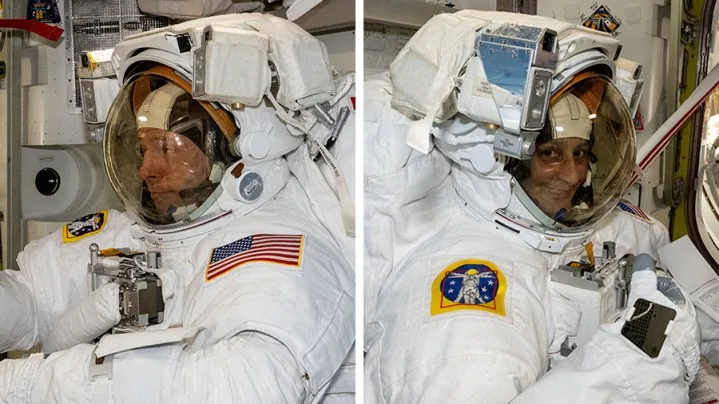
    Butch Wilmore just hours after returning to Earth.
    NASA astronaut and Starliner crewmember Butch Wilmore shortly after returning to Earth. NASA

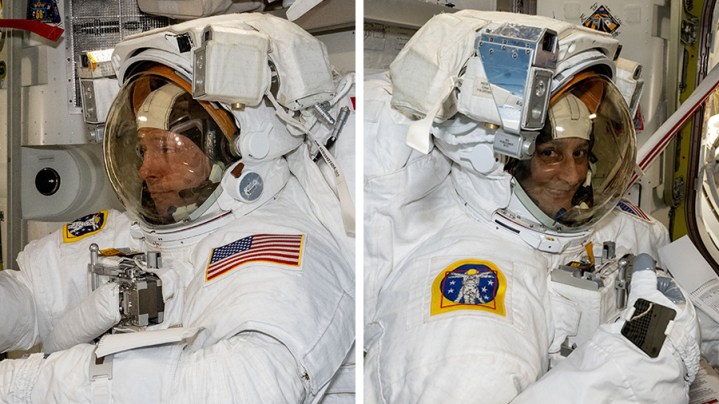
    NASA has released the first pictures of astronauts Butch Wilmore and Suni Williams after their remarkable nine-month journey in space, which was originally planned for just eight days.

    The duo was photographed alongside fellow NASA astronaut Nick Hague and Roscosmos cosmonaut Aleksandr Gorbunov. They all were part of SpaceX’s Crew-9 mission and successfully returned to Earth from the International Space Station (ISS) on Tuesday.

    The images of Wilmore and Williams were taken after their arrival at the Johnson Space Center in Houston following a splashdown off the coast of Florida earlier that day.

    Both astronauts appeared to be in great condition, standing unaided despite the extended time spent in microgravity. Wilmore had a big smile as he greeted officials at the space center.

    NASA astronaut Suni Williams just hours after returning from orbit.
    NASA

    Williams, also standing, smiled brightly as she stepped off the aircraft. The two astronauts had reached orbit aboard Boeing’s Starliner spacecraft back in June 2024. However, the initial crewed flight faced challenges with its thrusters during the journey to the ISS. While they managed to dock successfully, engineers couldn’t confidently resolve the technical difficulties, prompting the decision to return the spacecraft empty, which left Wilmore and Williams awaiting a ride home for nine months.

    Despite the unexpected delay, both astronauts thrived during their time in space and continued to work alongside their ISS crewmates, just as they had done on previous long-term missions aboard the orbital outpost.

    Wilmore and Williams were given seats on SpaceX’s Crew-9 Crew Dragon spacecraft, which arrived at the ISS in September of last year, bringing Hague and Gorbunov for a six-month mission.

    The crew made their return early on Wednesday, splashing down off the coast of Florida, where they were welcomed back by a playful pod of dolphins shortly after landing in the ocean.

  • NASA’s Webb Telescope Looks At Saturn-Like Planets 130 Light-Years Away

    NASA’s Webb Telescope Looks At Saturn-Like Planets 130 Light-Years Away

    The James Webb Space Telescope represents NASA’s pinnacle of precision and technology in the quest to observe the universe’s marvels. Astronomers depend on this remarkable tool to uncover profound mysteries by gazing into far-off solar systems and capturing images of worlds akin to our own.

    Recently, the Webb Telescope achieved a significant milestone by capturing its first direct images of exoplanets located approximately 130 light-years from Earth. The observatory photographed four massive planets orbiting a remote star known as HR 8799. This distant solar system is relatively young, having formed roughly 30 million years ago, a mere fraction compared to the 4.6 billion years of our own solar system.

    Researchers involved in the discovery noted that these planets were formed through a mechanism termed “core accretion,” in which a solid core develops before being enveloped by gas from a protoplanetary disk. This characteristic aligns them more closely with planets like Saturn and Jupiter.

    HR 8799 exoplanets captured by NASA James Webb Space Telescope.
    Exoplanets within HR 8799, as captured by NASA’s James Webb Space Telescope. NASA, Johns Hopkins University

    Due to the intense brightness of distant stars, capturing direct images of exoplanets can be challenging. However, the astronomers utilized a device known as a near-infrared coronagraph to block the direct light emitted by HR 8799, marking the telescope’s first successful capture of a direct image of carbon dioxide.

    By analyzing the different wavelengths of light from each planet, researchers also discerned the presence of elements such as oxygen, carbon, and iron in the atmospheres of these distant worlds. In addition to HR 8799, the team managed to secure direct images of another star, 51 Eridani, along with its accompanying exoplanet.

    William Balmer, the lead author of the study, emphasized the significance of understanding neighboring solar systems, explaining that these insights could help us better comprehend our own solar system, life, and our place in comparison to other exoplanetary systems. This context allows us to better appreciate our existence.

    The research team is now poised to further investigate other nearby stars and their orbiting bodies, with the goal of discovering more exoplanets and distinguishing them from brown dwarfs.

  • NASA’s Mars Rover Collects Unique Rock Sample

    NASA’s Mars Rover Collects Unique Rock Sample

    Perseverance's 26th rock sample collected from the Martian surface.
    NASA’s Mars Perseverance rover captured this image of its 26th rock sample, dubbed “Silver Mountain.” The image was taken with its onboard Sample Caching System Camera, which is located beneath the rover. This camera provides a close-up view down into a sample tube prior to sealing and storing the collected material.
    NASA/JPL-Caltech

    NASA is thrilled about a remarkable rock specimen recently collected by its Perseverance rover on Mars.

    The agency referred to this sample as “a unique treasure,” highlighting its composition, which is rich in low-calcium pyroxene (LCP). This makes it a particularly intriguing find, as it was extracted from the only location along the rover’s trajectory where such low-calcium pyroxene was identified from space.

    A post on Perseverance’s X account described the sample—named Silver Mountain—as something “unlike anything we’ve seen before.” The rock core has been sealed in a sample tube for future transportation to Earth for detailed analysis.

    I’ve successfully climbed out of Jezero Crater and am back to #SamplingMars! My 26th sample, known as “Silver Mountain,” features textures that are unprecedented. I’ve sealed the rock core in a sample tube, ensuring it can be analyzed in labs on Earth later. pic.twitter.com/YqEPZnDnfR

    — NASA’s Perseverance Mars Rover (@NASAPersevere) January 29, 2025

    NASA described this particular sample collection as “a crucial milestone in our quest to understand the geological history of Jezero Crater.”

    This achievement signifies Perseverance’s return to active exploration after spending much of the latter part of last year ascending the slopes of Jezero Crater, which it has been meticulously studying since its dramatic landing there four years ago.

    The rover navigated a distance of 1,640 feet (500 meters) over a three-and-a-half-month period, taking scheduled breaks to conduct scientific observations as part of its ongoing mission to seek evidence of ancient microbial life on Mars.

    Meanwhile, NASA is actively exploring the most effective strategy for executing its Mars Sample Return mission, which aims to transport all the samples gathered by Perseverance back to Earth. This intricate process involves landing a spacecraft on Mars, retrieving the collected samples, transferring them to an orbiting craft, and finally bringing them back to Earth.

    A successful Mars Sample Return mission would provide scientists the opportunity to study Martian material in laboratory settings, potentially revealing insights into whether life once existed on the red planet, as well as enhancing our understanding of its geological history and evolution.

  • NASA Astronauts Repair X-Ray Telescope Outside ISS

    NASA Astronauts Repair X-Ray Telescope Outside ISS

    This morning, on Thursday, January 16, at 8:01 a.m. ET, two NASA astronauts ventured outside the International Space Station (ISS) for a spacewalk. Their mission, expected to take about six and a half hours, involves repairing the NICER (Neutron star Interior Composition Explorer) X-ray telescope mounted on the station’s exterior.

    Nick Hague and Suni Williams are undertaking NASA’s first spacewalk in over six months. Spacewalk activities were paused following a spacesuit leak in June 2024. Fortunately, both astronauts are encountering no suit issues, enabling them to focus on their task of applying special patches to the damaged areas of the telescope’s light filter. These patches will reduce excessive light interference, ensuring more accurate readings from the observatory.

    NASA astronauts Nick Hague and Suni Williams examining their spacesuits in a pressurized airlock.
    Astronauts Nick Hague and Suni Williams assess their spacesuits in a pressurized configuration within the Quest airlock. NASA

    NASA representatives expressed gratitude on social media for Hague and Williams’ efforts in repairing the NICER telescope, an instrument designed to study dense celestial objects known as neutron stars through X-ray observations. NICER has previously created a remarkable map highlighting X-ray sources as observed from the ISS.

    Post-repair, NICER will undergo some adjustments and calibrations to ensure it can resume its scientific observations shortly.

    The patches for our NICER telescope have been installed thanks to @NASA_Astronauts Nick Hague!

    The next steps for the NICER team include unstowing the telescope and restarting daytime observations to examine the data with the patches installed. Stay tuned for updates. pic.twitter.com/JhFgskAmlj

    — NASA Universe (@NASAUniverse) January 16, 2025

    While conducting their spacewalk, Hague and Williams will also tackle additional tasks, such as removing and replacing a component known as a rate gyro assembly. This assembly is vital for maintaining the station’s orientation as it travels roughly 250 miles above Earth. Other maintenance duties include changing a reflector device on one of the docking adapters, which assists in navigation by indicating the position of the docking area. They will also inspect a section set for future maintenance work.

    This upcoming maintenance will involve a future spacewalk to work on the Alpha Magnetic Spectrometer, an instrument designed to explore dark matter that was classified as “unfixable” in 2011. However, astronauts succeeded in repairs in 2023, which included special tools designed to modify its cooling system, extending its operational life despite it originally being intended for only three years of use without astronaut maintenance.

    For those interested in watching the spacewalk, it can be viewed here:

    US Spacewalk 91 with Astronauts Nick Hague and Suni Williams (Official NASA Broadcast)

  • Parker Solar Probe Makes Historic Closest Approach to the Sun

    Parker Solar Probe Makes Historic Closest Approach to the Sun

    The Parker Solar Probe is making groundbreaking strides as it travels into the Sun’s outer atmosphere, braving extreme temperatures and powerful radiation. During this daring flyby, the spacecraft will temporarily lose communication for several days, with scientists eagerly anticipating a critical signal on December 28 at 5:00 AM GMT to confirm its safe passage.

    The mission aims to shed light on the Sun’s inner workings. Dr. Nicola Fox, NASA’s head of science, shared with BBC News, “For centuries, humanity has examined the Sun, but we cannot truly understand the atmosphere of an entity until we physically explore it. We can’t grasp our star’s atmosphere without traversing it ourselves.”

    Launched in 2018, the Parker Solar Probe is steadily making its way toward the core of our solar system. It has successfully completed 21 orbits around the Sun, inching ever closer, but the upcoming Christmas Eve flyby will mark a significant milestone. At its nearest point, the probe will be just 3.8 million miles (6.2 million kilometers) away from the Sun’s surface.

    While this distance may appear considerable, Dr. Fox provided a vivid analogy: “We are 93 million miles from the Sun, so if the distance between the Sun and Earth were just one meter, the Parker Solar Probe would be only four centimeters away—an incredibly close proximity.”

    The probe will encounter temperatures soaring to 1,400°C (2,552°F) and radiation potent enough to potentially harm its onboard electronics. To protect itself, the spacecraft is equipped with an 11.5 cm (4.5 inches) thick carbon-composite shield, and its strategy involves a quick pass-through. Traveling at a breathtaking speed of 430,000 miles per hour—comparable to flying from London to New York in under 30 seconds—the Parker Solar Probe leverages the Sun’s immense gravitational force during its descent.

    The mission’s objective is to unravel the mysteries surrounding the Sun’s outer atmosphere, known as the corona. Dr. Jenifer Millard, an astronomer at Fifth Star Labs in Wales, noted, “The corona is extraordinarily hot, yet we don’t understand why. The Sun’s surface is about 6,000°C, while the corona reaches millions of degrees—even farther from the Sun. So, what causes the heating in its outer atmosphere?”

    The spacecraft’s journey will also enhance scientists’ understanding of the solar wind—a continuous stream of charged particles escaping from the corona. These particles create magnificent auroras when they collide with Earth’s magnetic field but can also disrupt power grids, electronic devices, and communication networks, highlighting the importance of studying space weather.

    “Grasping the Sun’s behavior, its activity, space weather, and the solar wind is vital to our daily lives on Earth,” Dr. Millard emphasized.

    With the spacecraft temporarily offline during Christmas, NASA scientists are anxiously awaiting word of its status. Dr. Fox revealed that once they receive a signal, the team will celebrate by sending her a green heart emoji to indicate that the probe is safe. While acknowledging the tension surrounding the situation, she remains optimistic about the spacecraft’s durability: “I’ll certainly be concerned about the probe, but we’ve designed it to endure these harsh conditions. It’s a remarkably robust little spacecraft.”

    If the Parker Solar Probe emerges unscathed from this extraordinary challenge, it will continue its mission to delve deeper into the Sun’s secrets and extend the frontiers of scientific knowledge.

  • Watch NASA’s SLS Rocket Move Closer To Artemis II Moon Mission

    Artemis II Core Stage Moves to High Bay 2

    Although the launch is not expected until at least mid-2026, NASA is already deep into preparations for its eagerly awaited Artemis II mission.

    The mission will feature the Orion spacecraft, which will carry its first crew towards the moon, propelled by NASA’s Space Launch System (SLS) rocket. After launching, the Orion will pass within 80 miles of the lunar surface, orbit around the moon, and make its way back home.

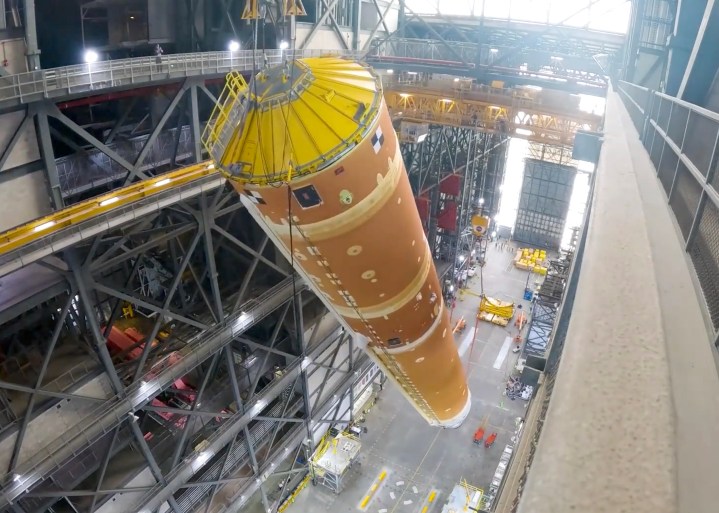
    This week, NASA released a time-lapse video showing the 212-foot core stage of the rocket being moved from a horizontal to an upright position in High Bay 2 at the Vehicle Assembly Building, located within NASA’s Kennedy Space Center in Florida.

    “With the move to High Bay 2, NASA and Boeing technicians now have 360-degree access to the core stage both internally and externally,” the agency noted in its video commentary.

    The core stage of NASA's SLS rocket.
    The core stage of NASA’s SLS rocket inside the Vehicle Assembly Building at the Kennedy Space Center in Florida.
    NASA

    The core stage of the SLS rocket is a crucial part of the vehicle, serving as the primary booster and supporting the entire structure when launching payloads into space. It holds both the payload and upper stages, as well as the avionics systems that manage flight operations.

    This stage generates approximately 1.6 million pounds of thrust during launch, while its two side boosters contribute an additional 3.6 million pounds, leading to a total thrust output of around 8.8 million pounds. This makes it one of the most powerful rockets globally, although it pales in comparison to SpaceX’s Starship, which delivers a staggering 17 million pounds of thrust upon liftoff.

    To date, NASA’s SLS rocket has completed only one flight, which occurred during the Artemis I mission in 2022. This mission rehearsed uncrewed operations ahead of Artemis II.

    The SLS rocket is central to NASA’s overall Artemis program. Following a successful Artemis II mission, it will carry a crew into lunar orbit. The astronauts will then transfer to a SpaceX Starship for humanity’s first return to the lunar surface since 1972. Artemis III, the subsequent mission, was initially slated for 2026 but has recently been postponed to a date no earlier than 2027.