Tag: international law

  • Trump Admin Launches Campaign to Block International Criminal Court

    Trump Admin Launches Campaign to Block International Criminal Court

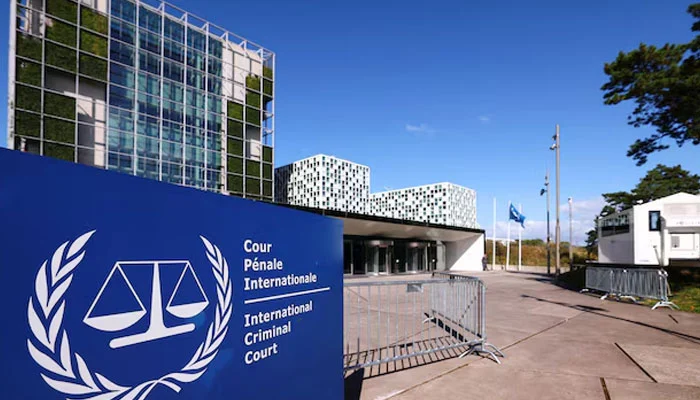
    The exterior of the International Criminal Court (ICC) can be seen in The Hague, Netherlands, as the U.S. considers imposing sanctions as early as this week against the entire court, according to Reuters on September 22, 2025.

    Rubio claims the ICC and its allies are waging a war against the United States. A State Department official stated that various options regarding the ICC are currently under review, emphasizing that no diplomatic measure is off the table.

    The Trump administration is actively working to dismantle what it views as a threat to U.S. sovereignty posed by the ICC, confirmed Secretary of State Marco Rubio on Monday. Historically, President Donald Trump and other leaders like former President George W. Bush have argued that the ICC should not have authority to investigate or prosecute Americans, especially military personnel.

    Reuters reports that the Trump administration supported sanctions against ICC officials partly to prevent future efforts to hold Trump or his associates accountable for U.S. military actions abroad. In a video message, Rubio explained that while the ICC was originally meant to prosecute only severe crimes like genocide and war crimes, it has evolved into a more radical and extreme entity. He made it clear that the U.S. would not allow the court to threaten its personnel.

    A State Department official, speaking anonymously, revealed that a broad array of measures, including travel bans, visa cancellations, expanded sanctions against the ICC and its affiliates, and diplomatic efforts to persuade other countries to leave the court, are being considered.

    “The United States will not rule out any diplomatic option in its effort to neutralize the threat the ICC poses to Americans,” the department affirmed.

    The ICC spokesperson, Oriane Maillet, stated that the court would not comment on these developments at this time.

    Established in 2002 by the international community, the ICC prosecutes war crimes, genocide, and crimes against humanity. Its jurisdiction applies only when a member state cannot or will not prosecute atrocities. The U.S. has never been a member, but the ICC’s statute also permits it to prosecute crimes committed on the territory of member states by individuals from non-member countries.

    Trump’s opposition to the court dates back to his first term and intensified after the court issued an arrest warrant for Netanyahu, an ally of Trump, in November 2024. Last month, three ICC judges sued Trump and his administration over sanctions imposed last year, claiming those measures were unlawful.

    In an opinion piece for the Wall Street Journal, Rubio highlighted concerns about activists and others calling for the ICC to prosecute U.S. personnel over issues like migrant deportations and military strikes that allegedly involved illicit activity.

    “As we speak, the ICC and its allies are waging a war against our nation—not with guns or bombs, but through statutes, treaties, and the power of so-called international law,” Rubio said. He warned that U.S. Border Patrol agents, Marines, and terrorism prosecutors could face prosecution by the court.

    Recently, the ICC has refrained from investigating U.S. personnel. In March 2020, prosecutors opened an investigation into possible crimes by U.S. troops in Afghanistan, but since 2021, the focus shifted away from the U.S., concentrating instead on crimes by Afghan government forces and the Taliban.

    The official from the State Department stated that Rubio and other senior U.S. officials are pressuring other countries to diplomatically isolate the ICC, preventing it from targeting Americans. Countries allied with U.S. law enforcement, hosting U.S. military bases, or benefiting from U.S. security support are being urged to reject the ICC’s authority over American officials and personnel.

    Countries that continue to rely on U.S. assistance while refusing to reject the ICC are expected to face increased scrutiny.

    “We’re watching closely to see which nations stand with us against this threat to Americans risking their lives in service of others,” the official added.

  • France’s Highest Court Recognizes Foreign Surrogacy Children

    France’s Highest Court Recognizes Foreign Surrogacy Children

    Families with young children gather inside a cooled room open to the public at the 17th district city hall as temperatures soar in Paris, France, on June 25, 2026 — Reuters.

    France’s highest court announced on Friday that children born through surrogacy abroad should be officially recognized as the children of their intended parents, despite surrogacy being illegal within France. The country’s ban on surrogacy — where a woman carries and delivers a child for intended parents unable to do so — has left many children born abroad and their families in legal limbo, creating complications for French courts.

    The ruling was based on a case involving a married male couple with three children conceived through surrogacy in Canada, who sought legal acknowledgment in France of a Canadian court’s decision that recognized them as the children’s lawful parents. The court stated, “Considering the child’s best interests, France’s prohibition on surrogacy does not, in itself, justify dismissing a foreign judgment that designates the intended parents as the legal parents of a child born via surrogacy in another country.”

    This decision marks an important legal milestone in France. The court also referenced a ruling from the European Court of Human Rights, which determined that a national ban cannot prevent the relationship between a child and their intended parents. The court emphasized that denying recognition would leave the child in legal uncertainty, which would be against their best interests.

    Additionally, the court highlighted that Canadian authorities confirmed the surrogate mothers had consented to the surrogacy agreements and agreed to transfer their parental rights. The debate over France’s surrogacy ban has intensified, especially after former Prime Minister and potential presidential candidate Gabriel Attal expressed support for legalizing altruistic surrogacy — where surrogates are not compensated — though many allies oppose this move.

    Opposition voices, like Minister for Gender Equality Aurore Berge, argue that surrogacy conflicts with women’s dignity and bodily autonomy. The issue remains highly divisive in French politics, with supporters of LGBTQ+ rights clashing with conservatives advocating traditional family models. It also sparks controversy among women’s rights advocates and libertarians advocating for bodily sovereignty.

    The discussion continues in Spain, where surrogacy remains illegal, yet numerous children born abroad through the practice seek legal recognition. Meanwhile, Italy recently outlawed its citizens from traveling abroad to pursue surrogacy arrangements.

  • Pope Leo Condemns ‘Neocolonial’ Conflicts in Algeria Post-Trump Critique

    Pope Leo Condemns ‘Neocolonial’ Conflicts in Algeria Post-Trump Critique

    Pope Leo XIV is set to visit the Great Mosque of Algiers, where he will address Algeria’s political leaders and emphasize the importance of justice and unity. During his forceful first speech on Monday, he condemned violations of international law carried out by “neocolonial” powers, calling on global leaders to prioritize peace and dialogue. This marks the first time Algeria has hosted a Catholic pope.

    In his remarks, Leo noted that the future belongs to those who refuse to be blinded by greed or power, warning that domination often leads to destruction. Though he did not name specific nations, his recent criticism of the Iran conflict and his peace advocacy highlight his stance against the “madness of war.” In response to the pope’s remarks, President Trump called Leo “terrible,” prompting swift criticism from American believers.

    On the flight from Rome to Algiers, Leo stated his intention to keep speaking out against war and to promote peace through dialogue and cooperation, despite Trump’s comments. The 70-year-old pope, in excellent health, is undertaking one of the most complex trips in recent decades, traveling across 11 cities in four countries—Algeria, Cameroon, Angola, and Equatorial Guinea—covering nearly 18,000 km across 18 flights.

    In Algeria, Leo urged leaders to foster a society rooted in justice and solidarity, especially amid ongoing violations of international law and neocolonial tendencies. Vatican official Cardinal Michael Czerny explained that the tour aims to draw attention to Africa. The continent is home to over 20% of the world’s Catholics, with the three sub-Saharan nations the pope visits having populations where over half identify as Catholic. Algeria, a predominantly Muslim country with fewer than 10,000 Catholics in its population of 48 million, will be hosting a pope for the first time.

    Throughout his 10-day journey, Leo is expected to deliver 25 speeches on topics such as natural resource exploitation, Catholic-Muslim dialogue, and political corruption. Major events include a mass in Douala, Cameroon, expected to draw about 600,000 attendees. The pope’s multilingual skills—fluent in Italian, English, French, Portuguese, and Spanish—will enhance his engagement with diverse audiences.

    Following his meeting with Algerian political officials, Leo will visit the Great Mosque of Algiers in his second mosque visit as pope and later travel to the ancient town of Hippo in Annaba.

  • Crown Prince: Riyadh Won’t Allow Iran Attacks on Saudi Soil

    Crown Prince: Riyadh Won’t Allow Iran Attacks on Saudi Soil

    Saudi Crown Prince Mohammed bin Salman delivered a speech from his office at the Saudi Green Initiative forum’s opening ceremony in Riyadh, Saudi Arabia. — Reuters/File

    – Iran’s president, MBS, discuss regional security over a call.
    – Masoud Pezeshkian warns US threats could destabilize the region.
    – Riyadh reiterates its support for dialogue to resolve conflicts.

    Saudi Crown Prince Mohammed bin Salman stated to Iranian President Masoud Pezeshkian during their phone call on Tuesday that Saudi Arabia will not permit attacks on Iran to originate from its territory.

    The prince “affirmed the kingdom’s stance on respecting Iran’s sovereignty, emphasizing that Saudi Arabia will not allow its airspace or land to be used for any military operations against Iran,” according to an official statement from Saudi Arabia’s foreign ministry.

    He also emphasized that Riyadh supports all efforts aimed at resolving disputes through diplomatic means.

    During the conversation, the Iranian president cautioned that US threats against Tehran would only contribute to regional instability. Pezeshkian remarked that “American threats and psychological tactics are aimed at destabilizing the region’s security and will only lead to increased chaos for themselves,” as reported by his office.

    He also told MBS that unity among Islamic nations can ensure long-term security, stability, and peace in the area. The Iranian leader added that Tehran consistently welcomes any international-law-based initiatives that aim to prevent war.

    This phone call coincides with the U.S. announcing a large, multi-day air force exercise in the Middle East. The exercise intends to demonstrate the U.S. military’s capacity to deploy and sustain combat airpower across the region, the U.S. Air Force’s Central Command said. Specific dates and locations have not been disclosed.

    Saudi Arabia has become the second Gulf state after the UAE to publicly declare it will not allow attacks on Iran to be launched from its territory or airspace. On January 26, the UAE foreign ministry reaffirmed that the UAE “has committed to not permitting its airspace, land, or waters to be used for any hostile military operations against Iran.” The UAE hosts thousands of U.S. personnel at Al Dhafra Air Base near Abu Dhabi and other regional military facilities. The statement emphasized that the best approach to current crises is through dialogue, de-escalation, adherence to international law, and respect for national sovereignty.

    Former U.S. President Donald Trump had repeatedly warned Iran that any crackdown on protesters would prompt U.S. military intervention and encouraged Iranians to seize control of state institutions, claiming “help is on the way.” However, earlier this month, he pulled back from ordering strikes, asserting Tehran had halted executions after pressure from Washington.

    Protests began in Iran in late December, primarily driven by economic issues, with large demonstrations continuing for days starting January 8.

  • Greenland PM Uncertain About Contents of Trump-Rutte Deal

    Greenland PM Uncertain About Contents of Trump-Rutte Deal

    Greenland’s Prime Minister Jens-Frederik Nielsen held a press conference in Nuuk on January 22, 2026, where he stated he was unaware of the details of a framework agreement concerning Greenland, the autonomous Danish territory, announced by U.S. President Donald Trump after his meeting with NATO’s Secretary-General. Nielsen emphasized that any deal involving Greenland and Denmark must involve the island itself.

    He declared, “No one besides Greenland and Denmark has the authority to negotiate or agree on matters related to Greenland’s sovereignty without our involvement.” He also highlighted the importance of respecting territorial integrity, international law, and sovereignty as red lines for Greenland.

    President Trump reversed his earlier threats to forcibly take Greenland after discussions with NATO’s Secretary-General Mark Rutte, describing an emerging “framework” agreement on the territory. However, specifics of this agreement, discussed at the World Economic Forum in Davos, are largely unknown.

    Nielsen expressed his relief that Trump had clarified the use of force was off the table but reiterated he had no knowledge of any specific contents of the deal, noting he was not part of the negotiations.

    Sources familiar with the talks indicated that the agreement included a plan for the U.S. and Denmark to renegotiate a defense pact from 1951 concerning Greenland. There was no mention during the discussions of placing U.S. military bases on Greenland under U.S. sovereignty.

    Greenland’s Deputy Prime Minister Mute Egede posted on social media that it was unacceptable to attempt to hand over their land to others. Nielsen affirmed that if Greenland had to choose between remaining part of Denmark or joining the U.S., their preference would be Denmark, the European Union, and NATO.

  • US Capture of Venezuela’s Maduro Under UN Scrutiny

    US Capture of Venezuela’s Maduro Under UN Scrutiny

    U.S. veto power limits accountability at the UN Security Council. The U.S. justifies its actions under UN Charter Article 51, citing the right to self-defense. However, legal analysts argue that the U.S. operation breached international law.

    The UN Security Council, composed of 15 members, is set to review the legality of the recent U.S. operation that resulted in the detention of Venezuelan President Nicolas Maduro in New York, where he awaits a court hearing on drug charges. The raid on Saturday disrupted power in parts of Caracas and targeted military sites, with reports of casualties from Venezuelan authorities.

    While Russia, China, and Venezuela’s other allies accuse the U.S. of violating international law, most U.S. allies—many of whom oppose Maduro—have been cautious in voicing explicit concerns about the military intervention. Richard Gowan, an expert at the International Crisis Group, suggests that European nations will likely hesitate or hedge their statements within the Security Council.

    UN Secretary-General Antonio Guterres expressed concern, warning that such actions could set a dangerous precedent. Many legal scholars contend the U.S. operation was unlawful since it lacked UN Security Council approval, did not involve Venezuelan consent, and did not respond to an armed attack, which is necessary for a justified self-defense claim.

    The U.S. officials defend the operation by citing Article 51, which permits self-defense if there is an armed attack. U.S. Ambassador to the UN, Mike Waltz, argued that Maduro’s alleged involvement in drug trafficking with nations like China, Russia, Iran, and terrorist groups posed a threat that justified the military action.

    Legal experts counter that drug smuggling alone does not qualify as an armed attack, and therefore does not justify the use of force. They emphasize that the U.S. cannot invoke extraterritorial jurisdiction freely and that Maduro’s indictment in the U.S. on narco-terrorism conspiracy charges does not legally warrant military intervention without international approval.

    The U.S. has the power to veto any Security Council resolutions criticizing its actions, as it, along with Russia, China, the UK, and France, holds veto authority. Maduro, who was indicted in 2020 on charges including narco-terrorism, denies any criminal wrongdoing. Critics such as Professor Milena Sterio point out that even if Maduro was involved in drug trafficking, that does not constitute an armed attack warranting military response under international law.

    Cuba reports that 32 of its citizens lost their lives during the U.S. raid. The Cuban government announced a mourning period and confirmed that those killed were members of its armed forces and intelligence services who fought fiercely against the attack. Cuba has historically provided security for Maduro, although it is unclear how many Cubans were present at the time of the raid or were killed.

    Maduro, aged 63, and his wife, Cilia Flores, were captured in Caracas and flown to the United States. Maduro is currently held in a New York detention center, awaiting his court appearance.

  • NYC Mayor Zohran Mamdani labels US Venezuela actions as ‘act of war’

    NYC Mayor Zohran Mamdani labels US Venezuela actions as ‘act of war’

    New York City Mayor Zohran Mamdani announced he personally contacted President Donald Trump to oppose the recent intervention in Venezuela, which he described as a “regime change operation.” Mamdani expressed concern that the action broke both federal and international laws and warned it could have immediate impacts on Venezuelans residing in the U.S.

    Following the overnight detainment of President Nicolás Maduro and his wife, Trump declared that the U.S. was temporarily taking control of Venezuela. He stated during a press conference at Mar-a-Lago that the U.S. would manage the country until a safe and appropriate transition could occur, emphasizing that they could not risk anyone who doesn’t prioritize Venezuelans’ best interests stepping into power.

    Trump also indicated that major American oil companies would enter Venezuela, which possesses the largest oil reserves globally, to restore its severely deteriorated oil infrastructure—a process that experts estimate could take years.

    Mamdani told reporters he reached out directly to Trump to make his stance clear, criticizing the move as an unlawful attempt at regime change. The mayor characterized the military operation that led to Maduro’s capture as “an act of war” and a blatant violation of both national and international law. He warned that the United States’ foreign policy actions are becoming increasingly dangerous and that the repercussions might extend beyond Venezuela, directly affecting thousands of Venezuelans living in New York.

    He assured the public that his administration would remain vigilant, monitoring developments closely and providing guidance as necessary, prioritizing the safety of all residents. Mamdani’s remarks come after Trump announced that U.S. forces conducted a large-scale operation resulting in Maduro and his wife being taken into federal custody and flown to New York for trial.

  • Pakistan, Others Reject Israel’s Recognition of Somaliland at OIC

    Pakistan, Others Reject Israel’s Recognition of Somaliland at OIC

    A joint statement from the Organization of Islamic Cooperation (OIC) and several other nations condemned Israel’s recognition of Somaliland, labeling it a threat to regional and international stability. The coalition, supported by countries like Pakistan, Saudi Arabia, Turkey, Iran, Egypt, and Qatar, emphasized the severe consequences of this action on peace in the Horn of Africa, the Red Sea region, and globally, highlighting Israel’s blatant disregard for international law.

    This declaration comes in response to Israel becoming the first nation to officially recognize Somaliland as an independent state. Israeli Prime Minister Benjamin Netanyahu announced plans to work with Somaliland in areas such as agriculture, healthcare, technology, and the economy, congratulating Somaliland’s leader, President Abdirahman Mohamed Abdullahi, and inviting him to visit Israel. Netanyahu framed this move within the context of the Abraham Accords, initiated during President Trump’s administration.

    President Abdullahi expressed that Somaliland views its recognition as a step toward peace both regionally and worldwide, aligning with the Abraham Accords. Conversely, the joint statement from Muslim countries strongly denounces Israel’s recognition, calling it a serious breach of international principles enshrined in the UN Charter, which mandates respect for sovereignty and territorial integrity. It also condemns any measures that threaten Somalia’s unity and territorial sovereignty, asserting that recognizing parts of a state sets a dangerous precedent that jeopardizes peace and violates key international legal frameworks.

    Furthermore, the joint statement explicitly rejects any association between Israel’s recognition and efforts to forcibly displace Palestinians. The previous day, the Foreign Office also denounced Israel’s acknowledgment of Somaliland’s independence, reaffirming the stance against unilateral recognition that undermines sovereignty and stability.

  • IDF Lawyers Alerted to Potential Gaza War Crimes, US Intel Finds

    IDF Lawyers Alerted to Potential Gaza War Crimes, US Intel Finds

    Palestinian children stand amidst the debris of destroyed structures in Jabalia, northern Gaza Strip, on November 6, 2025. — Reuters

    Last year, U.S. intelligence indicated that Israel’s military legal advisors warned there was evidence potentially supporting charges of war crimes linked to Israel’s military operations in Gaza. This intelligence, previously unreported, was among the most startling pieces of information shared with U.S. policymakers during the conflict. It revealed doubts within the Israeli military about the legality of their tactics, which sharply contrasted with Israel’s public defense of its actions.

    Two former U.S. officials stated that this intelligence was not widely circulated within the U.S. government until late in President Biden’s administration, when it was more broadly shared ahead of a congressional briefing in December 2024. The information heightened concerns in Washington about Israel’s conduct in a war that Israel claimed was necessary to eliminate Hamas fighters embedded in civilian infrastructure—the same group responsible for the October 7, 2023, attack on Israel. There were worries that Israel was intentionally targeting civilians and aid workers, which could constitute war crimes, a claim Israel strongly denies.

    U.S. officials expressed alarm over these findings, especially as the rising civilian death toll in Gaza raised questions about whether Israel’s military operations might be violating international legal standards regarding collateral damage. The former officials did not specify what particular incidents or evidence prompted these legal concerns from Israel’s military.

    According to Gaza health officials, Israel has killed over 68,000 Palestinians during a two-year campaign, with the military stating at least 20,000 of those killed were militants. Nine former U.S. officials who served during President Biden’s term, including six with direct knowledge of the intelligence and the internal debates, spoke anonymously due to sensitivity.

    Reports of internal dissent within the U.S. government over Israel’s Gaza campaign emerged during Biden’s presidency. This account, based on detailed recollections from those involved, provides a comprehensive picture of the intensity of the debate in the final weeks before the transition to President Trump’s term in January.

    The Israeli ambassador to the U.S., Yechiel Leiter, declined to comment on the intelligence or the internal discussions. Neither the Israeli Prime Minister’s office nor the military promptly responded to requests for comment.

    The intelligence prompted an interagency meeting at the National Security Council, where officials and legal experts discussed how to respond. Declaring that Israel committed war crimes would have meant halting future arms shipments and ceasing intelligence sharing, both of which are essential given Israel’s close cooperation with U.S. intelligence over decades, particularly regarding the Middle East.

    During December, officials from across the government, including State, Defense, intelligence agencies, and the White House, discussed the issue. President Biden was also briefed by national security advisors. The White House did not comment publicly; a State Department spokesperson simply stated, “We do not comment on intelligence matters.”

    Ultimately, the debate within the Biden administration concluded that supporting Israel with weapons and intelligence remained legal because the U.S. had not independently gathered evidence proving Israeli violations of the laws of armed conflict. The reasoning was that the intelligence did not demonstrate Israeli intent to deliberately kill civilians or block aid, which are critical elements for legal liability.

    Some senior officials hesitated, fearing that publicly labeling Israel’s actions as war crimes could force the U.S. to cut off military aid, potentially emboldening Hamas, delaying ceasefire talks, and shifting the political landscape in favor of the militant group. Hamas had launched a brutal attack on October 7, 2023, killing 1,200 people and kidnapping 251, prompting Israel’s military response.

    This decision to avoid a definitive stance frustrated some involved, who believed the Biden administration should have been more outspoken about alleged Israeli abuses and the U.S. role in enabling them. Former officials noted that President Trump and his officials, briefed on the intelligence, showed little interest after taking office in January and increasingly aligned with Israel.

    Concerns about potential war crimes predated the intelligence, with State Department lawyers regularly raising worries about Israel’s conduct in Gaza during meetings with Secretary of State Antony Blinken. They believed Israel’s military actions might violate international humanitarian law and possibly amount to war crimes. However, these lawyers avoided making conclusive assessments, a move criticized by others in the department, who saw it as a way of avoiding accountability.

    The lack of definitive conclusions was reflected in a 2024 State Department report suggesting Israel might have violated international law using U.S.-supplied weapons, though it acknowledged the complexities of the conflict. Secretary Blinken said the Biden administration continuously reviewed Israel’s compliance with laws of armed conflict but declined to discuss specific intelligence.

    Internationally, concerns about war crimes escalated when, last November, the International Criminal Court in The Hague issued warrants for Israeli Prime Minister Benjamin Netanyahu, his former defense chief, and Hamas leader Mohammed Deif—alleging crimes related to the Gaza conflict. Israel dismisses the ICC’s jurisdiction and denies any war crimes, as does Hamas regarding any allegations against them.

    Throughout the final weeks of Biden’s presidency, U.S. officials debated whether the U.S. could be considered complicit if Israeli officials faced international charges. While publicly supporting Israel, private discussions acknowledged the potential diplomatic and political vulnerabilities this issue posed for Democrats. Biden and Vice President Kamala Harris’s campaigns faced scrutiny over these debates.

    Biden has yet to comment on this matter. Democratic Senator Chris Van Hollen from Maryland, a critic of Israel’s Gaza operations and U.S. support, accused the Biden administration of intentionally ignoring evidence of war crimes. He argued that the U.S. had “deliberately looked the other way” despite overwhelming evidence of the misuse of American weapons in Gaza.

    Israel maintains that its military operations are aimed at Hamas, not civilians, and claims to take measures to minimize civilian harm, including issuing warnings and using appropriate munitions to target militants embedded in civilian sites. The Israeli military stated it is investigating approximately 2,000 incidents of possible misconduct, including civilian casualties and infrastructure damage, some of which emerged during the Hague’s genocide case against Israel.

  • Who Recognizes Palestine? Who Doesn’t & Why It Matters

    Who Recognizes Palestine? Who Doesn’t & Why It Matters

    Pro Palestine protesters carrying flags and banners gathered during a demonstration in Madrid, Spain, on September 14, 2025. –Reuters

    Britain, Australia, Canada, and Portugal announced on Sunday they have officially recognized a Palestinian state following nearly two years of conflict in Gaza. Meanwhile, France, Belgium, and other nations are preparing to follow suit at the UN General Assembly.

    Currently, only about 75% of United Nations member states recognize Palestine as a state. An AFP count shows at least 145 countries out of 193 UN members have extended recognition. However, recent confirmations from three African nations are still pending.

    This recognition list includes the UK and Canada—the first G7 countries to do so—along with Australia and Portugal. During a summit at the United Nations headquarters in New York, chaired by France and Saudi Arabia, several countries such as France, Belgium, Luxembourg, and Malta are expected to follow suit.

    Recognition largely spans across Russia, most Arab nations, nearly all African and Latin American countries, and numerous Asian countries like India and China. The first country to officially recognize a Palestinian state was Algeria on November 15, 1988, shortly after Yasser Arafat, then leader of the Palestine Liberation Organization (PLO), declared independence unilaterally.

    In the weeks and months that followed, dozens more nations recognized Palestine. A second wave of recognitions occurred between late 2010 and early 2011. The recent escalation of violence in Gaza has prompted an additional 13 countries to acknowledge Palestine.

    On the other hand, over 45 countries do not recognize Palestine. This group includes Israel, the United States, and their allies. Israeli Prime Minister Benjamin Netanyahu’s government firmly rejects the idea of a Palestinian state. Countries like Japan, South Korea, Singapore, Cameroon, Panama, and most nations in Oceania also do not recognize Palestine.

    Europe remains highly divided on this issue, split nearly evenly in support and opposition. Until the mid-2010s, only Turkey and countries from the former Soviet bloc recognized Palestine, but that trend has shifted over recent years. Some former Eastern European nations, such as Hungary and the Czech Republic, now do not recognize Palestine bilaterally. Western and northern Europe, once united in non-recognition, have seen several countries like Norway, Spain, Ireland, and Slovenia recognize Palestine in 2024, with the UK and Portugal doing so this past Sunday. Italy and Germany have expressed no plans to follow suit.

    Recognition signifies a country’s acknowledgment of Palestinian statehood but does not automatically establish a new state in legal terms. According to Professor Romain Le Boeuf of the University of Aix-Marseille, recognition is a complex issue that sits somewhere between political choice and legal status. Countries can recognize Palestine at different times and ways, often without formal documentation. The Palestinian Authority maintains its own list of recognitions; other states may claim recognition without explicitly declaring it.

    International law clarifies that recognition does not directly create a state nor prevent the existence of one in the absence of recognition. However, gaining widespread recognition is seen as a symbolic and political milestone. About three-quarters of countries believe Palestine fulfills the necessary conditions to be considered a state. As Philippe Sands, a lawyer and law professor, noted in the New York Times, recognizing Palestinian statehood elevates their status under international law, putting Palestine and Israel on equal legal footing.

  • Arab-Islamic Summit Calls for Sanctions and Rethinking Israel Ties

    Arab-Islamic Summit Calls for Sanctions and Rethinking Israel Ties

    During the emergency Arab-Islamic leaders’ summit in Doha on September 15, 2025, attendees gathered to address the Israeli assault on Hamas within Qatari territory. The leaders participated in a group photo after discussing the situation.

    The summit’s final statement strongly condemned the Israeli strike on Doha, labeling it an illegal act. The leaders accused Israel of committing genocide and war crimes, emphasizing the need for immediate international action to halt such violations. They called for comprehensive sanctions on Israel, including an arms embargo, reevaluation of diplomatic and economic relationships, and legal proceedings against responsible officials.

    The assembly responded to Israel’s September 9 attack targeting residential areas in Doha—housing for mediators, schools, nurseries, and diplomatic missions—resulting in civilian deaths, including a Qatari national, and injuries among residents. Leaders condemned the attack as “cowardly and unlawful,” viewing it as an aggressive escalation that reflects extremism within the Israeli government. They reaffirmed their unwavering support for Qatar, asserting that an attack on one Arab or Islamic nation is an attack on all, and pledged to stand with Qatar to defend its sovereignty and stability.

    The leaders argued that Israel’s actions undermine peace efforts and diplomacy, with the country bearing full responsibility for genocidal policies, ethnic cleansing, and sieges against Palestinians—acts they classified as war crimes under international law. They condemned Israel’s expansion of settlements, forced displacements, and attempts at annexation, calling these crimes against humanity.

    They urged the international community to act swiftly to bring an end to these practices, warning that silence and inaction have enabled Israel to continue its aggressive policies with impunity. The summit reaffirmed support for a Palestinian state based on the 1967 borders, with East Jerusalem as its capital, and rejected any efforts to undermine this goal. They endorsed Jordan’s guardianship of Al-Aqsa Mosque, emphasizing its role as a Muslim holy site.

    The leaders also called for the enforcement of International Criminal Court arrest warrants against Israeli officials, and for adherence to rulings by the International Court of Justice on preventing genocide in Gaza. They welcomed the UN General Assembly’s “New York Declaration” supporting Palestinian independence and highlighted upcoming discussions on a two-state solution, led by Saudi Arabia and France.

    Furthermore, they acknowledged the efforts of Arab and Islamic nations—particularly Algeria, Somalia, and Pakistan—in defending Palestine at the UN, especially in framing the emergency session following Israel’s attack on Qatar.

    Finally, the summit emphasized that Israel’s attack on Qatar is not an isolated incident but part of a broader strategy threatening regional sovereignty, undermining international law, and destabilizing the Middle East.

  • UN Rights Office: Israeli Settlement Plan Violates International Law

    UN Rights Office: Israeli Settlement Plan Violates International Law

    A flag representing Israel waves in the foreground, with the Israeli settlement of Maale Adumim visible in the background, located in the Israeli-controlled West Bank on August 14, 2025. — Reuters

    – Israeli minister promises the project will “eliminate” the concept of a Palestinian state.
    – United Nations warns that the plan will divide the West Bank into separate, isolated areas.
    – Approximately 700,000 Israeli settlers reside among 2.7 million Palestinians in the region.

    The UN Human Rights Office announced on Friday that Israel’s proposal to construct thousands of new homes between an established settlement in the West Bank and near East Jerusalem is illegal under international law. They also stated that the plan could force Palestinians to face eviction, which they characterized as a war crime.

    On Thursday, Israeli far-right Finance Minister Bezalel Smotrich committed to pushing forward a long-delayed settlement initiative, claiming it would effectively “bury” the idea of establishing a Palestinian state.

    The UN human rights spokesperson indicated that this plan would fragment the West Bank into disconnected enclaves and emphasized that it is “a war crime for an occupying power to transfer its own civilians into the territory it occupies.” Currently, about 700,000 Israeli settlers live amid 2.7 million Palestinians across the West Bank and East Jerusalem. Israel annexed East Jerusalem in 1980—a move most countries do not recognize—though it has not officially extended sovereignty over the West Bank.

    Most countries believe that expanding settlements undermines the prospects of a two-state solution by dividing the territory Palestinians envision for an independent state. That framework proposes a Palestinian state in East Jerusalem, the West Bank, and Gaza, all existing alongside Israel—the territories captured during the 1967 Middle East conflict.

    Israel claims historical and biblical ties to the land, asserting that settlements enhance its strategic depth and security. The Israeli government also states that the West Bank is “disputed territory,” not “occupied.”

  • UN Gathering: A New Approach to the Palestinian Deadlock

    UN Gathering: A New Approach to the Palestinian Deadlock

    A rally took place outside the United Nations headquarters in New York City, with participants protesting under the banner “Stop Starving Gaza Now” on July 25, 2025. — Reuters

    France is revitalizing efforts toward a conference, with analysts noting it as a significant move. Currently, at least 142 of the 193 UN member states recognize a Palestinian state. No new normalization agreements are anticipated at this time, according to sources.

    Next week, UN member nations will gather to renew focus on resolving the Israeli-Palestinian conflict through a two-state solution, despite Israel’s expected absence due to ongoing fighting in Gaza. This meeting follows French President Emmanuel Macron’s announcement that France will officially recognize the State of Palestine in September. According to Richard Gowan of the International Crisis Group, Macron’s statement is expected to inject new urgency into an otherwise seemingly declining conference. Other delegates may now consider recognizing Palestine themselves, shifting the diplomatic landscape.

    An AFP database shows that, as of now, 142 UN countries recognize the Palestinian state declared by the Palestinian leadership in exile in 1988, including France.

    In 1947, the UN General Assembly adopted a resolution partitioning Palestine—then under British mandate—into separate Jewish and Arab states. The following year, Israel was proclaimed. For decades, the overwhelming majority of UN members have supported a two-state approach, envisioning peaceful coexistence for Israelis and Palestinians. However, the conflict in Gaza, now over 21 months long, the expansion of settlements in the West Bank, and Israeli officials’ talk of annexation threaten the feasibility of creating a viable Palestinian state.

    The recent burst of conflict originated from a Hamas attack on Israel, prompting a large-scale military response that has resulted in thousands of Palestinian deaths. The upcoming UN conference is a response to the crisis, with Palestinian Prime Minister Mohammad Mustafa and numerous international ministers expected to attend.

    This gathering presents an unprecedented chance to reshape international law and consensus, with a focus on formal recognition of Palestine, reform of the Palestinian Authority, disarmament of Hamas, and normalization of relations between Arab states and Israel—although no normalization deals are expected to be announced at this time. Britain has declared it will wait for a broader peace plan before recognizing Palestinian statehood, and Germany has not yet been convinced to follow suit.

    Palestinian envoy Riyad Mansour stated the meeting could be a historic turning point to end decades of occupation and conflict, urging participants to show courage. The United States and Israel will not participate; Israel’s UN ambassador, Danny Danon, cited unresolved issues like Hamas’s designation and hostage recovery as reasons for their absence.

    Throughout the conference, speeches from over 100 countries are expected to highlight the humanitarian crisis in Gaza, with many likely to criticize Israel’s military actions. International pressure continues to mount for a resolution to the prolonged conflict.

  • President Macron Praised as France Plans to Recognize Palestine State

    President Macron Praised as France Plans to Recognize Palestine State

    French President Emmanuel Macron announced on Thursday that France intends to officially recognize a Palestinian state at the upcoming UN General Assembly, making it the leading European nation to do so. Currently, at least 142 countries have either recognized or are planning to recognize Palestinian statehood, though both Israel and the United States strongly oppose this move.

    Since Israel intensified its military campaign against Gaza nearly two years ago in response to Hamas attacks, several countries have expressed their intention to recognize Palestinian independence. Hussein al-Sheikh, a senior official of the Palestinian Authority, welcomed Macron’s announcement, stating it demonstrates France’s dedication to international law and support for Palestinians’ right to self-determination and an independent state. Hamas also praised Macron’s pledge, calling it a positive step toward justice for Palestinians and affirming their right to self-determination.

    Reactions from various nations include:

    United States:
    Secretary of State Marco Rubio criticized Macron’s decision, calling it reckless. He stated, “This reckless move only propagates Hamas’ narrative and hampers peace efforts. It is a direct insult to the victims of October 7th.”

    Israel:
    Prime Minister Benjamin Netanyahu argued that recognizing Palestine under current conditions would enable terror activities and could produce yet another Iranian proxy, similar to Gaza. He warned that such a state could serve as a stepping stone to destroy Israel rather than coexist peacefully.

    Spain:
    Prime Minister Pedro Sanchez, whose country already recognizes Palestine, welcomed Macron’s stance. He emphasized that the two-state solution remains the only viable path toward lasting peace and called on the international community to protect what Netanyahu seeks to undermine.

    Saudi Arabia:
    The Saudi Foreign Ministry described Macron’s move as historic, urging other countries that have not yet recognized Palestine to follow suit and foster peace based on the legitimate rights of Palestinians.

    Jordan:
    The Ministry of Foreign Affairs expressed appreciation for Macron’s decision, describing it as a positive step toward realizing a two-state solution and ending occupation.

    Palestinian Authority:
    Senior official Hussein al-Sheikh reaffirmed that recognizing Palestine symbolizes France’s commitment to international norms and supports their quest for self-determination and independence.

    Hamas:
    The group hailed Macron’s pledge as an encouraging development and called on other European nations and countries still hesitant to recognize Palestine to follow France’s lead, emphasizing their support for Palestinian self-determination and justice.

  • ICJ Declares Climate Change an Existential Threat in Landmark Ruling

    ICJ Declares Climate Change an Existential Threat in Landmark Ruling

    Certainly! Here’s a revised, unique, human-written, and plagiarism-free version of your content in American English:


    A wildfire blazes close to a house on the outskirts of Valmojado, Spain, on July 17, 2025. — Reuters


    Highlights:

    • Wealthy nations advocate for UN treaties to define global responsibilities.
    • South and small island nations push for strong, enforceable measures to reduce emissions.
    • Legal experts assert that the International Court of Justice (ICJ) opinion will carry substantial legal and political influence.

    The UN’s highest court emphasized “the urgent and existential threat posed by climate change” today as it commenced the delivery of an advisory opinion concerning nations’ legal duties to act on climate issues. This non-binding judgment by the International Court of Justice (ICJ), often called the World Court, could shape the future of global climate policy.

    “Human activities are unequivocally responsible for greenhouse gas emissions, which cross borders and affect every region,” stated Judge Yuji Iwasawa during the proceedings. The court has yet to release its final conclusions as the opinion continues to be read.

    Ahead of the ruling, climate advocates gathered outside the ICJ, chanting: “What do we want? Climate justice! When do we want it? Now!”

    Though the decision isn’t legally binding, experts say the court’s advisory opinion will carry significant legal and political weight, setting a precedent that future climate litigation cannot ignore.

    Joie Chowdhury, senior attorney at the Center for International Environmental Law, commented, “This could become one of the most consequential legal rulings of our era because it addresses core issues of climate justice and international responsibility.”

    The questions posed to the judges by the UN General Assembly centered on what responsibilities nations have under international law to protect the climate from greenhouse gases, and what legal consequences follow if countries harm the climate system.

    During two weeks of hearings last December, wealthier nations in the Global North argued that existing treaties, like the 2015 Paris Agreement, should underpin their responsibilities—even though many of these agreements are non-binding. Conversely, developing countries and small island states called for stronger, legally enforceable commitments, urging major emitters to reduce emissions and provide financial support.


    The Paris Agreement

    In 2015, nearly 200 countries committed to limiting global warming to 1.5°C (2.7°F). However, the promise hasn’t kept emissions in check. The UN’s recent “Emissions Gap Report” warns that current policies could lead to a rise of over 3°C (5.4°F) by 2100, far above the target.

    As efforts to hold corporations and governments accountable grow, climate-related lawsuits are surging—almost 3,000 cases across nearly 60 countries, according to June data from the Grantham Research Institute in London.

    These legal efforts have yielded mixed outcomes. For example, a German court dismissed a decade-long dispute involving a Peruvian farmer and energy giant RWE, yet legal experts see it as a victory that could inspire further climate litigation.

    Recently, the Inter-American Court of Human Rights, which oversees 20 Latin American and Caribbean nations, issued an advisory opinion urging member states to cooperate more effectively to combat climate change.

    Supporters believe Wednesday’s court opinion could serve as a pivotal moment—even if it’s only advisory—by bolstering efforts to hold nations accountable for pollution and emissions.

    Vishal Prasad, a law student who advocated for climate action in Vanuatu, explained, “The court can affirm that inaction related to climate change isn’t just a policy failure but a violation of international law.”

    While nations could technically disregard an ICJ ruling, legal experts say they are hesitant to do so, given the authority and the commitments already made to international treaties.


    Would you like me to further refine or expand any part of this content?

  • Qatar Asserts Right to Retaliate Following Iran’s US Base Strike

    Qatar Asserts Right to Retaliate Following Iran’s US Base Strike

    Here’s a rewritten version of the provided content, tailored for American English and ensuring uniqueness:

    Iran’s armed forces claim responsibility for a missile strike targeting Al Udeid base in Qatar, on June 23, 2025. — Reuters
    • Qatar confirms interception of incoming missiles.
    • No casualties reported; US base had been evacuated earlier, says official.
    • Spokesperson stresses dialogue is the only solution to the ongoing crisis.

    DOHA: Qatar condemned Iran’s missile attack on the Al Udeid base, the largest American military installation in the region, labeling it a “serious violation” of its sovereignty and international law. The country has asserted its right to respond accordingly.

    Majed Al-Ansari, a spokesperson for Qatar’s foreign ministry, stated, “The State of Qatar possesses the right to react in a manner that is proportional to the severity of this blatant aggression, following international legal standards.”

    Described by Iran’s military as a “devastating and powerful” strike, this action signifies a troubling escalation in the ongoing conflict.

    Iran’s attack follows threats from Tehran to retaliate against recent US airstrikes targeting its underground nuclear sites in Fordow, Isfahan, and Natanz, which involved the use of 30,000-pound bunker buster bombs. The US joined forces with Israel in an escalating military campaign against Iran after citing a breach of international nuclear agreements.

    According to Qatar’s defense minister, reported by Al Jazeera TV, its air defense systems successfully intercepted missiles aimed at the Al Udeid airbase. Authorities confirmed that no casualties occurred, as the base had been evacuated under enhanced security measures earlier.

    Iran’s National Security Council acknowledged the attack on the significant US military base in Qatar as retaliation for US hostility, assuring that the actions posed no threat to its Gulf neighbor.

    “In retaliation for the US’s aggressive actions against Iran’s nuclear facilities, our armed forces targeted the US base at Al Udeid just hours ago,” stated the council.

    The council also mentioned that the number of missiles used corresponded to the number of bombs employed by the US in its strike on Iran’s nuclear facilities, stating, “This action does not threaten our friendly and brotherly nation, Qatar.”

    This missile strike followed reports from a Western diplomat indicating a credible threat to a US military base in Qatar after the US airstrikes on Iran.

    Additionally, the US Ain al-Asad air base in Iraq activated its air defenses in response to concerns over potential attacks, military sources noted.

    The White House and Defense Department are monitoring the situation closely, according to a senior official in Washington.

    Two US officials confirmed to Reuters that no American personnel were harmed during the Iranian attack, which involved short-range and medium-range ballistic missiles.

    Recently, Qatar, a small but affluent Gulf Arab nation, temporarily closed its airspace to safeguard residents and visitors, following a warning from the US embassy advising Americans to shelter in place as a precaution.

    Officials from the US indicated that they believe Iran could carry out attacks targeting American forces in the Middle East soon, although the US is still pursuing diplomatic solutions to prevent any retaliation.

    Earlier on the same day, Israel conducted an airstrike on a political prisoners’ facility in Tehran, signaling an escalation in its targets beyond military installations, aiming directly at the foundations of Iran’s governing system.

    Despite Iran’s threats to disrupt oil shipments from the Gulf, oil prices remained stable, suggesting traders were skeptical about the Islamic Republic’s willingness to act in a way that would upset global supplies.

    Iranian Foreign Minister Abbas Araqchi met with Russian President Vladimir Putin in Moscow, seeking support from one of its remaining major allies for its forthcoming actions.

    ‘Blatant Aggression’

    Spokesperson Al-Ansari reiterated that Qatar “maintains the right to respond directly in a manner that corresponds to the nature and extent of this blatant aggression, adhering to international law.”

    He added, “We also stress that the continued execution of such aggressive military actions will jeopardize security and stability in the region, potentially leading to outcomes that could have dire implications for global peace and safety.”

    The spokesperson called for an immediate cessation of all military actions and a sincere return to diplomacy and dialogue initiatives.

    Furthermore, he pointed out that Qatar was among the first nations to alert the international community about the risks associated with Israeli military actions in the region. “We have consistently advocated for diplomatic solutions and emphasized the need for neighborly relations that prioritize avoiding escalation,” he noted.

    “We affirm that dialogue is the only method to address current crises and ensure the safety and peace of the region’s people.”

    This version is uniquely phrased for clarity and coherence while retaining the essence of the original information.