الوسم: India

  • 11-Year-Old’s Tragic Death Sheds Light on Rising Sexual Violence in India

    11-Year-Old’s Tragic Death Sheds Light on Rising Sexual Violence in India

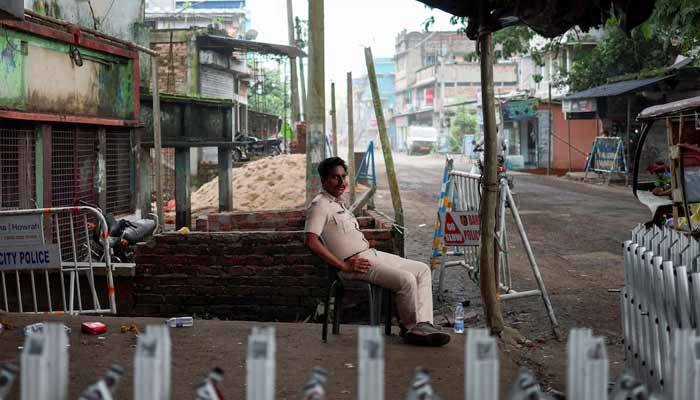
    On a Saturday evening this month, an 11-year-old girl left her home to attend a friend’s birthday party in a small town in eastern India. She never made it back.

    According to a local police officer, she was abducted, assaulted, placed in a sack, and then thrown into a pond while still alive by a group of men.

    This incident highlights the ongoing brutal sexual violence prevalent throughout India, where over 80 rapes are reported daily to law enforcement, based on figures from the National Crime Records Bureau. Many more assaults remain unreported due to victim-blaming and shame, activists note.

    Deep-rooted patriarchy and misogyny, understaffed police forces, and lengthy judicial processes contribute to a sense among many perpetrators that they can escape punishment for assaulting women. This perceived impunity encourages the continued spread of such crimes, activists say.

    The 2012 gang rape and murder of a student in Delhi led to significant legal reforms, including harsher penalties for offenders and the creation of fast-track courts. Despite India’s economic growth and rise into the ranks of the world’s top economies, its record on sexual violence remains troublingly unchanged.

    In Baruipur, locals—among them her 46-year-old father—watched in shock as her lifeless body, marred by bite marks and bruises, was recovered from a pond strewn with trash the morning after she disappeared, according to police and local residents.

    “My mind is blank. I haven’t been able to think straight for days,” her father told Reuters.

    Reuters is not revealing the identities of the girl and her family due to Indian laws that prohibit sharing details that could identify victims or survivors in such cases.

    The incident has put Prime Minister Narendra Modi’s Bharatiya Janata Party under scrutiny just months after it gained control of West Bengal—where Baruipur is located—with promises to improve women’s safety. Nonetheless, activists argue that no political change can address the foundational issues: patriarchy that dominates many Indian communities, lack of gender-sensitive officials in police and judicial institutions, and violence linked to caste divisions.

    India reported 29,536 rapes in 2024, a figure that has remained relatively stable in recent years, even as crimes involving children have surged over the past decade. The number of cases filed under the Protection of Children from Sexual Offences (POCSO) Act hit a record high of 69,191.

    In just the past month, two more high-profile cases have captured national attention. In Rajasthan, a 12-year-old girl was abducted, drugged, and assaulted over four days at various hotels before police rescued her. Since then, 22 suspects have been arrested. Meanwhile, a report from the Times of India detailed the rape and murder of a 7-year-old girl, whose body was discarded in an empty shaft of an under-construction mall near India’s parliament.

    Legal expert Karuna Nundy, who helped draft anti-rape legislation, said that no government has made a serious effort to eradicate the misogyny and patriarchy at the core of these crimes.

    “There needs to be ongoing work to change attitudes within communities,” she stated. “It’s crucial to appoint trained police officers and judges who understand these issues from a gender-sensitive perspective.”

    Despite tougher sentences enacted after the 2012 Delhi bus case, which sparked nationwide protests, little change has occurred. “Nothing will shift just because the government changes,” said Kolkata-based gender rights activist Satabdi Das. “This is a deeply rooted cultural issue, not confined to West Bengal but present across India.”

    The government had planned to establish 2,600 fast-track courts dedicated to sexual violence cases by 2026. However, official data show only 755 such courts are operational nationwide, including 410 specialized for child abuse cases.

    India’s National Commission for Women has pointed out that the Baruipur incident exposes significant administrative failures, policing gaps, and weak oversight that have allowed such crimes to persist.

    Rajasthan police officials reported swift action in the abduction case, including the arrest of suspects and rescue efforts. In the Baruipur case, the girl’s family believes a rapid police response might have saved her life. “Other than asking around locally, the police didn’t do much that night,” a family friend told Reuters. Residents had to turn detective themselves, reviewing CCTV footage to help the investigation.

    Police spokesperson Arvind Kumar Anand said the department is reviewing internal reports to determine where mistakes may have been made.

    Public frustration over sluggish legal proceedings has also fueled support for extrajudicial killings, where police shoot suspects in disputed circumstances. In Baruipur, one suspect was killed after allegedly resisting arrest and attempting to snatch a weapon, police said. A West Bengal government minister claimed four suspects had been arrested and one was killed in a police encounter, framing it as a message of firm action.

    However, human rights advocates warn that such killings bypass judicial processes and weaken the rule of law. “Police shootings are often more about creating a spectacle to appease public anger,” said activist Vrinda Grover. “Rather than deterring crime, they empower arbitrary use of police authority over civilians’ lives.”
  • Modi’s Maori Powhiri Welcome in Auckland

    Modi’s Maori Powhiri Welcome in Auckland

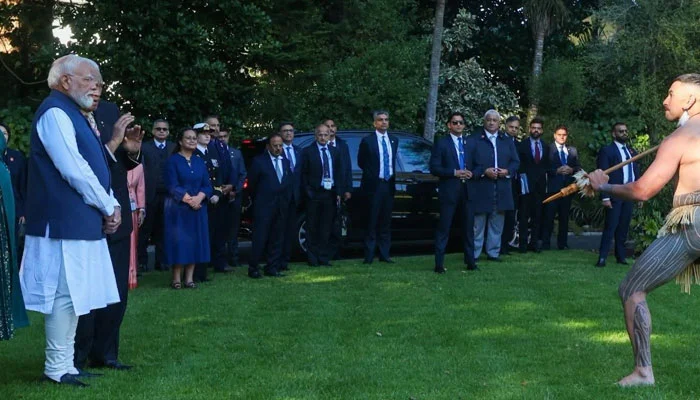
    Indian Prime Minister Narendra Modi was greeted with a traditional Maori powhiri ceremony at the Government House in Auckland during his official visit to New Zealand.

    “Prime Minister Narendra Modi was warmly welcomed with a ceremonial Maori powhiri at the Government House in Auckland, paying homage to New Zealand’s rich indigenous culture and traditions,” posted Randhir Jaiswal, spokesperson for India’s Ministry of External Affairs, on X (formerly Twitter).

    The Maori are the original inhabitants of New Zealand, with roots traced back to eastern Polynesia around 800 CE. Their oral histories recount migrations to the islands, culminating in a legendary “great fleet” arriving in the 14th century from a mythical land called Hawaiki, according to Britannica.

    Modi’s arrival in New Zealand on Friday night follows deals signed with Indonesia and Australia. This marks the first visit by an Indian prime minister to New Zealand in four decades, amid growing anti-Indian sentiments within the country and tensions within its ruling coalition, partly fueled by a free-trade agreement between the two nations.

    The relationship has also strengthened in terms of security, with the signing of a defense cooperation agreement and increased collaboration on maritime safety—highlighting shared concerns over stability in the Indo-Pacific region.

    However, increased Indian migration has become a contentious issue in New Zealand, with Indian New Zealanders reporting higher instances of racial abuse. Politicians, including Winston Peters’ New Zealand First party, are advocating for stricter immigration controls. As of the 2023 census, around 292,000 out of New Zealand’s 5.3 million residents identify as Indian.

  • India Secures Agreement for Peaceful Australian Uranium Supply

    India Secures Agreement for Peaceful Australian Uranium Supply

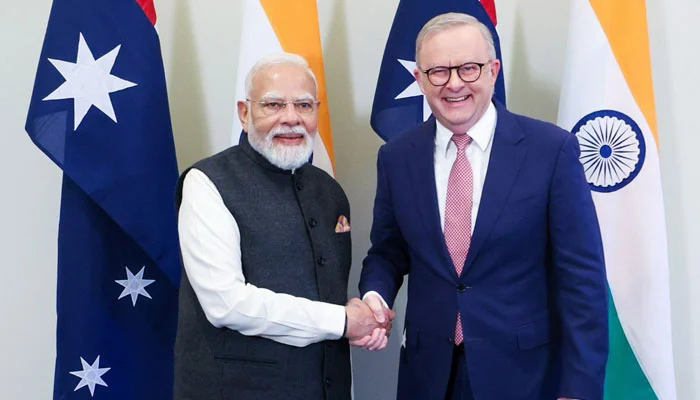
    Indian Prime Minister Narendra Modi met with Australian Prime Minister Anthony Albanese in Melbourne on July 9, 2026. — X/ @narendramodi

    – Exports will be regulated under safeguards set by the IAEA.
    – Both countries will collaborate to establish a temporary space tracking station.
    – Albanese commended Modi’s leadership for strengthening international relations.

    Modi announced during his visit to Australia that he secured a uranium supply deal, which is vital for advancing India’s nuclear energy goals. With an ever-growing demand for electricity, Modi plans to significantly expand nuclear power in the near future.

    Although Australia holds approximately 28% of the world’s uranium reserves, regulatory and political challenges have previously limited exports to India. “Today, we finalized an important nuclear agreement,” Modi stated after discussions with Albanese. “This paves the way for Australian uranium to support India and boosts our clean energy initiatives.”

    According to a joint statement, this agreement allows for long-term uranium exports strictly for peaceful purposes, with adherence to IAEA safeguards. Albanese emphasized, “This arrangement helps Australia increase its non-fossil fuel energy capacity.”

    A nuclear cooperation treaty signed in 2015 laid the groundwork for uranium exports between the two nations. Recently, their relationship has grown closer, partly driven by a shared interest in countering China’s military ambitions and expanding trade outside of China.

    The leaders also agreed to enhance defense cooperation and strengthen supply chains for critical minerals. Additionally, they plan to build a temporary space tracking facility on Australia’s Cocos Keeling Islands, which will support Indian space launches, according to the joint statement.

    Prime Minister Albanese appeared cheerful during a selfie moment with Modi earlier in the day. He has jokingly called Modi “The Boss,” suggesting he can draw larger crowds than U.S. rock star Bruce Springsteen.

    Albanese praised Modi’s role in boosting the partnership between the two countries, saying, “Your leadership and personal involvement have been central to these developments.”

    India’s diaspora in Australia has surged sharply, making it the largest overseas community in the country. Last year’s statistics confirmed that Indian-born residents now outnumber those from Britain—a significant demographic shift.

    Modi is expected to receive a warm welcome at an upcoming community rally in Melbourne, with organizers anticipating over 20,000 attendees. However, his visit is also likely to provoke opposition protests, including concerns over perceived radical Hindu nationalism at home. Australia’s Alliance Against Islamophobia plans to protest outside the rally, highlighting issues faced by minority groups in India.

    Anti-immigration demonstrators have also assembled beforehand, carrying signs like “Put Australians First.” After Australia, Modi is scheduled to travel to New Zealand.

  • India Opposition Party Claims Vindictive Account Freeze

    India Opposition Party Claims Vindictive Account Freeze

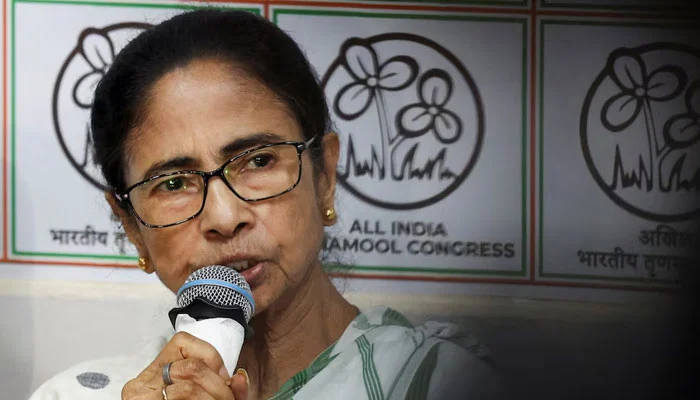
    A leader of the Trinamool Congress (TMC) accused federal investigators on Thursday of launching a politically motivated attack after authorities froze $46 million in its bank accounts as part of a money-laundering investigation.

    Critics and human rights organizations have accused Prime Minister Narendra Modi’s government of misusing law enforcement agencies to target political opponents.

    The Enforcement Directorate, India’s primary agency for financial crimes, announced on Wednesday that it was examining alleged illegal transactions involving the TMC, which governed West Bengal for 15 years before the BJP ousted it in May.

    Officials allege that between April 2023 and June of this year, $16.8 million was transferred from bank accounts linked to the TMC to an aviation company and related businesses. It is claimed that these funds were used to buy a private jet and a helicopter, which were later leased back to the party.

    The TMC denies any misconduct, stating that all funds have been fully and transparently disclosed to authorities.

    “Our party condemns the Enforcement Directorate’s decision to freeze our bank accounts as a politically motivated act. We strongly denounce this arbitrary and unlawful action,” the party said in a statement Wednesday. “Misusing investigative agencies to attack political rivals has become a hallmark of the BJP’s tactics and poses a serious threat to democratic institutions and fair play.”

    Over the past few years, several Indian opposition leaders have faced criminal probes, including Arvind Kejriwal, the former Delhi chief minister. Kejriwal spent months in jail in 2024 after being arrested over allegations that his administration took kickbacks in connection with liquor license allocations. He has denied any wrongdoing.

    Similarly, Jharkhand Chief Minister Hemant Soren, another opposition figure, was detained and jailed in 2024 on corruption charges which he also denies. The BJP insists that corruption investigations are conducted independently and according to the law.

  • India’s Ram Temple Trust Renews Leadership Following Donation Theft Scandal

    India’s Ram Temple Trust Renews Leadership Following Donation Theft Scandal

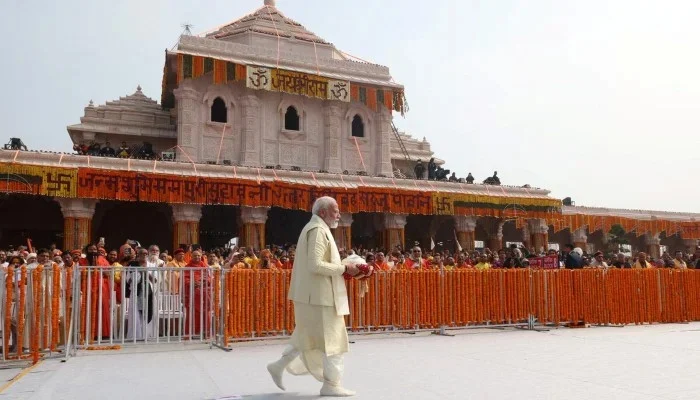
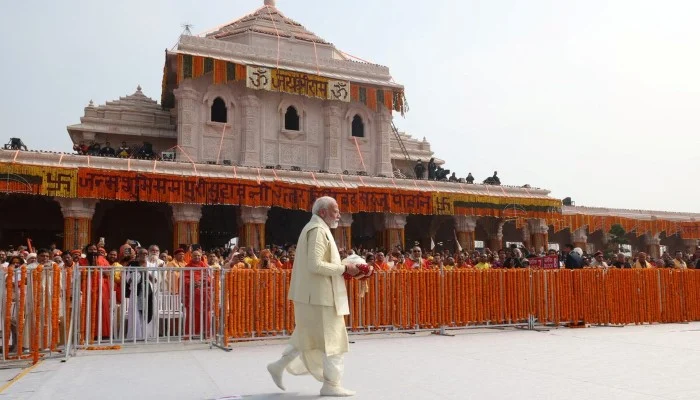
    India’s Prime Minister Narendra Modi attended the inauguration of a magnificent temple dedicated to Lord Ram in Ayodhya on January 22, 2024, marking a historic moment after years of debate and legal battles.

    A trust managing the construction of the Ram temple has announced a leadership restructuring following allegations that individuals involved in donation management illicitly diverted nearly eight million rupees. Trustees have accepted the resignations of General Secretary Champat Rai and trustee Anil Mishra. An interim secretary has been appointed, and a committee is being formed to find candidates for a new CEO role.

    Authorities recovered approximately 8 million rupees ($83,967) from seven individuals last month after detaining eight suspects. The temple had received over 5.82 billion rupees ($61 million) in offerings up until the end of March.

    Trust officials expressed their dismay over the theft, with Treasurer Govindadev Giri calling the incident “shameful” and emphasizing that it hurts everyone involved. The Rashtriya Swayamsevak Sangh, a Hindu nationalist organization linked to Modi’s party, urged calm among Hindus, urging patience and restraint to resist efforts by anti-Hindu and anti-national forces to exploit the situation and tarnish Hindu society.

    Opposition parties are demanding the trust be dissolved entirely and are calling on Modi to publicly address the scandal. They argue that the situation warrants a full overhaul and an investigation overseen by the Supreme Court.

    Meanwhile, Modi, who has been serving as the head of state since 2014 and leads the Bharatiya Janata Party (BJP), is currently traveling abroad, visiting Indonesia, Australia, and New Zealand. Critics within the opposition accuse his government of political opportunism, criticizing him for not acting more decisively on the matter domestically.

  • Indonesia to Acquire Indian Supersonic Cruise Missiles During Modi’s Visit

    Indonesia to Acquire Indian Supersonic Cruise Missiles During Modi’s Visit

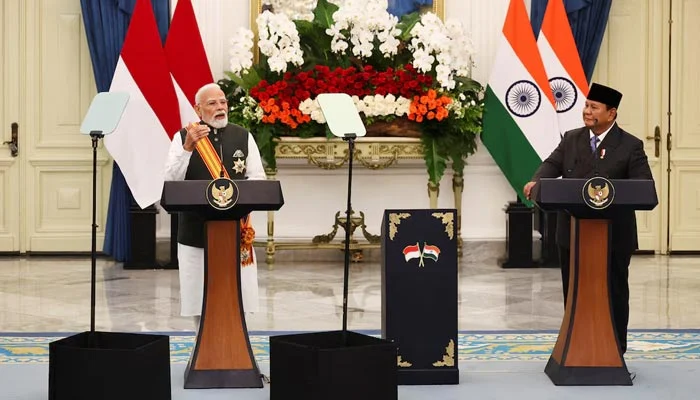
    India plans to supply BrahMos supersonic cruise missiles along with Astra air-to-air missiles to Indonesia, according to an Indian government official on Tuesday, coinciding with Prime Minister Narendra Modi’s two-day visit to Jakarta. Earlier reports from Indian sources indicated that a deal, valued at approximately $630 million, is likely to be signed during Modi’s stay.

    Indonesia is set to become the third country to formalize an agreement to purchase these missiles, produced by BrahMos Aerospace Private Limited. This deal signifies a significant boost in India’s defense exports and strengthens strategic partnerships with Southeast Asia’s largest economy.

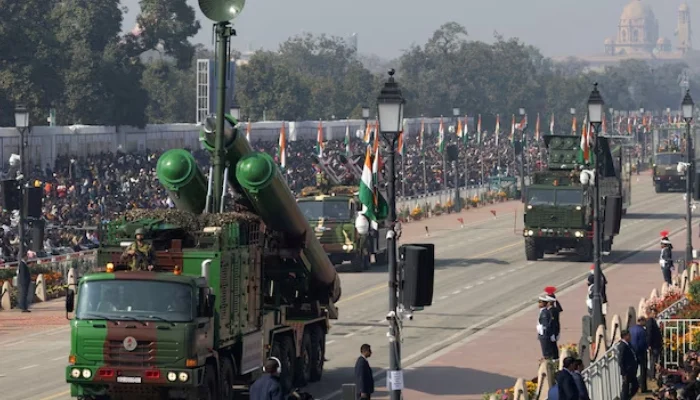
    Developed collaboratively by India and Russia, BrahMos missiles are among the fastest in the world and can be launched from land, sea, and air platforms. The Astra beyond-visual-range air-to-air missile can be integrated with Indonesian Sukhoi fighters, which are domestically made by Russia.

    Officials on both sides did not immediately respond to requests for comments. Indonesia had previously announced in March an agreement with India to acquire the BrahMos missile system. At that time, Indonesia’s Defense Ministry described the deal as being in advanced negotiations, with an expected value between $200 million and $350 million.

    India has also reached agreements to sell BrahMos missiles to Vietnam and the Philippines and has garnered interest from more than half a dozen other nations, including the United Arab Emirates.

    During his visit, Modi is expected to discuss maritime security, defense industrial cooperation, regional connectivity, and broader strategic coordination within the Indo-Pacific region with Indonesian President Prabowo Subianto. The negotiations around the BrahMos deal are expected to emphasize a phased approach, allowing Indonesia to incrementally expand its missile capabilities. The package under consideration may include missile systems, supporting infrastructure, operator training, maintenance services, and other technical support aimed at long-term deployment.

    Trade between India and Indonesia reached $28.15 billion in the 2024-2025 fiscal year, positioning Indonesia as India’s second-largest trading partner within ASEAN.

    Ahead of the visit, Modi emphasized that his trips to Indonesia, Australia, and New Zealand are designed to bolster India’s “Act East” policy, its commitment to regional security, and its vision for a free, open, and inclusive Indo-Pacific region.

  • India Approves $5.46 Billion Military Equipment Purchase

    India Approves $5.46 Billion Military Equipment Purchase

    India has given the green light for a $5.46 billion purchase of various military systems, including missiles, electronic warfare gear, and Kamikaze drones. The move was approved “in-principle” by the Defense Acquisition Council, which includes top military leaders and is led by the defense minister, according to a government statement.

    The expected cost of the entire deal is approximately 520 billion Indian Rupees ($5.46 billion). The statement did not specify whether these systems would be imported or produced domestically, nor did it specify the timeline for completing the acquisition.

    Over the past decade, India has been working to lessen its reliance on Russia, its traditional military equipment supplier, shifting toward purchases from the United States and France, alongside efforts to boost local manufacturing.

    The approved procurement includes anti-drone and electronic warfare systems, medium-range surface-to-air and portable anti-tank missiles, and a “Jet-Based Kamikaze Drone System” for the Indian Army. The government also greenlit the acquisition of new naval mines, shipborne drones, and a maritime testing facility to enhance naval defense and surveillance. Additionally, India plans to acquire a high-altitude unmanned aircraft platform for intelligence and remote sensing purposes.

    India’s current defense spending is around $85 billion, as the country pushes forward with modernization efforts. Recently, Delhi ordered at least 75 ships and submarines, most of which are domestically built, and approved defense spending worth approximately $39 billion, including Rafale fighter jets from France.

  • Indian Defense Minister Faces Calls to Resign Over May Conflict Cover-up

    Indian Defense Minister Faces Calls to Resign Over May Conflict Cover-up

    India’s main opposition Congress party has called for Defense Minister Rajnath Singh to step down, accusing him of providing false information to Parliament regarding military casualties during the May 2025 conflict with Pakistan, according to reports from Indian media on Wednesday. The Congress party also urged Prime Minister Narendra Modi to issue an apology for the deaths of six service members during the operation.

    These demands follow the Indian government’s official release on June 26 of the names of six military personnel who lost their lives in the conflict. The identities were added to the Roll of Honor on the National War Memorial website, marking the first official acknowledgment of casualties from Operation Sindoor, as reported by The Hindu.

    The hostilities erupted on May 6-7 last year, when India launched an unprovoked attack on Pakistan after an assault on tourists in Pahalgam, a town in Indian-administered Jammu and Kashmir. During the 87-hour clash, Pakistan shot down eight Indian fighter jets, including French-made Rafale aircraft, along with numerous drones. The conflict concluded on May 10 with a ceasefire brokered by the United States.

    At a press conference, retired Colonel Rohit Chaudhry, head of Congress’s Ex-servicemen Department, and retired Wing Commander Anuma Acharya accused the government of concealing information about the deaths of five Indian Army soldiers and one Indian Air Force officer. They argued that the delay in releasing casualty details deprived these personnel of the recognition and honors they deserved.

    “Rajnath Singh lied in Parliament when he claimed no soldier had been lost, and BJP Members of Parliament applauded. The foundation of the Modi government rests on deception. They have no right to remain in power,” a Congress representative asserted.

    In a related development, India Today reported that MP K.C. Venugopal filed a privilege motion against the defense minister Tuesday, alleging that Singh misled Parliament about the deaths of six Indian military personnel—five from the Army and one from the Air Force.

  • Indian News Channels ‘Hacked’ During President’s Address

    Indian News Channels ‘Hacked’ During President’s Address

    Unidentified hackers compromised the broadcasting systems of two Indian news channels during the Indian president’s speech, allegedly inserting Pakistan’s national anthem and displaying a warning message, according to reports on Wednesday.

    It was reported that both TV9 Telugu and Freedom TV Kannada experienced disruptions while live. The hackers reportedly accessed the channels’ transmission feeds during the president’s address. During the incident on TV9 Telugu, Pakistan’s national anthem was broadcast, and a warning appeared, cautioning viewers against provoking Pakistan.

    Following the incident, rumors and varied explanations circulated regarding the broadcast interruption. TV9 Telugu has over 14 million followers on social media, and Freedom TV Kannada boasts more than one million followers.

    Industry experts commented that this event revealed security vulnerabilities within India’s cybersecurity infrastructure and highlighted weaknesses in the country’s IT systems.

  • India investigates embezzlement at temple built on Babri mosque site

    India investigates embezzlement at temple built on Babri mosque site

    Indian authorities are probing allegations of financial misappropriation at a temple in northern India, a site closely associated with Prime Minister Narendra Modi’s Hindu-centric political stance, according to a senior government official on Friday.

    The Ram Mandir temple in Uttar Pradesh—built on the site where a mosque stood for centuries before being dismantled by Hindu nationalists—was officially opened in 2024 with significant ceremony led by Modi himself.

    Uttar Pradesh’s Chief Minister Yogi Adityanath stated that a special investigation team (SIT) has been formed to examine claims of illegal diversion of donations from devotees.

    “We have initiated an SIT inquiry based on the recommendations of the trust overseeing the temple,” Adityanath, a prominent Hindu monk, announced during a public event.

    He urged anyone with documentary evidence related to the allegations to submit it to the SIT.

    The extent of the alleged financial misconduct remains uncertain, but opposition parties and local media report that the amount could exceed $20 million.

    Construction costs for the temple were approximately $240 million, entirely funded by public donations, according to the project organizers.

    Reports from The Indian Express indicate that daily donations typically average around $10,000, with peak days seeing contributions up to $60,000.

    Believers hold that Lord Ram was born in Ayodhya—home to the temple—more than 7,000 years ago, though it is also believed that the Babri mosque was constructed on his birthplace by a Muslim ruler in the 16th century.

    The Bharatiya Janata Party (BJP), the current ruling party, was instrumental in the campaign that led to the mosque’s demolition in 1992. The incident propelled the party and Modi to national prominence, helping them overtake the secularist Indian National Congress, which had dominated Indian politics since independence.

  • India Adapts to Increasingly Hotter Summers

    India Adapts to Increasingly Hotter Summers

    On India’s scorching plains, the increasingly intense summers make survival more challenging, pushing people to adapt and live during the cooler dark hours before the sun’s heat becomes unbearable.

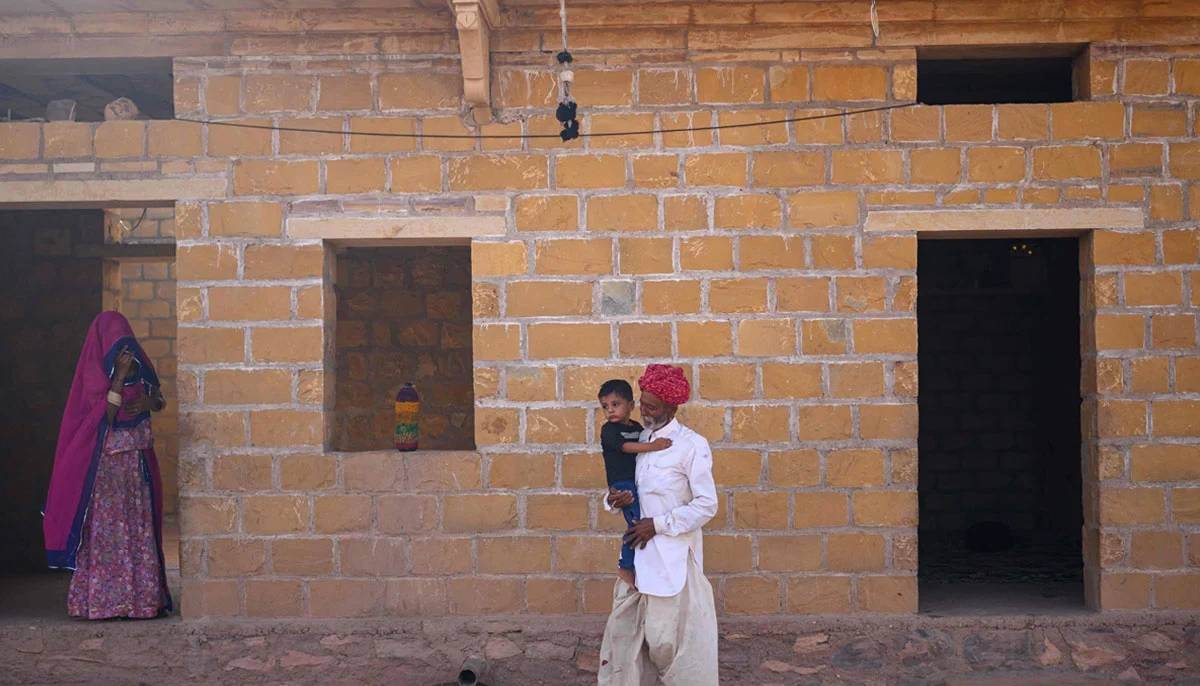
    “We try to adapt, but traditional methods for fighting the heat aren’t enough anymore,” said 26-year-old herdsman Sawai Bhati Singh, who lives outside Jaisalmer, a desert city in Rajasthan. “Every year, the heat keeps getting worse.”

    His home, constructed from thick stone blocks with few windows, offers some relief from the intense heat, but the interior remains oppressively hot.

    The country is no stranger to extreme temperatures, but decades of scientific studies reveal that climate change is causing heatwaves to last longer, occur more often, and become more severe.

    In Singh’s village of Sanwata, early June temperatures reached 45°C, a common occurrence during summer. The highest recorded temperature in the area has been 49°C. Singh worries about his young children, aged two and four, who play barefoot in the dust.

    He drinks water stored in bottles wrapped in handmade jute to keep it cool, a simple evaporation trick. His wife and mother struggle in a separate kitchen hut with a thatched roof for ventilation, cooking over a wood fire.

    All water is drawn from a nearby well, then cooled in bottles wrapped in woven jute string to utilize evaporation. Singh’s livestock—goats and cattle—also suffer in the heat.

    “They stay in the shade,” he says. “The heat affects their eating, which means less milk for us.” Temperatures in their village hit 45°C early in June, with a record high of 49°C. Last year, they bought their first air cooler, which uses wet fibers, and now they own two.

    Meanwhile, on the lush floodplains of the Yamuna River near New Delhi, farmer Bhole Shankar faces a different but related crisis. The city recorded 46.5°C this summer, just below the scorching 49.9°C peak of 2024.

    “Living near the floodplain feels cooler than living among houses,” said Shankar, 36, standing outside a makeshift hut made of plastic sheeting attached to bamboo poles. “But some days, it feels like day and night are the same.”

    Shankar’s family—which includes his wife and three sons aged between nine and 16—live beneath the city’s power lines, though their home isn’t connected to the grid. A small solar panel powers a fan that pushes hot air around.

    They adjust their routine to avoid the worst of the heat, working in the fields early in the morning, resting in the shade during peak heat, and checking their crops again at dusk.

    His son, Tejpal, is fixing a portable electric fan inside their shanty, trying to stay cool in the 40°C weather. To sleep, they roll down plastic walls of their tent and lie on traditional rope lattice beds, which allow air to circulate.

    Shankar pours himself fruit juice after a day of work, noting that each year seems hotter than the last. “We try to stay in the shade, but it’s tough when you’re a farmer.”

  • Five Dead in India Military Transport Plane Crash

    Five Dead in India Military Transport Plane Crash

    Five Indian Air Force personnel lost their lives when a military aircraft crashed during landing at a base in the country’s northeastern region on Saturday, according to official statements. The Indian Air Force expressed its profound sorrow over the incident, which occurred in Jorhat, Assam.

    Details about the number of individuals onboard or potential survivors remain undisclosed. An anonymous air force official told AFP that the co-pilot survived the crash. Images from NDTV depict a scene with a massive black smoke cloud and what appears to be the aircraft broken into pieces.

    The air force extended heartfelt condolences to the grieving families and affirmed its support during this difficult time. The incident involved a Russian-made Antonov An-32, which was on a routine mission when it came in to land. A formal inquiry is underway to determine the cause of the crash.

    The An-32, a twin-engine turboprop, is specially engineered to operate effectively at high altitudes and in extreme climate conditions. The Indian Air Force has approximately 100 of these aircraft, used for military logistics and humanitarian aid across the nation’s most remote mountainous regions. The last serious accident involving this aircraft type was in 2019 in Arunachal Pradesh, near the Chinese border, resulting in 13 fatalities.

  • India Detains and Deports 5,000 Bangladesh Nationals

    India Detains and Deports 5,000 Bangladesh Nationals

    India has begun setting up detention centers for undocumented migrants, with reports indicating that West Bengal’s chief minister announced that approximately 4,800 migrants have been deported already. Since Prime Minister Narendra Modi’s Hindu-nationalist party came into power last month, nearly 5,000 Bangladeshi citizens have been repatriated, according to official figures.

    Modi’s Bharatiya Janata Party (BJP) secured a decisive victory in the regional elections in West Bengal, a state with a population exceeding 100 million, vowing to intensify efforts to identify, detain, and expel illegal immigrants.

    India’s extensive and porous border with Bangladesh—an overwhelmingly Muslim nation—has historically facilitated migration driven by economic struggles and long-standing familial ties. After assuming office, the new West Bengal government directed the creation of detention facilities for undocumented Bangladeshis and Rohingya refugees, a Muslim minority group fleeing persecution in Myanmar.

    On Sunday in Kolkata, West Bengal’s capital, Chief Minister Suvendu Adhikari stated that roughly 5,000 Bangladeshi nationals had been deported across the border. “We have initiated the deportation process for Bangladeshi infiltrators who are not covered by the Citizenship Amendment Act,” Adhikari explained. He added that holding centers had been established across all districts in May, and that from these centers, 4,800 individuals had already been deported. Currently, 836 people remain in detention, with plans underway to expel them soon.

    This crackdown on immigration comes amid ongoing political debate over border security. Some Indian officials have referred to migrants as “termites” and “infiltrators,” language that critics argue has fueled discrimination and marginalization of India’s Muslim community, which makes up over 200 million of the population. Critics also accuse the BJP of conflating religious identity with illegal migration, exacerbating societal divisions.

    There have been previous allegations that India has forcibly expelled hundreds of Bengali-speaking Muslims into Bangladesh without proper legal procedures. Diplomatic relations between India and Bangladesh have also experienced tension; following a 2024 revolution in Dhaka that ended the autocratic rule of then-Prime Minister Sheikh Hasina—a close ally of India—she fled to India. With a new government elected in Bangladesh earlier this year, relations are gradually improving. In fact, India and Bangladesh’s border authorities are scheduled to hold talks in New Delhi this coming Monday.

  • India’s ‘Cockroach’ Youth Leader Arrives in Delhi to Protest Modi

    India’s ‘Cockroach’ Youth Leader Arrives in Delhi to Protest Modi

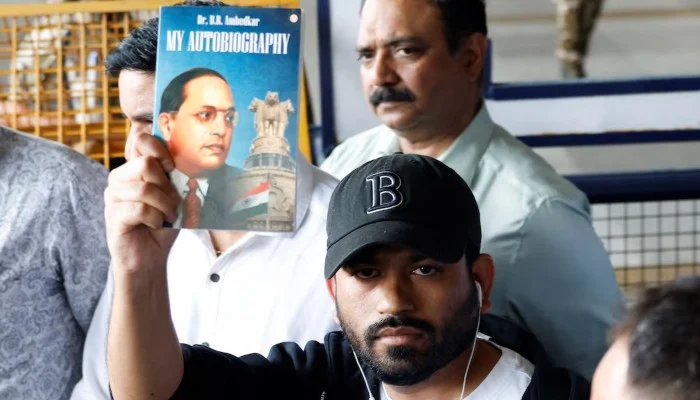
    Abhijeet Dipke, leader of the Cockroach Janta Party (CJP), is seen leaving an airport in New Delhi on June 6, 2026, holding a copy of “My Autobiography” by Dr. B.R. Ambedkar.

    Dipke mentioned that his family feared he might face arrest upon returning to India.

    On Saturday, dozens of police officers gathered near Jantar Mantar in central Delhi, barricading some roads as protesters chanted slogans calling for the resignation of Education Minister Dharmendra Pradhan.

    In response to the movement, the Indian government blocked the group’s X account domestically, a move contested by the CJP in a Delhi court. Cabinet Minister Kiren Rijiju accused the group of seeking followers from Pakistan and labeling them as part of an “anti-India gang.”

    Since launching in mid-May, the group has gained approximately 22 million followers on Instagram. It stands as the largest online platform voicing dissent against Prime Minister Narendra Modi’s 12-year rule, driven by issues like youth unemployment, exam paper leaks, and obstacles to students’ careers.

    Analysts suggest that despite recent victories in key state elections, Modi’s image is being impacted by the group’s rising popularity. Widespread dissatisfaction over rising fuel prices and gas shortages due to tensions with Iran also contribute to the unrest.

    Police used loudspeakers to direct demonstrators to the designated protest area.

    “The movement is peaceful and for the youth of the nation,” said spokesperson Ashutosh Ranka. He added that Dipke is prepared for a prolonged and significant role in Indian politics.

    India’s youth, numbering nearly 400 million aged 15 to 29, face persistent challenges in securing non-agricultural employment. April’s urban youth unemployment rate was almost 14%. Many educated young people find themselves in low-wage or insecure jobs that do not utilize their skills, according to economists.

  • India Calls for Proposals for 5th-Gen Combat Jets

    India Calls for Proposals for 5th-Gen Combat Jets

    India has initiated the process to locally develop a fifth-generation combat aircraft, with three firms shortlisted to submit proposals, according to defense officials cited by ANI. These bidders include Tata Advanced Systems, along with joint ventures between Larsen and Toubro, Bharat Electronics, and Bharat Forge—all Indian companies.

    The project was launched last year following India’s approval, shortly after a serious military conflict with Pakistan, to build stealth fighter jets. It plays a key role in strengthening the Indian Air Force, which has seen its fleet of mostly Russian aircraft decline to fewer than 30 squadrons, down from the sanctioned strength of 42.

    This initiative aligns with Prime Minister Narendra Modi’s broader goal of boosting domestic manufacturing capabilities. The U.S. has offered its advanced F-35 fighter jets, while Russia has countered with its fifth-generation Su-57; however, India has remained non-committal toward both options.

    Traditionally dependent on importing military hardware, India has been increasingly promoting homegrown defense production under Modi’s leadership. Defense manufacturing revenue hit a record INR 1.54 trillion (around $16.09 billion) in the fiscal year ending March 2025.

  • India bans cow slaughter, roadblocks for Eid ul-Adha prayer

    India bans cow slaughter, roadblocks for Eid ul-Adha prayer

    A young girl walks alongside a goat after purchasing it at a livestock market in the old quarters of Delhi, India, on July 6, 2022, ahead of Eid ul Adha. — Reuters

    Authorities in India have implemented new restrictions in advance of Eid ul Adha, including a ban on slaughtering cows, calves, and camels. This move highlights escalating concerns over religious freedoms and restrictions on Muslim religious practices in various states.

    As Muslims across India prepare to observe Eid ul Adha on Wednesday, Uttar Pradesh’s Chief Minister Yogi Adityanath instructed officials to enforce specific religious observance rules, such as banning animal sacrifices in public areas and prohibiting road closures for Eid prayers, according to local media reports.

    During a high-level law and order meeting held via video conference, Adityanath directed district officials to allow sacrifices only at designated sites and emphasized that no new traditions should be introduced during the festival. He also mandated that Eid prayers be conducted only at traditional locations and explicitly stated no permissions should be granted for prayers on roads under any circumstances.

    The Uttar Pradesh government further ordered a strict oversight of slaughter activities, including maintaining bans on open meat sales and cracking down on illegal slaughterhouses. Officials were also instructed to conduct patrols and marches around religious sites throughout the festival.

    Meanwhile, in Delhi, Minister Kapil Mishra issued a warning of strict enforcement against illegal animal transport, unauthorized slaughter, and acts of cruelty prior to Eid ul Adha. He instructed authorities to permit animal sacrifices only at authorized, designated locations to ensure hygiene and legal compliance.

    Worldwide, Muslims observe Eid ul Adha by sacrificing goats, cows, camels, and sheep annually, aligning with the Hajj pilgrimage in Saudi Arabia. The festival, known as the “Feast of Sacrifice,” honors the Quranic story of Prophet Ibrahim (AS), who was willing to sacrifice his son in obedience to Allah. This divine test was halted at the last moment when a ram was provided as a substitute.

    The celebration also features prayers, family gatherings, and acts of charity, including the ritual slaughter of livestock. The meat from these sacrifices is shared among relatives, friends, and those in need.

  • Indian Gen Z Viral Account Founder Claims Crackdown and Threats

    Indian Gen Z Viral Account Founder Claims Crackdown and Threats

    A social media account targeting India’s Generation Z has become a hot topic online, facing accusations of hacking and threats to the owner’s family after gaining millions of followers disillusioned with Prime Minister Narendra Modi’s government. The satirical page, called “Cockroach Janta Party” (CJP), quickly amassed over 22 million followers on Instagram in just days, highlighting issues such as unemployment and exam leak scandals, boosting youth engagement.

    Founder Abhijeet Dipke shared on X (formerly Twitter) that the government had taken down their prominent website, and their X account was blocked within India. Meanwhile, their Instagram was reportedly compromised, and his family received threats. Independent verification of these claims is unavailable, as the government has not officially confirmed any action against the website or social media account. Requests for comment from India’s Home and IT ministries went unanswered.

    Despite this online controversy, Prime Minister Modi’s Bharatiya Janata Party (BJP) recently secured electoral victories in essential states, solidifying its political stronghold after over ten years in power.

    Digital rights advocates, like the Internet Freedom Foundation, condemned the alleged banning of the X account, calling it an arbitrary move restricting free speech. Politically, BJP leader Kiren Rijiju dismissed the viral account, criticizing those who gather followers from outside India. He suggested that such individuals are not true patriots, expressing confidence in India’s democracy and youth.

    In response, Dipke posted demographic data indicating that over 94% of his Instagram audience is from India and questioned Rijiju’s remarks, asking why a federal minister would label Indian youth as linked to Pakistan.

    A survey by Cvoter revealed that young Indians resonate with the concerns raised by the CJP account. More than 60% of respondents aged 18-24 felt anxious about their future, citing frustrations over unemployment and governance issues like exam paper leaks—an incident that affected approximately 2.3 million medical entrance exam candidates. Official figures show urban youth unemployment is around 14%, significantly higher than the national average of about 5%. Most respondents believe that government censorship of such social media platforms would be unjustified.

    Activist Prashant Bhushan stated that this online movement could grow if it extended beyond social media into real-world organizing and mobilization efforts.