الوسم: floods

  • Nepal Teams Search for Hundreds Trapped in Hydropower Tunnels as Flood Toll Reaches 900

    Nepal Teams Search for Hundreds Trapped in Hydropower Tunnels as Flood Toll Reaches 900

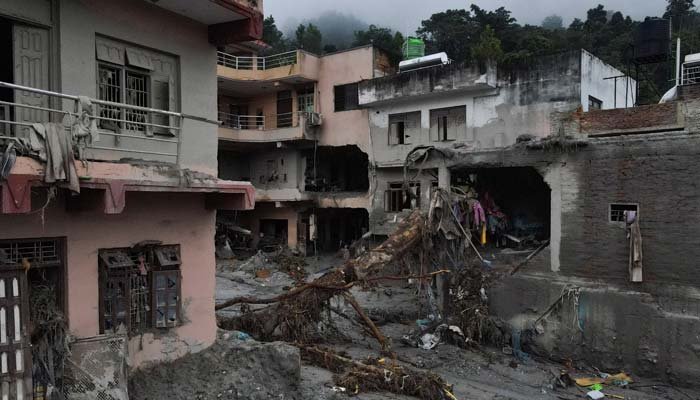
    A drone captures an aerial view of a tree that has been uprooted, alongside damaged houses, following the catastrophic flash floods and mudslide in Devighat, Nuwakot District, Nepal, on August 31, 2026. The scene highlights the extensive destruction wrought by the natural disaster. — Reuters

    – 933 workers are currently missing at hydropower project sites in the flood-affected areas.
    – Dozens of unidentified bodies have been buried in shallow graves amidst the ongoing crisis.
    – Nearly 21,000 security personnel have been mobilized to assist Nepal’s rescue efforts.

    Nepal’s rescue teams, with support from Chinese and Indian experts, worked through the night to reach hundreds of individuals believed to be trapped inside blocked tunnels of hydropower projects. The floods, which tore through the Himalayan region last week, have left a trail of destruction across valley towns, villages, and even into neighboring China.

    The disaster was triggered by a glacier collapse on the Nepal-Tibet border, unleashing an overwhelming flow of ice, rock, mud, and debris that resulted in over 900 deaths, with about 5,000 still unaccounted for. Many bodies, often unrecognized, have been buried hastily in shallow graves as they decomposed in the humid plains after being swept down from the mountains.

    Officials in Nepal are prioritizing efforts to unlock the blocked tunnels of approximately six hydropower projects, where workers are believed to be trapped. Rescue teams used earth-moving machinery to remove mud and rocks under the cover of night, with soldiers employing flashlights to search inside the tunnels. An excavated pit was created in a bid to access one of the affected tunnels.

    The Nepal Disaster Management Authority reports that 933 individuals are missing at hydropower sites in the flood zone. The Red Cross estimates that more than 90,000 people have been impacted by the disaster, which China attributes to climate change effects.

    As of Monday, official counts indicated 903 fatalities and 4,247 people missing in Nepal. On the Chinese side, authorities reported 16 deaths in Gyirong County and 546 individuals missing.

    Nepal’s Prime Minister Balendra Shah described the flood as an “unprecedented and devastating natural disaster,” emphasizing the difficulty of fully assessing the scope of the damage. Despite challenging weather conditions, treacherous terrain, and persistent risks, Nepal is committed to continuing rescue operations, with nearly 21,000 security personnel, alongside civilian workers and volunteers, actively involved.

    A drone image shows damaged buildings and homes caked in mud along the Likhu River in Devighat, Nuwakot District, following the deadly floods and mudslides on August 30, 2026. The destruction underscores the severity of the event. — Reuters

    Chinese President Xi Jinping, currently visiting Kyrgyzstan, has stated that Beijing is making every effort to locate and assist missing persons affected by the disaster, as reported by Xinhua. The Chinese authorities have identified 261 foreign nationals from 23 countries unaccounted for in Tibet near the critical border with Nepal.

    China has deployed over 2,100 rescue workers and allocated at least 220 million yuan (roughly $33 million) for relief operations. The country has been air-dropping supplies and deploying life-detection equipment to aid frontline rescue teams.

    Despite Nepal’s assertion that it does not require foreign rescue assistance, it has relied on India and China’s expertise for tunnel rescue operations. Rescue activities faced interruptions since Friday due to adverse weather and the potential threat posed by a newly formed lake on the Nepal-China border, potentially causing further flooding as it overflowed into Nepal’s rivers.

    Reports from China’s CCTV indicate that another upstream lake, created by a landslide, has largely drained naturally. This landslide occurred 2.8 kilometers downstream of the initial glacier debris site. Authorities are monitoring a large impact crater on the Nepal side, which expanded to 174,000 square meters by Saturday evening and holds around 2.5 million cubic meters of water. A breach here could trigger a chain reaction affecting downstream lakes.

    Further landslides along the river pose risks of additional lakes forming, with eight high-risk spots identified for geological disasters. The floods are largely attributed to glacier instability driven by long-term global warming effects, considered a new and significant feature of cryosphere-related disasters on the Tibetan plateau.

    Some Nepali officials have expressed concern over China’s limited sharing of glacier and water level data following earlier cooperation meetings, fearing this could hinder future disaster preparedness. China has yet to respond to inquiries about the extent of data sharing.

  • India Monsoon Floods & Landslides Claim Over 100 Lives Since July

    India Monsoon Floods & Landslides Claim Over 100 Lives Since July

    Floodwaters and landslides caused by the monsoon season have resulted in over 100 fatalities across India since July, with countless residents fleeing rising waters from their homes.

    The monsoon, which typically delivers vital rainfall to farmers, is becoming increasingly unpredictable and deadly in South Asia due to climate change, experts warn. Assam, in northeastern India, has been particularly hard-hit, with at least 87 deaths reported by Chief Minister Himanta Biswa Sarma. In Sivasagar district, which has seen the most devastation, 47 people have lost their lives, and many neighborhoods remain submerged.

    Authorities have called on the public for financial donations to aid relief efforts. “The destruction here surpasses anything this region has experienced before,” Sarma shared on X. “Material damage can be repaired, but no amount of money can bring back loved ones.”

    Images from AFP show residents navigating flooded streets on rafts and inflatable boats to reach higher ground.

    In Kerala, the southern Indian state, heavy rains over several days have resulted in at least 15 deaths, with seven more individuals reported missing. Relief efforts have established over 300 camps, providing shelter for more than 10,000 people as landslides and swollen rivers force evacuations.

    In Indian-administered Jammu and Kashmir, at least 31 deaths have been linked to sudden, intense rainfall. Lightning strikes have also been deadly, killing at least 22 people in Bihar and Jharkhand states since Tuesday. Most victims are farmers working in rice fields or cattle herders, including four children.

    India’s monsoon-related disasters are a seasonal challenge, often following long, hot summers marked by drought and water shortages. Meanwhile, Sri Lanka reports at least eight deaths from recent heavy rains that have caused flash floods and mudslides since Monday, displacing approximately 12,000 residents and flooding their homes.

    Interestingly, while parts of Sri Lanka suffer severe flooding, eastern regions are experiencing drought, prompting authorities to deliver drinking water via tanker trucks. Experts attribute these extreme weather patterns to El Nino, which has elevated surface temperatures in the central and eastern Pacific Ocean this year.

  • China Rains Kill 22, 20 Still Missing

    China Rains Kill 22, 20 Still Missing

    Heavy rainfall across central and southern China has resulted in a rising death toll, reaching 22, with an additional 20 people still missing, according to state media reports on Wednesday. Many regions have experienced what officials describe as “record-breaking rainfall,” leading to closures of schools and workplaces, as well as the deployment of relief funds to affected areas.

    In Hunan Province, five people have died, and 11 are missing following the severe weather, according to Xinhua. The previous day, the agency reported that over 61,500 residents in a single county were affected by the flooding without providing further details.

    Southern Guangxi reported the death of 10 individuals after a truck was swept into a swollen river during a crossing attempt on Saturday evening; the first fatality from that incident was noted on Sunday. Guizhou Province, nearby, also suffered from intense rains, resulting in four deaths and five more people missing.

    Further north in Hubei, floods caused by relentless rains have led to three deaths and four people missing. These floods also damaged infrastructure and cut off communication for some rural communities. The government allocated approximately 120 million yuan (about $17.6 million) in disaster relief funds for five of the affected regions, with an additional 30 million yuan directed to Guizhou, which has experienced significant casualties and property damage, according to the National Development and Reform Commission.

    Nearly 24,000 people have been evacuated from flood-prone areas across Hunan, Guizhou, and Hubei. Forecasters expect ongoing heavy rainfall over the coming days. Scientists warn that as the planet continues to warm due to fossil fuel emissions, the frequency and severity of such extreme weather events will likely increase. China, the world’s leading emitter of greenhouse gases, is also investing heavily in renewable energy and has set a goal to reach carbon neutrality by 2060.

  • Sri Lanka Alerts for Landslides as Cyclone Deaths Reach 618

    Sri Lanka Alerts for Landslides as Cyclone Deaths Reach 618

    More than 2 million individuals have been impacted by Cyclone Ditwah in Sri Lanka, affecting nearly 10% of the population. The death toll has climbed to 618, with 464 of those fatalities occurring in the central mountainous region, known for its tea plantations. Currently, 209 people are still reported missing.

    Landslide warnings have been reissued across the island as heavy rains continue to fall in areas already hard-hit. The monsoons are increasing rainfall and destabilizing slopes, especially in the central highlands and the northwestern midlands. Helicopters and aircraft are actively delivering aid to remote communities cut off by landslides.

    The Sri Lankan Air Force announced they received a shipment of relief supplies from Myanmar on Sunday, marking the latest tranche of international assistance.

    The number of people staying in government-organized refugee camps has decreased from a peak of 225,000 to about 100,000, as floodwaters gradually recede. Over 75,000 homes have been damaged, with nearly 5,000 completely destroyed.

    In response to the disaster, the government unveiled a major compensation plan aimed at rebuilding homes and revitalizing local businesses, which were already struggling in the wake of the country’s recent economic crisis. The recovery efforts are estimated to cost up to $7 billion.

    The International Monetary Fund (IMF) is considering a request from Sri Lanka for an additional $200 million to aid in rebuilding, supplementing the $347 million installment expected later this month as part of a four-year, $2.9 billion bailout agreement made in 2023.

    President Anura Kumara Dissanayake told parliament that while the economy has shown signs of recovery, it remains too fragile to withstand this new shock. Survivors are set to receive as much as 10 million Sri Lankan rupees (about $33,000) to purchase land in safer areas and construct new homes. Those who lost their lives or are permanently disabled will be compensated with a fixed amount of 1 million LKR.

    The government has not disclosed the total cost of the aid package, raising concerns over funding given the country’s ongoing economic instability. To assist in recovery, the central bank has directed both state-owned and private lenders to reschedule existing loans.

  • Flood’s death toll in Indonesia surpasses 900, sparking starvation fears

    Flood’s death toll in Indonesia surpasses 900, sparking starvation fears

    Massive floods and landslides have claimed over 900 lives on Indonesia’s Sumatra island, according to the country’s disaster response agency, with concerns rising that hunger could push the death toll even higher.
    A series of tropical storms and monsoonal rains have lashed Southeast and South Asia, sparking landslides and flash flooding across regions from the Sumatran rainforest to Sri Lanka’s highland tea plantations.

    Over 1,790 fatalities have resulted from recent natural disasters in Indonesia, Sri Lanka, Malaysia, Thailand, and Vietnam.
    In the provinces of Aceh and North Sumatra, waters have destroyed roads, buried homes under heavy silt, and severed supply lines.
    Aceh governor Muzakir Manaf reported that rescue teams are still searching for bodies in “waist-deep” mud.

    Starvation now poses a severe threat to remote, hard-to-reach villages.
    “Many people lack basic necessities. Many areas—especially in remote parts of Aceh—remain inaccessible,” he explained.
    “Young and old are dying not just from the floods but from hunger. That’s the harsh reality,” he added.

    Entire villages have been obliterated in Aceh Tamiang, a rainforest-covered area.
    Muzakir described the devastation: “Aceh Tamiang is completely wiped out—from the mountains down to the sea. Roads, villages, and districts are now just names on a map.”

    Fachrul Rozi, a flood survivor from Aceh, recounted that he spent the past week huddled inside an old shop with others fleeing rising waters.
    “We ate whatever we could find and helped each other with whatever supplies we had,” he told AFP.
    “We slept packed together, trying to stay safe.”

    Munawar Liza Zainal, an Aceh resident, voiced frustration with the Indonesian government, which has so far declined to declare a national disaster alert.
    “This is an extraordinary disaster that demands extraordinary measures,” he said, echoing other flood victims.
    “If they wait until declaring a disaster later, what’s the use of urgent action now?”

    Designating a national disaster would unlock additional resources and streamline response efforts.
    Some analysts believe Indonesia hesitated to make such a declaration to avoid revealing that it may not be fully equipped to manage the crisis or to secure foreign aid.
    This week, the government maintained it was capable of handling the situation.

    The full extent of the destruction is becoming clearer in Sumatra as floodwaters recede and rivers shrink.
    Photos from AFP show villagers salvaging furniture caked in mud from flooded homes in Aek Ngadol, North Sumatra.

    Humanitarian groups warn that this catastrophe might be a record-breaking event, even for a nation used to natural disasters.
    Indonesia’s death toll reached 908 on Saturday, with 410 people still missing, the disaster agency reports.

    Meanwhile, Sri Lanka’s death count climbed to 607, with authorities warning that ongoing rains could trigger more landslides.
    Thailand has reported 276 deaths, Malaysia two, and Vietnam has at least two fatalities following heavy rains and landslides.

    Seasonal monsoons are vital for rice and crop growth in Southeast Asia, but climate change is making these rains more unpredictable and deadly.
    Environmentalists and officials also link the severity to ongoing logging and deforestation efforts, which have worsened landslides and flooding in Sumatra.

  • Southeast Asia Storm Toll Reaches Nearly 700 Amid Disaster Unveiled

    Southeast Asia Storm Toll Reaches Nearly 700 Amid Disaster Unveiled

    A woman stands among tree trunks stranded on the shore after deadly flash floods and landslides in Padang, West Sumatra, Indonesia, on November 30, 2025. — Reuters

    Indonesia, Malaysia, and Thailand are experiencing widespread destruction. At least 176 people have died in Thailand and three in Malaysia. Indonesia’s death count has risen to 502, with 508 individuals still missing.

    Rescue teams in western Indonesia are working tirelessly to reopen roads blocked by cyclone-triggered landslides and floods. As clearer weather emerges, the full extent of the disaster becomes apparent, with nearly 700 lives lost across Southeast Asia.

    The catastrophic event originated from a rare tropical storm in the Malacca Strait, bringing relentless rains and strong winds for a week, complicating rescue efforts in stranded communities hit by mudslides and severe flooding.

    In Thailand, the death toll has increased slightly to 176 due to flooding in eight southern provinces, impacting approximately three million residents. The military has been mobilized to evacuate critical patients and assist those trapped for days by rising floodwaters.

    In the province of Songkhla, where 138 deaths have occurred, officials report that about 85% of water services have been restored, with full service expected by Wednesday. The hardest-hit city, Hat Yai, received a record 13 inches of rain on November 21—the highest in 300 years—followed by days of persistent downpours.

    Prime Minister Anutin Charnvirakul has announced a seven-day timeline for residents to return home, as part of the ongoing recovery efforts.

    Meanwhile, Malaysia has evacuated 11,600 people to shelters, remaining on alert for potential second and third waves of flooding.

    In Palembayan, West Sumatra, locals are clearing mud, trees, and debris from roads under bright sunshine, while some residents attempt to salvage belongings such as documents and motorcycles from their damaged homes. Men in camouflage gear sift through twisted metal and broken poles, as trucks circulate, looking for missing relatives and distributing water to those in knee-deep mud.

    Government officials are prioritizing infrastructure repairs—restoring roads, bridges, and communication networks. Indonesia has reported over 28,000 homes affected and 1.4 million people impacted by the disaster.

    Indonesian President Prabowo Subianto visited the affected regions Monday, commending the resilience and solidarity of the local communities amid what he called a catastrophe. “Some roads remain inaccessible, but we are doing everything possible to overcome these difficulties,” he said in North Sumatra. “Our nation is strong enough to get through this.”

    This widespread destruction follows months of severe weather across Southeast Asia, including typhoons impacting the Philippines and Vietnam, leading to frequent and prolonged flooding. Scientists warn that climate change is likely to increase the frequency of such extreme weather events.

  • Sri Lanka declares emergency amid cyclone death toll reaches 132

    Sri Lanka declares emergency amid cyclone death toll reaches 132

    A man assists a woman stranded inside a partially flooded house amid severe flooding in Wellampitiya, on the outskirts of Colombo, on November 29, 2025.— AFP

    – Over 15,000 homes have been destroyed, displacing 78,000 people who are now in temporary shelters.
    – The military rescued 69 bus passengers, including a German tourist, from floodwaters.
    – The government has called for international aid to help support affected communities.

    Sri Lanka declared a state of emergency Saturday and requested international assistance as fatalities from heavy rains and flooding caused by Cyclone Ditwah rose to 132, with 176 people still missing.

    The cyclone has wrecked over 15,000 homes and forced 78,000 residents into government-run shelters, according to the Disaster Management Centre (DMC). President Anura Kumara Dissanayake enacted emergency laws, granting broad powers to manage the crisis after a week of relentless rainfall across the island.

    “It’s confirmed that 132 people have died, and 176 are missing,” said Sampath Kotuwegoda, the DMC Director-General. Relief efforts have been intensified with the deployment of the army, navy, and air force.

    On Saturday, the military rescued 69 bus passengers, including a German tourist, stranded in the Anuradhapura district, after a 24-hour operation involving helicopters and naval vessels. One passenger recounted that navy personnel helped them climb onto a nearby rooftop after using ropes to navigate floodwaters.

    “We were very fortunate,” Shantha said from a local hospital. “While on the roof, part of it collapsed… three women fell into the water, but they were helped back onto the roof.” An initial helicopter rescue was aborted when rotor downdrafts threatened to blow the roof away; they were later rescued by naval boats.

    Roads in Badulla’s central district remain blocked, isolating many villages and preventing relief supplies from reaching residents. Saman Kumara from Maspanna village, one of the worst-hit areas, reported losing two people in his community. Others are sheltering at a temple and a still-standing house.

    “We can’t leave the village, and no one can enter because all roads are blocked by landslides. There’s no food, and clean water is scarce,” he told News Center by phone.

    Officials say about one-third of the country is without electricity and clean water, due to collapsed power lines and overwhelmed water purification stations. Internet access has also been disrupted in many regions.

    Cyclone Ditwah moved away from Sri Lanka Saturday, heading toward northern India. Chennai Airport has canceled 54 flights in anticipation of the cyclone’s approach, which the weather department warns will bring intense rainfall and strong winds over the next 48 hours.

    Landslides have struck Kandy, 115 kilometers east of Colombo, with several main roads submerged. The government is appealing for international support and has urged Sri Lankans abroad to donate cash to aid recovery efforts.

    Prime Minister Harini Amarasuriya has met with diplomats based in Colombo to update them on the situation and seek assistance. India responded promptly, dispatching two flights of relief supplies and donating rations from an Indian navy ship already stationed in Colombo on a goodwill visit.

    Prime Minister Narendra Modi expressed his condolences for the lives lost and affirmed India’s readiness to provide more aid. Flooding worsened in low-lying areas on Saturday, prompting evacuation orders along the Kelani River, which flows into the Indian Ocean from Colombo.

    While most of the country has seen eased rainfall, the northern regions continue to experience showers due to residual effects of Cyclone Ditwah. This storm marks Sri Lanka’s deadliest natural disaster since 2017, when flooding and landslides claimed over 200 lives and displaced hundreds of thousands. The most catastrophic flooding in recent memories occurred in June 2003, resulting in 254 deaths.

  • Typhoon Fung-wong Causes Floods and Evacuations in Taiwan

    Typhoon Fung-wong Causes Floods and Evacuations in Taiwan

    Ahead of Typhoon Fung-wong’s arrival on Wednesday, more than 8,300 residents in Taiwan were evacuated. The storm, now significantly weakened, brought heavy rains to the mountainous eastern coastline, causing severe flooding stretching in some areas up to waist-high.

    Most businesses and schools in the southern regions of the island shut their doors, with 51 individuals reported injured. Live footage showed extreme flooding in parts of Yilan County, an area predominantly rural, where waters reached neck level, prompting rescue teams—including soldiers—to conduct efforts for stranded residents.

    Fisherman Hung Chun-yi recounted, “The water entered so rapidly.” He spent the night removing mud from his home in Suao, an eastern harbor town, after floodwaters on the first floor reached depths of about two feet. “It rained so intensely and so quickly that the drainage system couldn’t keep up.”

    The fire department reported that about 8,300 people had been relocated to safer areas, mainly within Yilan and the neighboring Hualien regions, as a late-season typhoon and a monsoon from the north exacerbated rainfall. Yilan’s town of Dongshan recorded 794 mm (approximately 31 inches) of rain on Tuesday, according to weather officials.

    Fung-wong is expected to brush past Taiwan’s southern tip later today before moving out into the Pacific Ocean. The storm lost much of its strength after passing through the Philippines, where it claimed 18 lives, and a September typhoon caused similar destructive floods in Hualien, killing 18 people.

  • UN Warns Nearly 900 Million Poor Vulnerable to Climate Crises

    UN Warns Nearly 900 Million Poor Vulnerable to Climate Crises

    Nearly 80% of the world’s poorest, approximately 900 million people, are directly vulnerable to climate-related hazards worsened by global warming, the United Nations cautioned Friday. This exposes them to a “double and profoundly unequal burden.”

    “Everyone is affected by the increasingly frequent and intense effects of climate change, such as droughts, floods, heatwaves, and air pollution, but it is the most impoverished among us who endure the most severe impacts,” stated Haoliang Xu, acting head of the UN Development Programme, in an AFP statement.

    He emphasized that COP30, the UN climate conference scheduled in Brazil this November, “is the moment for world leaders to view climate action as a pathway to combat poverty.”

    An annual report released by the UNDP in partnership with the Oxford Poverty and Human Development Initiative reveals that about 1.1 billion people—roughly 18% of the 6.3 billion individuals surveyed across 109 countries—live in “severe multidimensional” poverty. This measure considers factors such as infant mortality rates, housing quality, sanitation, access to electricity, and education, with half of those affected being children.

    A stark example highlighted in the report is Ricardo, a member of Bolivia’s Guarani Indigenous community living near Santa Cruz de la Sierra. Ricardo survives on a modest income as a day laborer and shares his small house with 18 relatives, including his three children, parents, and extended family. The home has only one bathroom, a kitchen fueled by wood and coal, and none of the children are attending school.

    The report states, “Their lives mirror the multidimensional facets of poverty.”

    Focusing on regions such as sub-Saharan Africa and South Asia, the report underscores their vulnerability to both poverty and climate change impacts. It elaborates on the link between poverty and exposure to environmental risks like extreme heat, drought, floods, and air pollution.

    “Poor households are especially vulnerable to climate shocks, many relying on fragile sectors like agriculture and informal labor,” the report notes. “When hazards collide or recur, they deepen existing hardships.”

    It further reveals that almost 887 million people—about 79% of impoverished populations—face at least one of these threats. Specifically, 608 million suffer from extreme heat, 577 million are affected by pollution, 465 million are impacted by floods, and 207 million face drought conditions.

    Nearly 651 million individuals are exposed to multiple risks simultaneously; 309 million are affected by three or four hazards, and 11 million have experienced all four within a single year.

    “Concurrent poverty and climate hazards represent a global challenge,” the report emphasizes.

    While some progress has been made to reduce poverty in South Asia, nearly all of its impoverished population—99.1%—is vulnerable to at least one climate-related risk. Experts stress the need for a new approach that balances aggressive poverty alleviation with innovative climate solutions.

    As the planet continues to warm at an unprecedented rate, these issues are expected to intensify, disproportionately impacting the world’s poorest nations. The report advocates for a shift from mere acknowledgment to swift, decisive action, emphasizing that protecting people and the environment must go hand-in-hand.

  • In Minutes, Mexico’s Rains Destroy Homes and Displace Residents

    In Minutes, Mexico’s Rains Destroy Homes and Displace Residents

    A young man is receiving medical care in the municipality of Alamo, Veracruz state, Mexico, on October 12, 2025. — AFP

    Rosalia Ortega, standing beside her sister’s lifeless body, felt grateful she had found her in the mud-filled river that suddenly washed away her house amid relentless rains pounding her mountain town in Mexico.

    Since Thursday, at least 47 lives have been lost as flooding has caused extensive destruction in the hardest-hit states of Hidalgo, Puebla, Queretaro, and Veracruz.

    “We’re sad, but at least we’ll give her a proper Christian burial,” Ortega, age 76, told AFP in Huauchinango, Puebla—a state east of Mexico City that reports nine fatalities and significant damage.

    The affected area is part of the Sierra Madre Oriental mountain range, running parallel to Mexico’s eastern coast, populated with villages still waiting for telecommunications and other services to be restored.

    On Thursday night, a mountain river swollen with rain overflowed its banks in Huauchinango, instantly depriving residents of their homes and, in some cases, their loved ones.

    Maria Salas, a 49-year-old cook taking cover from the rain under an umbrella, watched as two soldiers guarded the neighborhood entrance. She lost five relatives when their house collapsed, and her own home was destroyed by a landslide.

    “I can’t retrieve my belongings, I can’t sleep there,” she said. “I have nothing left.”

    Families are now struggling to pay funeral costs and, if possible, recover belongings from their damaged or lost homes.

    Huauchinango, home to about 100,000 people, is one of the largest towns in the disaster zone and among the few accessible on Saturday.

    Mudflows swept away everything in their path, creating heavy rivers of sludge that made even intact homes uninhabitable.

    Petra Rodriguez, 40, a domestic worker, described her experience: “It was knee-deep.” She, her husband, and two sons managed to escape, holding hands tightly to ensure no one was left behind if the water pulled one of them under.

    In another part of town, teacher Karina Galicia, 49, showed AFP her house, now damaged by mud and mold. She and her family escaped in time; had they not, she believes, they would have been buried alive.

    In slightly less affected homes, neighbors worked diligently to remove water using plastic bottles, brooms, and shovels.

    Adriana Vazquez, 48, climbed a rugged, mud-strewn path to see if anything remained of a relative’s house. She found a jumble of wooden and tin structures flattened by a landslide, with soldiers operating a backhoe to clear debris from the street.

    Her relative answered the phone, though her voice was faint; Vazquez hopes that was due to poor connection rather than loss of contact.

    About 100 small communities are without contact due to blocked roads and power outages disrupting communications and travel.

    2025 has been marked by unusually heavy rains across Mexico, with rainfall records even set in Mexico City. Meteorologist Isidro Cano explained to AFP that this week’s intense weather resulted from seasonal shifts and cloud formations caused by warm, humid Gulf of Mexico air rising to the mountain peaks.

  • Heavy Rains Trigger Floods and Landslides, Killing 30 on IIOJK Pilgrim Route

    Heavy Rains Trigger Floods and Landslides, Killing 30 on IIOJK Pilgrim Route

    Heavy rainfall triggered a landslide on a well-known Hindu pilgrimage route in occupied Jammu, resulting in at least 30 fatalities, according to ANI. Floodwaters forced authorities to issue warnings for residents to remain indoors overnight. Forecasters predict continued rain and thunderstorms with strong winds across the mountainous Ladakh region, along with heavy downpours expected in Indian-occupied Jammu and Kashmir.

    Officials are struggling to restore communication networks, which are nearly out of service, stated Omar Abdullah, the region’s chief minister. The landslide near the Vaishno Devi shrine on Tuesday killed at least 30 people, ANI reported, with Reuters holding a minor stake in the news agency.

    This event marks the latest in a series of devastating weather impacts in the Himalayan region, which last week saw 60 deaths and around 200 people missing in Kishtwar, IIOJK. Authorities have also shut down schools in Jammu, which experienced 14.5 inches (368mm) of rain on Tuesday. The Tawi, Chenab, and Basantar rivers have surpassed danger thresholds, leading to flooding in lower areas, according to Jammu district official Rakesh Kumar.

    Images broadcast on local TV showed vehicles plunging into large holes after a bridge over the Tawi River collapsed. Several highways connecting Jammu with other parts of India were also damaged. Neighboring Pakistan is similarly affected by intense monsoon rains. On Tuesday, Pakistan’s Punjab province faced a “very high to exceptionally high” risk of flooding, driven by heavy rains and the release of water from two dams in India. Over 150,000 residents have been displaced in Punjab, including nearly 35,000 who evacuated voluntarily due to flood alerts issued since August 14.

  • Beijing States No Chinese Citizens Among Pakistan Flood Deaths

    Beijing States No Chinese Citizens Among Pakistan Flood Deaths

    Beijing has confirmed that none of the victims of recent severe flash floods in Pakistan are Chinese nationals. During a regular press briefing, Chinese Foreign Ministry spokesperson Mao Ning stated, “Currently, we have no information indicating any Chinese citizens have lost their lives in this disaster. Our embassy in Pakistan continues to verify the situation.” She conveyed China’s sympathies for those affected and expressed condolences for the lives lost and the destruction caused by the floods, which have resulted in hundreds of fatalities and widespread displacement across various regions.

    Ning also mentioned that Chinese Foreign Minister Wang Yi extended condolences to Pakistan’s Deputy Prime Minister and Foreign Minister, Ishaq Dar, reaffirming China’s confidence in Pakistan’s resilience. “We believe the Pakistani people will recover from this tragedy and rebuild their communities,” she added.

    Official figures now report that the death toll from the floods, brought on by heavy monsoon rains, has risen to 660 nationwide. Women, men, and children have all suffered, with the hardest-hit provinces being Khyber Pakhtunkhwa, which has seen 392 deaths, followed by Punjab with 164, Gilgit Baltistan with 32, Sindh with 29, Balochistan with 20, Azad Jammu and Kashmir with 15, and Islamabad Capital Territory with 8 fatalities. Among the casualties, 394 men, 95 women, and 171 children have been reported, with injuries reaching 935 across the country—most in Punjab (582), with 245 in KP, and smaller numbers in other regions.

    Housing infrastructure has been heavily impacted, with 2,478 homes damaged. In Khyber Pakhtunkhwa, 500 houses were partially destroyed and 212 completely lost. Sindh reported 54 partially damaged and 33 fully destroyed homes. Gilgit Baltistan saw 229 homes partially damaged and 368 completely destroyed, while Azad Jammu and Kashmir had 567 partially damaged and 152 fully destroyed. In Islamabad, 64 residences suffered partial damage, with one home completely wrecked. Punjab experienced 215 partial damages and one full destruction, and Balochistan reported 69 partially damaged and 13 fully damaged houses, totaling 82 affected structures.

  • India Himalayan Flood Toll Estimated to Reach 70+

    India Himalayan Flood Toll Estimated to Reach 70+

    A deadly flood swept through a Himalayan town in India, leaving at least 68 people missing nearly a week after a wall of icy water destroyed the area and buried it in mud. The official death toll has risen to over 70, including four confirmed fatalities from the disaster that occurred on August 5.

    Survivors captured videos showing a frightening wave of muddy water rushing through the town, demolishing multi-story apartment buildings. Rescue teams are actively searching the ruins of Dharali in Uttarakhand for victims. According to Gambhir Singh Chauhan of the National Disaster Response Force, sniffer dogs have detected several locations with potential bodies, but when excavation began, water emerged from below. The teams are also using ground-penetrating radar to aid in the grim search.

    Initially, over 100 individuals were reported missing, but the challenge of damaged roads and disrupted cellphone signals has complicated efforts to verify the list. The latest government update reports 68 missing persons, among them 44 Indians and 22 Nepalis, with nine soldiers also on the list.

    Flooding and landslides are typical during the monsoon season from June to September, but climate change and reckless development practices are believed to be increasing the frequency and intensity of these events. Climate experts warn that this tragedy serves as a stark reminder of the escalating impacts of global warming.

    While there’s no official explanation for the flood, scientists suggest that intense rainfall likely caused debris from a rapidly melting glacier to destabilize and collapse. Himalayan glaciers—crucial water sources for nearly two billion people—are melting faster than ever due to rising global temperatures, which exposes vulnerable communities to unpredictable and costly natural disasters. Additionally, the thawing of permafrost increases the likelihood of landslides.

  • Heavy Rains Cause Landslides, Hampering Rescue in Northern India, Dozens Missing

    Heavy Rains Cause Landslides, Hampering Rescue in Northern India, Dozens Missing

    Heavy rains have made rescue operations challenging in Kinnaur, Himachal Pradesh, India. The Indian army reports that the number of people missing remains unknown, while roads to impacted areas have either collapsed or are obstructed by debris. Rescue teams from the military and disaster response units faced difficulty reaching Dharali, a scenic stopover before ascending to Gangotri, as landslides blocked the main highway amid ongoing heavy rainfall.

    Harshavardhan, a colonel leading the rescue efforts, stated, “The number of missing persons isn’t known at this time, but relief efforts have persisted throughout the night. Our goal is to rescue and evacuate anyone in danger.” Local authorities confirmed that access remains limited due to roads caved in or buried under boulders, complicating assistance efforts. Communication has also been disrupted as many mobile towers and power lines were swept away by floodwaters; satellite phones are now being used by rescue workers.

    At Harsil, approximately 4 kilometers from Dharali, an army camp was struck by flash floods, resulting in the disappearance of eleven personnel. In response, additional army units, tracking dogs, drones, and earthmoving equipment have been dispatched to Harsil to speed up rescue operations. By Tuesday night, around 130 individuals had been rescued, according to Uttarakhand’s Chief Minister Pushkar Singh Dhami, who mentioned that army helicopters remain ready to deliver supplies to stranded residents.

    Footage showed floodwaters and mud rushing down mountain slopes, devastating the village by destroying homes and roads as residents scrambled to escape. A video shared by the state government indicates that a mudslide buried parts of Dharali village. Uttarakhand is historically vulnerable to floods and landslides, a pattern many attribute to climate change.

  • Mudslide devastates Indian village; 4 dead, 50+ missing

    Mudslide devastates Indian village; 4 dead, 50+ missing

    Floodwaters and a powerful mudslide tore through a village in northern India’s Uttarakhand state, resulting in at least four fatalities and over 50 people missing. Authorities and local TV reports indicated that disaster response teams, including military units, have arrived on the scene, working tirelessly to rescue individuals trapped under debris and sludge.

    Videos showed a mountain torrent crashing into Dharali village, washing away homes and roads while residents scrambled to escape. The mudslide cut through the village, partially burying some houses, as documented by an update from the state government.

    Uttarkashi district officials confirmed four deaths so far, with many others rescued. The Indian Army’s Central Command described the event as a massive mudslide in the Kheer Gad area near Harsil, which caused a sudden surge of debris and water through the settlement.

    Prime Minister Narendra Modi offered his sympathies to those affected and assured that efforts to aid the victims are underway. Uttarakhand, known for its susceptibility to floods and landslides, often faces such natural disasters, a situation many attribute to climate change.

    In 2021, flash floods swept away two hydroelectric projects in the region, killing at least 200 people. The Himalayan glaciers, numbering around 10,000, are rapidly retreating due to rising temperatures, further exacerbating the risk of such disasters.

  • Concerns Rise as Texas Flood Death Toll Soars; 160+ Missing

    Aerial view of houses and cars partially submerged in floodwaters near Kerrville, Texas, on July 4. — Reuters
    Aerial view of houses and cars partially submerged in floodwaters near Kerrville, Texas, on July 4. — Reuters

    • Rescue workers in central Texas are sifting through heaps of muddy debris.
    • The death toll has risen to 119, with over 160 individuals still unaccounted for.
    • An official remarked that, “as tragic as it is, the situation could have been much worse.”

    HUNT: On Wednesday, the casualty count from the Texas flash floods reached 119, with concerns that this number could more than double as over 160 people remain missing.

    Search efforts in central Texas were ongoing as workers navigated through muddy debris left by the floods on July 4. Governor Greg Abbott has ordered flags to be flown at half-staff in memory of the victims.

    Kerr County, which was the hardest hit by the flooding, reported that 161 individuals are currently missing.

    Located in a region of Texas known as “Flash Flood Alley,” Kerr County has experienced severe damage, with at least 95 fatalities, including 36 children, according to Sheriff Larry Leitha’s statements to the press.

    This tragic list includes 27 girls and counselors from a summer camp who went missing early on Friday when the Guadalupe River overflowed its banks.

    As of Wednesday, five campers and one counselor from Camp Mystic were still unaccounted for, along with another child not associated with the camp, Leitha confirmed.

    Additionally, at least two dozen other fatalities were confirmed across the state, based on reports compiled by the AFP.

    Over 2,000 rescue personnel, police, and specialists have mobilized to the affected areas, described by Leitha as an “all hands on deck” operation.

    Ben Baker from the Texas Game Wardens indicated that search and rescue operations using helicopters, drones, and dogs faced significant challenges due to the flooding, mud, and debris.

    “Large debris piles can obstruct recovery efforts, and navigating these areas is very risky,” Baker stated.

    Meanwhile, scrutiny has increased regarding whether funding cuts under the Trump administration compromised warning systems and the overall handling of rescue efforts.

    During several tense press conferences on Tuesday and Wednesday, officials dodged inquiries about the emergency response’s timeliness.

    “There will be a thorough review of what took place,” Sheriff Leitha noted, adding, “these issues need to be addressed.”

    However, officials emphasized that the priority remains to find the missing individuals and reunite them with their families.

    ‘Door to door’

    Kerrville police officer Jonathan Lamb recounted the courageous efforts of both authorities and volunteers who rescued hundreds from their homes or vehicles.

    Officers went “door to door, waking people up” in Kerr County during the early hours of Friday, sometimes even “pulling them out of windows” from homes and trailers swamped by flooding, Lamb informed reporters.

    He added, “As tragic as this disaster is, it could have been so much worse.”

    The National Weather Service (NWS) has issued forecasts for scattered storms in the Hill Country, warning of isolated heavy rainfall.

    In neighboring New Mexico, flash floods claimed three lives in Ruidoso, as reported on the village’s website, which noted that the Ruidoso River had surged to a historic 20 feet (six meters).

    Bodies in the mud

    In Hunt, Texas, an AFP team observed recovery workers diligently sifting through debris with helicopters hovering above.

    Javier Torres, 24, was digging through mud in search of his grandmother after having located his grandfather’s body.

    During his search, he also discovered the bodies of two children, apparently swept away by the river.

    Trump is scheduled to visit Texas on Friday alongside First Lady Melania Trump.

    “We deployed many helicopters from across the region… Their professionalism was key in rescuing many individuals,” Trump remarked about the response efforts.

    Shel Winkley, a weather specialist at Climate Central, attributed the severity of the disaster to geographical factors and the ongoing extreme drought, which causes dry soil to absorb less rain.

    This part of Texas, particularly Kerr County, was experiencing a severe drought, with temperatures above average since May, Winkley explained to reporters.

  • Texas Flood Death Toll Reaches 108 Amid Ongoing Rainfall

    Texas Flood Death Toll Reaches 108 Amid Ongoing Rainfall

    Flood Devastation in Texas

    A drone image reveals the extensive damage at Camp Mystic following flooding on the Guadalupe River in Hunt, Texas, on July 6, 2025.

    The toll from the catastrophic floods sweeping across Texas has tragically climbed to 108 fatalities, as officials anticipate further rainfall in the following days. Rescue teams continue to search for missing individuals, focusing particularly on severely affected regions like Kerr County, where the majority of the casualties—87 bodies—were discovered by Tuesday morning, according to Sheriff Larry Leitha.

    Rescue and recovery operations are anticipated to become even more challenging due to the predicted heavy rain.

    Among the deceased, there are at least 27 campers and counselors from a youth summer camp along the Guadalupe River, who were present over the Fourth of July weekend. Sheriff Leitha reported that five campers and one counselor from Camp Mystic are still unaccounted for.

    Local officials have confirmed that 108 flood-related deaths have been reported across central Texas. President Donald Trump stated during a Cabinet meeting that he and First Lady Melania Trump will visit the affected areas on Friday. He noted his strong relationship with the state’s Republican governor has aided the rescue efforts.

    “The response has been remarkable. We deployed many helicopters from various locations, and they excelled at evacuating numerous individuals quickly. Texas also utilized some excellent resources in its response,” Trump mentioned.

    Despite previously asserting that disaster response should be managed at the state level, Trump signed a major disaster declaration earlier this week, unlocking additional federal resources and assistance.

    “Extremely Hazardous Conditions”

    Ben Baker, a member of the Texas Game Wardens, explained that search and rescue operations involving helicopters, drones, and dogs are extremely complicated due to the water and mud.

    “Navigating through these debris piles can be dangerous, and getting deep into them poses significant hazards,” Baker noted. “It’s perilous and laborious work, and the water remains present.”

    He also stressed the importance of prioritizing the mental health of first responders, especially given that many of the bodies being recovered are those of children.

    In Hunt, the epicenter of the disaster, an AFP team observed recovery workers searching through debris while helicopters hovered above, as hopes for finding survivors began to fade.

    Javier Torres, 24, diligently dug through the mud in search of his grandmother’s body after having already discovered his grandfather’s remains, along with the bodies of two children apparently swept away by the river.

    Officials are warning that additional heavy rainfall will complicate recovery efforts even further. “We have received reports of possibly more water arriving, which will obviously affect search and recovery operations,” Baker said. “While the weather may alter aerial surveillance patterns, it won’t stop the efforts.”

    Amid this calamity, scrutiny is increasing regarding whether funding cuts by Trump have weakened early warning systems and how rescue operations have been conducted. During a sometimes tense press conference, Baker avoided commenting on the emergency response’s speed, stating, “Our focus right now is on bringing people back home.”

    Shel Winkley, a climate expert with Climate Central, cited regional geography, remnants of tropical storm Beryl, and the impact of exceptional drought as key factors contributing to the disaster’s severity. “The Kerr County area faced extreme to exceptional drought conditions, which are the most severe possible. Since May, temperatures have consistently been above average,” Winkley explained to reporters.

    Tom Di Liberto, the organization’s media director, indicated that staffing shortages at the National Weather Service have also played a part in the tragedy. “Across the country, weather forecasting offices have seen their most experienced personnel leave, making it difficult to replace that expertise,” Di Liberto stated.