PlayStation has shared the initial details for its new sports game, MLB The Show 25, and it’s shaping up to be quite different from the previous installment.
The most significant change highlighted in a PlayStation Blog post this week is the removal of Sets and Seasons from the Diamond Dynasty mode. This feature was introduced in MLB The Show 24 but failed to resonate with fans, as it restricted players to using certain cards only during specific seasons. The intent was to enhance the game’s live-service elements, but it ultimately did not succeed. By eliminating this limitation, players can now utilize their cards throughout the entire lifespan of the game.
“We appreciate the feedback from our community and have made the decision to eliminate Sets and Seasons in MLB The Show 25, allowing unrestricted use of all cards throughout the year,” stated the post.
This adjustment will also apply to MLB The Show 24 starting with Season 4. The new Now & Later MLB The Show packs, which will be usable in MLB The Show 24, will be available beginning Friday. This initiative serves as a bridge between the two game versions, signaling to players that the developers are attentive to their feedback.
Sony San Diego teased further modifications coming to Diamond Dynasty, the mode where players curate a team by opening virtual packs and engaging in various single-player and multiplayer formats, including miniature seasons. However, additional details about these changes will be disclosed later.
Furthermore, the developers are revising the customization options in Road to the Show, enhancing metrics in Franchise mode, and more.
Although the MLB The Show series is developed and published by Sony in collaboration with Major League Baseball, it continues to release on Xbox platforms, maintaining that trend for MLB The Show 25. Moreover, MLB The Show 24 was also available on Xbox Game Pass, indicating a similar availability for the upcoming title.
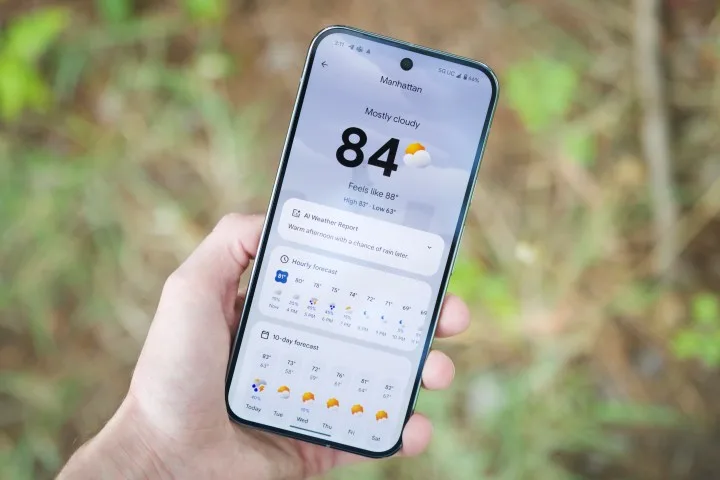
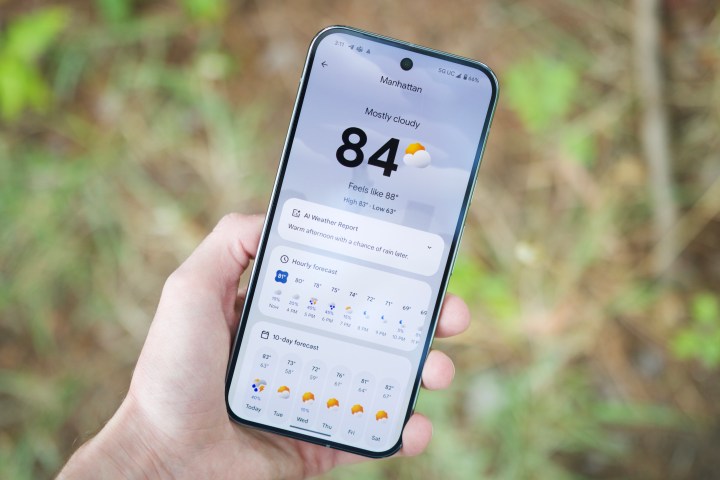
Lately, the Pixel Weather app has gained significant attention as Google enhances its user interface and adds new functionalities. Excitingly, two of the anticipated features—the Pollen count card and immersive vibrations—are now available for some users.
With the introduction of “immersive weather vibrations,” the Pixel Weather app vibrates in sync with its animated backgrounds. The intensity of the vibrations corresponds to the level of precipitation, encompassing a variety of weather conditions, not just rainfall, as reported by 9to5Google. If this feature isn’t to your liking, you can easily turn it off in the account settings.
The pollen count feature appears at the bottom of the interface and informs users about potential allergy triggers over the next three to five days, specifically detailing levels for grass, tree, and weed pollen. Currently, this feature is operational in France, Germany, Italy, and the U.K. However, Google has mentioned that it can be accessed from anywhere and will become more widely available in the future.
Joe Maring / Digital Trends
Users have begun receiving the immersive vibrations and pollen count feature in recent days. If you haven’t spotted these options on your device yet, give it some time. The pollen count function may take a while to reach the U.S., especially since it is currently limited to EU countries and we are entering winter. It’s more likely that Google will roll it out in the states as spring approaches.
Related
A new Google Pixel feature could simplify handling phone calls
Everything we know about the Google Pixel 9a so far
An unexpected change may affect the camera on the Google Pixel 9a
Stay tuned for updates about the Pixel app. We’ll keep you posted when the pollen feature makes its way to the U.S.
Your daily Windows applications are set to become significantly more intelligent. As highlighted in Microsoft’s Windows Insiders Blog, upcoming enhancements to the Paint and Notepad apps in Windows 11 will incorporate new AI features designed to facilitate user interaction. These updates are still in the early testing phase, and no definitive timeline has been provided regarding wider availability.
The Notepad app for Windows 11 has recently received an update that included autocorrect and spellcheck features. The next addition will be a Rewrite functionality that enables users to rephrase selected text based on specified instructions.
This AI rewriting feature allows users to tailor the AI’s responses in several ways: they can request longer responses, adjust the tone, or select different formats. There will also be a Replace button to apply the generated text easily. Users can activate the feature by highlighting the text, right-clicking, and selecting Rewrite, or by using the keyboard shortcut Ctrl + I.
Microsoft also notes, “All previous versions will remain accessible in the current dialog, allowing you to revert to earlier texts if necessary. If you wish, you can disable the rewrite option in the app settings.”
Currently, this feature is available only to testers located in the U.S., Canada, the U.K., Germany, France, and Italy, and a Microsoft account is required to access it. There has been no word on whether this feature will be extended to additional countries. Furthermore, Microsoft claims that the Notepad app will experience performance enhancements, potentially running up to 35% faster, with some users seeing as much as a 55% boost.
Microsoft
Turning to the Paint app, it will soon feature an AI-driven generative fill capability, allowing users to add AI-generated elements to images. For instance, by selecting an area and typing in a text prompt, users can generate a new image element like a castle, which will be integrated into the existing view at the press of a Create button. If the outcome is unsatisfactory, users can simply request the AI to attempt again.
Additionally, there will be a generative erase feature, enabling users to eliminate unwanted objects from the background. By brushing over the targeted area, the AI facilitates the removal process. However, there is a limitation: the generative fill feature will initially only be available on Copilot+ PCs equipped with a Snapdragon CPU, making it inaccessible to users on standard computers that lack the necessary advanced processing units.
Earlier this year, Paint introduced its first AI feature, Cocreator, coinciding with the phased out Paint 3D.
Microsoft is proceeding cautiously with these innovative features, especially following issues surrounding Recall. The company intends to monitor user feedback before a broader rollout.
One of the standout features of iOS 18 is Apple Intelligence. Although the iPhone 16 series launched with iOS 18 pre-installed, Apple Intelligence was not yet operational. With the arrival of the latest iOS 18.1 update, users can now access these AI functionalities on their compatible iPhones.
If you’ve updated your iPhone and are still unable to utilize the Apple Intelligence features, that’s likely because you need to sign up before they’re activated on your device.
Difficulty Level
Easy
Estimated Time
5 minutes
Requirements
A compatible iPhone
iOS 18.1 update
Here’s how to sign up for Apple Intelligence on your eligible iPhone. Keep in mind that this feature is exclusively available on the iPhone 15 Pro, iPhone 15 Pro Max, and the iPhone 16 series.
Steps to Join the Apple Intelligence Waitlist
Open the Settings app on your iPhone.
Tap on Apple Intelligence & Siri.
Choose Join the Apple Intelligence waitlist.
Tap Join waitlist.
After signing up, you will get a notification once access is granted.
Activating Apple Intelligence
Once you’ve been accepted off the waitlist, you’ll need to manually turn on Apple Intelligence.
Open the Settings app on your iPhone.
Tap on Apple Intelligence & Siri.
Select Turn on Apple Intelligence.
Press Continue.
Choose to Summarize all notification previews if you’d like, or select Not now if you prefer not to summarize.
Tap Continue on the Siri setup screen.
Press Continue again.
Continue on the Type to Siri screen.
Ensure the toggle for Apple Intelligence is set to On. If you change your mind later, you can simply turn it off.
With these steps, you’ll be able to make the most of the new Apple Intelligence features on your iPhone.
OnePlus has established itself as a standout brand known for delivering high-performance flagship smartphones at competitive prices when compared to leading competitors. After months of speculation surrounding the OnePlus 13, the device has finally launched, and it meets all our expectations. While it may not be widely available in Western markets just yet, it won’t be long before it makes its debut.
So, what sets the OnePlus 13 apart? Here’s an overview of everything you need to know about OnePlus’s latest flagship device.
When is the OnePlus 13 expected to release?
Tushar Mehta / Digital Trends
The OnePlus 13 has already been launched in China, but it may take a few months before it rolls out globally. As a Chinese company, it is customary for OnePlus to have its releases start in its home market, which has been consistent in its previous three launches. For instance:
OnePlus 10 Pro: Released in China on January 11, 2022, followed by a global launch on March 31, 2022.
OnePlus 11: Launched in China on January 9, 2023, with a global release on February 7, 2023.
OnePlus 12: Unveiled in China on December 5, 2023, and expected to be available globally starting January 23, 2024.
As you can see, China consistently gets OnePlus’s latest models first. Moreover, the release dates have been getting earlier each year, with the OnePlus 13 officially launching in China on October 31.
The timeframe between the initial launch in China and the global rollout has been steadily decreasing, and current rumors suggest that the OnePlus 13 could become available internationally in late 2024 or early 2025. According to a note from a Reddit user, the OnePlus 13 might hit the market in Singapore as early as January.
While specifics about its global release are still unclear, based on previous patterns, we could see the OnePlus 13 outside China as early as November 2024, though January 2025 is also a possibility. For now, all we can do is wait.
What is the price of the OnePlus 13?
OnePlus
The starting price for the OnePlus 13 is CNY 4,799, approximately $675. In comparison, the OnePlus 12 was launched at CNY 4,299, indicating a price increase of about 500 CNY for this iteration — although this increase may not fully carry over to markets outside China.
When it comes to flagship smartphones, OnePlus has consistently offered competitive pricing. For reference, the OnePlus 11 debuted at $700, followed by the OnePlus 12 at $800.
This consistent increase over the last couple of models raises concerns about affordability in global markets. Recent reports suggest that if the price hike holds true, we might see the OnePlus 13 start at about $900 in the U.S. Nevertheless, considering that most flagship devices from competitors start at $1,000 or higher, the OnePlus 13 could still be a more affordable option, especially compared to models like the Galaxy S25, even if the price gap continues to narrow.
Specifications of the OnePlus 13
Dimensions
162.9 x 76.5 x 8.5 mm
Weight
210 or 213 g (7.41 oz)
Display
6.82 inch AMOLED, 2550 x 3168 pixels, 120Hz refresh rate, 4,500 nits peak brightness
While OnePlus may not enjoy the same level of recognition as giants like Apple or Samsung, they certainly produce some impressive phones. The top-tier configuration offering 1TB storage and 24GB RAM surpasses many laptops in performance. Additionally, the triple-camera setup on the back presents significant photographic potential. However, it’s worth noting that there are rumors suggesting this high-end configuration may only be available in China.
Another aspect to highlight is the impressive battery capacity of 6,000mAh. The device supports both 100W charging and 50W wireless charging, with the ability to reach a full charge in as little as 36 minutes.
While the camera specifications are exciting, you may observe that the telephoto lens has a lower megapixel count than that of the OnePlus 12. Rest assured, with its enhanced sensor, the overall photo quality should remain superior.
Keep in mind that these specifications could vary for the global version of the device.
OnePlus 13 Design and Colors
Digital Chat Station / Weibo
Before the announcement, there was considerable debate about the OnePlus 13’s design, but now the details are out.
This phone comes in a trio of color options: black, blue, and white. However, each color has its unique name: Obsidian Secret Realm for black, Blues Hour for blue, and White Dew Dawn for white. Each hue features its distinct texture as well.
The Obsidian Secret Realm has a dense wood grain pattern on the glass that not only adds a textured feel but also gives it an appealing appearance. Blues Hour is crafted from leather, while White Dew Dawn boasts a sleek glass back.
The camera module design has also evolved. Previously, OnePlus employed a half-pill shape for housing the cameras, but that design has been simplified to a single circular module that accommodates the three cameras and the LED flash. A slender metal band now extends from the camera module into the device’s frame. Additionally, there’s an “H” symbol indicating the partnership with Hasselblad for camera optimization.
The OnePlus 13 features narrow bezels and rounded edges, resulting in a sleek and modern aesthetic. The side has a volume control and a three-position alert slider, while the flat display includes a punch-hole for the front camera.
Another notable advancement is the inclusion of “glove touch” technology, allowing users to interact with their device while wearing gloves, as well as Rain Touch 2.0, which helps prevent raindrops from affecting the touch functionality.
How does the OnePlus 13 measure up against the OnePlus 12?
OnePlus
While the OnePlus 13 shares many features with the OnePlus 12, it’s clear that the newer model is an enhancement across the board. What improvements can we expect?
The OnePlus 13 is both thinner and lighter, features a brighter display with a larger battery capacity. A significant upgrade comes in the form of the Snapdragon 8 Elite chip, replacing the Snapdragon Gen 3 used in the OnePlus 12.
While comparing their specifications is straightforward, there are subtle enhancements not captured in the specs that may significantly influence the user experience. The real test will come once we can evaluate how the new design feels in hand and assess the performance of the upgraded cameras.
We anticipate the OnePlus 13 will outperform the OnePlus 12 in several aspects, but the full extent of the improvements will only be revealed once we have the chance to test the device ourselves.
Is the OnePlus 13 a smart purchase?
OnePlus
Here’s the challenging part: the OnePlus 13 is not yet available for purchase in the U.S. at this moment and can only be acquired in China (or through importation of the Chinese model).
As we mentioned, its global release is anticipated within the upcoming months. If you’re on the lookout for a new smartphone, the OnePlus 13 is certainly a device to monitor. While its pricing remains uncertain, its specifications compete well against those of larger brands, and it will likely be priced significantly lower than the Samsung Galaxy S25.
If you’re considering an upgrade, the OnePlus 13 presents an attractive option. This flagship model positions itself as a strong contender for anyone seeking a robust Android smartphone without the premium price tag of $1,000 or more. Keep an eye on this phone.
Safety has become the primary focus of Google’s software developments for 2024. With the introduction of Android 15, the tech giant implemented numerous anti-theft features for mobile devices and subsequently secured the Find My system with biometric verification. Now, it’s time to enhance the Messages app.
This morning, the company revealed improved scam detection capabilities, specifically targeting package delivery deceptions and job scams. There has been a noticeable surge in package delivery fraud schemes, with scammers employing tactics that range from brushing scams to extorting individuals under the guise of fake delivery issues.
Furthermore, the U.S. Federal Communications Commission (FCC) has issued a warning about the alarming increase in such fraudulent activities. These scams typically commence with misleading text messages often containing deceptive tracking links.
Andy Boxall / Digital Trends
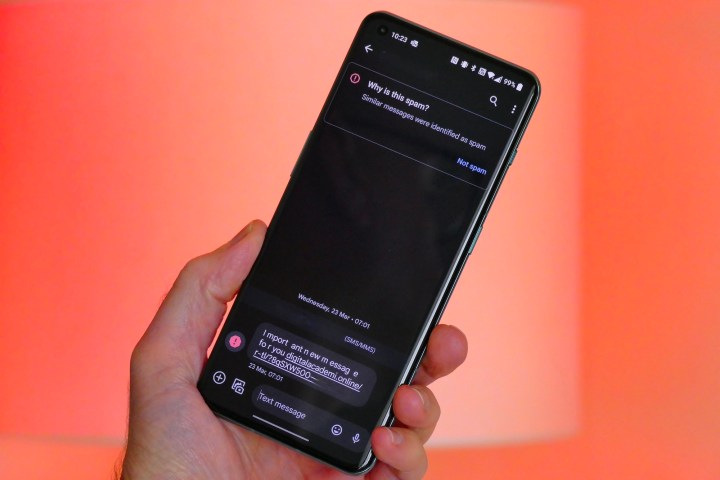
Google has stated that the Messages app will utilize on-device artificial intelligence to identify suspicious texts. Users will receive alerts about these messages, which will automatically be moved to the spam folder. This functionality is currently being rolled out to beta users.
Related
When will my phone get Android 15? Here’s everything we know
Google’s Pixel Weather app could get a fun new feature
What is RCS messaging? A briefing on the SMS successor
Additionally, Google is broadening a safety scan system that automatically searches for potentially harmful links or URLs. These deceptive links can lead to serious issues, including malware installation or directing users to phishing websites. This system has been tested in several Asian nations, including India, and will soon expand globally to offer intelligent URL warnings in Messages before the year concludes.
However, there remains a risk of users encountering well-crafted online scams initiated by seemingly urgent messages. In response, Google will introduce an extra layer of security that blocks messages from unknown international numbers.
Andy Boxall / Digital Trends
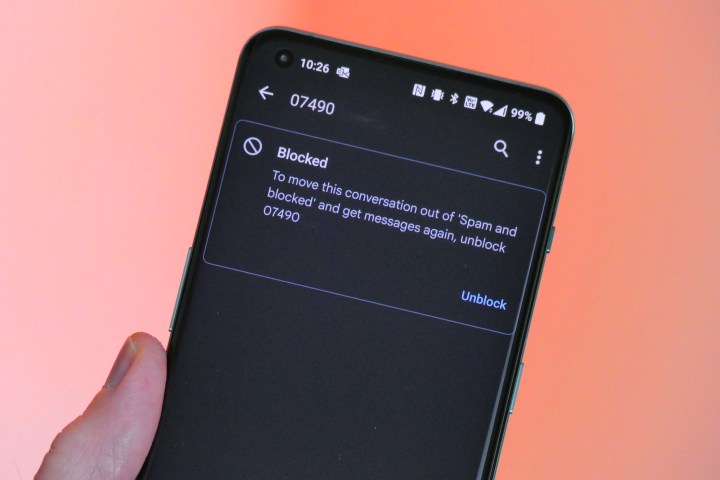
Scammers frequently use international virtual numbers to evade detection by local law enforcement. Google emphasizes that the Messages app will allow users to automatically filter out messages from such international senders to reduce potential threats. These communications will be directed to the “Spam & blocked” folder in the Messages app, with initial rollout commencing in Singapore. Based on feedback, it will expand to additional markets.
It’s worth noting, however, that scammers don’t exclusively utilize international numbers. They often impersonate legitimate businesses such as banks, automotive companies, and logistics providers by adopting their business sender profiles. In some instances, they may even pose as someone the recipient knows. To combat these advanced threats, the Messages app is developing a contact verification system. This will use each contact’s public key for validation, checking the sender’s identity through a QR code or registered phone number.
Google has already begun designing a unified public key dashboard and aims to make the contact key verification feature accessible to all devices running Android 9 or later.
Manage Consent
To provide the best experiences, we use technologies like cookies to store and/or access device information. Consenting to these technologies will allow us to process data such as browsing behavior or unique IDs on this site. Not consenting or withdrawing consent, may adversely affect certain features and functions.
Functional
Always active
The technical storage or access is strictly necessary for the legitimate purpose of enabling the use of a specific service explicitly requested by the subscriber or user, or for the sole purpose of carrying out the transmission of a communication over an electronic communications network.
Preferences
The technical storage or access is necessary for the legitimate purpose of storing preferences that are not requested by the subscriber or user.
Statistics
The technical storage or access that is used exclusively for statistical purposes.The technical storage or access that is used exclusively for anonymous statistical purposes. Without a subpoena, voluntary compliance on the part of your Internet Service Provider, or additional records from a third party, information stored or retrieved for this purpose alone cannot usually be used to identify you.
Marketing
The technical storage or access is required to create user profiles to send advertising, or to track the user on a website or across several websites for similar marketing purposes.