الوسم: Deck

  • The Ultimate Guide to Completing the Goblin Storm Commander Deck in MTG

    The Ultimate Guide to Completing the Goblin Storm Commander Deck in MTG

    Not all Magic: The Gathering Commander decks are sold through retail stores; some are only available through Secret Lair. The newest deck released via this limited-edition service is Goblin Storm, which offers a fun, cartoon-style twist on some of our favorite goblin Commanders, including Krenko, Mob Boss, and Zada, Hedron Grinder.

    This highly aggressive Goblin deck features artwork from Wizard of Barge. Based on past Secret Lair releases, it’s expected to sell out quickly and likely surpass its $150 retail price early on.

    The complete Goblin Storm deck list is now available. As expected, it’s a Mono-Red deck with a single focus: winning as fast as possible.

    The deck includes these main cards:

    – Krenko, Mob Boss (Creature)
    – Zada, Hedron Grinder (Creature)
    – Pashalik Mons (Creature)
    – Broadside Bombardiers (Creature)
    – Conspicuous Snoop (Creature)
    – Skirk Prospector (Creature)
    – Roaming Throne (Creature)
    – Goblin Chieftain (Creature)
    – Goblin Dark-Dwellers (Creature)
    – Goblin Lackey (Creature)
    – Goblin Thashmaster (Creature)
    – Grenzo, Havoc Raiser (Creature)
    – Howlsquad Heavy (Creature)
    – Redcap Gutter-Dweller (Creature)
    – Rundvelt Hordemaster (Creature)
    – Searslicer Goblin (Creature)
    – Siege-Gang Commander (Creature)
    – Siege-Gang Lieutenant (Creature)
    – Gempalm Incinerator (Creature)
    – General Kreat, the Boltbringer (Creature)
    – Goblin Bushwhacker (Creature)
    – Goblin Matron (Creature)
    – Goblin Warchief (Creature)
    – Impulsive Pilferer (Creature)
    – Mogg War Marshal (Creature)
    – Storm-Kiln Artist (Creature)
    – Frontline Heroism (Enchantment)
    – Goblin Bombardment (Enchantment)
    – Boggart Shenanigang (Enchantment)
    – Impact Tremors (Enchantment)
    – Quest for the Goblin Lord (Enchantment)
    – Skullclamp (Artifact)
    – Sol Ring (Artifact)
    – Idol of Oblivion (Artifact)
    – Ruby Medallion (Artifact)
    – Throne of Eldraine (Artifact)
    – Swiftfoot Boots (Artifact)
    – Brightstone Ritual (Instant)
    – Chaos Warp (Instant)
    – Great Train Heist (Instant)
    – Ancestors’ Aid (Instant)
    – Battle Hymn (Instant)
    – Crimson Wisps (Instant)
    – Expedite (Instant)
    – Fists of Flame (Instant)
    – Sazacap’s Brew (Instant)
    – Seething Song (Instant)
    – Empty the Warrens (Sorcery)
    – Grapeshot (Sorcery)
    – Blasphemous Act (Sorcery)
    – Past in Flames (Sorcery)
    – Daring Discovery (Sorcery)
    – Dragon Fodder (Sorcery)
    – Faithless Looting (Sorcery)
    – Glimpse the Impossible (Sorcery)
    – Goblin Negotiation (Sorcery)
    – Haze of Rage (Sorcery)
    – Krenko’s Command (Sorcery)
    – Mana Geyser (Sorcery)
    – Renegade Tactics (Sorcery)
    – Spreading Insurrection (Sorcery)
    – Vandalblast (Sorcery)
    – Wild Ride (Sorcery)
    – Witch’s Mark (Sorcery)
    – Arena of Glory (Land)
    – Castle Embereth (Land)
    – Den of the Bugbear (Land)
    – Fountainport (Land)
    – Kher Keep (Land)
    – Spinerock Knoll (Land)
    – War Room (Land)
    – Shinka, the Bloodsoaked Keep (Land)
    – Dwarven Mine (Land)
    – Forgotten Cave (Land)
    – Goblin Burrows (Land)
    – Hidden Volcano (Land)
    – Reliquary Tower (Land)
    – Mountain (Land)

    The Goblin Storm deck will be available through Secret Lair starting May 18, 2026, at a price of $149.99. This release won’t be reprinted, so once it’s gone, it’s gone for good. These decks can be good investments if you’re willing to hold onto them for a while, as demand may not spike immediately after they sell out.

    In this deck’s Commander breakdown, the two main commanders are Krenko, Mob Boss, and Zada, Hedron Grinder.

    Krenko is one of the most popular goblin commanders across different formats. He’s a four-mana goblin warrior who can be tapped to produce X 1/1 goblin tokens, with X being the number of creatures you control. Krenko’s straightforward approach focuses on quickly filling the battlefield with goblins.

    Zada, on the other hand, is often overlooked but is very powerful. She allows you to copy any spell that targets just her, and each copy must target a different creature you control. For example, casting Ancestors’ Aid on Zada would give all your creatures +2/0 and generate a treasure for each one, potentially winning the game in a flash.

    Zada can secure quick victories in Commander games, especially with a four-mana cast cost, similar to Krenko.

    The deck’s strategy is simple: attack fast and wide. Fill your side with small, low-power creatures to deal damage in volume. While some spells can temporarily pump your creatures into bigger threats, the main goal is to end the game quickly. Think of it like a speedrun, aiming for the fastest victory possible and leaving opponents stunned.

  • Enhance Your MTG Strixhaven Commander Deck Through Completing and Solving

    Enhance Your MTG Strixhaven Commander Deck Through Completing and Solving

    Some prebuilt Magic: The Gathering Commander decks are great, but they often have hidden potential that can be unlocked with a few smart card additions. All it takes are a few well-chosen upgrades to improve each deck and make it more powerful.

    In this guide, we’ll look at three key upgrades for each of the Secrets of Strixhaven Commander decks. For each deck, we’ll suggest one budget option, one mid-priced choice, and one high-end upgrade to cover all spending levels.

    Note: Prices listed are the lowest and highest bids on TCGPlayer at the time of writing.


    Prismari Artistry

    Shark Tycoon — $1.50–$14
    This inexpensive enchantment is surprisingly flexible. For six mana, it creates X/X flying shark tokens whenever you cast a noncreature spell, with X equal to the mana cost of that spell. You can also cycle Shark Tycoon for X plus two mana to create a shark token with power and toughness equal to X.

    Insurrection — $8–$18
    If you can cast it, this spell turns the tide of the game. It gains control of all creatures, untaps them, and grants them haste for the turn. Though it costs eight mana, having this in hand can be a game-changer when the moment is right.

    Improvisation Capstone — $13–$26
    A bit costly, but very powerful, this card provides you with several free spells each turn, depending on luck. It costs seven mana, but its ability to give you multiple free plays can win clutch games if you resolve it.

    Cards to Remove:

    • Solemn Simulacrum
    • Surge to Victory
    • Twinflame
    • Chaos Warp
    • Prismari Charm

    Quandrix Unlimited

    Broodguard Elite — $0.20
    A budget-friendly pick that helps grow your army fast. Playing this card early helps you put counters on Zimone, which amplifies the power of your X-cost spells. Despite its low cost, it can have a big impact if you draw it early.

    Doppelganger — $5–$50
    This card lets you create tokens copying other creatures, turning threats into your own forces. It requires some math to figure out exactly how many tokens you’ll make, but in mana-rich Commander games, Doppelganger can cause serious trouble for opponents.

    Kalonian Hydra — $5–$29
    A significant upgrade to existing large creatures, Kalonian Hydra enters with four +1/+1 counters and doubles the counters on all your creatures when attacking. Thanks to Trample, it’s a major threat on the green battlefield.

    Cards to Remove:

    • Eureka Moment
    • Quandrix Apprentice
    • Open the Way
    • Curse of the Swine
    • Zimone, All Questioning

    Silverquill Influence

    Ethereal Armor — $0.40
    A perfect addition for enchantment-heavy decks, this card grants a creature +1/+1 for each enchantment you control and gives it First Strike. It’s a cheap upgrade that packs a punch, especially with many enchantments in play.

    Light Paws, Emperor’s Voice — $2–$20
    A versatile two-mana creature, it can fetch other auras with lower or equal mana value each time an aura enters the battlefield, then attach it to Light Paws. In Commander, its ability can quickly empower your enchantments and creatures.

    Sigarda’s Aid — $16–$66
    This enchantment allows you to cast equipment and auras at instant speed, making your plays more flexible. It bypasses many costs associated with attaching items, enabling quick and surprising game-changing moves.

    Cards to Remove:

    • Keen Duelist
    • Anguished Unmaking
    • Firemane Commandos
    • Breena, the Demagogue
    • Mangara, the Diplomat

    Witherbloom Pestilence

    Blech, Loafing Pest — $0.49
    A budget creature that benefits from life gain and +1/+1 counters, Blech accumulates counters each time you gain life, while so do Pest, Bat, Insect, Snake, or Spider tokens you control.

    Vito, Dusk of the Thorn Rose — $9–$59
    A Golgari staple that can create infinite life-loss combos or become a persistent threat. You can activate his ability for five mana to give all your creatures Lifelink, or use him to chip away at opponents’ life totals.

    Sephiroth, Fabled Soldier / One-Winged Angel — $25–$93
    A somewhat unusual choice, Sephiroth thrives on creature sacrifices and life gain. With each of his minions that dies, he chips away at opponents. Once he transforms, he grants you an emblem that makes his ability permanent and can start sacrificing creatures when attacking.

    Cards to Remove:

    • Gilded Goose
    • Nether Traitor
    • Bloodghast
    • Night’s Whisper

    Lorehold Spirit

    Ghost Vacuum — $3–$20
    A slightly pricier inclusion, Ghost Vacuum exiles cards from graveyards and can be sacrificed to return exiled creatures as spirits, benefiting from all buffs on the battlefield. It’s a strong way to control graveyard interactions and resurrect threats.

    Caretaker’s Talent — $8.49–$10
    An enchantment that benefits token strategies by allowing you to draw a card whenever a token enters the battlefield. Higher levels enable copying tokens and boosting all creatures, adding consistency and power.

    Esper Sentinel — $65–$92
    A high-value upgrade that draws you a card whenever an opponent casts their first noncreature spell each turn unless they pay mana equal to its power. It’s a powerful economic tool, especially in multiplayer formats.

    Cards to Remove:

    • Moonshaker Cavalry
    • Secret Rendezvous
    • Lorehold Charm
    • Primary Research
    • Bitterthorn, Nissa’s Animus

    Summary

    With just a few targeted upgrades, each of these decks can reach new heights. Replacing less impactful cards with these recommended choices will give you more options and stronger plays, helping you better control the game and come out ahead.

  • Complete Breakdown of the Avengers Assemble Commander Deck in MTG

    Complete Breakdown of the Avengers Assemble Commander Deck in MTG

    The newest set of Magic: The Gathering Commander preconstructed decks is almost here, and this guide focuses on the Avengers Assemble deck. The main commanders from the four new decks have already been leaked, and this one looks to be the most aggressive of the bunch.

    If you enjoy playing with big creatures and adding lots of +1/+1 counters, this deck is a great fit. Here’s what we know so far, including the deck list and gameplay strategies.

    Avengers Assemble Deck List

    We only have three confirmed cards for the Avengers Assemble Commander precon so far, with hints of a fourth from the packaging. The full deck list is expected to be revealed in early to mid-June, but some cards might leak before that.

    Card Name Card Type
    Captain America, Team Leader Creature
    Sol Ring Artifact
    Arcane Signet Artifact

    The possible fourth card is Nick Fury, who appears on the packaging along with Captain America. In sets featuring universes beyond, these spots usually represent the deck’s main Commander, as seen with the Wakanda Forever and Fantastic Four decks in this set.

    Commander Breakdown

    So far, the only Commander card revealed is Captain America, Team Leader. This is a 3-mana 3/3 creature that activates when another Hero enters play. It grants the new Hero Vigilance and Haste until end of turn and gives both the Hero and itself a +1/+1 counter.

    This card is straightforward but might seem a little simple. Since the deck aims to be aggressive, the Commander’s simplicity works well. Its low cost allows you to cast it early, and every Hero played afterward makes your board stronger. You can attack sooner and with more power.

    Strategy

    The deck packaging states it will rely heavily on equipment and counters. Expect to use these to boost your creatures’ power and toughness while protecting them from removal spells.

    Additionally, the deck suggests a focus on equipment and counters, which usually indicates a creature-rich approach. If the deck isn’t packed with creatures, it will likely generate creature tokens—just as useful—and these tokens can also be equipped with gear to strengthen your forces.

  • MTG Strixhaven Quandrix Unlimited Commander Deck: Completing & Solving Tips

    MTG Strixhaven Quandrix Unlimited Commander Deck: Completing & Solving Tips

    If you’re thinking about getting one of the new Magic: The Gathering Secrets of Strixhaven Commander pre-constructed decks for your next game night, the mysterious Quandrix Unlimited green and blue deck is a solid choice.

    Although the complete deck list isn’t out yet, we have a good idea of some of the key cards and mechanics it will include. If you enjoy boosting your creatures with +1/+1 counters and casting X-cost spells for maximum benefit, this deck aligns with that playstyle.

    Quandrix Unlimited Deck List

    While we wait for the full list, here are some cards we know are likely to be in the deck:

    • Zimone, Infinite Analyst
    • Sol Ring
    • Arcane Signet
    • Talisman of Curiosity

    The full deck list is expected to be revealed between late March and early April, and we will update as more spoilers come out.

    Commander Breakdown

    The main commander for this deck is Zimone, Infinite Analyst. This card has a lot of text, so understanding its abilities is important before you jump into a game:

    • Whenever you cast your first spell with an X cost each turn, it costs one less mana for each +1/+1 counter on Zimone.
    • When you cast your first X spell each turn, you also put two +1/+1 counters on Zimone.

    This makes Zimone a powerful and potentially game-breaking card, especially as you add more counters to it. Focus on creating ways to add counters to Zimone, so you can reduce the cost of your X-spells and cast bigger spells more easily, rapidly shifting the board state in your favor.

    Deck Strategy & Themes

    The deck’s main strategy revolves around two key mechanics:

    • Placing many +1/+1 counters on your creatures.
    • Casting X-cost spells to maximize their impact.

    Zimone only places counters on itself, so you will need other ways to buff your other creatures. Timing your X-spells is crucial—they can be used for various effects like creating tokens or dealing damage to opponent’s creatures. It’s best to cast these spells selectively, choosing the right moment to get the most benefit rather than just going for maximum value every time.

    Upgrades

    There are many ways to boost this deck, especially by adding impactful X-spells. Some potential upgrades may include reprints of powerful cards, once we see the official list.

    Notable Upgrade Options:

    Nissa, Steward of Elements
    This planeswalker is unique because it’s cast with an X-value, giving it a dynamic entry. If you can cast her with at least seven X, her -6 ability becomes available immediately, allowing you to turn two lands into 5/5 flying, haste creatures that stay on the battlefield. This can deal a lot of damage quickly. Her other abilities help with drawing cards and finding lands, making her a flexible upgrade.

    Repulsive Mutation
    An instant that’s great as both an offensive tool and a counterspell. It puts X +1/+1 counters on a creature you control and counters an opponent’s spell unless they pay mana equal to the highest power among your creatures. For example, if you have a creature at 12/12, the opponent must pay 12 mana to cast their spell, effectively making it very hard to counter your big threats.

    Zimone, Paradox Sculptor
    Consider using a different version of the commander for additional synergy. This version can put a +1/+1 counter on up to two creatures at the start of your turn, and with some mana and tapping, can double the counters on those creatures or artifacts, further amplifying your growth.

    Hydroid Krasis
    A versatile X-spell that gains you life and draws cards based on X. When cast, you gain half of X in life and draw that many cards, then it enters with X +1/+1 counters, flying, and trample—making it both a big threat and a sustain source.


    This deck revolves around stacking counters and casting impactful X-spells at the right moments to dominate the game. Keeping your focus on speeding up your threats and controlling the pacing with well-timed spells will give you a strong edge.

  • Strixhaven Lorehold Spirit Commander Deck List & Completing Upgrades

    Strixhaven Lorehold Spirit Commander Deck List & Completing Upgrades

    Five new Commander pre-constructed decks are arriving in Secrets of Strixhaven, and we’re here to break down each one so you can decide which fits your play style best.

    If your strategy involves graveyard recursion, token creation, or if you have a soft spot for Lorehold College, the Lorehold Spirit deck is an excellent choice. We’ll also look at possible upgrades, especially from the white and red mana pools.

    Lorehold Spirit Deck List

    Much about the full deck list is currently unknown, unlike the Prismari Artistry deck which leaked earlier. More details are expected during spoiler season.

    Here’s what we know so far about the deck’s key cards:

    Card Name Card Type Cost
    Quintorius, History Chaser Planeswalker 1 Red, 1 White + 2 Colorless
    Arcane Signet Artifact 2 Colorless
    Sol Ring Artifact 2 Colorless
    Talisman of Conviction Artifact 2 Colorless

    Full deck details are anticipated in late March or early April.

    Commander Breakdown

    The Commander for this deck is Quintorius, History Chaser, which is a planewalker, not a legendary creature—a rare choice for Commander decks that can work if explicitly specified. Planeswalkers as Commanders are uncommon but powerful when used correctly.
    Quintorius’s abilities clearly define the deck’s focus: whenever cards leave your graveyard, you get to create a 3/2 white and red spirit token. Its +1 ability allows you to discard a card, draw two, and mill one, helping to fill your graveyard and draw more cards to interact with it. The -4 grants all your spirit tokens vigilance and double strike, making them more formidable in combat.

    Deck Theme & Strategy

    From the packaging and the Commander, the deck centers around two main themes: casting cards from the graveyard and generating spirit tokens. Mechanics like flashback, unearth, dredge, or delve are likely included, as they all involve interacting with your graveyard. While most focus on creature cards, non-creature cards that leave your graveyard can also be part of the strategy, especially creature cards that can return to the battlefield repeatedly, creating recurring threats for opponents.

    Enhancing your spirits and creatures with spells or enchantments to boost their power is also expected, making your tokens even more menacing alongside your graveyard recursion.

    Upgrades

    We can’t specify which cards will be removed until the full deck list is available, but we can suggest existing Commander-legal cards that would complement this deck.

    Some promising options include:

    • Sacred Fire: This flashback spell deals two damage to any target and restores two life. Its initial cost is low, making it good for early removal of small creatures. Its flashback cost is six mana, but it can also help when your life is low by dealing damage and creating a spirit token if Quintorius is on the battlefield.

    • Quintorius, Field Historian: A legendary creature that shares the same ability as Quintorius, creating a spirit token whenever you leave cards from your graveyard. Having both on the battlefield means you’ll consistently generate two spirits each time you interact with your graveyard, and it also boosts spirits’ power by +1/+0.

    • Firemane Angel: A 4/3 flying, first strike creature that gains you one life at the start of each upkeep if it’s on the battlefield or in your graveyard. Recasting it from the graveyard costs ten mana but can be done during your upkeep, providing a way to activate Quintorius’s talent repeatedly. Accumulating life over time can be a useful buffer.

    • Rally The Peasants: An instant that gives all creatures +2/0 until end of turn, ideal for boosting your spirits’ attack power. It has a flashback cost similar to its original, allowing you to cast it twice, maximizing its value during the match.

    The deck will likely revolve around mechanics that involve cards leaving your graveyard, with creature cards that can repeatedly return to play being particularly disruptive for opponents. Expect numerous ways to enhance your spirits and creatures, either through instant spells or enchantments, to strengthen your tokens and overall board presence.

  • Top Lorwyn Eclipsed Brawl Decks in MTG Arena: Solving and Completing

    Top Lorwyn Eclipsed Brawl Decks in MTG Arena: Solving and Completing

    While Commander may not be arriving on Magic: The Gathering Arena anytime soon, the Brawl format has really grown in popularity. Building a Brawl deck in Arena is often simpler because it usually requires fewer wildcards or lucky pulls from packs, thanks to the singleton rules, even though the deck size is larger.

    If you’re interested in trying it out, here are some top decks released after Lorwyn Eclipsed to consider.

    High Perfect Morcant

    This Golgari deck is built around mana-producing creatures to get through early on, which allows bigger creatures to enter the battlefield sooner than your opponent might expect. With High Perfect Morcant as the commander, you’ll use elves to trigger the Blight on your opponents, then proliferate to double the counters. Pairing this with a planeswalker like Tyval Kell lets you untap one of your elves each turn so it can attack again. Proliferate appears on various creatures as well, and you’ll often add +1/+1 counters to different cards.

    Deck Breakdown

    • Creatures — 31
    • Planeswalkers — 3
    • Spells — 16
    • Artifacts — 3
    • Enchantments — 3
    • Lands — 43
    • Estimated Tabletop Value — $1,072

    Maralen, Fae Ascendant

    Maralen, Fae Ascendant MTG card from Lorwyn Eclipsed.

    This Sultai deck heavily focuses on faeries, elves, and changelings, which boost the effectiveness of spells or abilities that depend on creature types. Most spells are counters or removal, with powerful game-ending cards like Meathook Massacre, which forces your opponents to lose life when their creatures die and gains you life for your creatures’ deaths. It’s an X-cost spell that can wipe out your opponent’s creatures — or nearly do so — if not countered. Given that Brawl games are often chaotic and full of combat, if this spell isn’t stopped, it can turn the tide of the game instantly.

    The deck also includes flying creatures, leveraging mechanics such as alliance, card draw, and life gain. Although only about 7% of the current Brawl meta features this deck type, it’s highly popular among competitive players due to its effectiveness.

    Deck Breakdown

    • Creatures — 34
    • Spells — 25
    • Artifacts — 3
    • Enchantments — 5
    • Lands — 32
    • Estimated Tabletop Value — $980

    Bruvac the Grandiloquent

    Bruvac the Grandiloquent MTG card from Ravnica Remastered.

    This mono-blue deck stands out because it includes 20 copies of Persistent Petitioners, thanks to a special rule that allows any number of these cards in a deck. The deck mainly uses counter spells and bounce effects, along with some removal options. Its main strategy is mill — forcing the opponent to discard cards from their deck.

    With Bruvac as the commander, the effect doubles the number of cards opponents mill when triggered. For example, each time you activate, the opponent mills two cards with one Petitioners, or 24 when four are tapped.

    Deck Breakdown

    • Creatures — 20
    • Planeswalkers — 2
    • Spells — 28
    • Artifacts — 6
    • Enchantments — 1
    • Lands — 41
    • Estimated Tabletop Value — $418

    Bre Of Clan Stoutarm

    Bre of Clan Stoutarm MTG card from lorwyn Eclipsed.

    This Boros deck is highly aggressive, featuring the most creatures among those covered. Many spells support damage to creatures or players. Several creatures have flying, first strike, vigilance, haste, or lifelink, and some can boost other attacking creatures’ power with mana abilities.

    This creature-based style is great for beginners learning Brawl or Magic: The Gathering in general, but it also offers plenty of opportunities for strategic synergy. A little practice can unlock its full potential.

    Deck Breakdown

    • Creatures — 41
    • Spells — 15
    • Artifacts — 4
    • Enchantments — 3
    • Lands — 36
    • Estimated Tabletop Value — $670

    Vorinclex, Voice Of Hunger

    Vorinclex, Voice of Hunger MTG card from Iconic Masters.

    This mono-green Vorinclex deck is well-balanced with a nearly equal mix of creatures, spells, and enchantments, along with a few planeswalkers, artifacts, and battle cards. Landfall plays a key role, supported by cards that search for lands or allow you to play extra lands each turn. Creatures with trample ensure damage gets through, making this deck tough to defend against.

    While green has fewer counters, giving creatures hexproof is one way to avoid removal spells. The deck is built around efficient land use and big, trampling creatures for a strong offense.

  • Mono-Black Skeletons Deck Guide for MTG Standard: Completing and Solving Strategies

    Mono-Black Skeletons Deck Guide for MTG Standard: Completing and Solving Strategies

    Not all Magic: The Gathering decks are designed the same way. This Mono-Black Skeletons deck takes a unique approach by using your life points as leverage to secure victory. The idea is to put yourself at risk, leaving you vulnerable to quick defeat if things don’t go your way.

    This deck can be pretty challenging to master, but its success rate is just under 60%, making it a strong choice once you understand how to play it effectively.

    ### Mono-Black Skeletons Deck List

    While not entirely made up of only creatures and spells, this deck isn’t overly complicated or cluttered. However, since many cards come in pairs, you need to keep track of where they are so you don’t accidentally lose your last copy of something important.

    | Card Name | Card Type | Copies | Set |
    | — | — | — | — |
    | Cecil, Dark Knight / Cecil, Redeemed Paladin | Legendary Creature | 2 | Final Fantasy |
    | Forsaken Miner | Creature | 4 | Outlaws of Thunder Junction |
    | Tinybones, the Pickpocket | Legendary Creature | 2 | Outlaws of Thunder Junction |
    | Sunset Saboteur | Creature | 3 | Edge of Eternities |
    | Timeline Culler | Creature | 4 | Edge of Eternities |
    | Sephiroth, Fabled SOLDIER / Sephiroth, One-Winged Angel | Legendary Creature | 3 | Final Fantasy |
    | Stab | Instant | 2 | Foundations |
    | Bitter Triumph | Instant | 2 | Lost Caves of Ixalan |
    | Heartless Act | Instant | 2 | Avatar: The Last Airbender |
    | Case of the Stashed Skeleton | Enchantment | 4 | Murder at Karlov Manor |
    | Nowhere to Run | Enchantment | 2 | Duskmourn: House of Horror |
    | Corpses of the Lost | Enchantment | 4 | Lost Caves of Ixalan |
    | Tragic Trajectory | Sorcery | 2 | Edge of Eternities |
    | Strategic Betrayal | Sorcery | 2 | Takir: Dragonstorm |
    | Soulstone Sanctuary | Land | 2 | Foundations |
    | Realm of Koh | Land | 1 | Avatar: The Last Airbender |
    | Swamp | Land | 19 | Player’s Choice |

    ### How This Mono-Black Skeletons Deck Works

    This deck divides the game into phases. Initially, your goal is to get Cecil, Dark Knight onto the battlefield and start dealing damage while protecting it enough to transform. Achieving this takes some effort, as Cecil needs five unblocked attacks to lose half its health and transform.

    You can accelerate this process by casting Timeline Culler for its Void cost—two life points and one black mana. Between this, the damage from Cecil, and incoming attacks, you could transform Cecil into Cecil, Redeemed Paladin, in about three turns. Once transformed, the focus shifts to building your board and regaining some life points lost during the early game.

    This deck also tends to be quick, with an average game lasting around 4.7 minutes—similar to many aggressive decks. Yet, it offers opportunities to close out games early, so always be alert for chances to finish quickly.

    For a more defensive approach, you can concentrate on slowly building your creatures and using spells like Case of the Stashed Skeleton and Corpses of the Lost to generate tokens and buff them.

    Generally, your winning strategy relies on creatures, but the deck includes a variety of spells to disrupt your opponent’s plans. Be mindful of your life total because some moves cost you health, leaving you less able to defend.

    ### Ideal Starting Hand

    While there isn’t a strict perfect starting hand for this deck, having Cecil, Dark Knight in your opening hand is a big advantage. Including Timeline Culler early can also be very beneficial if you want to quickly transform Cecil.

    Starting with three lands is recommended, but two lands can work if you have one- or two-mana spells to set you up. It’s good to have Cecil at the ready from the start, along with cards like Forsaken Miner, Stab, and Case of the Stashed Skeleton, with at least three lands to back them up.

    ### Changes You Can Make

    A useful addition to this deck is Unstoppable Slasher. Although it isn’t a skeleton, it’s become a powerful card for black decks because it can cut your opponent’s health in half with each attack. It’s especially helpful if you’re playing a life-loss style or facing decks that gain a lot of life.

    Any modifications should be balanced carefully, but once you’ve played with the deck, you’ll understand which tweaks better suit your playstyle.

  • The Ultimate Guide to Completing the TMNT MTG Commander Deck and Solving Its Secrets

    The Ultimate Guide to Completing the TMNT MTG Commander Deck and Solving Its Secrets

    Wizards of the Coast has taken a unique approach with the latest Magic: The Gathering pre-constructed Commander deck. Instead of offering a single deck with one hero, this set includes six different possible Commanders, including the Teenage Mutant Ninja Turtles. Usually, each deck features just one hero, but this time, all six are combined into one highly packed deck, which is more budget-friendly.

    One key mechanic in this deck is “partner,” which allows players to run two Commanders together if they share the same ability—this deck uses an ability called “Character Select.”

    What Comes in This Commander Pre-Con Deck?

    • One face Commander with special borderless art and a foil finish
    • Five additional Commanders, also with borderless art and foil finish
    • 94 non-foil cards
    • Ten double-sided tokens or punch-out counters
    • A deck box

    This setup confirms there are six Commanders total. However, only Leonardo, the Balance, is considered the main Commander—the card the rest of the deck is designed around. The other legendary creatures can legally lead the deck but are not designated as the face Commander.

    The Turtle Power! Commander deck has a suggested retail price of $69.99. Depending on how popular it is, it could become worth much more if the entire deck list turns out to be just as strong as initial impressions suggest.

    Turtle Power! Deck Guide
    Wizards has not revealed the full deck list yet, but we know of six cards confirmed so far:

    • Leonardo, the Balance
    • Donatello, the Brains
    • Raphael, the Muscle
    • Michelangelo, the Heart
    • Splinter, the Mentor
    • Heroes in a Half Shell

    Looking closer at these cards, two main themes are clear: token creation and +1/+1 counters. Each confirmed card features one or both mechanics.

    Leonardo can put a +1/+1 token on every creature you control whenever a token you control enters play. This can be any token, including creatures or artifacts like treasure or food tokens.
    Donatello creates a mutagen token every time any token is created, ensuring more tokens appear on the battlefield each time.
    Raphael doubles the damage of creatures you control that already have counters and also generates a mutagen token when he enters play.
    Michelangelo’s raid ability activates if you attacked this turn, creating a food token and placing a +1/+1 counter on a target creature. He also has trample.

    The “Heroes in a Half Shell” card generates +1/+1 counters whenever a turtle, mutant, or ninja deals combat damage to a player, and it allows you to draw a card.
    Splinter creates a mutagen token each time he or any other non-token card leaves the battlefield and has menace, making him difficult to block unless two or more creatures gang up on him.

    We’re eager to see what the rest of this deck will include, and more details can be found in comprehensive guides on all TMNT MTG products.

  • How to Build the Tannuk Steadfast Second Commander Deck in Edge of Eternities MTG

    How to Build the Tannuk Steadfast Second Commander Deck in Edge of Eternities MTG

    About Tannuk, Steadfast Second

    Tannuk, Steadfast Second is the first legendary Kavu to appear in Magic: The Gathering. He is a proud warrior who gives all your other red creatures haste, but he doesn’t get the benefit himself.

    If Tannuk didn’t have a special ability, he wouldn’t be very memorable. But he does have a second ability: he grants every red creature and artifact in your hand the ability to warp, and sets the warp cost at two generic and one red mana.

    Warp is an alternative spell casting method that has a drawback: when you warp a permanent, it is exiled at the start of your next end step. You can later cast those exile cards without any additional downside, but you must cast them normally.

    Because warping counts as casting, your spell can be countered, but effects that reduce spell costs, like Ruby Medallion, can help lower the warp cost.

    While Tannuk isn’t going to lead you to victory with commander damage, he can help you play powerful, Game-winning bombs early and often. This allows you to overwhelm opponents with huge threats you typically see in mono-green decks.

    How To Build The Deck

    Most mana acceleration in this deck comes from rituals or by cheating in expensive creatures with Tannuk for bonus value.

    Neheb, the Eternal, passively generates mana at the start of your second main phase based on how much life your opponents have lost that turn. Warping it in before a big attack can give you enough mana to cast your big creatures from exile.

    Creatures like Cavern-Hoard Dragon and Ancient Copper Dragon usually require an attack to generate Treasure tokens. If one opponent lacks flying creatures, they can make a lot of Treasures—Ancient Copper Dragon averages 10 to 11 Treasures after a hit, while Cavern-Hoard Dragon can produce up to six.

    Rituals and Big Spenders

    Mana Geyser and Jeska’s Will are powerful rituals that produce large amounts of mana. Mana Geyser generally gives more, especially with three opponents, but Jeska’s Will can produce a huge amount if an opponent has many cards in hand.

    Special Cards and Tricks

    The deck includes cards that help reduce spell costs, but Warped Space deserves special mention. It’s costly at six mana, but it allows you to cast a spell from exile for free, including previously warped spells. You can pay six, cast a big threat like Blightsteel Colossus, then trigger Warped Space to exile it immediately, enabling you to cast it again later on for free.

    Drawing Cards & Managing Exile

    The warp ability can also hide cards in exile, letting you play them later as if they’re in your hand. This makes “wheel” effects especially strong—forcing opponents to discard and draw new cards can give you several valuable cards in exile ready to cast later.

    For example, Clive, Ifrit’s Dominant, puts a creature into exile when it enters, and it can be flipped into Ifrit, Warden of Inferno, becoming a new creature and making it unnecessary to exile again.

    Sandstone Oracle is another useful card; it doesn’t require discarding your hand and allows you to catch up if opponents draw many cards. Hold this card when you expect others to draw heavily, and then capitalize on their plays.

    Help with Exile & Re-Entry

    Use cards like Conjurer’s Closet to get similar benefits. If your warped creature leaves and re-enters the battlefield, it’s considered a new creature, so you don’t need to exile it again.

    Example of Big Threats

    Cards such as Maelstrom Colossus, Wild-Magic Sorcerer, and others make huge game-changing plays possible. Since warp counts as casting, you can cascade off of warped spells—paying three mana for Maelstrom Colossus might let you find an Ancient Copper Dragon via cascade.

    Wild-Magic Sorcerer is especially strong late in the game because it grants cascade when casting cards from exile, allowing you to cheat in expensive creatures and generate even more value at that stage.

    Ramp and Mana Generation

    Besides basic mana rocks, the deck relies on rituals and creatures that produce Treasure tokens, like Cavern-Hoard Dragon and Ancient Copper Dragon. Warping these in during combat can net you a surge of Treasure tokens.

    Neheb, the Eternal, can generate large amounts of mana during your second main phase if you’ve lost a lot of life that turn. Combining warped creatures with rituals can help you cast your biggest threats.

    Additional Tools

    Cards like Sundial of the Infinite let you manipulate triggers—exiling a spell with Warp, then activating the sundial to skip the end step, prevents it from triggering again.

    Extinguisher Battleship and Myojin of Roaring Blades are board control options. The Battleship can destroy a permanent and deal damage for just three mana when used with Tannuk, while Myojin is indestructible and can trade safely to deal damage to multiple creatures.

    Backup Commander

    If your main commander is removed, Sneak Attack offers an alternative way to cheat big threats into play at instant speed for just one mana. Though you must sacrifice the creatures at turn’s end, Tannuk’s abilities help keep your warped threats in play longer.

  • Completing a Shadow the Hedgehog Commander Deck in MTG

    Completing a Shadow the Hedgehog Commander Deck in MTG

    Sure! Here’s a rewritten version of your content in American English, made unique and easily understandable:


    Shadow the Hedgehog in Magic: The Gathering

    Shadow the Hedgehog is a standout character in the crossover set of Magic: The Gathering and the Sonic the Hedgehog series. He appears in a Secret Lair drop alongside six other characters from the Sonic universe. As a card, Shadow is formidable, featuring one of the most impactful abilities ever seen in the game.

    In a Commander deck built around Shadow, you’ll emphasize cards with haste, complementing his ability. The deck also incorporates a sub-theme involving Treasure tokens, which helps make your spells uncatchable by opponents. Shadow serves as an excellent commander if your strategy revolves around creating creature copies and drawing cards.

    Deck Overview

    This deck comprises one planeswalker, 34 creatures, five sorceries, four instants, 14 artifacts, seven enchantments, and 34 lands. Its primary focus is on creatures, and most other cards either generate Treasure tokens or help ramp up your mana.

    Key Cards

    Shadow the Hedgehog
    Shadow is undoubtedly the highlight of the deck, providing you with consistent card draw whenever a hasty creature falls. This is a game-changer, especially since many token creators result in sacrificed creatures at the end of the turn.

    Shadow also excels in control. If any spell uses mana from an artifact, it gains split second—meaning it can’t be interrupted. This means no spells or abilities can be activated while that spell is pending.

    Knuckles the Echidna
    Knuckles plays a dual role in the deck: helping to generate additional Treasure tokens and serving as a win condition. When your creatures deal damage, they create Treasure tokens, which can synergize with Shadow’s ability to maintain the all-important split second. Notably, if a creature has double strike, you’ll get two Treasures instead of one.

    The deck features a wealth of artifacts, including mana rocks and artifact creatures. This makes reaching the 30 artifacts required for Knuckles’ victory condition relatively easy.

    Rain of Riches
    This card allows you to transform your first Treasure-fueled spell into one that cascades, letting you get more bang for your buck.

    Playing Strategy

    The deck thrives on creating hasty token creatures that sacrifice themselves to draw cards with Shadow’s ability. Your opponents will struggle to interrupt you, as most of your spells will benefit from split second due to Shadow’s control feature.

    Treasure tokens play a large role, enabling you to ramp up mana quickly, which is vital for a Rakdos deck focused on speed. Always remember to use at least one mana from an artifact source to maximize Shadow’s chaos control.

    Win Conditions and Challenges

    The main strategy involves winning through combat. With many of your token-generating cards producing strong, evasive creatures, you’ll systematically chip away at your opponents’ life totals. Additionally, cards like Knuckles, Hellkite Tyrant, and Revel in Riches provide alternate win conditions based on accumulating a specific number of artifacts.

    However, a significant drawback is the deck’s reliance on creatures, making it vulnerable to board wipes. Rakdos has limited card draw options, so if Shadow is removed early, regaining footing can prove tough.


    If you need further adjustments or specific sections enhanced, feel free to ask!

  • Completing and Solving a Miles “Tails” Prower MTG Deck

    Completing and Solving a Miles “Tails” Prower MTG Deck

    As part of the Magic: The Gathering Universes Beyond series, the Sonic the Hedgehog collection introduces seven new cards, six of which are creatures, through Secret Lair. One notable addition is Miles “Tails” Prower, Sonic’s trusty sidekick, who has been featured since the second Sonic game.

    In the game, Tails shines as he supports the Vehicle card type, reflecting his skills as a mechanic. The Azorius color combination (white/blue) works excellently for Vehicles, enabling a Commander deck led by Tails to include strong Vehicle support cards while optimizing the card type itself.

    Decklist


    Commander: Miles “Tails” Prower

    This deck includes one planeswalker, 23 creatures, four sorceries, three instants, 30 artifacts, four enchantments, and 34 lands. Of the artifacts, 22 are Vehicles, making them a significant portion of the deck, with creatures that enhance the Vehicle card type.

    Key Cards

    Miles “Tails” Prower

    MTG Miles Tails Prower card with the art in the background.

    Miles “Tails” Prower allows you to draw cards while making your Vehicles harder to block in combat. Many Vehicles in the deck already possess flying, resulting in frequent cards draws rather than needing to add flying counters to them.

    Tails has Flash, letting you cast it whenever you could cast an instant. Even in the command zone, this rule applies, enabling you to deploy Tails before your turn begins, ensuring it’s on the battlefield as you start playing Vehicles.

    With flying, Tails performs well in combat, though its lower toughness makes it less effective defensively. Tails is likely to be used for crewing rather than attacking, as its three power can easily crew most Vehicles in your deck.

    Prodigy’s Prototype

    MTG Prodigy's Prototype card with the art in the background.

    A possible drawback of a Vehicle deck is lacking creatures to crew them. Prodigy’s Prototype helps by creating Pilot tokens that you can use for crewing or blocking.

    This card only requires any Vehicle to attack to trigger its ability; it doesn’t need to attack on its own, nor does it need to be crewed for its effect to take place.

    It’s often best not to crew Prodigy’s Prototype so it remains more difficult to remove.

    Drumbellower

    MTG Drumbellower card with the art in the background.

    To crew a Vehicle, you need to tap creatures, and if they lack vigilance, that Vehicle remains tapped, leaving you open to attacks. Drumbellower addresses this issue by untapping all your creatures at the end of each opponent’s turn.

    You can still crew a tapped Vehicle by paying its usual crew cost. You can crew a tapped Vehicle before Drumbellower’s effect resolves, untapping both the creature that crewed it and the Vehicle itself.

    Although you won’t untap during your own end step, Drumbellower helps turn your Vehicles into more effective creatures, enabling you to attack with them and have them available for blocking later.

    Mendicant Core, Guidelight

    MTG Mendicant Core, Guidelight card with the art in the background.

    Mendicant Core, Guidelight can achieve a high power level due to the number of artifacts you have on the battlefield, making it an excellent creature for crewing your Vehicles.

    To achieve maximum speed, you’ll need to deal damage to an opponent on three separate turns, as speed can only increase once per turn.

    The main draw of Mendicant Core is its max speed ability. It allows you to pay additional mana to duplicate any artifact spell you cast. All Vehicles qualify as artifacts, and as long as they aren’t legendary, you can double your best Vehicles.

    How to Play the Deck

    General Game Plan

    MTG Fabricate card with the art in the background.

    A Miles “Tails” Prower Commander deck focuses on deploying numerous Vehicles while constantly drawing cards. Tails will frequently enable card draws since most Vehicles in the deck possess flying, allowing for additional Vehicles to enter your hand.

    Cards such as Reliquary Tower and Thought Vessel, which eliminate hand size limits, are beneficial for keeping all the cards you draw.

    Crewing Vehicles often leaves many of your creatures tapped, so abilities that untap your permanents are especially beneficial. Unstoppable Plan and Drumbellower are excellent resources to untap both Vehicles and creatures.

    The deck also includes various token generators, providing bodies for crewing abilities or for blocking your opponents. Cards like Parhelion II, Rolling Hamsphere, and Prodigy’s Prototype excel in this area, as do Thopter Spy Network and Mirrodin Besieged with their more passive token production.

    Since all Vehicles are artifacts, numerous cards grant artifacts passive abilities. Indomitable Archangel provides shroud, meaning they cannot be targeted, making removal much more difficult. Additionally, Vehicles are immune to board wipes as they are not creatures during your opponents’ turns. Padeem, Consul of Innovation grants hexproof as an extra layer of protection.

    Win Conditions and Flaws

    MTG Peacewalker Colossus card with the art in the background.

    The main path to victory in this deck is through combat. Vehicles typically have high power, and since Tails ensures they will have flying, they become difficult for opponents to block since many won’t have fliers available.

    While you attack with your Vehicles, you will also generate tokens to keep your battlefield protected. It’s important to play aggressively when you can create tokens, using Vehicles to deal damage while holding tokens back for defense.

    However, the significant drawback of this deck is its heavy reliance on Vehicles. Because Vehicles require tapping creatures to be effective, opponents can easily attack without concern. Although some Vehicles create tokens to help mitigate this risk, if you lack these, you may face difficult choices between attacking and leaving blockers available. Generally, if your opponents have a strong battlefield presence, it’s safer to leave Vehicles uncrewed to make sure you can use them as blockers.

  • Completing a Cloud Ex-SOLDIER Commander Deck in MTG

    Completing a Cloud Ex-SOLDIER Commander Deck in MTG

    Cloud, Ex-SOLDIER is the featured commander in the **Magic: The Gathering** Limit Break preconstructed Commander deck. While it performs well right out of the box, Cloud truly shines when used as a dedicated Commander without the limits of a prebuilt deck.

    This version of Cloud focuses heavily on Equipment, with each card related to him in the Final Fantasy set connected to Equipment in some way. A Cloud, Ex-SOLDIER Commander deck is ideal for maximizing Equipment, attaching them to creatures for powerful, potentially game-changing effects. If you enjoy Equipment strategies or are a fan of Final Fantasy 7, Cloud, Ex-SOLDIER is an excellent choice as your commander.

    Decklist

    Commander: Cloud, Ex-SOLDIER

    Adelbert Steiner

    Ardenn, Intrepid Archaeologist

    Barret, Avalanche Leader

    Beatrix, Loyal General

    Bruenor Battlehammer

    Bureau Headmaster

    Cid, Freeflier Pilot

    Cloud, Midgar Mercenary

    Cloud, Planet’s Champion

    Codsworth, Handy Helper

    Danitha Capashen, Paragon

    Freya Crescent

    Gilgamesh, Master-at-Arms

    Halvar, God of Battle // Sword of the Realms

    Kellan, the Fae-Blooded

    Lion Sash

    Lizard Blades

    Professor Hojo

    Puresteel Paladin

    Red XIII, Proud Warrior

    Sram, Senior Edificer

    Stoneforge Mystic

    Tifa, Martial Artist

    Yuffie, Materia Hunter

    Farseek

    Nature’s Lore

    Open the Armory

    Rampant Growth

    Steelshaper’s Gift

    Three Visits

    Chaos Warp

    Dispatch

    Inventory Management

    Path to Exile

    Swords to Plowshares

    Arcane Signet

    Basilisk Collar

    Behemoth Sledge

    Blackblade Reforged

    Bloodforged Battle-Axe

    Champion’s Helm

    Colossus Hammer

    Commander’s Sphere

    Conformer Shuriken

    Conqueror’s Flail

    Embercleave

    Excalibur, Sword of Eden

    Fellwar Stone

    Hexplate Wallbreaker

    Inspirint Statuary

    Loxodon Warhammer

    Pip-Boy 3000

    Power Fist

    Sol Ring

    Sword of the Animist

    Talisman of Conviction

    Talisman of Unity

    The Reaver Cleaver

    Trailblazer’s Boots

    Ultima Weapon

    Wrecking Ball Arm

    Blacksmith’s Talent

    Fighter Class

    Forge Anew

    Sigarda’s Aid

    Axgard Armory

    Battlefield Forge

    Brushland

    Buried Ruin

    Canopy Vista

    Cinder Glade

    Clifftop Retreat

    Command Tower

    Exotic Orchard

    x4 Forest

    Ishgard, the Holy See

    Jungle Shrine

    Karplusan Forest

    x4 Mountain

    Overgrown Farmland

    x5 Plains

    Rockfall Vale

    Rogue’s Passage

    Rootbound Crag

    Rugged Prairie

    Slayers’ Stronghold

    Spire of Industry

    Sundown Pass

    Sunpetal Grove

    This deck features **24 creatures, six sorceries, five instants, 26 artifacts, four enchantments,** and **34 lands**. The creature count is slightly higher than the Equipment, which is crucial for optimal deck performance.

    Key Cards

    Cloud, Ex-SOLDIER

    MTG Cloud, Ex-SOLDIER card

    Cloud, Ex-SOLDIER is both a focal point for your Equipment and a source of card advantage and mana ramp. You want Cloud’s power to reach **seven or more**, which will activate all of Cloud’s abilities when he attacks.

    Cloud allows you to draw a card for **each equipped creature**, making it beneficial to distribute your Equipment among all your creatures. Boosting Cloud’s power to at least seven also generates Treasure tokens.

    Some Equipment come with high equip costs, but Cloud, Ex-SOLDIER can bypass these with its ability when it enters the battlefield. With **haste**, you can trigger Cloud’s effects as soon as he enters. Making Cloud unblockable is a smart strategy for safe attacks.

    Codsworth, Handy Helper

    MTG Codsworth, Handy Helper card

    Codsworth, Handy Helper is a key support card in any Equipment-focused strategy. It serves as a mana producer, tapping for two mana instead of one, and can also reduce equip costs by tapping itself. It can function as either ramp or utility, depending on the game situation, while also providing your commander with ward two for extra protection.

    Inspiring Statuary

    MTG Inspiring Statuary card

    Inspiring Statuary helps balance Equipment and non-Equipment spells, turning all your Equipment into mana sources. The ability to improvise allows you to tap your artifacts to help pay for generic mana costs, letting you conserve colored mana. Tapping Equipment doesn’t create any downsides, so using them for improvise effectively makes them generate “free” mana. This flexibility allows you to cast creatures while still holding mana for interaction during your opponents’ turns.

    Gilgamesh, Master-at-Arms

    MTG Gilgamesh, Master-at-Arms card

    Gilgamesh, Master-at-Arms is a fantastic way to bring multiple Equipment into play simultaneously. His ability activates whether he enters the battlefield or attacks, ensuring the effect triggers if he is played at least once.

    There are several creatures with reconfigure in the Equipment category, which Gilgamesh can fetch from the deck, enhancing battlefield presence even if those creatures remain as Equipment.

    As the only Samurai in the deck, Gilgamesh is the sole target for free equipment. However, the deck has many methods to cheat Equipment onto your creatures, making it easy to capitalize on Gilgamesh’s ability.

    How to Play the Deck

    General Gameplan

    MTG Barret, Avalanche Leader card

    A Cloud, Ex-SOLDIER deck focuses on equipping all your creatures, many of which should achieve at least seven power. Various Equipment provide stat boosts, like Behemoth Sledge and Blackblade Reforged, making it easier to hit that power threshold.

    Some Equipment, like the Power Fist and Pip-Boy 300, place +1/+1 counters on equipped creatures, making it permanent for creatures to reach seven power, whether or not they are equipped.

    It’s crucial to ensure that all your creatures are equipped, not just one. Unlike many Equipment decks, Cloud, Ex-SOLDIER doesn’t focus on a single powerful creature. Instead, equipping several creatures amplifies your benefits. For instance, Red XIII, Proud Warrior grants equipped creatures vigilance and trample, while Barret, Avalanche Leader produces tokens that equip themselves.

    With numerous Equipment in the deck, make sure to place your best Equipment on your most powerful creatures. As a rule, prioritize equipping Cloud, Ex-SOLDIER to maximize commander damage against your opponents.

    Win Conditions and Flaws

    MTG Ultima Weapon card

    The deck’s main win strategy revolves around combat. You can deal damage traditionally by boosting your creatures with Equipment, or through commander damage by making Cloud a powerful threat.

    This deck makes it straightforward to escalate your commander’s power to 21, potentially taking an opponent out of the game with just one hit. Some cards like Tifa, Martial Artist and Hexplate Wallbreaker even allow for extra combat steps, facilitating victory further.

    However, a significant drawback is the deck’s reliance on Equipment, which can be mana-intensive—requiring you to spend mana both to cast the Equipment and to attach it to creatures. While cards like Sigarda’s Aid and Blacksmith’s Talent can help you attach Equipment for free, they must remain on the battlefield to be effective.

    If you don’t have ways to reduce equip costs, your turns can become sluggish, giving your opponents time to disrupt your strategy. Once your creatures are equipped, though, you can unleash massive damage, shifting the game in your favor quickly.

  • Completing Your Midgar Mercenary Commander Deck in MTG: Top Cards and Tips

    Completing Your Midgar Mercenary Commander Deck in MTG: Top Cards and Tips

    Exploring Cloud, Midgar Mercenary in Magic: The Gathering

    As one of the most iconic characters in the Final Fantasy series, Cloud Strife appears in various forms within the Magic: The Gathering Final Fantasy set. Each version has its unique color identity and abilities, but there’s something special about focusing on a single color, especially with Cloud, Midgar Mercenary.

    The mono-white version of Cloud emphasizes Equipment and allows you to activate both his and the equipment’s abilities more than once. This can lead to some impressive advantages and make Cloud a formidable force in the game. If you’re eager to go all out, this guide will show you how!

    Sample Decklist

    Commander

    • Cloud, Midgar Mercenary

    Creatures (16)

    • Ardenn, Intrepid Archaeologist
    • Brass Squire
    • Codsworth, Handy Helper
    • Crackdown Construct
    • Danitha Capashen, Paragon
    • Esper Sentinel
    • Foundry Inspector
    • Halvar, God of Battle // Sword of the Realms
    • Knight of the White Orchid
    • Leonin Shikari
    • Lion Sash
    • Puresteel Paladin
    • Silent Arbiter
    • Sram, Senior Artificer
    • Stoneforge Mystic
    • Stonehewer Giant

    Sorceries (9)

    • Brilliant Restoration
    • Divine Reckoning
    • Open the Armory
    • Promise of Loyalty
    • Sevinne’s Reclamation
    • Single Combat
    • Slash the Ranks
    • Steelshaper’s Gift
    • Unfinished Business

    Instants (10)

    • Clever Concealment
    • Cloud’s Limit Break
    • Dispatch
    • Flawless Maneuver
    • Generous Gift
    • Path to Exile
    • Rebuff the Wicked
    • Sejiri Shelter // Sejiri Glacier
    • Swords to Plowshares
    • Teferi’s Protection

    Artifacts (22)

    • Arcane Signet
    • Bloodforged Battle-Axe
    • Brotherhood Regalia
    • Buster Sword
    • Extraplanar Lens
    • Fireshrieker
    • Hammer of Nazahn
    • Leyline Axe
    • Masterwork of Ingenuity
    • Mox Opal
    • Plate Armor
    • Shadowspear
    • Sol Ring
    • Swiftfoot Boots
    • Sword of Feast and Famine
    • Sword of Fire and Ice
    • Sword of Hearth and Home
    • Sword of the Animist
    • The Aetherspark
    • The One Ring
    • Thought Vessel
    • Umezawa’s Jitte

    Enchantments (6)

    • Duelist’s Heritage
    • Forge Anew
    • Land Tax
    • Mantle of the Ancient
    • Sigarda’s Aid
    • Smothering Tithe

    Planeswalkers (1)

    • Ugin, Eye of the Storms

    Lands (35)

    • Ancient Den
    • Bonder’s Enclave
    • Buried Ruin
    • Castle Ardenvale
    • Eiganjo, Seat of the Empire
    • Ishgard, the Holy See // Faith & Grief
    • Monumental Henge
    • Myriad Landscape
    • Reliquary Tower
    • Rogue’s Passage
    • Snow-Covered Plains (23)
    • The Mycosynth Gardens
    • War Room

    This deck is tailored for Bracket 3 (Optimized) and features an incidental infinite combo. Puresteel Paladin lets you equip for free if you possess three artifacts, and Crackdown Construct gains +1/+1 each time you activate an artifact’s ability.

    While you need an Equipment and another artifact to set this up, it’s quite feasible once Crackdown Construct is on the board. Just be sure to communicate this strategy to your table, and be ready to swap out cards if players voice concerns.

    The Commander

    Cloud, Midgar Mercenary is a legendary Human Soldier Mercenary with a 2/1 power and toughness. He requires two white mana to summon and can search for an Equipment card upon entry. His ability to find and use Equipment quickly is superb, especially when you can easily attach it on the next turn.

    His second ability is where he truly shines: as long as he’s equipped, both his abilities and those of his equipment trigger an additional time. This can lead to some rapid advantage accumulation, especially with items like the Sword of Fire and Ice.

    When attached to Cloud, this sword allows you to deal damage to two targets and draw two cards each time he deals combat damage. Given the right conditions, this can make Cloud a serious threat.

    Cloud’s ability isn’t limited to specific triggers, so even those activated by opponents’ actions, like ward, will also trigger twice. This flexibility makes Cloud a versatile solution for various challenges, whether you’re looking to remove threats or ramp up your resources.

    Building the Deck

    Focus on Equipment for Cloud’s deck, crafting a low-cost mono-white Voltron that allows for quick attachments. Since Cloud has low toughness, including ways to safeguard him is essential. Additional attackers can also help reduce dependence on your Commander.

    Cloud’s low mana cost means you’ll have multiple Equipment options to fetch on turn two, giving you a significant edge in the early game.

    The deck’s Equipment-heavy theme does limit creature space. Therefore, it includes several board wipes that leave players with only one creature, maximizing Cloud’s potential.

    Despite the deck’s tight mana curve, ample ramp ensures that Cloud can return consistently and stay aggressive.

    Ramp

    The standard ramp options, like Sol Ring and Arcane Signet, blend well with Cloud’s effective Equipment options. The Sword of the Animist stands out, costing just two mana to cast and equip, letting you search for two basic lands every time Cloud attacks.

    Similarly, Sword of Hearth and Home lets you search for lands whenever Cloud deals combat damage, especially if you can give him double strike, which can net you four lands in one attack.

    The Aetherspark is also highly beneficial in Cloud’s hands, gaining loyalty counters as he inflicts damage. His ability lets it trigger twice, which can significantly amplify its effectiveness.

    Additionally, Land Tax is a fantastic starter spell, ensuring you don’t miss land drops and allowing Cloud to search for Equipment instead. Knight of the White Orchid can also help establish early land advantages.

    Draw

    White has several solid draw options that align well with Cloud’s Equipment theme. Esper Sentinel is a great turn one card and increases your chances of drawing cards as you attach Equipment later.

    Sram, Senior Edificer similarly allows card draws whenever you cast Equipment or Auras. With a good portion of the deck fulfilling these criteria, you’ll often get a card back when you want to play.

    Puresteel Paladin also provides card draws, focusing on Equipment that comes into play, making it an excellent draw engine when paired with Bloodforged Battle-Axe.

    The Bloodforged Battle-Axe can duplicate itself with each instance of combat damage, quickly leading to a scenario where you gain several new Equipment pieces.

    One-On-One Combat

    This deck excels in a one-on-one scenario, largely due to its Voltron theme. Partial board wipes can ensure that most players are left with only a single creature, allowing Cloud to shine.

    Divine Reckoning lets you choose a single survivor among all creatures for just four mana, with flashback to use it later if needed.

    Slash the Ranks wipes out everything except commanders, giving Cloud a potential advantage if opponents have multiple commanders out.

    Single Combat is another powerful option, leaving each player with a single creature or planeswalker of their choice, while clearing everything else from the board.

    Silent Arbiter can help manage the tempo of the game by limiting attacks to a few creatures, allowing you to control the narrative, especially if opponents see each other as bigger threats.

    Overall, crafting a strategy around Cloud, Midgar Mercenary can lead to exciting and dynamic gameplay, giving you plenty of opportunities to engage and outmaneuver your opponents.

  • Squall: Completing the SeeD Mercenary Commander Deck for MTG

    Squall: Completing the SeeD Mercenary Commander Deck for MTG

    Squall, SeeD Mercenary is one of the iconic commanders available in Magic: The Gathering, introduced through its collaboration with the Final Fantasy series. As the lead character of Final Fantasy VIII, Squall is known for his solitary demeanor and the catchphrase “whatever.”

    Reflecting his independent nature, Squall’s Magic card emphasizes the desire to attack solo. A deck built around Squall combines elements of a Voltron strategy—focusing on a single powerful creature—with control tactics leveraging Squall’s abilities.

    Decklist

    Commander: Squall, SeeD Mercenary

    Accursed Marauder

    Akrassan Squire

    Aven Squire

    Battlegrace Angel

    Blood Artist

    Boromir, Warden of the Tower

    Bounty Agent

    Braids, Arisen Nightmare

    Burnished Heart

    Cathar Commando

    Dauthi Voidwalker

    Demon’s Disciple

    Duty-Bound Dead

    Elas il-Kor, Sadistic Pilgrim

    Exsanguinator Cavalry

    Fang, Fearless l’Cie

    Fleshbag Marauder

    Gravelighter

    Jirina, Dauntless General

    Kami of False Hope

    Knight of Glory

    Loran of the Third Path

    Lurrus of the Dream-Den

    Merciless Executioner

    Peacekeeper

    Plaguecrafter

    Scorn-Blade Berserker

    Selfless Savior

    Selfless Spirit

    Sigiled Paladin

    Psychic Paper

    Sublime Archangel

    Westfold Rider

    Zulaport Cutthroat

    Toxic Deluge

    Deadly Dispute

    Generous Gift

    Path to Exile

    Swords to Plowshares

    Village Rites

    Arcane Signet

    Brotherhood Regalia

    Commander’s Sphere

    Fellwar Stone

    Grim Bauble

    Key to the City

    Lightning Greaves

    Mind Stone

    Orzhov Signet

    Robe of Stars

    Sol Ring

    Swiftfoot Boots

    Sword of the Animist

    Talisman of Hierarchy

    Thought Vessel

    Trailblazer’s Boots

    Vorrac Battlehorns

    Angelic Benediction

    Angelic Exaltation

    Hour of Victory

    Idolized

    Momentum Breaker

    Seal of Doom

    Teval’s Judgment

    Underhanded Designs

    Brightclimb Pathway // Grimclimb Pathway

    Castle Locthwain

    Cathedral of War

    Caves of Koilos

    Command Tower

    Concealed Courtyard

    Desolate Mire

    Exotic Orchard

    Fetid Heath

    Isolated Chapel

    x8 Plains

    Rogue’s Passage

    Shattered Sanctum

    Shizo, Death’s Shadow

    Silent Clearing

    x8 Swamp

    Tainted Field

    The Black Gate

    Vault of the Archangel

    Witch’s Clinic

    This deck consists of 33 creatures, one sorcery, five instants, 18 artifacts, and 34 lands. Squall serves as your main offensive force, while other creatures help control the battlefield or enhance Squall’s power.

    Key Cards

    Squall, SeeD Mercenary

    As the leader of the deck, Squall, SeeD Mercenary is pivotal. He grants double strike to any creature attacking alone, which is essential because each strike activates Squall’s other ability twice instead of once.

    When Squall successfully deals damage (which is easy to achieve if you equip him with items that grant unblockability), you can return a permanent from your graveyard to the battlefield. This allows for repeated use of permanents that sacrifice themselves for value, forming the heart of the strategy.

    Squall’s ability to grant double strike applies to any creature, but he can only return a permanent from the graveyard if he’s the one dealing combat damage.

    Idolized

    MTG Idolized card with the art in the background.

    It’s crucial to attach Idolized to Squall as quickly as possible for a significant stat boost each time he attacks alone. At minimum, Idolized provides a +2/+2 enhancement, growing stronger as the game progresses.

    One drawback of Auras in Voltron decks is that if the creature is removed, the Aura is lost. However, with Squall, you can retrieve Idolized from the graveyard and reattach it to him once you start attacking again.

    Lurrus of the Dream-Den

    MTG Lurrus of the Dream-Den card with the art in the background.

    Lurrus of the Dream-Den serves as a backup commander, providing a similar function to Squall but without needing to attack. Lurrus allows you to cast any permanent spell that costs two or less mana from your graveyard.

    Cards cast with Lurrus aren’t exiled, so you can easily recast any spells used with him on your next turn, as long as they remain in the graveyard.

    Lurrus is invaluable for recycling useful cards, especially those that let you search your library for additional cards. Although you can only use Lurrus’ ability once each turn, it pairs beautifully with Squall’s ability to reuse a card multiple times in a single turn.

    Sublime Archangel

    MTG Sublime Archangel card with the art in the background.

    Exalted is a crucial keyword for this deck. It provides a creature that attacks alone with a +1/+1 boost for each instance of exalted on the battlefield. For example, if four permanents have exalted, attacking alone grants +4/+4 to that creature’s stats.

    Sublime Archangel is the premier card for granting exalted, as it distributes this ability to every creature. Notably, if a creature possesses multiple exalted instances, they all trigger as if they were separate cards, significantly enhancing your lone attacker and sometimes enabling a single attack to eliminate an opponent.

    How to Play the Deck

    MTG Seal of Doom card with the art in the background.

    A Squall, SeeD Mercenary Commander deck seeks to attack with just Squall, triggering exalted abilities and dealing damage to recycle your best permanents from the graveyard. This provides the freedom to sacrifice creatures without worry, as Squall can bring them back.

    The main strategy for controlling the battlefield involves using creatures that force opponents to sacrifice permanents upon entering the battlefield. Cards like Accursed Marauder, Fleshbag Marauder, and Merciless Executioner achieve this and have a mana cost of three or less, allowing Squall to return them to the battlefield for repeated sacrifice effects.

    When you bring in creatures that force sacrifice, it’s often best to sacrifice them immediately. Once their effects resolve, they typically don’t contribute much on the battlefield and are better off in the graveyard for Squall to reanimate.

    Instead of traditional removal spells, this deck focuses on permanents that can eliminate troublesome permanents. Thanks to Squall’s recursion ability, Seal of Doom and Grim Bauble become particularly potent, providing targeted removal while your forced sacrifice creatures clear out lesser threats.

    It’s essential to equip Squall with items that make him unblockable, such as Brotherhood Regalia and Psychic Paper. This makes it easier to connect for damage and reduces the likelihood of losing Squall during combat.

    For commander damage to eliminate an opponent, a commander must deal 21 or more damage to them. This is easily achieved with Squall due to his double strike ability combined with all the exalted triggers.

    The primary victory condition of the deck is combat-based. Although you typically attack with just one creature, Squall poses a significant threat with his abilities. You’re likely to reduce opponents’ life totals through commander damage rather than bringing them to zero health.

    The deck’s main weakness lies in its dependence on Squall. If he’s removed, your effectiveness significantly diminishes. This is an inherent risk of building a Voltron deck. Fortunately, there are many Equipment options available that enhance Squall’s durability, making him harder to eliminate. If you find yourself without access to Squall, rely on your suite of control cards to stall your opponents until you can get him into play.

  • Completing the Ultimate Giratina ex Snorlax Deck in Pokémon TCG

    Completing the Ultimate Giratina ex Snorlax Deck in Pokémon TCG

    Sure! Here’s the rewritten content in American English, with a unique approach:


    The Rise of Snorlax in Pokémon TCG Pocket

    When Snorlax debuted in the Triumphant Light set, many regarded it as one of the least effective cards, along with Giratina from the same collection. Fast forward a few sets, and Snorlax is now a key player in one of the hottest decks in Pokémon TCG Pocket—alongside Giratina no less.

    Initially, Snorlax struggled to find a place in competitive decks. However, with the introduction of new support cards in Celestial Guardians, it transformed from being merely okay to indispensable in one of the strongest decks currently in the game.

    Sample Deck Configuration:

    This deck blends Water-type and Psychic-type Pokémon, capable of utilizing both energy types. While many setups only rely on Water Energy, focusing on early attacks with Greninja, some players have chosen to incorporate both types. Taking a break from Psychic Energy is often advisable.

    Note: Ensure that you’re using the Snorlax card from Triumphant Light or the promotional Chansey variant, avoiding the version from Genetic Apex.

    Some players have opted to replace a Pokémon Center Lady with Ilima. This adjustment allows them to retrieve their damaged Snorlax, preventing their opponent from gaining a prize point. Irida is another favored alternative, offering potential healing for all active Pokémon.

    Strategy with Giratina ex Snorlax

    The Giratina ex Snorlax deck might seem complex within the realm of Pokémon TCG Pocket, but its adaptability stands out.

    Starting with Snorlax in the active position is crucial. It serves as a robust barrier while you evolve Froakie into Greninja, attaching Psychic Energy to Giratina ex as you go. A second Greninja enables you to deal 40 damage wherever needed, but having an additional Snorlax can protect you from Sabrina.

    Snorlax can absorb 140 damage before being taken out, so it’s wise to use Pokémon Center Lady to heal Snorlax if it means retaining it for another turn.

    Barry can be instrumental in reducing the energy requirement for Snorlax’s attack, enabling surprise strikes against key Pokémon or preparing them for Giratina ex to finish off.

    On your bench, deploying Rare Candy to swiftly evolve Froakie into Greninja is advantageous. This strategy allows you to utilize its Water Shuriken ability for strategic damage.

    Water Shuriken is particularly effective against high-HP Pokémon like Charizard ex, enabling an easy clean-up for Giratina ex’s attack.

    Facing Off: Matchups

    The Giratina ex Snorlax deck generally possesses a slight edge over popular configurations like Solgaleo ex Skarmory. Snorlax’s ability to take out Skarmory in one hit while withstanding damage from Solgaleo ex creates opportunities for significant revenge knockouts.

    When up against a Darkrai ex deck, prioritize your second Snorlax unless your starting hand looks promising. Leveraging Greninja for a revenge knockout on Giratina ex can turn the tide significantly.

    In contrast, Magnezone Oricorio is a favorable matchup, as it leads with Oricorio to disrupt ex Pokemon-based decks. Your strategy should focus on eliminating Magnemite or Magneton before they evolve. This approach prevents your opponent from dealing significant damage while making Oricorio a lesser threat.


    Feel free to let me know if you need any further adjustments or additional information!

  • Completing a Magnezone Oricorio Deck in Pokémon TCG Pocket

    Completing a Magnezone Oricorio Deck in Pokémon TCG Pocket

    In the Pokémon TCG Pocket, some of the strongest cards are the ex Pokémon, which are twice as valuable as regular Pokémon in terms of Prize Points. While there are ways to counter these high-powered cards, Oricorio stands out as a game-changer.

    Unlike Meowscarada, which inflicts extra damage on ex Pokémon, Oricorio has a unique ability that nullifies their damage completely. If your opponent relies solely on ex Pokémon, winning becomes nearly impossible for them. And if you’re feeling uncertain, don’t worry—our guide has you covered!

    Sample Decklist

    Oricorio Magnezone

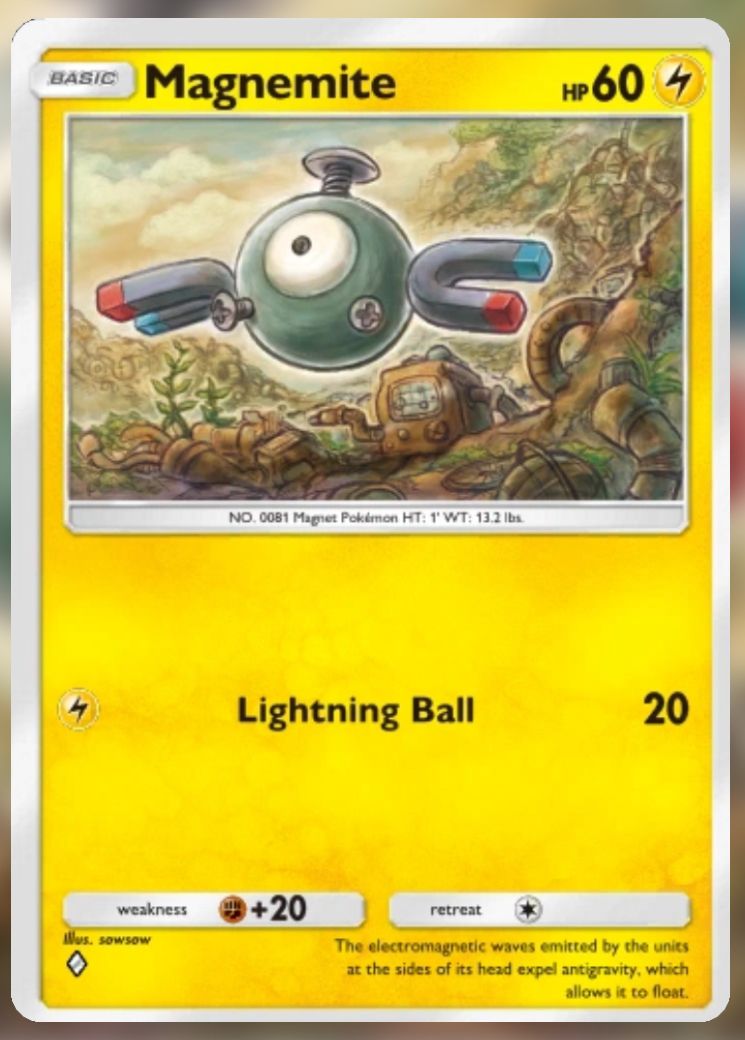
    The Magnemite card, from Pokemon TCG Pocket's Genetic Apex (Pikachu) pack.

    The Magneton card, from Genetic Apex in Pokemon TCG Pocket.

    The Magnezone card, from Space-Time Smackdown in Pokemon TCG Pocket.

    The Lightning-type Oricorio, from Celestial Guardians in Pokemon TCG Pocket.

    Magnemite (A1) x2

    Magneton (A1) x2

    Magnezone (A2) x2

    Oricorio (A3 66) x2

    The Professor's Research promo from Pokemon Trading Card Game Pocket.

    Guzma, from Celestial Guardians in Pokemon TCG Pocket.

    Sabrina from Genetic Apex in Pokemon Trading Card Game Pocket.

    The Cyrus card, from Space-Time Smackdown in Pokemon TCG Pocket.

    Professor’s Research x2

    Guzma x2

    Sabrina x1

    Cyrus x1

    Potion, from Pokemon TCG Pocket.

    The Pokemon Trading Card Game Pocket Promo Card Poke Ball.

    The Pokemon Communication card, from Space-Time Smackdown in Pokemon TCG Pocket.

    The Giant Cape card, from Space-Time Smackdown in Pokemon TCG Pocket.

    Potion x2

    Poke Ball x2

    Pokemon Communication x1

    Giant Cape x1

    Because this deck focuses purely on Lightning types, the Genetic Apex version of Magnemite is the best fit, as it delivers an extra ten damage compared to the Space-Time Smackdown version commonly used in decks with different energy types.

    While we appreciate the added stability from using Pokemon Communication, you can substitute that or Guzma for two Pokemon Center Ladies to enhance your Pokémon’s longevity in games.

    Be sure to use Oricorio number 66 (or the Illustration Rare, 165) from Celestial Guardians, as it’s the only Lightning-type version of this Pokémon. Don’t mistakenly add a Psychic or Fire-type instead.

    Oricorio Magnezone Strategy

    Magnezone Pokemon TCG Pocket Space Time Smackdown Card Art is shown.

    The Oricorio Magnezone strategy revolves around disruption: when all of your opponent’s Pokémon are ex Pokémon, they cannot attack Oricorio, effectively stalling their game plan. However, Oricorio can still be knocked out by statuses like Poison or Darkrai ex’s Nightmare Aura, so it’s not without its vulnerabilities.

    Between Oricorio and Magnemite, it’s usually better to start with Oricorio due to its higher HP and immunity to attacks from ex Pokémon. If your opponent has a non-ex Pokémon that can strike first, consider swapping in a second Magnemite.

    No matter which Pokémon you lead with, use Potions and your Giant Cape to keep it alive while you build your bench.

    Magneton, from Space-Time Smackdown in Pokemon TCG Pocket.

    If your opponent plays a deck focused on ex Pokémon like Charizard ex or Darkrai ex/Giratina ex, begin adding Energy to Oricorio for attacks. At the same time, evolve the bench Magnemite into Magneton and utilize Volt Charge to attach more Energy.

    In matchups where your opponent is solely using ex Pokémon, they may choose to concede as soon as you play Oricorio.

    Unlike other Stage 2 Pokémon, avoid evolving Magneton into Magnezone until later in the game. Evolving too soon results in losing a Lightning Energy with each attack, so maximizing Volt Charge activations allows better distribution of regular Lightning Energy to your other Pokémon.

    Immersive Rare Guzma Pokemon TCG Pocket Celestial Guardians card art.

    Magnezone packs a solid punch with its 110 damage, while Oricorio only manages 50, which may require several turns to take down some opponents. If your opponent is using Poison Barb or Rocky Helmet, utilize Guzma to prevent Oricorio from taking unnecessary damage.

    Sabrina can disrupt your opponent’s plan by bringing a Benched Pokémon to the front, while both she and Cyrus can pull out weakened Pokémon to secure the final Prize Point.

    In matchups against ex-free decks like Lucario Rampardos, Oricorio’s ability becomes ineffective. In such cases, feel free to utilize Oricorio as a shield while you develop your Magnezone.

    Oricorio Magnezone Matchups

    Giratina ex Darkrai ex

    The Giratina ex card, from Shining Revelry, and the Darkrai ex card, from Space-Time Smackdown in Pokemon TCG Pocket.

    Oricorio excels against decks featuring Giratina ex or Darkrai ex due to their reliance on ex Pokémon. While Darkrai ex’s Nightmare Aura, along with items like Rocky Helmet, can challenge Oricorio, a smart strategy will keep you in control of the game.

    If the opportunity arises, use Sabrina to target Darkrai ex early and aim for a knockout. This limits your opponent’s options for applying chip damage to Oricorio. However, avoid this if they manage to field both Pokémon.

    Giratina ex Snorlax

    The Giratina ex immersive rare and Snorlax promo, from Pokemon TCG Pocket.

    When Triumphant Light released in March 2025, Snorlax was slammed as one of the weaker Pokémon in the game. Just two months later, it became a critical element in a popular deck, one that poses a challenge for the Oricorio Magnezone setup.

    Even though Snorlax primarily serves as a blocker, it can deal significant damage when necessary. Meanwhile, your opponent might be assembling two Greninja on the bench to snipe at your Pokémon. Focus on eliminating those Greninja to create breathing room for dealing with Snorlax, but prepare for your opponent to switch it out with Ilima if it takes too much damage.

    Charizard ex Moltres ex

    The Super Rare prints of Charizard ex and Moltres ex, from Genetic Apex in Pokemon TCG Pocket.

    The classic Charizard ex and Moltres ex combo hits a wall against Oricorio. Neither Moltres ex nor Charizard ex can impact Oricorio, making it tough for them if they evolve both Charmanders into Charizard ex while you still have Oricorio in play.

    If they opted for Charmeleon instead of Rare Candy, you could still find yourself in trouble. Charmeleon’s Combustion attack hits for 40 damage, sufficient to 2HKO Oricorio and open a path to victory for your opponent. As long as you can take down Charmeleon before it can knock out Oricorio, you’ll be in a strong position.