الوسم: canadian

  • Heartbreaking Video: Celine Dion Shakes Uncontrollably on Camera

    Heartbreaking Video: Celine Dion Shakes Uncontrollably on Camera

    A video of Canadian singer Celine Dion has stirred shock among her fans after she was captured shaking uncontrollably on camera.

    In the viral clip, Celine Dion is seen lying down, crying, with noticeable facial and lip twitching as her body experiences severe spasms. Many fans shared the footage with captions like “This is hard to watch” or “This is heartbreaking.”

    Is Celine Dion’s shaking video recent?
    The footage is old but gained renewed attention after being circulated by various groups. It originates from her 2024 documentary I Am: Celine Dion, which details her struggles with severe health issues. The video shows her in significant distress due to stiff-person syndrome, a rare autoimmune neurological disorder she was diagnosed with in 2022.

    Stiff-person syndrome causes painful muscle spasms; the footage depicts her crying and twitching as medical staff administer a nasal spray to alleviate her symptoms. Dion was diagnosed in August 2022, although symptoms started as early as 2008. This condition is exceedingly rare, affecting about 1 in a million people.

    Celine Dion attended a special screening of the documentary I Am: Celine Dion in New York, where she was photographed in recovery.

  • Canadian PM Welcomes Narendra Modi to G7 Summit in Canada

    Canadian PM Welcomes Narendra Modi to G7 Summit in Canada

    Here’s a revised version of the content in American English, making it unique and human-written:

    —

    Canadian Prime Minister Mark Carney (left) and Indian Prime Minister Narendra Modi. — Reuters/File

    • Modi expresses gratitude to Carney for the invitation to the upcoming June summit.
    • The Indian leader emphasizes cooperation with Canada following the invitation.
    • Although India is not a G7 member, it has the opportunity to participate as a guest at the annual event.

    Canadian Prime Minister Mark Carney extended an invitation to his Indian counterpart, Narendra Modi, for the forthcoming Group of Seven (G7) summit during a phone conversation on Friday. This gesture comes as both nations seek to repair their relationship after a period of tension over the last two years.

    According to a statement from Carney’s office, the two leaders agreed to maintain communication and were looking forward to meeting at the G7 summit later this month.

    While India is not a formal G7 member, it can attend the annual gathering as a guest. This year’s summit is scheduled to take place in Kananaskis, Alberta, Canada, from June 15 to 17.

    “I was pleased to receive a call from Prime Minister Carney… and I thanked him for the invitation to the G7 Summit,” Modi posted on X.

    In his message, Modi also highlighted that India and Canada would collaborate “with renewed energy, based on mutual respect and shared interests.”

    The relationship between the two countries had deteriorated after Canada accused India of being involved in the assassination of a Sikh separatist leader and alleged attempts to meddle in two recent elections. In October 2024, Canada expelled several high-ranking Indian diplomats, tying them to the murder and claiming a wider campaign to target Indian dissidents in Canada.

    India has rejected these allegations and responded by expelling an equal number of Canadian diplomats.

    India ranks as Canada’s 10th largest trading partner, with Canada being the primary exporter of pulses, including lentils, to India.

    Carney, aiming to diversify trade away from the United States, stated that it is sensible for the G7 to invite India, given that it has the fifth-largest economy globally and plays a critical role in numerous supply chains.

    “Moreover, we’ve made important strides in our bilateral law enforcement dialogue, which recognizes accountability issues. I conveyed this context when I invited Prime Minister Modi,” he told reporters in Ottawa.

    Four Indian nationals have been charged in connection with the assassination of the Sikh separatist leader.

    —

    This version maintains the key details while ensuring originality and clarity in American English.

  • Canadian Election: Liberals Lead at 42.8%, Conservatives 39.2%

    Canadian Election: Liberals Lead at 42.8%, Conservatives 39.2%

    The Tight Race in the Canadian Election: A Shift in Voter Sentiment

    As Canada heads to the polls, the political landscape is shaping up to be a riveting competition. Once considered a strong contender, the Conservative Party has seen its fortunes shift dramatically, particularly following the resignation of former Prime Minister Justin Trudeau in March. This blog delves into the key factors influencing the current electoral dynamics and the unexpected revival of the Liberal Party under new leadership.

    Historical Context: The Conservative Party’s Lead

    In early 2023, the Conservative Party of Canada occupied the top position in opinion polls, capitalizing on growing dissatisfaction with Trudeau’s administration. The party, buoyed by various factors including dissatisfaction with the government and promises of change, seemed poised to reclaim power after years of Liberal leadership.

    Trudeau’s Resignation: A Turning Point

    Trudeau’s resignation marked a critical juncture in Canadian politics. His administration had faced numerous challenges, culminating in a series of ethics scandals that tarnished its image. As discontent brewed among voters, the Conservative Party sought to capitalize on this unrest, with Pierre Poilievre leading the charge.

    The Liberal Comeback: A New Strategy

    As public sentiment appeared to favor the Conservatives, a remarkable shift transpired. The Liberal Party, under the new leadership of Mark Carney, rebounded in polls, portraying themselves as the stable option amidst growing international uncertainties.

    The Impact of U.S.-Canada Relations

    The escalating trade war between the U.S. and Canada served as a backdrop for the election campaign and played a pivotal role in reshaping voter preferences. The uncertainty and economic ramifications led many Canadians to reconsider their support for the Conservative Party.

    Populism vs. Pragmatism

    Pierre Poilievre’s populist approach, while initially attractive to many, began to falter as concerns over his ties to the U.S. political landscape emerged. Voters showed apprehension towards a leader whose style mirrored that of the controversial Trump administration, steering many back to the Liberal Party, which positioned itself as a reasoned alternative.

    Polling Dynamics: A Narrow Lead

    As of late April, the polling numbers reflected a tightening race. The Liberals managed to secure a narrow lead with approximately 42.8% of the voter support, compared to the Conservatives at 39.2%. This shift in perception indicates a potential reevaluation of priorities among the electorate as they weigh the implications of their votes.

    Coalition Possibilities: The Role of the NDP

    A crucial aspect of the upcoming election is the likelihood of no party achieving an outright majority. In such cases, coalition governments often form as a pragmatic solution to bridging differing party agendas.

    The New Democratic Party as a Potential Ally

    Currently polling at around 8%, the New Democratic Party (NDP) could emerge as a significant player in post-election negotiations. During the last parliament, the Liberals governed as a minority party, relying on informal support from the NDP to pass legislation. This arrangement may influence the election outcomes and subsequent governance strategies.

    Conclusion

    The current Canadian election embodies a fascinating evolution of voter sentiment, shaped by domestic dissatisfaction and international crises. With the stakes high and the political landscape shifting, the coming days promise to deliver unexpected outcomes and set the course for Canada’s future direction.

  • Crafting a Canadian Highlander Deck in MTG

    Crafting a Canadian Highlander Deck in MTG

    Canadian Highlander is a distinctive format in the world of Magic: The Gathering. While it lacks official support from Wizards of the Coast, it stands out as the leading singleton format, second only to Commander.

    If you enjoy the concept of a singleton format—where you can only include one of each non-basic land but prefer not to engage in the multiplayer dynamics of Commander—then Canadian Highlander could be a perfect fit for you. It’s a captivating format embraced by a passionate community.

    What Is Canadian Highlander?


    In Canadian Highlander, decks are made up of at least 100 cards, with no duplicates allowed—except for basic lands. The format is designed for one-on-one matches, and there are no sideboards.

    While you can exceed 100 cards in your deck, it’s generally recommended to stick with the 100-card limit. Since sideboards aren’t a feature in Canadian Highlander, you cannot use companions in the companion role, although they can still be included in your main deck.

    If a card allows for multiple copies, such as Persistent Petitioners or Hare Apparent, you are permitted to include several in your Canadian Highlander deck.

    Canadian Highlander adheres to the same ban list as Vintage. Consequently, if a card is banned in Vintage, it will also be banned in Canadian Highlander. Unlike Vintage, which typically restricts cards instead of banning them, Canadian Highlander naturally enforces restrictions since only one copy of each card can be played.

    In Canadian Highlander, cards are never banned based on their power level; only those banned across all Magic formats are excluded.

    To maintain a balanced environment, Canadian Highlander employs a points system. Powerful cards are assigned a point value between 1 and 8. A player’s deck cannot exceed a total of ten points, and they may choose to exclude any cards on the points list.

    Banlist And Points

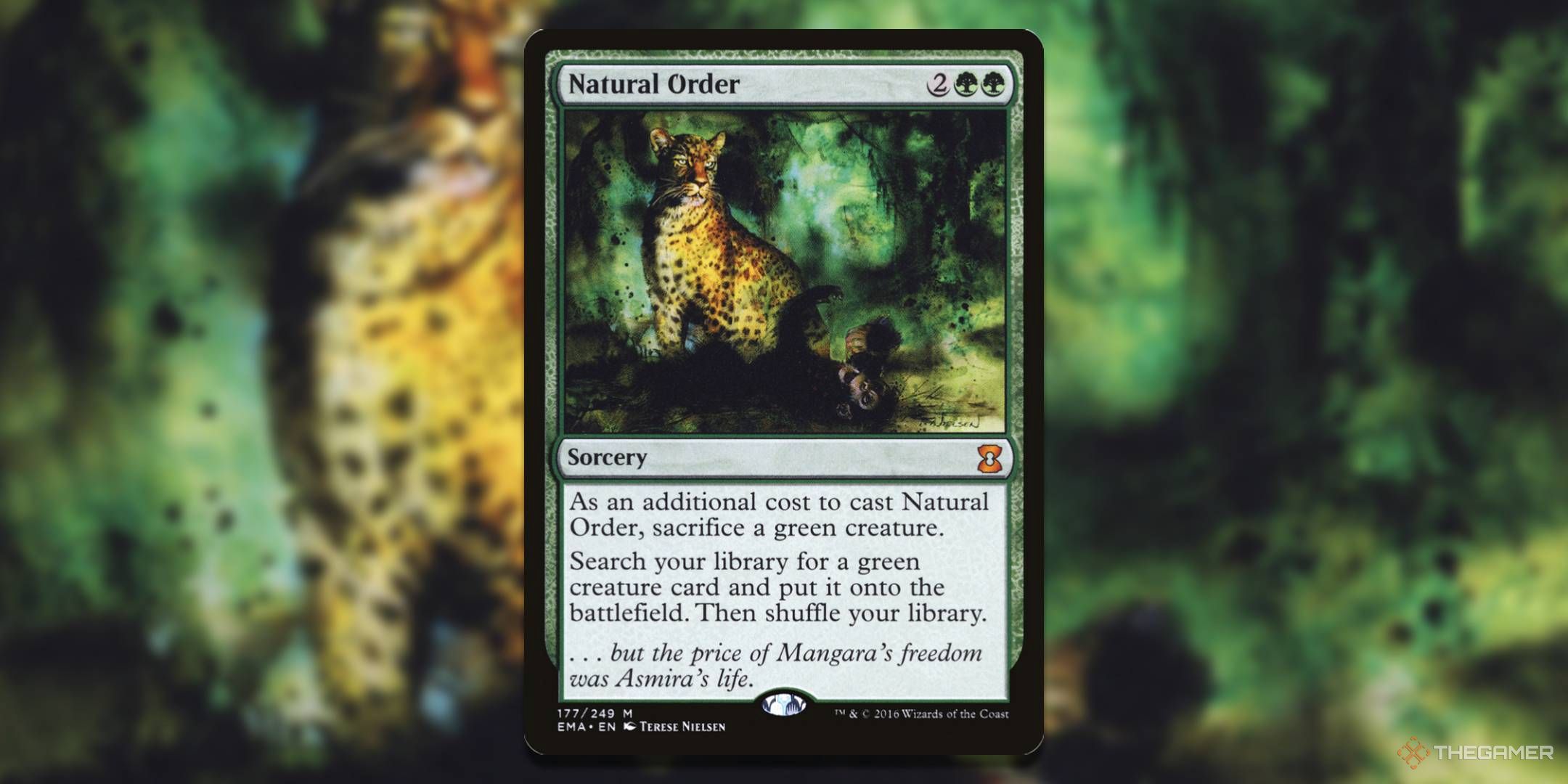
    MTG Natural Order card with art in the background.

    The points system is vital for keeping the format competitive. If a card becomes overly dominant, it will be added to the points list to make it harder to include alongside other strong cards. The cards deemed most powerful receive higher scores, while those with less impact get lower ones.

    Here’s an overview of the Canadian Highlander points list:

    Ancestral Recall: 8 Points

    Ancient Tomb: 1 Point

    Black Lotus: 7 Points

    Demonic Tutor: 3 Points

    Dig Through Time: 1 Point

    Flash: 7 Points

    Forth Eorlingas!: 1 Point

    Gifts Ungiven: 1 Point

    Imperial Seal: 1 Point

    Intuition: 1 Point

    Mana Crypt: 5 Points

    Mana Drain: 1 Point

    Mana Vault: 1 Point

    Minsc & Boo, Timeless Heroes: 1 Point

    Mox Emerald: 3 Points

    Mox Jet: 3 Points

    Mox Pearl: 3 Points

    Mox Ruby: 3 Points

    Mox Sapphire: 3 Points

    Mystical Tutor: 1 Point

    Natural Order: 1 Point

    Psychic Frog: 1 Point

    Reanimate: 1 Point

    Sol Ring: 3 Points

    Strip Mine: 1 Point

    Tainted Pact: 1 Point

    Thassa’s Oracle: 6 Points

    Time Vault: 7 Points

    Time Walk: 6 Points

    Tinker: 3 Points

    Tolarian Academy: 1 Point

    Treasure Cruise: 1 Point

    True-Name Nemesis: 1 Point

    Underworld Breach: 3 Points

    Urza’s Saga: 1 Point

    Vampiric Tutor: 2 Points

    White Plume Adventurer: 1 Point

    Wishclaw Talisman: 1 Point

    Wrenn and Six: 1 Point

    You can only accumulate a total of ten points. For instance, including Ancestral Recall in your deck (8 points) would disallow Mox Emerald (3 points) since that would exceed the limit. However, you could combine Ancestral Recall with Psychic Frog (1 point) and Treasure Cruise (1 point), totaling exactly ten points.

    Alongside the point system, certain cards are entirely banned in Canadian Highlander:

    Any cards that use the ante mechanic.

    Any card with the conspiracy card type.

    Cards banned for cultural insensitivity.

    Cards that utilize the sticker or attraction mechanic.

    Cards with silver borders/acorn symbols.

    Chaos Orb

    Falling Star

    Shahrazad

    How To Build A Canadian Highlander Deck

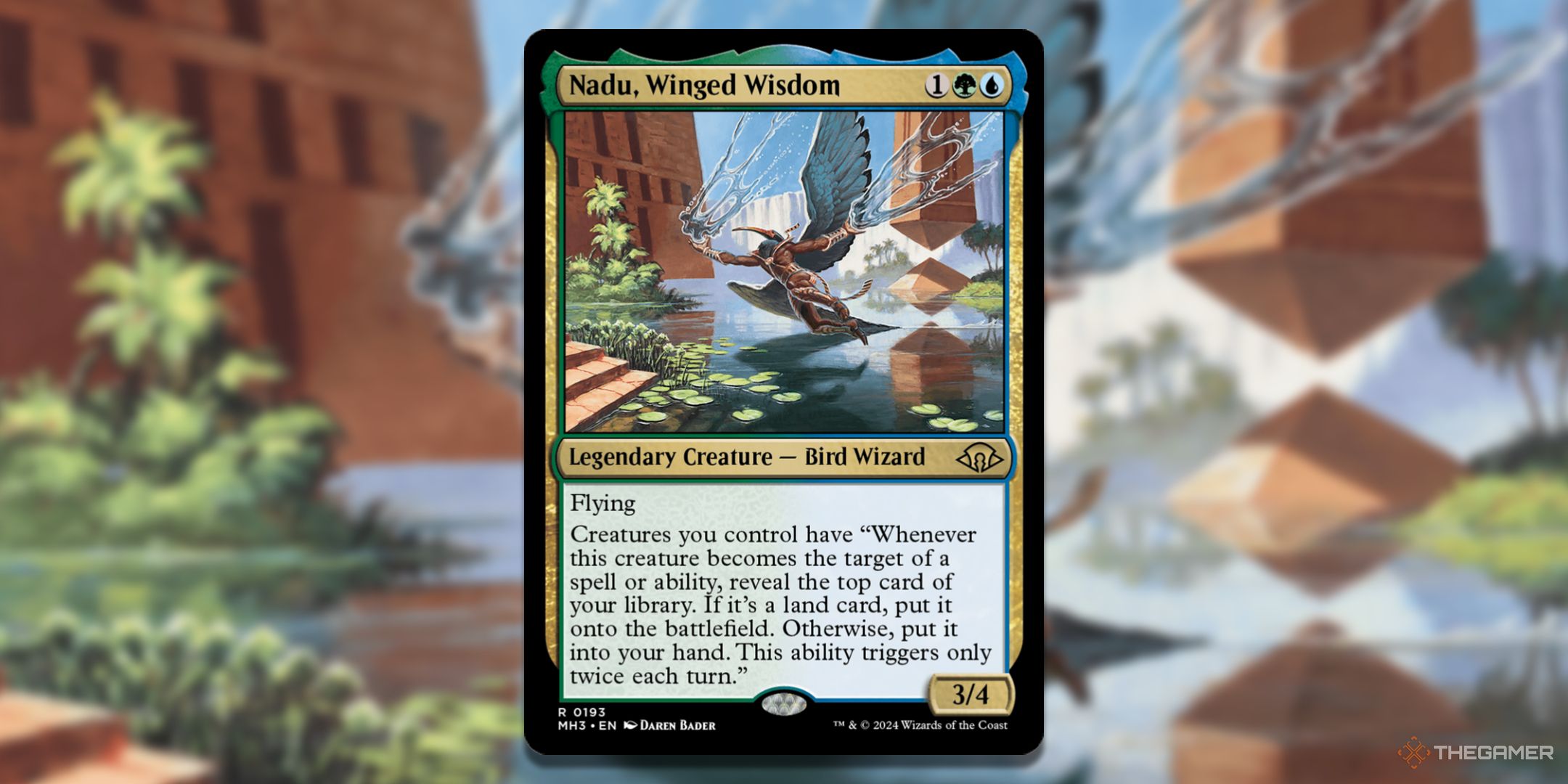
    Nadu, Winged Wisdom card with the card art in the background.

    If you’re just starting with Canadian Highlander, it’s helpful to check out the Legacy format as a reference for building your deck. While Legacy allows four copies of each card, it shares a similar power level with Canadian Highlander, resulting in recognizable archetypes.

    In addition to consulting Legacy archetypes, reviewing various historical builds can provide insightful guidance for selecting cards that fit a singleton format.

    Also, it’s beneficial to look for decks that have seen success in Canadian Highlander, as understanding the current metagame can paint a clearer picture of what works well.

    Unlike Commander, which often has a more social feel, Canadian Highlander is a competitive format. Therefore, crafting optimized decks is essential. While budget considerations may come into play, aim to build a deck that not only competes effectively but is also enjoyable for you.