Tag: Booking.com

  • Global Accommodation Preferences: 60% Favor Hotels, Regional Variations

    Global Accommodation Preferences: 60% Favor Hotels, Regional Variations

    Global Accommodation Preferences: A Look at Cultural Influences

    Understanding the varied accommodation preferences around the world reveals not only a lot about travel habits but also the cultural nuances that inform these choices. Booking.com’s Travel Trends 2025 provides invaluable insights into how different regions prioritize their lodging options.

    The Dominance of Hotels

    Hotels continue to reign supreme as the preferred choice of accommodation for travelers globally. This trend is consistent across many demographics and is indicative of the trust and comfort that established hotel brands provide. However, the necessity for variety in lodging options has led to diverse second preferences that vary significantly by region.

    Regional Preferences in Accommodation

    Asia: The Rise of Resorts

    In Asia, particularly in China and India, resort stays have gained immense popularity. These destinations often combine luxury with leisure, appealing to travelers seeking a more immersive experience. Resorts offer amenities that ensure relaxation and entertainment, making them a preferred option for families and couples alike. This trend highlights a cultural appreciation for destinations that facilitate both vacation and recreation.

    The Americas: Family Connections

    Travelers from Brazil and the United States tend to favor staying with family or acquaintances. This preference underscores the importance of personal connections and relationships in travel. The experience of staying with loved ones can provide a sense of comfort and belonging that commercial establishments are less likely to replicate. It also allows for richer interactions and a more authentic experience of local culture, further enhancing the travel experience.

    Europe: Short-Term Rentals Flourishing

    In Europe, short-term rentals have emerged as a formidable competitor to traditional hotels. This shift illustrates a growing desire for a "home away from home" experience. Travelers enjoy the flexibility and personalized touch that short-term rentals offer, enabling them to live like locals during their stay. This trend also reflects a broader cultural shift towards seeking more unique and memorable experiences.

    The Universal Pursuit of Comfort

    While accommodation preferences may differ across the globe, the underlying thread that ties them all together is the pursuit of comfort. Each region’s unique understanding of what constitutes a "home away from home" speaks volumes about local cultures and travel motivations. Travelers prioritize comfort, but the interpretation of this concept varies, leading to different accommodation choices based on cultural values and social norms.

    Conclusion

    As travel continues to evolve, so do the preferences of travelers worldwide. By examining these trends, we can gain deeper insights into the motivations behind accommodation choices and how they reflect cultural values. Understanding these patterns allows hospitality providers to better cater to the diverse needs of their guests, ultimately enhancing the overall travel experience.

  • 70% of Tourists Value Experiences Over Traditional Services

    70% of Tourists Value Experiences Over Traditional Services

    The Evolution of Economic Value: From Goods to Experiences

    The transformation of economies over time reflects a profound shift in the way value is perceived and delivered. This evolution is eloquently captured in the concept of the experience economy, a term popularized by the Harvard Business Review in its seminal article "Welcome to the Experience Economy." Understanding this transition from commodities to experiences provides valuable insights into current market trends and consumer expectations.

    The Four Stages of Economic Development

    The journey of economic development can be broken down into four key stages:

    1. Extracting Commodities:

      • The initial phase involves the extraction of natural resources, such as minerals and agricultural products. At this stage, the primary focus is on raw materials, which are characterized by their utility and basic functionality. The value derived here is generally uniform, with little personalization involved.
    2. Manufacturing Goods:

      • Next, the focus shifts to manufacturing, where raw materials are transformed into tangible products. This phase introduced elements of design and branding, allowing for greater differentiation among products. However, the value is still largely centered around physical attributes rather than customer experience.
    3. Delivering Services:

      • As economies mature, the service industry begins to flourish. This stage emphasizes interactions and personalized relationships, facilitating enhanced customer engagement. While service delivery adds layers of value, it often falls short of fully tapping into emotional connections.
    4. Staging Experiences:
      • The final phase is where we currently find ourselves: the experience economy. In this realm, businesses actively curate experiences that resonate personally with consumers, leading to emotional engagement and lasting memories. This transformation signifies a shift from simply providing products and services to crafting immersive encounters that elicit feelings and connections.

    Tourism: A Pioneering Sector in the Experience Economy

    Tourism exemplifies the principles of the experience economy to perfection. Unlike other industries that have had to adapt to this evolving landscape, tourism was inherently designed for experiential consumption. The roots of leisure travel lie not in utility but in the pursuit of enjoyment and inspiration.

    The Essence of Experience in Travel

    The unique appeal of tourism is that its core offering lies in the experience itself:

    • Feelings Over Destination: While a destination may be fixed—say a breathtaking beach or a historic city—the value tourists derive is intrinsically linked to how these places make them feel. The memories created, the people met, and the stories returned with contribute to the overall value of the travel experience.

    • Discovery and Storytelling: Tourists are not merely seeking a place to visit but are on a quest for discovery. Each journey is an opportunity to uncover new perspectives and engage with the world in profound ways. The stories collected during these travels are often more valuable than the trip itself.

    Implications for Businesses

    The shift toward an experience-based economy means businesses must rethink their strategies:

    • Personalization is Key: Companies must focus on creating personalized experiences that resonate with individual consumers. By understanding customer preferences and behaviors, businesses can tailor their offerings to foster deeper connections.

    • Emotional Resonance: Crafting experiences that connect emotionally with consumers will set businesses apart. This involves not only delivering a service but also ensuring that the consumer feels valued and understood throughout their journey.

    • Incorporating Storytelling: By integrating storytelling into their branding and marketing strategies, businesses can enhance the perceived value of their offerings. Sharing authentic narratives helps forge connections and fosters loyalty among consumers.

    The Future of the Experience Economy

    As we move forward, the importance of experiences will only grow. The ongoing digital transformation will likely play a significant role in how experiences are delivered and consumed. Virtual reality, augmented reality, and other cutting-edge technologies can enhance and diversify the experience landscape.

    The tourism sector will continue to lead the way in this space, demonstrating how experiences can be intentionally designed to captivate and inspire. In this evolving landscape, businesses that prioritize experiential value will likely thrive and build lasting relationships with their audiences.

    For further insights into the evolving tourism sector and economic trends, subscribing to industry newsletters can provide essential information to stay ahead of the curve.

  • Travel Experience Economy Reaches $1.3 Trillion: Key Insights

    Travel Experience Economy Reaches $1.3 Trillion: Key Insights

    The Rise of Experience Travel: Insights from Recent Data

    Travel has evolved significantly beyond just visiting new places; it now encompasses a deep engagement with experiences that resonate personally. The "experience travel" sector has captured attention, revealing substantial economic impact and changing consumer preferences.

    Understanding the Experience Economy

    The core of experience travel lies in its emphasis on personal engagement rather than mere sightseeing. According to a recent analysis by McKinsey, the travel experience economy is valued between USD 1.1 trillion and USD 1.3 trillion. This staggering figure illustrates how travelers are now prioritizing experiences that resonate on an emotional level.

    Breakdown of Experience Spending

    Travelers are willing to invest significantly in experiences that enrich their journeys. Here’s a closer look at the different categories of spending within this sector:

    Live Events and Cultural Engagement

    This category emerges as a major player, with spending estimates ranging from USD 430 billion to USD 530 billion. Live concerts, theater performances, and cultural festivals provide travelers with unique moments that forge lasting memories. The emotional adrenaline of a live event fosters connections not only with the locality but also with fellow attendees.

    Active and Nature-Based Travel

    Spending in this area is projected to fall between USD 250 billion and USD 410 billion. Activities like hiking, biking, and eco-tourism foster a direct connection to nature and promote well-being. This trend reflects a broader societal shift towards health consciousness and sustainable living, allowing travelers to explore the environment while engaging in physically enriching activities.

    The Emotional Connection in Travel Choices

    Consumers are increasingly seeking experiences that resonate with their inner values, desires, and emotions. The travel experience economy represents a shift from traditional viewing itineraries to immersive interactions that provoke deeper emotional responses.

    Personalized Experiences

    Travelers today are gravitating toward customized adventures tailored to their personal tastes and interests. Whether it’s a cooking class in Tuscany or a guided meditation retreat in Bali, personalized experiences offer travelers a sense of individuality and satisfaction.

    Social and Cultural Understanding

    Cultural immersion is a key aspect of experience travel. Participants not only visit new locations but also engage with local cultures, traditions, and communities. This creates a richer understanding of the world, fostering respect and appreciation for diverse perspectives.

    The Future of Experience Travel

    As the desire for authentic and meaningful travel grows, the industry must adapt to meet changing consumer demands.

    Technology’s Role

    Innovations in technology, such as virtual reality and apps promoting local experiences, are enhancing how travelers seek and engage with experiences. These tools allow users to preview activities and discover hidden gems, merging convenience with meaningful engagement.

    Sustainability Considerations

    Increasing awareness around sustainable travel practices is likely to steer consumer behavior in the future. Eco-friendly experiences that prioritize environmental conservation will likely gain traction, encouraging travelers to make responsible choices during their adventures.

    Conclusion

    The ascent of experience travel signals a significant transformation in how we perceive and engage with the world. As travelers continue to prioritize emotional connections and immersive experiences, the travel economy will shift to accommodate these evolving preferences. This trend not only highlights the changing landscape of travel but also underscores the importance of emotional fulfillment in consumer choices.

  • 63% of Travelers Prioritize Experiences Over Costs

    63% of Travelers Prioritize Experiences Over Costs

    The Shift in Travel Considerations

    In an ever-evolving travel landscape, it’s essential to understand what makes destinations appealing to today’s travelers. According to McKinsey’s 2024 State of Travel Survey, new priorities are emerging that radically shift how individuals choose where to go.

    Experience-Centric Travel

    The data indicates a marked shift toward experience-led criteria when selecting travel destinations. Travelers are increasingly placing importance on the unique activities that a location offers, emphasizing experiences over traditional metrics like cost and accessibility.

    Quality of Local Activities

    A significant 63% of travelers prioritize the quality of local activities. This encompasses everything from adventurous excursions to community-led tours that provide authentic interactions. Travelers are seeking out opportunities that allow for deeper engagement with the local culture and environment.

    Dining Options

    Closely trailing behind are the dining options available in a destination, with 62% of respondents highlighting this as a crucial factor. Culinary experiences today are not just about nourishment but also about immersion in local traditions and flavors. Travelers are drawn to unique food offerings that reflect the region’s heritage, making gastronomy a powerful motivator in destination selection.

    Cultural Authenticity

    Cultural authenticity is another predominant criterion, with 58% of travelers valuing it highly. Individuals are searching for genuine experiences that allow them to connect with the local community, understand their customs, and appreciate their history. This desire for authenticity often guides travelers to lesser-known sites and local gatherings rather than mainstream tourist traps.

    Traditional Metrics Still Matter

    While experience-led factors reign supreme, traditional considerations such as cost and accessibility remain significant. However, they are increasingly viewed through the lens of enhancing the overall travel experience.

    Cost Considerations

    Though less prioritized, cost still plays a role in decision-making. Travelers are motivated to consider budget-friendly options that don’t compromise the quality of their experiences. In an era where travelers seek memorable adventures, the balance of expense and experience becomes critical.

    Accessibility

    Accessibility continues to be a foundational element in travel planning. Travelers want ease of access to their chosen destinations, which affects their willingness to explore particular locales. However, the trend indicates that if a destination promises unparalleled experiences, many travelers may be more willing to invest in overcoming these barriers.

    The Modern Travel Paradigm

    This shift towards valuing experiences indicates a broader change in consumer behavior. Modern travelers do not merely seek a vacation; they are on quests for meaningful stories and personal growth. This transition underscores the importance of the travel industry in adapting to changing consumer preferences to remain relevant.

    Implications for the Travel Industry

    Understanding this evolution in traveler priorities holds significant implications for businesses within the travel sector, from hospitality to tour operators.

    Enhancing Local Offerings

    Businesses need to enhance their local offerings to cater to this increasingly experience-oriented traveler base. Fostering partnerships with local artisans, chefs, and guides can create more immersive experiences that resonate with today’s travelers.

    Marketing Strategies

    Marketing strategies must evolve to highlight these experiential offerings rather than focusing solely on price and convenience. Showcasing stories, testimonials, and unique offerings can create a more engaging narrative that attracts those looking for rich experiences.

    Community Engagement

    Finally, travel companies must also consider community engagement as a key element. By actively involving local communities in tourism efforts, businesses can create authentic experiences that benefit both travelers and residents alike.

    This transformation in travel preferences sheds light on the modern traveler’s mindset, signaling an exciting new era for the industry focused on enriching lives through meaningful experiences.

  • 59% of Tourism Workforce is Women: Key Employment Stats

    59% of Tourism Workforce is Women: Key Employment Stats

    Understanding the Tourism Workforce

    The tourism sector is a vital part of the global economy, and its workforce reflects unique characteristics and trends. Analyzing the demographics, employment types, and educational backgrounds within this industry reveals substantial insights.

    The Composition of the Tourism Workforce

    The tourism workforce encompasses a diverse range of roles within various sectors, particularly focusing on tourism and accommodations. Statistically, women make up a significant portion of this workforce, with a notable 59% presence in accommodations. This figure is interesting, especially when compared to the broader services industry, where men and women represent an equal 50% each.

    Gender Dynamics

    The higher representation of women in tourism roles can be attributed to several factors:

    • Nature of Roles: Many positions within the tourism and hospitality industry, such as hotel management, customer service, and event planning, align with traditional roles that women have historically occupied.

    • Flexibility: The flexibility of work hours in the tourism sector can attract women who seek roles that accommodate familial responsibilities.

    Employment Patterns in Tourism

    While analyzing the employment patterns within the tourism sector, several trends emerge:

    1. Foreign Workforce: There is a slightly elevated ratio of foreign workers in this industry compared to others. This trend highlights the global nature of tourism, where diverse cultural insights enhance customer experiences.

    2. Education Levels: The tourism workforce also includes a significant number of individuals with lower levels of educational attainment. This phenomenon reflects the availability of entry-level jobs in the industry, which often require minimal qualifications.

    Impact on Local Economies

    The reliance on a diverse and sometimes less formally educated workforce has implications for local economies. Many communities benefit from the job opportunities created by tourism, and this workforce often contributes significantly to local development.

    Comparing Tourism to Other Sectors

    When juxtaposed with the broader services industry, several distinctions become evident:

    • Employment Ratios: The tourism and accommodations sector exhibits unique employment ratios concerning gender and nationality, emphasizing its distinct operational dynamics.

    • Skill Development: Many roles in tourism offer on-the-job training, which can lead to upward mobility for workers who may not have extensive formal education.

    Challenges Faced by the Tourism Workforce

    Despite the advantages, the tourism workforce faces several challenges:

    • Job Security: Many roles in this sector are tied to seasons and economic conditions, leading to fluctuations in job security for employees.

    • Work Conditions: Workers in tourism often face demanding hours and varied working conditions, which can affect job satisfaction and retention rates.

    Addressing the Issues

    To enhance the working conditions and career prospects within the tourism industry, stakeholders must focus on strategies such as:

    • Training Programs: Developing comprehensive training programs can equip workers with the necessary skills to advance in their careers.

    • Advocacy for Rights: Ensuring that workers’ rights are respected and that fair wages are paid is crucial for fostering a sustainable workforce.

    Through these methods, the tourism sector can continue to thrive while supporting its diverse workforce, which plays an essential role in driving economic growth and cultural exchange.

  • 18% of Germans Travel Abroad for Music Festivals

    18% of Germans Travel Abroad for Music Festivals

    Music Tourism: A Growing Trend in Europe

    The thrill of live music combined with the allure of travel has given rise to a booming sector known as music tourism. In recent years, this trend has gained momentum, drawing in fans from all corners of the continent. The vibrant music scenes in major cities and festivals provide an irresistible pull, especially for Europeans looking to combine their love for music with travel experiences.

    Insights from the YouGov Survey

    A recent YouGov survey sheds light on the current landscape of music tourism across Europe. The findings reveal that a significant percentage of travelers are willing to cross borders to indulge in their passion for live music events.

    Germans Lead the Pack

    According to the survey, 18% of Germans reported that they traveled abroad specifically to attend concerts or festivals. This statistic positions Germany as the frontrunner in music tourism in Europe. The country’s rich cultural heritage and extensive network of music festivals undoubtedly contribute to this trend. From the iconic Wacken Open Air for metal enthusiasts to the more eclectic line-ups at Fusion Festival, Germany has something for everyone.

    A Close Following: Spain

    Not far behind, Spanish respondents also exhibited a strong inclination towards music tourism, with just over 10% stating they ventured abroad for concerts. Spain’s vibrant music scene, characterized by its diverse genres such as Flamenco, electronic, and pop, calls travelers from around the continent. Festivals like Mad Cool and Primavera Sound draw massive crowds, further solidifying Spain’s position in the music tourism landscape.

    The Allure of Festivals

    Festivals are an essential aspect of music tourism, acting as key motivators for travel. Each year, countless festivals take place across Europe, attracting both local attendees and international visitors.

    Varieties of Music Festivals

    Music festivals vary greatly in their focus and style. From electronic dance music (EDM) extravaganzas to intimate folk gatherings, there’s something to suit every taste. Major events like Glastonbury in the UK and Tomorrowland in Belgium are not just music events; they are cultural phenomena that attract global audiences.

    The Economic Impact

    The influx of music tourists tends to have a significant economic impact on the local economy. Hotels, restaurants, and local businesses thrive during festival seasons as attendees seek accommodations, meals, and souvenirs. This boost in revenue not only benefits local artisans but also encourages the longevity of the festivals.

    The Cultural Experience

    Engaging in music tourism offers more than just the thrill of live performances; it also provides an opportunity for cultural exchange. Fans can immerse themselves in local customs and traditions, enhancing their travel experience.

    Interactions with Local Artists

    Attending a festival often leads to spontaneous interactions with local artists and musicians. This exposure enriches the understanding of different music styles, aiding in the appreciation of cultural nuances.

    Culinary Delights

    Moreover, music festivals often showcase local cuisine. Travelers get the unique opportunity to sample traditional dishes while enjoying their favorite acts, making the experience even more memorable.

    Conclusion

    Music tourism represents a significant cultural phenomenon, especially in Europe, where various countries showcase their unique sounds and artistic expressions. By traveling for music experiences, fans not only indulge in their passion but also directly contribute to the local economies and cultures of the destinations they visit.

  • Top 2025: 10 Most Welcoming Cities by Review Awards

    Top 2025: 10 Most Welcoming Cities by Review Awards

    Exploring the Most Welcoming Cities on Earth for 2025

    As global travel continues to evolve, Booking.com has unveiled its annual ranking of the most welcoming cities for 2025. This prestigious list is based on the share of accommodation partners receiving a Traveller Review Award, reflecting the hospitality and quality of service in each city. Let’s dive into some of the standout destinations that made this year’s list.

    Unique Criteria for Assessment

    The Traveller Review Award

    Booking.com assesses the welcoming nature of cities through the Traveller Review Award. This award is given to accommodations that have consistently received positive reviews from travelers, highlighting their commitment to quality service and guest satisfaction.

    Factors Influencing Rankings

    Several factors contribute to a city being recognized as welcoming:

    • Customer Service Excellence: The friendliness and helpfulness of staff.
    • Cultural Richness: The diversity and historical significance that enhance the visitor experience.
    • Overall Visitor Experience: This includes cleanliness, amenities, and local attractions.

    Featured Destinations

    Sigiriya, Sri Lanka

    Ancient Heritage

    Sigiriya is renowned for its ancient rock fortress, a UNESCO World Heritage Site that tells tales of Sri Lanka’s rich history. Visitors can explore impressive frescoes, archaeological sites, and stunning panoramic views.

    Warm Hospitality

    Known for its village hospitality, travelers often rave about the welcoming nature of the locals, who engage visitors with warmth and friendliness, making it a must-visit destination.

    Ko Lanta, Thailand

    Pristine Beaches

    Ko Lanta offers breathtaking beaches and clear waters, perfect for sunbathing or engaging in water sports. The island’s natural beauty captivates tourists looking for relaxation and adventure alike.

    Community Spirit

    The island’s local community is known for its inviting atmosphere, with many accommodations and eateries emphasizing local culture and personal interactions with guests.

    Quedlinburg, Germany

    Medieval Charm

    Quedlinburg stands out with its medieval architecture and cobblestone streets, providing a unique glimpse into Germany’s past. This World Heritage Site is filled with half-timbered houses and historical landmarks.

    Local Engagement

    Visitors often comment on the friendly demeanor of the residents, who take pride in sharing their city’s history and traditions with guests. Numerous local events provide further opportunities for engagement.

    Conclusion (to be omitted)

    [Note: The conclusion is omitted as per your request.]

    Through thoughtful curation and quality service, Booking.com’s list of the most welcoming cities for 2025 offers a glimpse into the diverse cultures and experiences that enrich global travel. These destinations not only highlight unique historical and natural beauty but also showcase the warmth of their respective communities.

  • 13 of Top 20 Hospitality Schools are in Europe

    13 of Top 20 Hospitality Schools are in Europe

    The Global Landscape of Hospitality Education: A Focus on Europe

    The hospitality industry is a cornerstone of the global economy, requiring a robust workforce equipped with the right skill set for delivering exceptional service. As markets evolve and customer expectations increase, the importance of well-educated professionals in this sector is more paramount than ever. This reality has led to a burgeoning focus on hospitality education, particularly in Europe, which boasts an impressive number of top-ranked institutions.

    Leading Institutions in Hospitality Education

    EHL Hospitality Business School: The Pinnacle of Hospitality Studies

    As of March 2025, the QS Top Universities ranking highlighted EHL Hospitality Business School in Switzerland as the leading university globally for hospitality and leisure management. EHL has a rich history and reputation for excellence, offering programs that delve deep into the complexities of the hospitality sector. Their curriculum not only emphasizes theoretical knowledge but also provides practical training, enabling students to excel in various managerial roles upon graduation.


    The European Powerhouses: A Closer Look

    According to recent data, Europe is home to thirteen of the world’s top twenty hospitality schools. The prominence of these institutions can be attributed to several factors:

    • Rich Cultural Heritage: Europe has a long-standing tradition of hospitality and tourism, with countries such as France, Italy, and Spain leading the way. This cultural backdrop enriches the educational experience.

    • Industry Connections: The abundance of hotels, restaurants, and tourism businesses in Europe provides students with opportunities for internships and networking, making education more practical and relevant.

    • Diverse Programs: European schools often offer a variety of programs, ranging from traditional hospitality management to specialized areas like sustainable tourism and event management.

    Notable European Hospitality Schools

    1. Les Roches Global Hospitality Education (Switzerland): Known for its strong focus on leadership and entrepreneurship, Les Roches offers programs that blend academics with real-world experience.

    2. Glion Institute of Higher Education (Switzerland): This institution emphasizes a global perspective and internships, preparing students for international careers in hospitality.

    3. César Ritz Colleges (Switzerland): Named after the legendary hotelier, this college focuses on luxury hospitality management, aligning with Switzerland’s reputation for high-end tourism.

    4. Oxford Brookes University (UK): Consistently recognized for its excellent teaching and research, Oxford Brookes offers a comprehensive suite of hospitality programs.

    5. University of Surrey (UK): With a strong emphasis on research-led teaching, the University of Surrey offers innovative programs in hospitality management.

    North America and Asia’s Contribution

    While Europe leads in the number of top-ranked hospitality schools, North America and Asia are not far behind. Each region contributes three institutions in the top 20, showcasing the global reach of hospitality education.

    • North America: Institutions such as the Cornell University School of Hotel Administration, known for its comprehensive curriculum and strong ties to the industry, play a significant role in shaping the sector.

    • Asia: The Les Roches Jin Jiang and the Hong Kong Polytechnic University are notable mentions, offering programs that cater to the unique characteristics of the Asian hospitality market.

    The Future of Hospitality Education

    As the hospitality industry continues to evolve due to technological advancements and changing consumer preferences, the educational landscape must adapt accordingly. Schools are increasingly integrating digital tools and platforms into their curriculum, preparing students for the future of work in a tech-savvy world. Moreover, a focus on sustainability and socially responsible practices is becoming essential, mirroring global trends toward eco-friendly solutions.

    The European dominance in hospitality education is not just a reflection of history; it’s an ongoing saga of excellence, innovation, and adaptation to meet the challenges of a dynamic industry. As students and aspiring professionals navigate their career paths, understanding these educational dynamics will be essential in making informed decisions that shape their futures in hospitality.

  • 33% of Travelers Book Based on AI-Generated Tips

    33% of Travelers Book Based on AI-Generated Tips

    The Growing Influence of AI in the Travel Booking Process

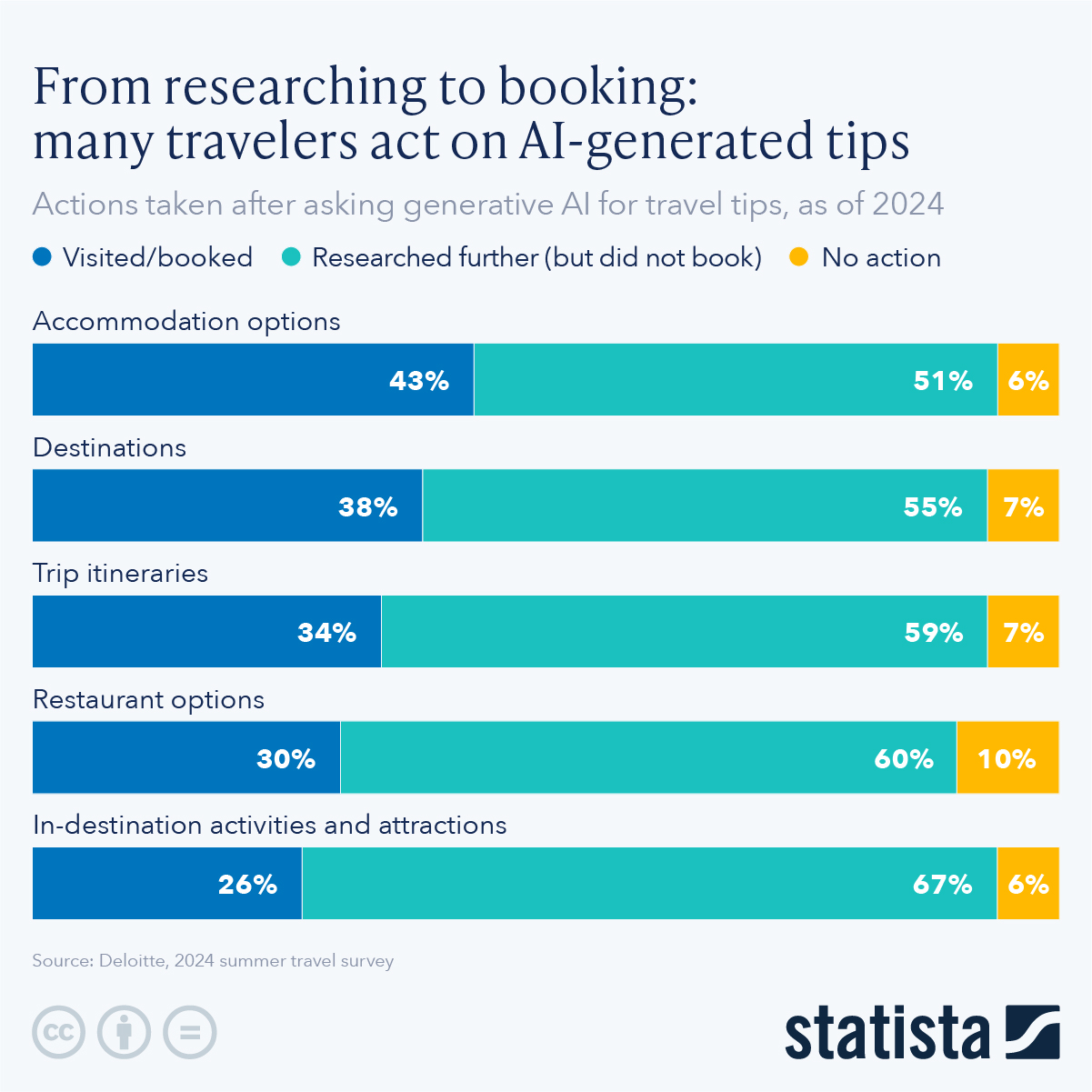
    As technology continues to evolve, artificial intelligence (AI) is becoming an integral part of many industries, including travel. A recent study by Deloitte highlights a compelling trend: a significant number of travelers are acting on AI-generated tips when it comes to booking their trips. This blog explores the implications of this trend, breaking down how AI impacts travel planning and booking behaviors.

    Understanding the Role of AI in Travel

    AI technologies are being utilized in various ways within the travel industry. From personalized recommendations to streamlined booking processes, AI is helping travelers make informed decisions quickly and efficiently. As a result, a newer form of decision-making is observed—many travelers are now willing to book accommodations and activities directly based on the suggestions provided by AI systems.

    AI Systems: How They Operate

    These AI systems analyze vast amounts of data to generate insights that cater to individual preferences. They take into account a user’s past travel behavior, preferences, and even real-time conditions to provide tailored recommendations that can enhance the travel experience. This not only saves time but also helps users discover options they might not have considered otherwise.

    Booking Trends Based on AI Recommendations

    According to the Deloitte study, at least one-third of respondents reported proceeding with AI recommendations for travel bookings. This statistic underlines an essential shift in how travelers approach planning their trips.

    Accommodation Recommendations

    The study revealed that accommodation bookings are often made with minimal additional research after receiving AI-generated suggestions. This indicates a growing trust in AI systems to provide reliable and relevant options for travelers, streamlining the booking process significantly. Travelers might appreciate the convenience of selecting a place to stay based on personalized recommendations, allowing them to spend less time searching through countless listings.

    Dining and Activity Choices

    In contrast to accommodation bookings, dining and activity suggestions appear to prompt more thorough research among travelers. This difference can be attributed to the nature of these experiences—travelers may want to explore menus, read reviews, or consider location factors before making dining or entertainment decisions. As such, while AI influences initial suggestions, many users still prefer to validate those options through additional resources before committing.

    Trust in Technology: A Double-Edged Sword

    While travelers are increasingly relying on AI-generated recommendations, it raises questions about the implications of such trust in technology. The convenience offered by AI systems can enhance the travel experience, but it also necessitates a level of caution.

    Balancing AI Usage with Human Input

    Travelers must balance AI suggestions with their own intuition and preferences. The best outcomes often come from blending AI insights with personal research. This behavior not only empowers travelers but also encourages them to engage more deeply with their travel plans.

    Future Implications for the Travel Industry

    The impact of AI on travel booking is still unfolding. As AI technologies continue to advance, the potential for even more sophisticated recommendations and interactions with travelers grows. For travel companies, adapting to these changes will be key to staying relevant and competitive in a rapidly evolving market.

    Opportunities for Travel Companies

    With the rise of AI in the travel sector, companies have a unique opportunity to enhance their services. By integrating AI tools effectively, travel companies can provide hyper-personalized experiences that cater to the needs of their customers. In addition, leveraging data analytics can help companies anticipate trends and consumer behavior, leading to better service delivery and customer satisfaction.

    By understanding and adapting to the growing role of AI in travel booking, both travelers and industry professionals can navigate this changing landscape more effectively, ultimately leading to better travel experiences across the board.

    Key Findings from the Deloitte Study

    • One-third of travelers are booking based on AI recommendations.
    • Accommodation bookings are frequently made with minimal additional research.
    • Dining and activity choices prompt more thorough investigations before confirmation.

    The integration of AI in travel planning is reshaping the industry, prompting a need for continued adaptation and consideration of the best practices in leveraging technology for optimal travel experiences.

  • 65% Prefer Travel Experiences Over Dining & Shopping: Trends

    65% Prefer Travel Experiences Over Dining & Shopping: Trends

    The Travel Mindset: A Shift Towards Experiences

    Introduction to Travel Enthusiasm

    Traveling has always held a special place in the hearts of many. But a recent shift is illustrating that consumers are prioritizing travel over traditional retail and dining experiences. The findings from Skift Research’s Global Travel Outlook 2025 shed light on this emerging trend, highlighting a growing preference for travel as the top discretionary purchase across six surveyed nations. This sense of adventure and curiosity is revealing a significant transformation in consumer behavior.

    The Experience Economy

    Definition and Significance

    The experience economy is a concept that emphasizes the value of memorable experiences over material possessions. This shift in consumer preferences signals that people are increasingly prioritizing experiences—whether it’s travel, concerts, or workshops—rather than buying physical items. This trend has widespread implications for businesses and industries that rely on consumer spending.

    Travel in the Experience Economy

    Travel is at the forefront of this movement as individuals seek to create lasting memories, deepen cultural understanding, and escape their routine lives. The idea of visiting new places, meeting diverse people, and immersing oneself in different environments resonates more deeply than acquiring tangible goods. This new mindset is crucial for understanding why travel has dethroned shopping and dining from the top spot in discretionary purchases.

    Data Insights From Skift Research

    Survey Details

    The Skift Research study surveyed consumers across six different countries to gauge their spending preferences. The results consistently showed that travel emerged as the most sought-after discretionary purchase. This finding is telling, reflecting deeper societal changes and potentially influencing future market trends.

    Global Perspective

    Travel’s popularity is not limited to particular regions or demographics; it transcends borders and age groups. From millennials eager to explore new cultures to retirees looking to see the world, travel is appealing to a broader audience than ever before. This universal appeal is indicative of changing values in an increasingly interconnected world.

    Implications for Industries

    Travel and Hospitality Sectors

    The travel and hospitality industries stand to benefit immensely from this shift. With consumers willing to prioritize experiences, businesses in these sectors can tailor their offerings to meet the emerging demands of travelers. This could mean providing unique, immersive experiences or creating personalized travel packages that align with travelers’ desires.

    Retail and Dining Challenges

    Conversely, the retail and dining sectors may face new challenges as consumers divert their discretionary income towards travel. Businesses in these industries might need to rethink their strategies, perhaps incorporating experiential elements into their offerings to capture consumer interest and engagement.

    The Role of Technology

    Booking and Planning

    Advancements in technology have made travel planning significantly more accessible. Online platforms and applications allow consumers to seamlessly compare prices, read reviews, and book their trips. This ease of planning may contribute to the rising interest in travel by reducing barriers that once hindered spontaneous travel decisions.

    Virtual Experiences

    As we move into a more tech-savvy world, virtual experiences also play a role in reigniting the desire to travel. With options like virtual reality tours and live-streamed events from far-off lands, consumers can experience destinations from the comfort of their homes, often inspiring them to explore these places in person.

    The Future of Travel Spending

    Sustainable Practices

    As consumer behavior emphasizes experiences, there is also a growing consciousness regarding sustainability. Travelers are becoming more mindful of their environmental impact, leading to a rise in eco-friendly travel options and sustainable tourism practices. Future travel trends will likely reflect this awareness, with consumers favoring services that align with their values.

    Long-term Change

    The prioritization of travel over shopping and dining is not just a fleeting trend; it’s representative of a long-term change in consumer mindset. As people continue to value transformative experiences, the implications for businesses will be profound, requiring adaptability and innovation to keep pace with evolving preferences.

    Summary of Key Points

    The findings from Skift Research highlight that as travel takes precedence over dining and shopping, businesses across various sectors must adapt to this new landscape. This shift underscores the broader concept of the experience economy, where moments and memories become paramount. Understanding these dynamics will be essential for stakeholders in the travel, retail, and dining industries as they navigate this exciting phase of consumer behavior.

  • 54% of Travel Firms Use AI, But Adoption Faces Key Hurdles

    54% of Travel Firms Use AI, But Adoption Faces Key Hurdles

    The Growing Role of AI in the Travel Industry

    The Integration of AI into Travel

    Artificial intelligence (AI) is rapidly transforming the travel industry in ways that were once considered futuristic. From the early stages of trip planning to post-travel reviews, AI plays an integral role in enhancing the overall customer experience. According to a global survey conducted by Amadeus, a substantial majority of travel companies—over 50%—have embraced Generative AI technologies to streamline the booking process.

    How AI Enhances the Booking Experience

    Personalized Recommendations

    AI systems analyze travelers’ preferences and behaviors to provide tailored recommendations. By examining past trips, search queries, and other relevant data, AI can suggest destinations, accommodations, and activities that align with an individual’s preferences. This level of personalization not only improves user satisfaction but also increases the likelihood of bookings.

    Chatbots and Virtual Assistants

    In the customer service realm, chatbots powered by AI are becoming commonplace. These virtual assistants can provide instant support, answer common questions, and guide travelers through the booking process. This reduces the burden on human agents and allows for 24/7 assistance, ensuring that help is available at any time.

    Major Challenges Hindering AI Adoption in Travel

    Despite the many advantages that AI brings to the table, the path to widespread adoption is not without significant hurdles.

    Data Protection Concerns

    One of the most pressing issues highlighted in the Amadeus report is data protection. A considerable number of travel professionals express apprehension over the security of sensitive personal information handled by AI systems. Given that these systems are trained on vast datasets, there’s legitimate concern about how data is collected, stored, and utilized. Ensuring compliance with regulations like GDPR (General Data Protection Regulation) and other data protection laws is essential for maintaining consumer trust.

    Lack of Expertise and Training

    Another significant obstacle in the implementation of AI technologies is the shortage of expertise and training within the industry. According to the findings from the Amadeus survey, 34% of respondents identified this challenge as a barrier to successful AI adoption. The rapidly evolving nature of AI means that travel professionals must continuously upskill to remain proficient in utilizing these technologies effectively. Without adequate training programs, the potential of AI tools can go largely untapped.

    The Future of AI in Travel

    Despite these challenges, the synergy between AI and the travel industry holds promise for future developments. As technology continues to advance, new solutions may emerge to address the concerns surrounding data protection and training. The travel industry must not only embrace AI but also invest in its responsible and knowledgeable integration into everyday operations.

    As travelers increasingly turn to digital solutions for their travel needs, the role of AI will only become more pronounced. While the journey toward full-scale adoption may encounter some turbulence, the potential benefits could transform the travel experience for generations to come.

  • 69% of Travel Industry Uses AI for Customer Support

    69% of Travel Industry Uses AI for Customer Support

    The Rise of AI in the Travel Industry

    In recent years, the travel industry has witnessed a profound transformation, largely fueled by advancements in artificial intelligence (AI). As travel companies strive to enhance customer experiences and streamline operations, AI has emerged as a valuable ally. According to a recent study by Amadeus, customer service chatbots represent the most prevalent application of generative AI in the travel sector. This post delves into the overarching role of AI in travel, focusing on its applications in customer support, marketing, product development, operations, and human resources.

    The Dominance of AI in Customer Support

    Chatbots at the Forefront

    The findings from the Amadeus study highlight that a significant 69% of travel industry respondents utilize AI for customer support. The rise of customer service chatbots has revolutionized how businesses interact with their clients. These AI-driven bots provide instant responses to common queries, ensuring that travelers receive timely assistance regardless of the hour.

    Enhancing Customer Experience

    By employing AI in customer support, travel companies can offer personalized experiences, addressing individual traveler preferences and concerns. Chatbots analyze customer interactions to provide tailored recommendations, thus making the booking and travel experience more enjoyable and efficient. The ability to handle multiple inquiries simultaneously ensures that no customer is left waiting unduly for assistance.

    Beyond Customer Support: AI in Marketing

    Targeted Campaigns

    AI’s potential in marketing within the travel industry is substantial. More than half of the surveyed travel companies reported the use of AI in their marketing strategies. AI enables businesses to analyze large sets of data to identify customer behavior patterns, allowing for more effective targeting of advertising campaigns.

    Predictive Analytics

    The integration of predictive analytics further strengthens marketing efforts. By forecasting travel trends and customer preferences, travel companies can proactively modify their offerings and communication strategies, which enhances consumer engagement and improves conversion rates.

    Operational Efficiency through AI

    Streamlining Processes

    The application of AI in operations is also gaining momentum, with over half of the respondents acknowledging its presence in their operational framework. From optimizing flight schedules to managing inventory systems, AI helps streamline complex processes, minimizing delays and reducing operational costs.

    Data-Driven Decision Making

    AI’s data processing capabilities empower travel companies to make informed decisions. By analyzing historical data and real-time information, businesses can adjust operations to meet fluctuating demands, ultimately leading to improved operational efficiency.

    AI’s Role in Product Development

    Innovative Offerings

    Product development is another area where AI is making inroads. By leveraging data analytics, travel companies can identify gaps in their offerings and develop new products that cater to emerging trends and customer needs. For instance, AI can help delineate which travel packages or experiences are gaining popularity, thus guiding the creation of new, attractive travel options.

    Enhancing Product Features

    Additionally, AI can enhance existing products by integrating features that meet modern travelers’ expectations. This might include features such as user-friendly mobile apps or personalized travel suggestions based on accumulated customer data.

    Human Resources and AI Integration

    Recruitment and Onboarding

    Interestingly, AI’s influence extends beyond customer-facing services into human resources. Just over a quarter of respondents reported utilizing AI in HR functions. AI-driven recruitment tools can streamline the hiring process by automating candidate screening and shortlisting based on predefined criteria, thus saving valuable time for HR professionals.

    Employee Engagement and Retention

    Moreover, AI can assist in improving employee engagement and retention strategies. By analyzing employee feedback and performance data, HR departments can better understand staff needs and develop programs that foster a positive workplace culture.

    Conclusion

    As demonstrated by the Amadeus study, the integration of AI into the travel industry is multifaceted, enhancing customer support and driving efficiencies across marketing, operations, product development, and human resources. The potential of AI to reshape the travel landscape is vast, and as technologies continue to evolve, travel companies are well-positioned to harness these advancements to create superior customer experiences and achieve operational excellence.

  • 80% of Travelers Open to Using AI for Trip Planning

    80% of Travelers Open to Using AI for Trip Planning

    The Role of Generative AI in Modern Travel Planning

    As we move deeper into the digital age, the travel industry is witnessing a significant transformation, largely driven by advancements in technology. Among these innovations, generative AI has emerged as a game-changer, influencing how we plan, book, and experience our journeys. A recent survey conducted in 2024 highlights that an impressive 80% of international travelers are open to integrating AI into their holiday planning process. This trend is not just a passing phase; it’s a fundamental shift in travel dynamics that promises to reshape our experiences.

    AI-Driven Inspiration for Travel Destinations

    One of the primary ways travelers are utilizing generative AI is for inspiration when selecting travel destinations. According to the Phocuswright Travelers and Tech 2024 report, a significant percentage of U.S. travelers are turning to AI tools to help them decide where to go. The allure of AI lies in its ability to analyze vast amounts of data, providing personalized recommendations based on user preferences, past travel experiences, and even trending locations.

    This systematized approach to discovering new places not only enhances the excitement of planning a trip but also ensures that travelers can explore options they might not have considered otherwise. Whether it’s a hidden gem in a foreign country or an up-and-coming city, AI has the capacity to broaden the horizons for many travelers.

    Comparing Travel Destinations

    Beyond inspiration, generative AI is also being leveraged to facilitate more complex tasks such as comparing destinations. In the 2024 survey findings, around 45% of travelers reported using AI to assess and contrast different locations before making a decision. This feature allows travelers to evaluate key factors such as safety, cost of living, local attractions, and climate. By providing a comprehensive overview of potential locations, AI empowers users to make more informed choices that align with their specific preferences and needs.

    Imagine planning a trip where AI analyzes factors like travel budget, desired experiences, and even traveler reviews, presenting a tailored comparison that highlights the pros and cons of each choice. This capability greatly enhances the travel planning process, making it efficient and data-driven.

    Crafting Personalized Itineraries

    Further advancing the travel planning process, generative AI is being harnessed to create personalized itineraries—a task previously dominated by travel agents and manual planning efforts. Approximately 38% of respondents in the Phocuswright report indicated that they were using AI for this meticulous aspect of travel planning. By integrating various elements such as accommodation options, activities, and travel times, AI tools can craft detailed itineraries that fit the traveler’s needs perfectly.

    The beauty of using AI for itinerary planning is its adaptability. If plans change or if travelers wish to explore different activities, AI can quickly reconfigure suggestions to fit the new parameters. This flexibility removes much of the stress associated with planning a trip, allowing travelers to focus on enjoying their experiences instead.

    The Future of Travel with Generative AI

    The implications of generative AI in travel planning extend beyond mere convenience; they signify a broader evolution in how we approach travel itself. The technology is not only enhancing the way we discover and plan journeys but is also invaluable in creating seamless and personalized travel experiences. As we continue to integrate AI into our daily lives, including travel planning, we are likely to see even more innovative applications that cater to the ever-evolving needs of modern travelers.

    By leveraging the power of generative AI in travel, we are stepping into a realm where personalized experiences take precedence, and the process of planning becomes not only easier but also more enjoyable. The ongoing evolution of this technology promises to enrich our future travels, making it more accessible, efficient, and tailored to individual preferences. As we look forward, the synergy between AI and travel will likely lead to unprecedented opportunities for exploration and adventure.

  • Hotels Gain 1.12% Occupancy for Every Dollar in Commissions

    Hotels Gain 1.12% Occupancy for Every Dollar in Commissions

    Understanding the Financial Benefits of Online Travel Platforms for Hotels

    The hospitality industry has undergone significant transformation with the advent of online travel platforms (OTAs). These platforms have become crucial for hotels, providing increased visibility and bookings. Recent research conducted in February 2025 illustrates that hotels experience significant financial returns from the commissions paid to these online platforms.

    An Overview of the Study

    The research analyzed a representative sample of 644 hotels across the United States, encompassing various market segments. The study focused on quantifying how hotels benefit financially from their listings on online travel platforms, assessing key performance indicators like occupancy rates, revenue per available room (RevPAR), and earnings before interest, taxes, depreciation, and amortization (EBITDA).

    Key Findings

    1. Increased Occupancy Rates

    One of the standout findings of the study is the direct correlation between commissions paid to OTAs and increased occupancy rates. On average, for every dollar spent on commissions per available room:

    • Occupancy increases by 1.12%.

    This uptick suggests that the visibility hotels gain from being featured on these platforms effectively translates into more bookings.

    2. Revenue Growth: RevPAR

    The study highlighted another critical metric: Revenue per Available Room (RevPAR). The data indicates that:

    • RevPAR rises by $20.20 for every dollar spent on commissions.

    This growth reflects an essential measure of a hotel’s financial performance, indicating that the returns from increased bookings often outweigh the costs associated with commission payments.

    3. EBITDA Improvements

    Earnings before interest, taxes, depreciation, and amortization (EBITDA) serves as a vital indicator of overall profitability. The study found that:

    • EBITDA grows by $7.08 for each dollar spent on commission.

    This significant financial return underscores the effectiveness of online travel platforms in augmenting a hotel’s profitability, particularly for those in competitive markets where visibility is crucial.

    Impact on Different Hotel Segments

    While the overall results show robust financial benefits for most hotels, the study categorizes hotel performance based on market segments, revealing interesting insights:

    1. Mainstream and Luxury Segments

    The findings indicate that mainstream and luxury hotels typically see substantial returns from their investments in online travel platform commissions. These types of establishments benefit greatly from the increased exposure and higher occupancy rates driven by OTAs, resulting in positive financial outcomes.

    2. Economy Hotels

    Interestingly, the research points out that economy hotels, which accounted for 20% of the sample, experience a different dynamic:

    • Their participation in OTAs may have a slight negative impact on profitability.

    Although these hotels may see gains in occupancy and RevPAR, the associated commission costs can often negate these benefits, leading to a net loss in profitability.

    Strategic Implications for Hotels

    The conclusions drawn from the research emphasize the need for hotels to adopt a hotel-specific, data-driven approach when formulating distribution strategies. By leveraging such strategies, hotels can effectively harness the advantages offered by online travel platforms while mitigating potential drawbacks.

    1. Tailoring Distribution Strategies

    Hotels should consider their unique market positioning and guest demographic when developing their distribution strategies. For instance:

    • Luxury hotels might emphasize brand storytelling on OTAs to attract high-spending travelers.
    • Economy hotels may need to negotiate lower commissions or seek alternative marketing strategies to balance costs.

    2. Continuous Performance Evaluation

    To maximize returns from OTAs, it’s essential for hotel operators to continuously monitor and evaluate their performance metrics. By analyzing occupancy rates, RevPAR growth, and EBITDA changes over time, hoteliers can adjust their approach to optimize profitability.

    Future Considerations for the Hospitality Industry

    As the industry continues to evolve with technology and consumer behavior, hotels must stay ahead of trends impacting travel and booking preferences. Recognizing the role of OTAs in shaping guest expectations and the competitive landscape will be paramount for sustained success.

    Overall, the findings from the February 2025 research present compelling evidence that online travel platforms can yield substantial financial returns for hotels. However, the nuances among different segments highlight the importance of tailored strategies to navigate the complexities of this evolving marketplace.

  • 74% Prioritize Price in Hotel Selection: Amenities Vary by Type

    74% Prioritize Price in Hotel Selection: Amenities Vary by Type

    Understanding Hotel Selection Preferences Among Travelers

    Traveling is not just about reaching a destination; it is about the experiences along the way, including where you stay. The choice of hotel can significantly influence a traveler’s experience, making hotel selection a crucial part of the journey. Based on Deloitte’s summer travel survey, it’s clear that while price reigns supreme in the minds of many travelers, preferences for amenities vary widely depending on the traveler’s situation. This blog explores these variances in detail.

    The Price Factor: Leading the Way in Hotel Selection

    Why Price Matters Most

    Price is often the first consideration for travelers when selecting accommodations. In an era where travel budgets can be constrained, many seek out the best deal. This is especially true for budget-conscious travelers who prioritize affordability over luxury.

    1. Budget Limitations: Travelers often have set budgets which dictate their choices in accommodations. A significant amount of research commonly shows that individuals are gaining more value from their money by choosing lower-priced options without compromising on basic needs.

    2. Value for Money: A low price does not only mean affordability; it can also imply better deals on amenities. Many travelers base their decisions on what they can afford versus what offers the most value, resulting in an increased focus on price.

    Amenities: A Divided Preference

    Though price often takes precedence, how travelers prioritize various amenities reflects their unique needs and preferences.

    Families: Space and Water Activities

    For family travelers, comfort and space are paramount. According to the survey findings, these travelers show heightened concern for room size and the availability of water activities.

    1. Importance of Room Size: Families need larger rooms to accommodate multiple family members, thus prioritizing hotels with spacious accommodations. This concern often outweighs the mere cost.

    2. Water Activities Appeal: Children love water-related activities, making hotels with pools, beaches, or water parks highly desirable for families. Such amenities can transform a stay into an unforgettable family vacation.

    International Travelers: Activities and Nightlife

    International travelers have distinct priorities that set them apart.

    1. Access to Activities: For this demographic, the possibility of engaging in local activities is crucial. They typically prioritize hotels that offer easy access to cultural experiences, tours, and local attractions.

    2. Dining and Nightlife Options: Access to quality restaurants and vibrant nightlife assumes greater importance for international travelers. They are often seeking experiences that showcase the local culture, food, and entertainment.

    The Importance of Local Information

    Travelers Researching Before Booking

    With the rise of online travel reviews and social media, prospective guests conduct extensive research on hotels prior to booking.

    1. Customer Reviews: Today’s travelers are more inclined to check reviews and feedback from previous guests, focusing on amenities and overall experiences rather than simply price.

    2. Social Media Influence: Instagrammable locations and enticing visuals often influence travelers who seek unique experiences over just cost-effective options.

    Conclusion

    Through this exploration of traveler preferences based on Deloitte’s data, it’s evident that while price remains a dominant factor in hotel selection, the type of traveler significantly influences their priorities when choosing accommodations. Families often seek larger spaces and family-friendly facilities, while international travelers favor access to local activities and dining experiences. Understanding these varying preferences can be beneficial for both travelers and hotel operators.

  • 34% of Travelers Use Search Engines for Accommodation

    34% of Travelers Use Search Engines for Accommodation

    The Evolution of Accommodation Search: Insights from a 2024 Global Traveler Survey

    In an era dominated by technology, the way travelers seek accommodations has seen a seismic shift. A recent survey by SiteMinder probed the preferences of global adventurers in choosing their lodging, unveiling some eye-popping statistics that underscore the continuing dominance of search engines.

    The Dominance of Search Engines in Accommodation Searches

    Google: The Traveler’s First Choice

    According to the findings, over one-third of travelers start their accommodation search on search engines, particularly Google. This reliance on general search engines reflects a broader trend in how consumers across various industries seek information. With the power of curated search results and vast amounts of data, platforms like Google allow users to access a wealth of options instantly.

    Comparison with Online Travel Agencies (OTAs)

    In stark contrast, less than 20% of respondents prefer utilizing dedicated online travel agencies (OTAs) for their accommodation needs. Platforms like Booking.com and Expedia have carved out a significant niche, yet they don’t hold a candle to the sheer volume of initial inquiries that search engines attract. This pattern implies that while OTAs are integral to the travel purchasing process, they are often secondary to the exploratory phase of finding options.

    The Role of Social Media and Personal Recommendations

    Minimal but Noteworthy Engagement with Social Media

    Interestingly, only about 10% of travelers turn to social media platforms for finding places to stay. This percentage highlights a significant gap in social media’s effectiveness as a move-to-booking tool compared to traditional search engines. However, it is essential to recognize that social media still plays a vital role in the broader context of travel inspiration and engagement. Users often browse visually appealing posts before deciding where to book.

    The Power of Personal Connections

    A mere 7% of travelers seek accommodation advice from friends and family, which might seem low at first glance. However, it is crucial to remember that personal recommendations often hold a profound value when it comes to building trust. While travelers might not rely heavily on these connections for initial searches, conversations with loved ones can influence decisions made later in the process, such as selecting between options discovered online.

    Understanding the Implications of These Trends

    User Behavior in the Digital Age

    The data points gathered from the SiteMinder survey indicate a deep-rooted behavior among travelers—a tendency to prioritize immediate access to information. Search engines serve as a one-stop shop for gathering diverse accommodation options in seconds, allowing users to compare prices, amenities, and locations at their leisure.

    Marketing Opportunities for Hospitality Businesses

    For accommodation providers and marketers, these insights present significant opportunities to enhance visibility. By optimizing for search engines, businesses can ensure they catch potential travelers during the initial stages of their search, effectively steering them toward booking on their platforms or through OTAs.

    The Future of Accommodation Searches

    Continued Growth of Search Engines

    As technology progresses, it’s likely that search engines will continue to expand their capabilities, providing even more personalized and refined results. Integrating Artificial Intelligence and machine learning could elevate the user experience, making these platforms even more appealing for accommodation searches.

    The Evolving Role of Social Media and OTAs

    Though OTAs are currently less popular at the search stage, their significance will likely evolve as more travelers look for specialized experiences and deals. Likewise, social media’s role may shift towards influencing choices through powerful storytelling and influencer marketing, enhancing its effectiveness as an inspiring tool.

    Conclusion

    The findings from the SiteMinder survey shine a light on the dynamic and evolving landscape of accommodation searching. As travelers’ preferences continue to change in response to technological advancements, both hospitality providers and marketers must adapt to these trends, ensuring they meet the needs of today’s tech-savvy adventurers.

  • 50% of Travelers Prioritize Hotel Experience in 2025

    50% of Travelers Prioritize Hotel Experience in 2025

    The Evolving Hotel Experience: A Shift in Traveler Preferences

    Understanding the Modern Traveler

    Traveling in 2025 is shaping up to be quite different from the traditional travel experiences of the past. According to the latest insights from SiteMinder’s Changing Traveler Report 2025, a significant portion of travelers is redefining what a vacation means. For many, hotels are no longer just a place to rest but a central hub for leisure and activities. This shift highlights a growing trend among vacationers who prioritize their hotel experience.

    Key Findings from SiteMinder’s Report

    Spending Quality Time in Hotels

    The data reveals that around 50% of respondents plan to spend most or a considerable amount of their time inside their hotel rooms during their vacations. This statistic is particularly intriguing as it marks a departure from the common notion that hotels serve merely as a base for exploring local attractions. Instead, it suggests that the quality of the hotel experience is becoming increasingly important to travelers.

    Nationality Influence on Travel Preferences

    When broken down by nationality, the survey results present fascinating insights into the preferences of different cultures.

    • Indian and Indonesian Travelers: These holidaymakers stand out as the demographic most likely to enjoy extended time in their hotel accommodations. This trend may reflect cultural values emphasizing relaxation and leisure during travel.

    • European Travelers: In contrast, travelers from Italy, France, Spain, and Germany appear more inclined to seek outdoor activities and sightseeing experiences over spending time within hotel walls. This group tends to view travel as an opportunity for exploration and connection with the local culture and environment.

    The Role of Hotels in Enhancing the Travel Experience

    Hotels as Destinations

    With travelers prioritizing their hotel stays, hotels are evolving from a simple lodging service to a destination in their own right. This transformation is prompting hotel operators to focus on creating unique experiences that engage guests without requiring them to step outside.

    Amenities and Experiences

    As part of this changing landscape, hotels are investing in various amenities that cater to these new preferences. Features such as:

    • Wellness Centers: Spa services, yoga classes, and fitness programs that promote well-being.
    • Culinary Experiences: On-site dining options that showcase local cuisine can encourage guests to enjoy meals without venturing out.
    • Social Spaces: Communal areas, lounges, and dedicated entertainment spaces provide opportunities for guests to mingle, socialize, and enjoy activities alongside fellow travelers.

    Insights into Traveler Behavior

    The Shift Toward Comfort and Convenience

    The desire for comfort and convenience aligns with broader trends in consumer behavior. As life becomes increasingly demanding, the search for tranquility and relaxation has intensified.

    Embracing Hotel Life

    Travelers are now placing more value on their time spent within hotels, highlighting a shift from being merely transient guests to fully engaging with hotel offerings. This enthusiasm for hotel life underscores a changing travel ethos, one that prioritizes comfort and connection over the conventional rush to see and do as much as possible during a trip.

    Conclusion

    As the statistics from SiteMinder’s report show, the modern traveler is redefining the travel experience, making the hotel stay an integral part of their journey. As travelers embrace the comforts and amenities that hotels offer, those in the hospitality industry must adapt to these evolving preferences to ensure they meet the growing demand for quality hotel experiences.

    The insights gleaned from this data not only reflect changing traveler attitudes but also underline the need for hotels to innovate continuously, creating environments that cater to relaxation, social interaction, and shared experiences.