الوسم: astronomy

  • Astronomers Find 4 Unusual Planets Orbiting Nearby Star

    Astronomers Find 4 Unusual Planets Orbiting Nearby Star

    Astronomers now have their most detailed view yet of a captivating group of small planets orbiting Barnard’s Star, one of the closest stars to our Sun. These worlds are unusual, rocky, and almost certainly incapable of supporting life.

    Barnard’s Star is less than six light-years away, making it the nearest neighbor after the Alpha Centauri system. In 2025, scientists detected four planets circling the star. All are smaller than Earth and Venus but larger than Mars, placing them in a size category with no counterparts in our solar system.

    Researchers from the University of Cambridge have now examined the star’s chemical makeup to infer what its planets might consist of. Since stars and their planets form from the same material, the elements present in the star can give important clues about their planetary compositions.

    They found that Barnard’s Star contains notably high amounts of magnesium. This indicates its planets are probably also rich in magnesium. On Earth, much of our magnesium is stored in olivine minerals, which are capable of holding water deep beneath the surface—potentially playing a role in Earth’s long-term water cycle.

    However, the planets around Barnard’s Star are likely quite different. Their high magnesium content probably results in the formation of large amounts of a mineral called periclase. Unlike olivine, which can trap water and is found near the surface on Earth, periclase is mostly located deep underground and is less effective at water storage.

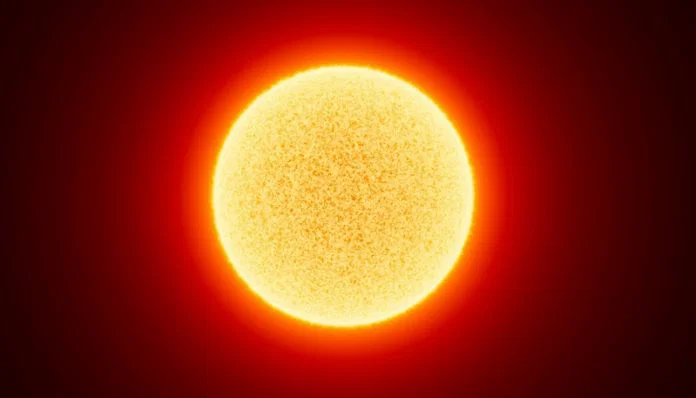
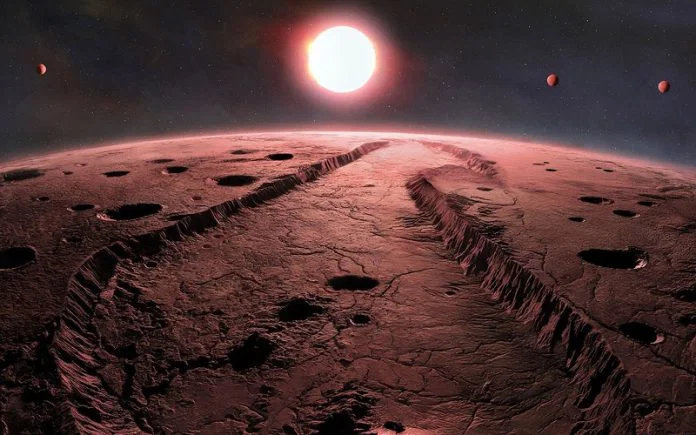
    Adding to their harsh environment, the planets probably lack significant atmospheres. They orbit extremely close to Barnard’s Star—so near that even the outermost planet is about ten times closer than Mercury is to the Sun. This proximity, combined with their weak gravitational pull, suggests that radiation and stellar particles could have gradually stripped away any original atmospheres.

    It’s estimated that these atmospheres last no longer than about two billion years. Given that Barnard’s Star is roughly 10 billion years old, these planets might have been airless for most of their existence. They are also likely tidally locked, meaning one side always faces the star while the other remains in endless darkness—similar to how the Moon always shows the same face to Earth.

    Remarkably, despite these extreme conditions, the planets maintain stable orbits. The inner three planets are arranged in a resonance pattern with orbital periods in a 9:12:16 ratio, which may help keep their paths stable over time.

    Upcoming missions, like the European Space Agency’s Plato, are expected to discover many more small rocky planets like these. Although the worlds surrounding Barnard’s Star are probably uninhabitable, studying them offers valuable insights into what conditions might enable or prevent life on other planets, based on the star’s characteristics, planetary composition, and environmental dynamics.

    Source: KSR.

  • Astronomers Spot a 50-Year-Old Cosmic Yardstick’s Flaw

    Astronomers Spot a 50-Year-Old Cosmic Yardstick’s Flaw


    For more than 50 years, astronomers have relied on a fundamental assumption when estimating the number of stars in distant galaxies: that stars of different sizes form in roughly the same proportions, regardless of where they are in the universe.

    New findings challenge that notion.

    Researchers at the University of Missouri have discovered evidence that the ratio of large to small stars varies depending on the environment where they originated.

    This discovery could revolutionize how astronomers determine the mass, age, and development of galaxies. It might also shed light on some of the puzzling phenomena observed by the James Webb Space Telescope.

    The study centers on the initial mass function (IMF), a mathematical tool that helps estimate star populations because directly counting every star in faraway galaxies isn’t feasible.

    Low-mass, faint stars are especially hard to detect due to their dimness compared to larger, brighter stars.

    Instead of counting all stars directly, scientists observe the brighter ones and apply the IMF to estimate the total number of smaller stars. Historically, astronomers have assumed this relationship remains consistent across different regions of space.

    This new research suggests the universe’s star formation process may be more complex than previously thought.

    To explore this, the team used data from ESA’s Gaia mission, which has charted the positions and properties of nearly 2 billion stars within our Milky Way galaxy.

    The scientists examined star clusters—groups of stars that formed together under similar conditions. These clusters serve as natural laboratories, allowing researchers to compare stellar populations formed in various environments.

    If the traditional assumption held true, different clusters should show similar ratios of low-mass to high-mass stars.

    However, the findings revealed significant differences among clusters, indicating that local conditions influence the types of stars that form.

    The researchers aren’t suggesting the IMF should be discarded. Instead, they propose that different versions or adjustments of the IMF might be necessary for different environments.

    This could have profound implications for understanding distant galaxies. If astronomers misjudge the number of faint, low-mass stars, their estimates of a galaxy’s total mass could be substantially off.

    This insight is especially relevant to observations from NASA’s James Webb Space Telescope, which has detected surprisingly bright and seemingly massive galaxies from the early universe. Some of these findings have been difficult to reconcile with existing models of galaxy growth.

    Should stellar formation differ in those early cosmic environments, some galaxies might only seem more massive due to assumptions rooted in traditional models.

    This research offers a promising pathway to refine one of astronomy’s most important measurement tools. Instead of implying that distant galaxies defy physical laws, it suggests we simply need a better cosmic yardstick—one that recognizes the variability in star formation across the universe.


  • Astronomers Observe Dying Star Releasing Material into Space

    Astronomers Observe Dying Star Releasing Material into Space

    Astronomers have captured a stunning image of a dying star’s remnants being torn apart and redistributed into the space between stars. This observation provides a rare glimpse into a key cosmic recycling process: the return of material from ancient stars, which can eventually contribute to the formation of new stars, planets, and other celestial objects.

    The finding was made during observations of the Helix Nebula, a well-known planetary nebula approximately 650 light-years from Earth. The study, led by Yale University astronomer Pieter van Dokkum, was published in Nature.

    The Helix Nebula originated when a star similar in size to the Sun reached the final stages of its life cycle. It expelled much of its outer layers into space, leaving behind a dense stellar core known as a white dwarf. This expelled gas created the nebula’s characteristic bright ring.

    However, the new observations uncovered structures far from the nebula’s core, especially on its eastern side. The team was actually calibrating a new telescope called MOTHRA, short for the Modular Optical Telephoto Hyperspectral Robotic Array, located at the El Sauce Observatory in Chile. Designed to detect extremely faint gases in space, MOTHRA unexpectedly revealed a network of previously unnoticed structures in the nebula’s outer regions.

    They identified 22 complete or partial “bow shocks” — curved formations resembling waves in front of a boat. These appear where clumps of material, expelled from the dying star, move swiftly through the sparse gas between stars. As these fragments collide with surrounding material, they produce glowing, curved features visible to astronomers.

    The shape and size of these bow shocks offer vital clues about what happens to stellar debris after its release. Closer to the star, the structures are larger, sharply defined, and thin. At greater distances, they become smaller, more diffuse, and increasingly fragmented. This pattern suggests that the fragments gradually break apart as they traverse space.

    Researchers estimate that individual clumps can survive for roughly 10,000 years after exposure to surrounding gas before being shredded and their material blending into the interstellar medium. This process plays a crucial role in the universe’s matter cycle, with materials from dying stars eventually becoming part of new stellar and planetary systems. In billions of years, our Sun will undergo a similar cycle, returning much of its material to the galaxy.

    The discovery also highlights MOTHRA’s potential. Once fully operational, the telescope will employ 1,140 telephoto lenses, advanced filters, and powerful computing to hunt for some of the faintest structures in the universe. For astronomers, the Helix Nebula has become more than just a beautiful image — it’s a glimpse into the dynamic, ongoing process of cosmic recycling.

    Source: Yale.

  • Astronomers Unveil the Largest 2D Universe Map Ever Created

    Astronomers Unveil the Largest 2D Universe Map Ever Created

    A groundbreaking two-dimensional color map of the universe has been unveiled, featuring an astonishing 5.6 trillion pixels and nearly 4 billion stars, galaxies, and other celestial bodies. This vast map was developed by the DESI Legacy Imaging Surveys team and spans approximately 75% of the sky in visible and near-infrared light. The entire dataset is accessible to the public, inviting astronomers, students, and curious skywatchers to explore the cosmos via the Legacy Survey Sky Viewer.

    The detailed visualization offers an especially close view of regions beyond our Milky Way galaxy. Researchers can utilize it to hunt for unusual phenomena, such as gravitational lenses—which occur when gravity bends and amplifies light from distant galaxies—and supernovae, the dazzling explosions marking the death throes of stars.

    This map may also prove pivotal in tackling two of astrophysics’ most profound mysteries: dark matter, an invisible substance thought to comprise most of the universe’s mass, and dark energy, the enigmatic force believed to accelerate the universe’s expansion.

    Creating this colossal map involved compiling 263,407 individual telescope exposures collected across 2,285 nights. Over 160 scientists participated in gathering the data, with a dedicated team of 20 researchers assembling the final product. The images originated from three major ground-based surveys utilizing telescopes in Chile and Arizona. Additional data came from years of infrared observations from NASA’s Wide-field Infrared Survey Explorer (WISE), plus other publicly available astronomical datasets.

    Combining such diverse images posed a significant computational challenge due to variations in weather, atmospheric conditions, and telescope settings. Developing the specialized software took about a year, and processing the data required roughly eight weeks on the Perlmutter supercomputer at the National Energy Research Scientific Computing Center.

    Initially designed to support the Dark Energy Spectroscopic Instrument (DESI), the new 2D map resembles a giant photograph that indicates where stars and galaxies are situated and how luminous they are. DESI then studies selected galaxies in detail—analyzing their light to measure their distances. By combining positional data with these distances, scientists can construct a three-dimensional map of the universe, allowing them to analyze galaxy clustering over billions of years and explore how the universe has expanded over cosmic history. This also provides insights into whether dark energy’s influence might be weakening over time—a possibility that could dramatically alter our understanding of the universe’s future.

    DESI wrapped up its initial five-year observing campaign ahead of schedule in April 2026. Early findings suggest dark energy’s strength may diminish over time, an indication with profound implications for cosmology. More comprehensive results are anticipated in 2027, with observations continuing until 2028.

    Beyond DESI, this extensive map will serve as a critical reference for future observations from the Vera C. Rubin Observatory and NASA’s Nancy Grace Roman Space Telescope. It will also be instrumental in training artificial intelligence algorithms to sift through the massive influx of data generated by modern telescopes.

    Previous editions of the Legacy Surveys have already contributed to over 1,800 scientific papers. Now, with nearly 4 billion objects charted, this latest release offers an unprecedented glimpse into the universe, accessible to anyone with an internet connection.

  • Scientists discover miniature rocky planets in perpetual darkness and daylight

    Scientists discover miniature rocky planets in perpetual darkness and daylight

    Astronomers have conducted their most detailed examination yet of the planetary system orbiting Barnard’s Star, one of our closest stellar neighbors. The findings indicate these nearby planets are quite different from anything in our own solar system. Although they are relatively close to Earth in cosmic terms, the planets appear to be dry, airless, and far too harsh to support life.

    Barnard’s Star is just under six light-years away, making it the closest individual star to the Sun after the Alpha Centauri system. In 2025, scientists confirmed that four small rocky planets orbit this star. Each planet is smaller than Earth and Venus but larger than Mars, placing them in a size range that doesn’t exist anywhere else in our solar system.

    The recent study, published in the Monthly Notices of the Royal Astronomical Society, involved researchers from the University of Cambridge who analyzed the star’s chemical makeup to better understand the composition of its planets. They found that Barnard’s Star has unusually high levels of magnesium. Lead author Xander Byrne from Cambridge’s Institute of Astronomy explains that this extra magnesium likely influenced how the planets formed billions of years ago.

    On Earth, much of the magnesium turns into minerals called olivines, which are essential for storing water deep within the planet. However, scientists believe that on the planets orbiting Barnard’s Star, the excess magnesium primarily formed a different mineral called periclase. Unlike olivine, periclase doesn’t retain water well, making these planets much drier than Earth.

    Furthermore, these planets likely lack long-lasting atmospheres. They orbit extremely close to their star — the outermost planet is about ten times closer than Mercury is to the Sun. Such proximity exposes them to intense radiation and stellar winds that can gradually strip away any atmosphere they might have had.

    Given their weak gravity and close orbits, the researchers estimate that any primordial atmospheres could have only persisted for around two billion years. Since Barnard’s Star is approximately 10 billion years old, those atmospheres would have disappeared billions of years ago.

    Another notable feature is that all four planets are probably tidally locked, meaning one side constantly faces the star while the other remains in perpetual darkness. This is similar to how the Moon always shows the same face to Earth. One side would be in constant daylight and extreme heat, while the dark side would remain cold and shadowed.

    Despite their tight spacing, the system appears surprisingly stable. Typically, planets so close together would exert strong gravitational pulls on each other, increasing the chances of collisions or ejections. However, the study found that their orbits are arranged in a pattern called orbital resonance. The inner three planets follow a repeating 9:12:16 orbital rhythm, a gravitational configuration that also helps stabilize some of Jupiter’s moons.

    Future space missions, such as the European Space Agency’s PLATO mission, are expected to discover many more small rocky planets like these. While the planets around Barnard’s Star are most likely uninhabitable, the research demonstrates that a star’s chemical composition can provide valuable insights into the nature of its planets. This knowledge may guide scientists in finding more promising worlds elsewhere in the galaxy where life could potentially exist.

  • Scientists find Sun holds more silver than previously believed

    Scientists find Sun holds more silver than previously believed

    Scientists have found that the Sun contains approximately 55% more silver than previous estimates indicated, settling a long-standing question about the element’s abundance in our solar system. This breakthrough comes from researchers at Uppsala University in Sweden, who developed a more precise method for analyzing the Sun’s chemical composition.

    This new insight enhances our understanding of the Sun and could offer valuable clues about the formation of stars, planets, and the elements that make up the universe over billions of years. Although the Sun is massive, it is composed mainly of hydrogen and helium, with only about 1.5% of its mass consisting of heavier elements like carbon, iron, oxygen, and silver. Despite their small proportion, these elements help scientists uncover the history of cosmic evolution.

    Since the Sun serves as a benchmark for studying other stars, knowing its exact chemical makeup is crucial. Accurate measurements allow astronomers to compare different stars and gain deeper insights into the evolution of galaxies.

    The research was led by Sema Caliskan during her Ph.D. work at Uppsala University. To determine the silver content, her team used spectroscopy, a technique that examines how sunlight interacts with the Sun’s outer atmosphere. When light passes through this layer, atoms absorb specific wavelengths, creating dark lines—spectral fingerprints unique to each element. By analyzing these patterns, scientists can identify elements present and estimate their quantities.

    Previous studies depended on simplified models of the Sun’s atmosphere, but this research employed a more sophisticated computer simulation that closely reflects the Sun’s dynamic outer layers. The study also incorporated improved calculations of how silver atoms behave amidst interactions with light and other particles.

    Unlike earlier approaches, the new model accounts for complex effects where sunlight influences the behavior of silver atoms, enabling a much more accurate measurement. This refinement helps resolve a longstanding puzzle: prior measurements of solar silver were significantly lower than levels found in some ancient meteorites, which are remnants of the early solar system. Both the Sun and these meteorites originated from the same gas and dust cloud around 4.6 billion years ago, and they were expected to have similar chemical compositions.

    The updated calculations now reveal that the silver levels in the Sun match those in primitive meteorites, solving the discrepancy. The researchers believe their improved method can also be applied to study other stars. By measuring silver and other elements across stars of different ages and types, scientists aim to understand where these elements originated—whether in stellar explosions like supernovae—and how they have dispersed throughout the Milky Way over cosmic history.

  • Scientists Discover a Unique Nearby Planet System Unlike Our Solar System

    Scientists Discover a Unique Nearby Planet System Unlike Our Solar System

    Barnard’s Star is one of the brightest stars in our night sky for astronomers because of its proximity to Earth. Situated just under six light-years away, it ranks as the second-closest star system after Alpha Centauri. In 2025, researchers confirmed the presence of four small planets orbiting this nearby star.

    A recent study has provided the clearest view yet of these unusual worlds, revealing that they are rocky, incredibly hostile, and markedly different from any planets in our solar system. Published in the Monthly Notices of the Royal Astronomical Society, the study was led by scientists from the University of Cambridge. By analyzing the star’s chemical composition, the team estimated what these planets might be made of and how they have changed over billions of years.

    All four planets are smaller than Earth and Venus but larger than Mars. Interestingly, this size range is quite common in other planetary systems, even though our solar system lacks planets of this size. As more small rocky worlds are discovered, scientists are beginning to realize that our solar system may not be as typical as previously thought.

    One of the most surprising discoveries is that these planets are possibly rich in a mineral called periclase. On Earth, periclase is found deep underground, hundreds of kilometers below the surface. Barnard’s Star has a much higher magnesium content compared to the Sun, which likely influenced the mineral formation inside its planets. On Earth, magnesium is mainly stored in olivine minerals that help retain water. However, the high magnesium levels around Barnard’s Star probably led to the formation of more periclase, which isn’t as efficient at holding water. This suggests that these planets might have had significantly less water from the start.

    The planets orbit very close to their star. The farthest one circles Barnard’s Star at about ten times the distance Mercury orbits the Sun. Such proximity to the star likely caused intense radiation that stripped away any original atmospheres, which probably only lasted for around two billion years—considerably shorter than the star’s estimated age of around ten billion years.

    Because of their tight orbits, the planets are expected to be tidally locked, meaning one side constantly faces the star while the other remains in perpetual darkness, similar to how the Moon always shows one face to Earth.

    Despite their close proximity, the planets seem to maintain stable orbits. The inner three move in a resonant pattern, with their orbital periods following a 9:12:16 ratio. Gravitational interactions like this are similar to those that keep some of Jupiter’s moons in stable orbits, possibly preventing the planets from colliding.

    While these worlds are almost certainly inhospitable, the findings offer valuable insights into planetary formation around different types of stars. Upcoming space missions, including the European Space Agency’s PLATO, aim to find many more small rocky planets like these. By studying the chemistry of stars and their planets, astronomers hope to better identify which distant worlds might support life.

  • Scientists Unveil Tiny ‘Drift’ Signaling Star Formation

    Scientists Unveil Tiny ‘Drift’ Signaling Star Formation

    A new star’s birth begins deep within cold, dense clouds of gas and dust, known as prestellar cores. Researchers have long been curious about the processes leading to star formation, and recent observations are shedding light on one of the earliest stages.

    A study published in Astronomy & Astrophysics reports a groundbreaking discovery by scientists from Kyushu University in Japan and the Max Planck Institute in Germany. They observed, for the first time, a phenomenon called ambipolar diffusion inside a prestellar core—a dense, cold cloud that has yet to ignite as a star.

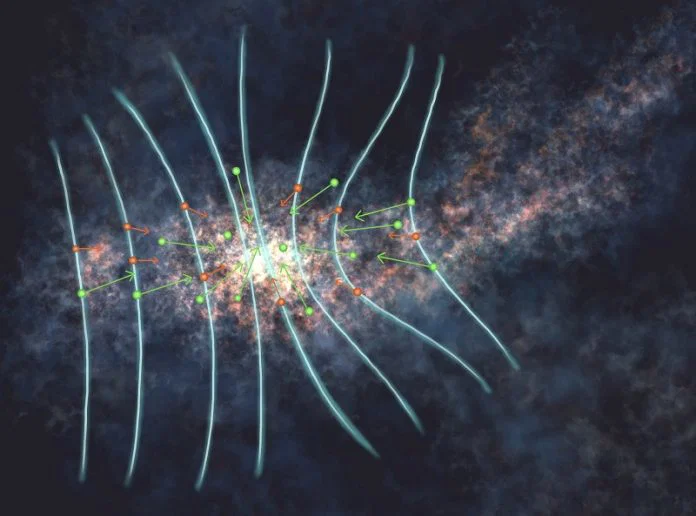
    Stars like our Sun emerge from these cores. Gravity constantly pulls the gas and dust inward, striving to create a new star. But magnetic forces also play a crucial role, threading through the cloud and opposing gravity’s pull. These magnetic fields can slow or even halt the collapse, preventing immediate star formation. For years, scientists have believed that weakening of these magnetic fields is necessary for a star to form, but actually observing this process has been extremely challenging.

    The team focused their study on a prestellar core named L1544, located in the Taurus Molecular Cloud—one of Earth’s closest star-forming regions. They utilized the powerful 30-meter IRAM radio telescope to gather data. Since these cores are extremely cold, many molecules freeze onto dust grains, making detection tricky. Instead, they targeted two specific molecules that stay in the gas phase: diazenylium-d1 (N₂D⁺), a charged molecule, and para-monodeuterated ammonia (para-NH₂D), a neutral molecule.

    By analyzing the radio waves emitted by both molecules, the scientists measured their movements. They discovered that the neutral molecules moved approximately 0.05 kilometers per second faster than the charged ones—a tiny but significant difference. This difference served as clear evidence of ambipolar diffusion at work.

    The explanation lies in how these particles interact with magnetic fields. Charged molecules remain tied to magnetic lines, while neutral molecules are not as constrained. As the cloud becomes denser, fewer charged particles linger, weakening magnetic support. Consequently, gravity pulls the neutral particles inward more freely, while the charged particles continue to follow magnetic lines, resulting in a gradual drift between the two groups.

    Over time, this drift diminishes the magnetic field’s hold, allowing gravity to dominate. When gravity overpowers the magnetic resistance, the cloud collapses, and a protostar—an embryonic star—begins to form.

    This discovery contributes a vital piece to understanding how stars originate. The researchers plan to observe additional prestellar cores with even more sensitive instruments to verify if ambipolar diffusion is a common step throughout our galaxy.

    Understanding star formation is essential because stars are the factories of planets and the raw materials for life. By capturing this tiny cosmic drift, scientists have taken a significant step toward unraveling the cosmic story of how stars like our Sun, and countless others across the universe, come into existence.

  • 13-billion-year-old interstellar comet predates our solar system

    13-billion-year-old interstellar comet predates our solar system

    A year ago, on July 1, 2025, astronomers spotted a captivating new object passing through our solar system. Detected by the Asteroid Terrestrial-impact Last Alert System (ATLAS), this object stood out as something extraordinary. Racing past at an unprecedented speed, the comet, known as 3I/ATLAS, is only the third interstellar object ever observed.

    Originating from another star, this transient visitor is now heading out of the solar system at over 60 kilometers per second, never to return. The discovery made headlines across the globe, with some sensational claims suggesting it might be an alien spaceship—though that was more speculation than fact, distracting from the true significance of the find.

    A recent study published in Nature by a team led by Martin Cordiner from NASA’s Goddard Space Flight Center provides new insights into the comet’s origins. Their findings suggest 3I/ATLAS is a genuine relic from our galaxy, predating our solar system by billions of years.

    What Are Interstellar Objects?

    Planetary systems are often chaotic. Besides planets, they contain countless smaller remnants—debris leftover from their formation. Much of this debris follows unstable orbits and is periodically expelled into interstellar space due to gravitational interactions with planets. These objects, such as comets and asteroids, then drift through the vastness between stars.

    It has long been theorized that if planetary systems are common across the universe, then these systems produce and eventually shed countless rocky and icy bodies. The space between stars should be filled with this debris—ancient and newly formed—much of which never comes close enough to other stars to be observed. However, with advancements in technology, we’ve now identified a handful of such interstellar visitors, including ’Oumuamua, Borisov, and ATLAS.

    An Ancient, High-Speed Visitor

    Scientists quickly recognized that 3I/ATLAS was hurtling through space at incredible velocity. At its closest approach to the Sun, it was traveling faster than 68 km/s, and even before feeling the Sun’s gravitational influence, it was moving at over 58 km/s. Such speeds hinted that this object was not typical.

    By analyzing its orbit within the Milky Way, researchers concluded that 3I/ATLAS is likely much older than our solar system. It probably originated from the galaxy’s “thick disk”—an ancient stellar population that predates the Sun.

    Unraveling Its Cosmic Ingredients

    To better understand its history, scientists used the James Webb Space Telescope and the Atacama Compact Array to observe 3I/ATLAS in infrared and microwave wavelengths. These observations revealed that the comet’s emitted gases contained significantly less carbon-13, a heavier isotope of carbon, compared to similar objects in our solar system.

    This isotope ratio is key because the production of carbon-13 occurs within the interiors of stars over cosmic timescales. Stars more massive than the Sun convert carbon-12 into carbon-13 through a process called “hot bottom burning.” Over billions of years, this increases the proportion of carbon-13 in the galaxy.

    The very low levels of carbon-13 in 3I/ATLAS suggest it formed around 12 billion years ago, during the early years of the galaxy, when the abundance of this isotope was still low. This makes it an ancient relic from the galaxy’s infancy.

    What’s Next?

    The Vera Rubin Observatory, situated atop a mountain in northern Chile, boasts the largest camera ever mounted on a telescope, designed for rapid, wide-angle sky surveys. It is perfectly equipped to spot interstellar objects as they zip through the solar system. Forecasts suggest this observatory could detect dozens more such visitors over the next decade.

    Each interstellar object discovered so far has been unique, but with increased detection capabilities, scientists will start to see these objects as part of a larger population. This will enable a deeper understanding of star and planet formation in our galaxy, revealing the history embedded in these cosmic travelers.

  • Astronomers Find 1.8M-Light-Year “Bow and Arrow” Galaxy

    Astronomers Find 1.8M-Light-Year “Bow and Arrow” Galaxy

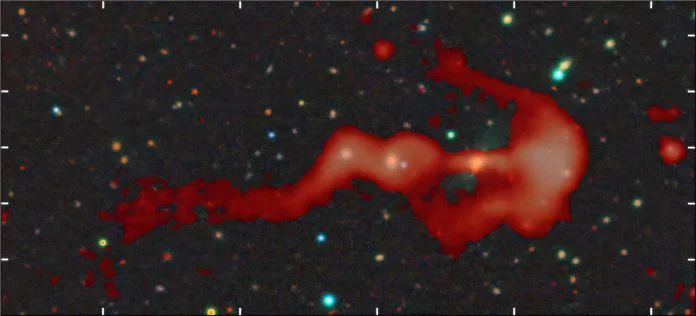
    A remarkable and bizarre galaxy has been uncovered by astronomers, resembling a massive bow and arrow stretching across the cosmos. Named RAD-BAARG (Bow-And-Arrow Radio Galaxy), this extraordinary object features a massive arc-like formation that extends nearly 1.8 million light-years—about 18 times the width of our Milky Way galaxy.

    What makes this find particularly exciting is that it was originally spotted by a citizen scientist in India while analyzing images from a large sky survey. The discovery was made by an international team collaborating with the RAD@home Astronomy Collaboratory, a citizen science initiative that trains volunteers to analyze data from powerful telescopes. The images were captured by LOFAR, one of the world’s most sensitive radio telescope arrays.

    Radio galaxies are typically powered by supermassive black holes at their centers, which eject enormous jets of high-energy particles into space. These jets often produce recognizable structures that astronomers have studied extensively. However, RAD-BAARG looks very different from typical examples.

    Dr. Ananda Hota, the lead researcher, stated that in 25 years of studying radio galaxies, he had never seen anything like this. The galaxy’s shape suggests a dramatic interaction with its environment. The team theorizes that the galaxy is moving rapidly through hot gas towards a nearby galaxy cluster at supersonic speeds. Just like a jet breaking the sound barrier creates a shock wave, RAD-BAARG appears to generate a “bow shock” as it speeds through space.

    These shock waves are usually very faint and difficult to detect because the surrounding gas is extremely thin. In this case, however, the black hole’s radio jets seem to illuminate the shock front, making it visible in radio wavelengths. One side of the galaxy features a narrow jet that feeds into a vast arc-shaped structure about 560 kiloparsecs, or roughly 1.8 million light-years long. On the opposite side, another jet twists into an S-shaped pattern before fading into a long, faint tail. These features together resemble a cosmic bow and arrow.

    RAD-BAARG is located in a crowded and dynamic environment, where neighboring galaxy clusters and moving gas might be distorting and shaping its radio-emitting material. The researchers believe these environmental forces are mainly responsible for the galaxy’s unique appearance.

    This discovery may represent one of the clearest examples to date of a giant bow shock surrounding an infalling galaxy, something that has long been predicted by theories and computer simulations but rarely observed directly. Interestingly, the galaxy was first identified by Pranim Limbo, a citizen scientist from a remote Himalayan region who is not affiliated with major research institutions. His contribution highlights how enthusiasts worldwide can participate in cutting-edge scientific discoveries.

    Looking ahead, scientists anticipate that future observatories, including the upcoming Square Kilometre Array, will uncover many more galaxies like RAD-BAARG. They also hope that artificial intelligence will play a vital role in processing the vast volumes of data, helping scientists uncover hidden structures and better understand galaxy evolution in the universe’s vast environment.

    Source: Royal Astronomical Society.

  • Astronomers find Sun-like star that probably consumed a planet

    Astronomers find Sun-like star that probably consumed a planet

    A team of astronomers has gathered compelling evidence suggesting that a star similar to our Sun might have consumed one of its own planets.

    This star, identified as TOI-5882, is approximately 1,300 light-years away from Earth.

    Scientists found that TOI-5882 contains an unusually high level of lithium, a chemical element that could indicate a significant event in the star’s history.

    The idea that “you are what you eat” applies to stars as well. While stars naturally contain small amounts of lithium, planets tend to be much richer in this element.

    When a star engulfs a planet, it can absorb a large dose of lithium, leaving behind a chemical signature. This process, known as “planetary engulfment,” occurs very rapidly on cosmic timescales—sometimes within days or weeks.

    Because such events happen so quickly, astronomers rarely have the chance to observe a star swallowing a planet in real-time. Instead, they must piece together clues left behind long after the event.

    Lead researcher Brooke Kotten from the University of Michigan explains that this investigative work is what makes the field so engaging. Since they can’t observe the “crime” directly, scientists analyze data to reconstruct what likely happened.

    Studying these occurrences helps us understand how often stars consume planets and the various mechanisms behind it.

    In the distant future, our own solar system might experience a similar fate. In about five billion years, the Sun is expected to swell into a red giant, potentially swallowing Mercury and Venus, and possibly even Earth.

    However, TOI-5882 hasn’t expanded enough for that explanation to fit. Instead, scientists suspect that another object—the brown dwarf orbiting the star—may have played a role.

    This brown dwarf is a massive object, over 20 times the mass of Jupiter, larger than planets but too small to become a true star. Researchers believe it might have disrupted the orbit of a nearby planet, eventually causing it to spiral into the star.

    The scientists estimate that the planet likely had a mass somewhere between a few Earth masses and Neptune.

    They used a technique called spectroscopy to study the light emitted by TOI-5882. Since different elements leave unique patterns in starlight, spectroscopy helps identify the chemical makeup of stars from great distances.

    To confirm that TOI-5882’s lithium level was truly exceptional, the team compared it with 62 similar stars matching in age, size, and temperature. In all cases, TOI-5882 stood out—containing more lithium than at least 97% of the comparison stars.

    Interestingly, a few other stars also showed higher-than-normal lithium levels, hinting that there may be additional ways for stars to become enriched with this element. While one mystery is solved, many new questions have arisen for astronomers to explore.

  • How to Complete and Solve During a Meteor Shower in Heartopia

    How to Complete and Solve During a Meteor Shower in Heartopia

    In Heartopia, there are many fun activities to connect with your neighbors and create new memories. From chasing your dreams to trying out new hobbies, there’s always something entertaining to do.

    One exciting activity is collecting rare materials that fall from stars. However, finding them isn’t common. Here’s a guide on how to locate and gather Starfall Shards so you can build a steady supply for your crafting needs. Let’s get started with everything you need to know about collecting shards!

    How to Get Starfall Shards

    Before you begin, it’s important to know where these special gems appear. Starfall Shards are fragments of meteorites that only show up on Onsen Mountain during a Meteorite Shower. Make sure to check the weather at night to catch these showers.

    All Meteor Shower Starfall Shard Locations

    Starfall Shards will appear all across Onsen Mountain, so you can gather them as soon as the event starts. It’s a good idea to start at one side of the mountain and collect from each node in order to avoid missing any. Alternatively, you can begin at the bus stop and walk in a circle, whichever is easier for you.

    Look carefully at different heights, as shards can spawn on cliffs or along the shoreline. A map of Onsen Mountain shows initial shard locations marked with gold stars. Here are some key spots to check, but remember, their exact locations can change with each meteor shower:

    • The northwest beach: Search the shoreline in this area.
    • The ruins: Behind the rocks near the capybara trough.
    • South of Onsen Mountain Lake: Head down the cliffs near Crater Lake.
    • Southwest corner: On the winding path west of lot five, away from the mountain resort.
    • South of the Old Sea: Walk along the shore near the Old Sea Islet.
    • On the mountain cliffs: Up on the central cliffs overlooking the hot springs.
    • Near Mountain Lake: At the fork in the path in the southeast.
    • The eastern hills: Close to lot eight, on the cliffs.
    • On the stone path: Along the shoreline on the far eastern side of the mountain.

    How to Tell When the Next Meteor Shower Will Be

    To know when a meteorite shower is coming, check your smartwatch and tap the weather icon in the top right corner. This will show detailed weather info for the upcoming week.

    Look for the moon icon surrounded by stars – that’s when the shower will happen! The shower usually occurs from 6:00 PM to midnight, so plan your activities accordingly.

    How to Get More Starfall Shards

    During the meteor shower, nine nodes will pop up around Onsen Mountain. Mining each will give you about three to four pieces of the matching color of Starfall Shard.

    Keep in mind, once you harvest a shard from a node, it doesn’t respawn. Be sure to gather all shards before the event ends to maximize your collection.

    There are five shard colors—white, red, yellow, green, blue, and purple—but not every shower will have all colors available.

    If you’re missing a specific color, you can exchange white shards for others by talking to Doris, the mysterious merchant. She offers more than just shards during the meteor shower, with a variety of items to buy.

    Doris’s Meteorite Shop

    During meteor showers, Doris stands by her umbrella at the Onsen Mountain bus stop. She sells a selection of special items you can pick up.

    Here’s what she offers during these nights:

    Note: Each furniture piece comes in five colors, but only the ones available during the shower can be purchased that night.

    Item Cost
    Meteorite Bathtub 20 Starfall Shards
    Meteorite Toilet 18 Starfall Shards
    Meteorite Pendant Lamp 16 Starfall Shards
    Meteorite Shower Room 20 Starfall Shards
    Meteorite Vessel Sink 18 Starfall Shards
    Meteorite Wall Lamp 12 Starfall Shards
    Meteorite Stool 12 Starfall Shards
    Starfield Ceiling Light 15 Starfall Shards
    Starfield Strand Chandelier 12 Starfall Shards
    Star String Lights 12 Starfall Shards
    Star Wall Lamp 12 Starfall Shards
    Star Desk Lamp 12 Starfall Shards
    Wish Upon Shooting Stars Emote 5 Starfall Shards

    How to Get the Beneath the Meteor Shower Badge

    You can earn a special badge for your profile by purchasing the meteor shower exclusive emote from Doris. Use the emote with friends to trigger a huge falling star in the sky. Once you do, you’ll receive the badge immediately, which you can put on your profile. Plus, you’ll gain the Gemini title to showcase your star-wishing skills!

  • DNA Tech Solves the Unsolvable, Sora 2 Turns Fake, Alien Comet Detected

    DNA Tech Solves the Unsolvable, Sora 2 Turns Fake, Alien Comet Detected

    Sora 2 could be TikTok without people—powered solely by AI.

    OpenAI is gearing up to introduce Sora 2, a short-form video platform that closely resembles TikTok, but with a twist: every video is AI-generated. There are no user uploads or mobile recordings, only 10-second clips created from prompts.

    The layout feels familiar, with vertical scrolling, likes, comments, and remix options. However, Sora 2 introduces a new feature—identity verification. Users can consent to their likeness being used by AI, and they will be alerted if someone attempts to feature their image, even in draft videos.

    The timing isn’t coincidental. TikTok is under scrutiny in the U.S., while Meta and Google are advancing their AI-driven video technologies. By designing “everything fake by default,” OpenAI bets that audiences will crave endless streams of AI-generated cats, dance routines, and memes. Currently, it’s an internal project, but if launched broadly, Sora 2 could signal the rise of an AI-based social media feed.

    —

    DNA technology solves Austin’s yogurt shop murders after 34 years

    In December 1991, firefighters responded to a small frozen yogurt shop in Austin, Texas. The fire initially seemed routine until the smoke cleared, revealing a haunting scene: four teenage girls, bound, gagged, and shot before the fire was started to destroy evidence.

    For years, the case remained unresolved, marked by false confessions, overturned convictions, and lingering questions. The victims’ families faced ongoing heartbreak as justice seemed increasingly distant.

    But technology has a way of uncovering truths that time cannot erase. In 2025, investigators revisited the case with advanced DNA testing and ballistic analysis. This time, science came through. DNA found under one victim’s fingernails matched Robert Eugene Brashers, a violent drifter who had committed suicide during a police standoff in 1999. A shell casing from the shop linked back to his weapon, finally closing the case that had remained unresolved for over three decades.

    Although there was no courtroom trial or chance for the families to confront their loved one’s killer, this breakthrough offered long-awaited closure—proof that even after many years, small traces can resurrect the truth.

    The yogurt shop murders now stand as a tragic reminder—and a testament—that patience and scientific advancement can breathe life back into the coldest cases.

    —

    Are we witnessing alien technology or just ice? Scientists debate interstellar comet 3I/ATLAS

    When astronomers first spotted 3I/ATLAS in July, it resembled a typical comet—icy, dusty, more than three miles wide. Yet, its trajectory raised eyebrows. The object’s motion couldn’t be explained solely by gravity, and subtle shifts indicated something unusual was happening.

    This mystery prompted Harvard astrophysicist Avi Loeb to propose a provocative theory: 3I/ATLAS might be more than just a comet. Building on his earlier claim about ʻOumuamua’—the first confirmed interstellar visitor—he suggests it could be an alien artifact disguised as a natural object.

    Skeptics note that 3I/ATLAS is releasing carbon dioxide and dust, behaviors consistent with comets warming as they approach the Sun. Nonetheless, its retrograde orbit and unexpected movements keep the debate alive.

    Regardless of the truth, this is a rare scientific opportunity. Telescopes worldwide are racing to observe and study this interstellar visitor before it disappears into space once more, leaving us to ponder: is this truly a comet, or is it something more extraordinary?

  • NASA’s Weekend Solar Eclipse: Will Pakistan Witness It?

    NASA’s Weekend Solar Eclipse: Will Pakistan Witness It?

    On the nights of September 21-22, sky enthusiasts should mark their calendars for a partial solar eclipse, as announced by NASA. Although this celestial event won’t be visible in the U.S., viewers in Australia, Antarctica, and across the Pacific and Atlantic Oceans will have prime views.

    Pakistan, unfortunately, will miss out on witnessing the eclipse. The Pakistan Meteorological Department’s Climate Data Processing Center reports the eclipse will commence at 10:30 PM local time on September 21, reach its peak at 12:42 AM, and conclude by 2:54 AM. Yet, the event remains invisible nationwide.

    NASA describes a partial solar eclipse as occurring when the Moon passes between the Sun and Earth but doesn’t align perfectly, resulting in a glowing crescent shape of the Sun visible from Earth. This marks the second major sky event this September—the first being a total lunar eclipse on the 7th and 8th. The month also brings the autumn equinox on September 22, when daylight and nighttime are nearly equal worldwide.

    Looking ahead, the next total solar eclipse noticeable in parts of North America will be on August 12, 2026, visible across Greenland, Iceland, Spain, Russia, and a small part of Portugal. A partial eclipse will be observable throughout North America, Europe, Africa, and across the Atlantic, Arctic, and Pacific Oceans. Additionally, an annular eclipse is expected on February 17, 2026, visible in parts of Antarctica, with partial views across Africa, South America, and several oceans.

    NASA emphasizes the importance of safely observing these events, advising against looking directly at the Sun without proper eclipse glasses or filters. Viewing any part of the bright Sun through cameras, binoculars, or telescopes without specialized solar filters can cause immediate and serious eye damage.

  • James Webb Sees Stunning Light Show on Jupiter

    James Webb Sees Stunning Light Show on Jupiter

    On our planet, we occasionally witness the breathtaking glow of auroras, commonly known as the Northern Lights, caused by solar activity. However, Earth is not the only celestial body to experience this captivating phenomenon; planets like Mars and Neptune also exhibit auroras. Recently, the James Webb Space Telescope has captured extraordinary images of auroras on Jupiter, where these light displays are hundreds of times more intense than those seen on Earth.

    Auroras occur when energetic particles from the sun interact with a planet’s atmosphere, usually near the magnetic poles. Observing these spectacular light shows on Jupiter not only offers stunning visuals but also provides astronomers with insights into the planet’s vast and complicated magnetosphere.

    The auroras were first detected during Webb’s observations on December 25, 2023, with the findings only recently made public.

    Lead researcher Jonathan Nichols from the University of Leicester, UK, expressed his astonishment, saying, “What a Christmas gift it was – I was completely blown away! We expected to see the auroras slowly fading in and out, perhaps over 15 minutes, but instead, we observed the entire auroral region sparkling and pulsing with light, sometimes changing from second to second.”

    NASA’s James Webb Space Telescope has captured new details of the auroras on our solar system’s largest planet. The dancing lights observed on Jupiter are hundreds of times brighter than those seen on Earth. NASA, ESA, CSA, Jonathan Nichols (University of Leicester), Mahdi Zamani (ESA/Webb)

    Jupiter’s auroras differ from those on Earth; they are influenced not only by solar storms but also by the planet’s powerful magnetic field. This magnetic field draws in charged particles from both the sun and its moon, Io, which is known for its volcanic activity. When volcanic eruptions on Io release particles into space, they can escape the moon’s gravity and become trapped in Jupiter’s orbit. As these particles accelerate due to Jupiter’s immense gravitational force, they collide with the atmosphere, creating that stunning glow.

    However, many questions remain about these auroras. Researchers are puzzled by discrepancies between observations made by the Webb and Hubble space telescopes, which reveal different brightness levels in their images despite observing at various wavelengths.

    “What makes these observations even more fascinating is that we captured images simultaneously in ultraviolet light with NASA’s Hubble Space Telescope,” Nichols noted. “Curiously, the brightest light observed by Webb didn’t have a counterpart in Hubble’s images. This has left us scratching our heads. To produce the brightness observed by both telescopes, we would expect a combination of a high amount of very low-energy particles impacting the atmosphere, which was previously deemed impossible. We still don’t fully grasp how this occurs.”

  • Hubble Sees Rogue Black Hole Consuming A Star

    Hubble Sees Rogue Black Hole Consuming A Star

    Black holes are the voracious giants of the universe; incredibly dense entities capable of drawing in everything that comes too close, ultimately leading to its consumption. Recently, astronomers utilizing the Hubble Space Telescope witnessed a black hole actively consuming a star, tearing it apart and emitting a massive burst of radiation.

    This radiation release, known as a tidal disruption event (TDE), enabled the scientists to pinpoint the black hole. The TDE designated AT2024tvd was especially intriguing for a unique reason: while most supermassive black holes reside at the centers of galaxies, this one is a nomadic outlier.

    “Typically, one anticipates locating massive black holes at the core of galaxies, like Sagittarius A* in the Milky Way,” noted lead researcher Yuhan Yao from UC Berkeley. “That’s where tidal disruption events are usually sought. However, this black hole is not at the center; it’s located approximately 2,600 light years away. This marks the first optically identified off-nuclear TDE.”

    In addition to Hubble, researchers employed various instruments, including NASA’s Chandra X-Ray Observatory and the NRAO Very Large Array telescope, to study the TDE depicted above.

    The black hole often starts as a discreet figure in the cosmos, but when a star ventures too close, it succumbs to the black hole’s gravitational pull and becomes extended, or “spaghettified,” into a long shape. This results in a disk-like formation of debris around the black hole, which rapidly spirals in, generating a burst of radiation detectable from Earth — indicating that the black hole defies typical central placement within galaxies.

    Interestingly, this galaxy houses not just one, but two supermassive black holes: one at the core and another wandering nearby. This phenomenon is believed to arise when two smaller galaxies collide and amalgamate, forming a larger galaxy.

    “Massive black holes are generally positioned at the centers of galaxies, but galaxies do merge — this is a fundamental process in their growth. When two galaxies merge, they can host multiple black holes,” said co-author Ryan Chornock, also from UC Berkeley. “What happens next? While we anticipate they will eventually merge, theorists have postulated a population of black holes that roam within galaxies.”

    The researchers speculate that these two supermassive black holes may eventually combine, resulting in a cataclysmic event powerful enough to produce gravitational waves that could be detected from our planet.

    The study will be published in The Astrophysical Journal Letters.

  • Hubble Marks 35 Years With Four Stunning New Images

    Hubble Marks 35 Years With Four Stunning New Images

    This week marks a momentous occasion for one of the planet’s most cherished astronomical instruments: the Hubble Space Telescope is turning 35. Since its launch on April 24, 1990, Hubble has transformed our comprehension of cosmology, shedding light on the universe’s expansion, and it continues to gather priceless scientific data along with stunning images today.

    To commemorate its 35 years in orbit around Earth, the Hubble team has unveiled a collection of four remarkable images highlighting the diverse types of celestial objects that Hubble can study, including planets, nebulae, and galaxies. The telescope has benefited from multiple servicing missions over the years, resulting in significant instrument upgrades, enabling it to remain at the forefront of astronomical research even as technology evolves.

    According to the European Space Agency, Hubble has made an astonishing 1.7 million observations of 55,000 targets, leading to the publication of 22,000 scientific papers and the accumulation of over 400 terabytes of data. Even now, time on Hubble is a precious commodity, with six times as many science projects vying for access to the telescope’s resources as can be accommodated.

    This breathtaking image showcases a planetary nebula, formed by powerful stellar winds emanating from a vibrant white dwarf at its center. With temperatures soaring to nearly 22,000 degrees Celsius, the core of this dying star emits enough radiation to mold the surrounding dust and gas into exquisite structures.

    This eye-catching galaxy resembles our Milky Way with its spiral arms and luminous central bar of stars. However, while our galaxy exhibits distinct spiral arms, NGC 5335’s arms are more spread out, with patches of brightness in some areas due to star formation, while other zones appear less populated. A significant portion of the star formation activity within this galaxy occurs in the central bar, which appears particularly bright.