الوسم: architecture

  • US Court Blocks Trump’s $400M White House Ballroom Plan

    US Court Blocks Trump’s $400M White House Ballroom Plan

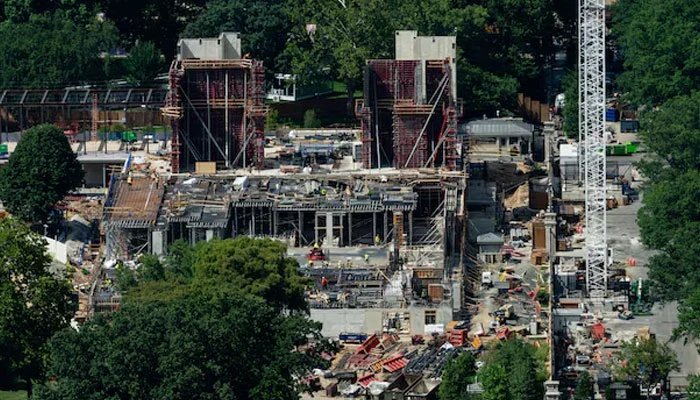
    A federal appeals court in the United States has ordered the Trump administration to halt construction on a $400 million ballroom at the White House, built on the site of the former East Wing. The ruling presents a significant setback for former President Donald Trump as it tests the extent of executive authority over presidential property.

    The Court of Appeals for the District of Columbia Circuit, in a 2-1 decision, emphasized that “each president is a temporary tenant, not the owner, of the White House,” and cannot make major alterations without congressional approval. This decision upholds an injunction granted to the National Trust for Historic Preservation, which challenged the administration last year after demolition of the East Wing and the start of the ballroom’s construction—an 88,360-square-foot project—without congressional approval.

    The majority argued that the decision on whether to build a large ballroom is a matter for Congress, not executive self-help, and temporarily paused the project while allowing the Trump administration to pursue further appeals, including to the Supreme Court.

    Trump, who has defended the project by claiming it’s essential for national security, posted on Truth Social that the court’s ruling was “horrendous” and politically motivated. He asserted the structure would include bomb shelters, medical facilities, and defenses against drones and missiles—integrated into a complex security system. Trump also called for the decision to be overturned, stating that the project is a major security upgrade.

    Brent Leggs, president of the National Trust, praised the ruling as a victory for the country’s historic sites and the public’s right to voice their opinions about treasured landmarks, including the White House.

    The dispute arose after lower courts, including a judge appointed by former President George W. Bush, repeatedly blocked surface construction while allowing underground work. The administration argued the project was necessary for hosting large events and ensuring White House safety—an effort that fits within a broader pattern of Trump’s attempts to reshape Washington’s iconic government architecture.

    In a related case, a judge recently ordered the removal of Trump’s name from the exterior of the Kennedy Center, citing illegal placement.

    During the appeals process, the Justice Department’s attorney contended that the courts shouldn’t intervene in a privately funded project and that national security concerns should take precedence over the National Trust’s aesthetic preferences. The appellate judges clarified that, while their ruling delays ground-level work, it doesn’t permanently block the project, emphasizing the importance of congressional approval for significant alterations.

    One dissenting judge, Neomi Rao—appointed by Trump—criticized the court’s decision and argued that the project should be able to proceed, asserting the injunction was an overreach of judicial authority. Rao contended that the administration’s security features—costing more than initially projected and now doubled in price—should not be hindered by judicial rulings.

    Overall, the case underscores ongoing tensions over presidential power, historic preservation, and national security considerations at one of America’s most symbolic sites.

  • Dubai unveils innovative floating arts museum

    Dubai unveils innovative floating arts museum

    Sheikh Mohammed bin Rashid Al Maktoum reviews scale model of the Dubai Arts Museum (DUMA). — Dubai government

    Dubai is gearing up to introduce another iconic feature to its skyline—an attraction that will float on water.

    The Dubai Arts Museum (DUMA), announced by Sheikh Mohammed bin Rashid Al Maktoum, UAE’s vice president and prime minister, and Dubai’s ruler, is planned to be built on an island at the center of Dubai Creek.

    Unlike traditional museums fixed on land, DUMA’s design integrates the creek’s waters into its architecture. Designed by renowned Japanese architect Tadao Ando, the project seeks to blend sleek modernism with Dubai’s lively cultural scene.

    Sheikh Mohammed called the project “a reflection of Dubai’s artistic soul and cultural spirit,” underscoring its importance in fostering the city’s creative scene.

    Positioned on the creek, DUMA isn’t just a museum; it’s a bold statement of Dubai’s desire to redefine how art interacts with urban environments.

    The development is a joint effort between the government and private enterprise, with Emirati businessman Abdullah Al Futtaim and his son Omar leading the initiative. Sheikh Mohammed highlighted their role as “a shining example of how private business can significantly contribute to Dubai’s cultural and creative economy.”

    The museum will feature both modern and classic artworks, with architecture designed to function as a welcoming public space, a scenic promenade, and a cultural hub where residents and visitors can enjoy unique views of Dubai Creek.

    Construction is expected to start later this year, with a timeline to complete the project within three years.


  • Trump Grooves to His Beat Amid White House Demolition Rage

    Trump Grooves to His Beat Amid White House Demolition Rage

    President Donald Trump dismissed backlash on Tuesday over the partial demolition of the White House to make way for a new ballroom, claiming the noise from construction was “music to my ears.” Critics, including Democrats, accused him of showing disrespect to the historic residence after images surfaced of excavators tearing away the East Wing’s facade.

    As journalists from AFP watched the demolition continue throughout Tuesday, Democratic leaders also criticized him for advancing a $250 million renovation plan amidst a backdrop of a government shutdown and rising living costs. Trump, 79, emphasized that the renovation was necessary and insisted that taxpayers wouldn’t bear any of the costs. He mentioned that he is partially funding the project himself, with private and corporate donors covering the remaining expenses.

    Last week, Trump hosted a lavish dinner for donors, featuring guests from major tech companies, though the White House has yet to release a guest list or financial details. The White House responded dismissively to the criticism, describing it as “manufactured outrage” by “unhinged leftists and their Fake News allies” over the addition of a large, privately funded ballroom.

    They defended the project as a “bold and essential” upgrade that continues a tradition of presidential renovations intended to keep the White House a symbol of American excellence. The White House also highlighted previous renovations by past presidents, including Barack Obama’s upgrade of the tennis court into a full basketball court.

    In his second term, Trump has overseen a significant overhaul of the White House, including paving over the Rose Garden, where he previously held Republican senator meetings. Democrats sharply condemned the demolition, equating it to Trump’s broader efforts to overhaul the federal government and target his political rivals. Hawaii Senator Mazie Hirono remarked, “The demolition of the East Wing feels very symbolic of what Trump is doing to our democracy. He’ll claim to protect it, then tear it apart before your eyes.” Elizabeth Warren added that amidst America’s rising costs of living, Trump appears to be deaf to the concerns while bulldozing part of the White House to build a new ballroom.

  • Architecture Award Highlights Innovative Solutions for Global Challenges

    Architecture Award Highlights Innovative Solutions for Global Challenges

    Seven architecture projects that protect communities from climate hazards, conserve cultural heritage, and develop affordable housing were honored at the Aga Khan Award for Architecture ceremony held at the Kyrgyz National Philharmonic Hall.

    His Highness the Aga Khan attended the event alongside His Excellency Adylbek Kasymaliev, Chairman of the Cabinet of Ministers of Kyrgyzstan, to oversee the proceedings.

    The selected projects, sharing a prize of $1 million, showcase architecture’s ability to tackle some of humanity’s most urgent issues. Notable designs include flood-resistant bamboo homes that can be moved when river courses change; a community-driven urban heritage restoration project; and a repurposed oil company site transformed into a vibrant public space with a community center.

    Attendees included distinguished winners, government officials, architecture specialists, the Award’s Steering Committee and Master Jury members, and other prominent guests. This celebration marks the close of the Award’s 16th triennial cycle.

    Throughout the week in Bishkek, a series of events gathered architects, urban planners, policymakers, and community leaders to explore how architecture and city planning can be catalysts for positive change worldwide.

    One of the award recipients was Vision Pakistan, based in Islamabad, which won recognition for its innovative, socially impactful, and eco-conscious design. The project features a multi-story building with lively facades inspired by Pakistani and Arab craftsmanship, hosting a charity dedicated to empowering youth through vocational training.

    The jury praised the building for offering a new educational approach, filling spaces with light, creating interesting spatial experiences, and maintaining cost efficiency.

    Founded in 1977 by the late His Highness Prince Karim Aga Khan IV, the Aga Khan Award stands out among architectural honors. It emphasizes projects that combine design excellence with tangible improvements to quality of life, highlighting the roles of municipalities, builders, clients, artisans, and engineers alongside architects.

    Since inception, the award has recognized over 130 projects globally, influencing architectural dialogue within the Muslim community and beyond.

    His Highness stressed the vital role of architects today: “With today’s climate fluctuations, architects have a profound responsibility—and a unique opportunity—to design structures that buffer these changes and protect the most vulnerable. Flexibility to adapt to unforeseen circumstances was central to this cycle’s jury considerations,” he said.

    He further explained that in addition to environmental justice, architecture holds great promise for advancing social justice. “Affordable housing, access to green spaces, education, healthcare, and cultural preservation all depend on the creativity of architects and wise urban planning,” he pointed out. Buildings, he noted, can elevate living standards, inspire reverence, and provide solutions for future generations.

    “Exceptional architecture directly addresses critical development challenges and helps create an inclusive, safe, and dignified world for all,” he concluded. Earlier that day, His Highness also took part in a special stamp cancellation ceremony, commemorating the awards with a postage stamp issued by Kyrgyzstan’s postal service.

  • Trump’s Journey: From Gold Dreams to $200M Ballroom Powerhouse

    Trump’s Journey: From Gold Dreams to $200M Ballroom Powerhouse

    WASHINGTON: Donald Trump is making unprecedented efforts to reshape the architecture of Washington, from a gold-accented White House to extensive city renovations. Earlier this month, the former real estate mogul announced his plans for a $200 million ballroom at the White House, emphasizing his pride in creating and building large-scale projects. Known for his glittering hotels and casinos, critics argue that his White House upgrades reflect a similar flamboyant style, reminiscent of his Florida resort, Mar-a-Lago, with features such as the newly paved Rose Garden decorated with picnic tables and umbrellas.

    During his first term, stylist Peter York called his aesthetic “dictator chic,” comparing it to the decor favored by foreign autocrats. Recently, Trump unveiled broader ambitions for the nation’s capital, linking his efforts to beautify Washington with a tough-on-crime approach, including deploying troops to the city—a Democratic-run area—where he also held a military parade on his birthday.

    Peter Loge, director at George Washington University’s School of Media, commented, “This is a demonstration of power. Trump often puts his name on bibles and casinos, so the logic follows—except now he’s affecting lives, the nation’s reputation, and its democratic legacy.”

    In the 225-year history of the White House, Trump is among the few presidents to undertake such extensive renovations. Past updates include Franklin Roosevelt’s 1934 Oval Office construction, Harry Truman’s overhaul completed in 1951, and John F. Kennedy’s 1961 creation of the modern Rose Garden. The White House Historical Association notes that the building remains a dynamic symbol of American democracy, evolving over time as a national landmark.

    Stewart McLaurin, the association’s president, stated that while renovations have historically attracted criticism for costs and preservation concerns, they have ultimately become integral to the White House’s identity. However, Trump’s current modifications are among the most extensive in nearly a century. His recent additions include gold trim, decorative objects, and a transformed Rose Garden turned patio, which he justified as a response to women’s high heels sinking into the grass. Visitors now often hear music from his playlist emanating from the patio, which also features oversized U.S. flags and a giant mirror on the West Wing colonnade—allowing Trump to see himself leaving the Oval Office.

    Trump claims to finance these upgrades himself, but larger projects like the new East Wing ballroom will rely on outside funding. The White House indicated the $2 billion plan to revamp Washington, including a marble-clad Kennedy Center for the Performing Arts and city infrastructure repairs, will seek support from Trump and patriotic donors. Meanwhile, Trump envisions a gleaming capital similar to Saudi Arabia’s skyline, with plans for extensive beautification, graffiti removal, and infrastructure repairs, such as fixing roads and barriers.

    His political rhetoric also involves a crackdown with the National Guard, which he has threatened to extend to other cities like Chicago. He has publicly suggested that Americans might “prefer a dictator,” despite denying any authoritarian tendencies. His imagery is also on display in the form of enormous posters of his face in prominent government building entrances, including the Department of Labor.

    Secretary Lori Chavez-DeRemer extended an invitation to Trump, saying, “Mr. President, I invite you to see your big, beautiful face displayed on a banner outside the Department of Labor.”

  • Trump plans $200M White House ballroom to cement legacy

    Trump plans $200M White House ballroom to cement legacy

    WASHINGTON: Donald Trump is making an unprecedented effort to leave a distinctive architectural footprint in Washington, D.C., with ambitions of transforming the city, much like he did with his properties elsewhere. From a white House infused with gold accents to a lavish redesign of the capital, Trump’s vision includes bold, opulent changes intended to make an impact.

    Earlier this month, the former real estate mogul boasted about his talent for construction, revealing plans for a $200 million ballroom at the White House—arguably his most ambitious project yet. Trump’s wealth was built through the development of high-end hotels and casinos bearing his name, and critics say his White House renovations echo that flamboyant style.

    Certain sections now evoke the feel of his opulent Mar-a-Lago estate in Florida, especially the reimagined Rose Garden, which features picnic tables, yellow and white umbrellas, and freshly paved paths. During his first term, British style commentator Peter York dubbed his aesthetic “dictator chic,” comparing it to the decor favored by foreign autocrats.

    He has also laid out broader plans to revamp the entire city, explicitly linking his beautification efforts to stricter law enforcement, including deploying troops to the city—controlled by Democrats—where just two months ago he led a military parade for his birthday. Political analyst Peter Loge commented, “This is a show of power escalation. It’s typical of him—branding bibles, casinos, and now, playing with lives and national reputation. It’s about legacy and control.”

    In the history of the White House, major renovations have occurred multiple times. Franklin Roosevelt built the current Oval Office in 1934, Harry Truman led a comprehensive overhaul finished in 1951, and John F. Kennedy developed the modern Rose Garden in 1961. According to the White House Historical Association, the building remains a “living symbol of American democracy, evolving with the nation.” Stewart McLaurin, president of the association, noted that historical changes often drew criticism over costs and preserving the building’s integrity but emphasized that many have become essential to its identity. Trump’s modifications are the most extensive in nearly a century.

    Since returning to office, Trump has added lavish touches—gold trim and ornaments in the Oval Office, which foreign leaders have publicly complimented. He transformed the grass of the Rose Garden into a patio, citing sinking heels as his motivation, and installed a sound system, with music often echoing from it. His additions also include two large American flags on the White House lawns and a giant mirror on the West Wing colonnade, enabling him to see himself as he departs the Oval Office.

    Trump asserts that he is personally financing these upgrades. However, his larger projects, such as the new East Wing ballroom scheduled to be completed before his term ends in January 2029, are expected to be funded through donations, with estimates reaching $2 billion for wider improvements across Washington.

    During a May visit to Saudi Arabia, Trump admired the city’s gleaming skyline, signaling his interest in creating a similarly dazzling capital. His plans include a marble-finished redesign of the Kennedy Center and efforts to clean up graffiti, repair road barriers, and lay fresh asphalt.

    Additionally, Trump’s vision for Washington involves a significant security presence—threatening to extend deployment of the National Guard to other cities like Chicago—and he has openly speculated about the possibility of Americans “maybe liking a dictator,” despite denying such intentions. His face now looms large above the city, showcased on posters at government departments, symbolizing his ongoing influence and desire to imprint his image on the nation’s capital.

  • Hagia Sophia Readies for Future Earthquake in Istanbul

    Hagia Sophia Readies for Future Earthquake in Istanbul

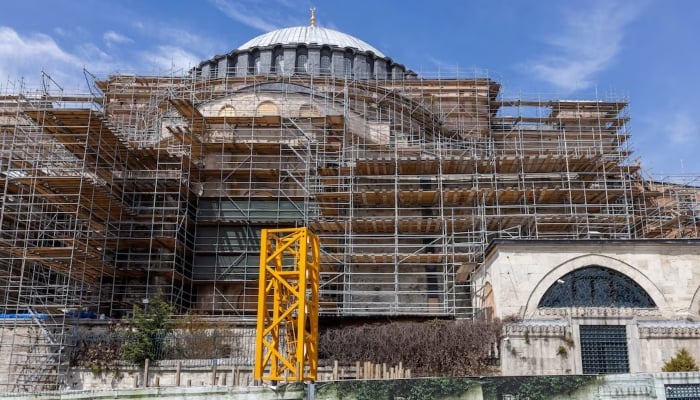
    An aerial view of scaffolding on the Hagia Sophia Grand Mosque in Istanbul, Turkey, taken on April 14, 2025. — AFP

    ISTANBUL: The Hagia Sophia in Istanbul is no stranger to transformations. Over its long history, this architectural masterpiece has transitioned from a church to a mosque, then to a museum, and back to a mosque once more.

    The current renovation project is designed not only to preserve the marvelous structure that has stood for 1,488 years but also to fortify it against the next earthquake that may strike this ancient city.

    From a distance, its magnificent dome, radiant stone, and elegant minarets continue to grace the Istanbul skyline, as they have for centuries.

    However, as visitors approach, they notice scaffolding enveloping its eastern facade and one of the minarets.

    While “the renovations do somewhat disrupt the exterior atmosphere” and “the scaffolding detracts from the monument’s aesthetics… repairs are crucial,” commented Abdullah Yilmaz, a tour guide.

    Hagia Sophia, a UNESCO World Heritage Site, is Turkey’s most frequented landmark. However, it “constantly faces various challenges,” noted Hasan Firat Diker, an architecture professor involved in the restoration efforts, in an interview with AFP. This is why the structure has undergone numerous repairs throughout the centuries.

    A ‘Global’ Restoration

    This renovation marks the first instance of a comprehensive restoration, affecting the dome, walls, and minarets, Diker explained.

    Scaffolding on the Hagia Sophia Grand Mosque in Istanbul, captured on April 14, 2025. — Reuters
    Scaffolding on the Hagia Sophia Grand Mosque in Istanbul, captured on April 14, 2025. — Reuters

    Upon its completion in AD 537, built on the site of previous churches, the Hagia Sophia became a beacon of Byzantine architectural excellence during the era when the city was known as Constantinople.

    It functioned as a church until the city fell to the Ottomans in 1453, and it was then converted into a mosque.

    In 1935, Mustafa Ataturk, the architect of modern Turkey who transformed the nation into a secular state, designated the building as a museum.

    This status persisted until 2020, when President Recep Tayyip Erdogan, a practicing Muslim associated with an Islamist-rooted party, restored its function as a mosque.

    Prepared for the Next Earthquake

    The Hagia Sophia, like many structures in this historically rich city, is not only influenced by its rulers but also faces the persistent threat of earthquakes. The last significant quake occurred in 1999.

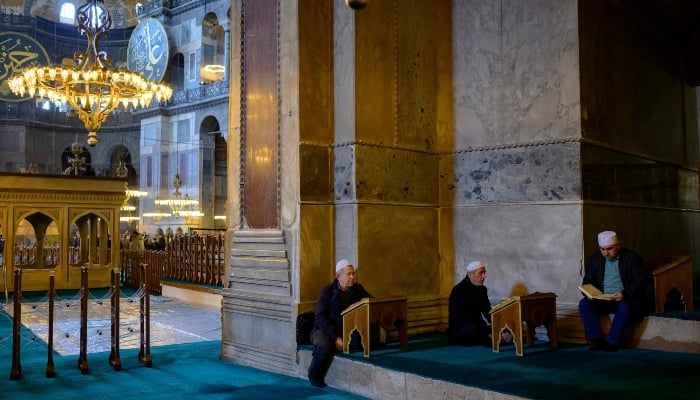
    Visitors reading the Holy Quran in Hagia Sophia Grand Mosque, April 14, 2025. — AFP
    Visitors reading the Holy Quran in Hagia Sophia Grand Mosque, April 14, 2025. — AFP

    Located just a few kilometers from a seismic fault line, Hagia Sophia does not adhere to modern earthquake safety standards. The dome collapsed during an earthquake in 558, and the building has since suffered damage from subsequent quakes.

    The primary objective of the ongoing restoration is to “strengthen the structure in preparation for the next major earthquake,” ensuring that the ancient monument “endures with minimal damage,” stated Ahmet Gulec, a member of the scientific committee overseeing the project.

    At this stage, experts are examining the dome to devise the best strategies for reinforcement and restoration, according to Diker.

    The interior currently remains free of scaffolding, but eventually, four large pillars will be installed inside to support a platform for specialists to repair the dome’s paintings and mosaics.

    “Once you’re inside, it’s amazing,” exclaimed Ana Delgado, a 49-year-old tourist from Mexico, as she absorbed the lively ambiance filled with laughter and conversation following afternoon prayers.

    “It’s enchanting,” added her friend, Elias Erduran, who hails from the Dominican Republic.

    A Popular Destination

    Last year, Hagia Sophia welcomed a remarkable 7.7 million visitors.

    Visitors admiring Byzantine mosaics in Hagia Sophia Grand Mosque on April 14, 2025. — AFP
    Visitors admiring Byzantine mosaics in Hagia Sophia Grand Mosque on April 14, 2025. — AFP

    Approximately 2.1 million were international tourists, many of whom paid 25 euros for an entry ticket, contributing to substantial annual revenue.

    Officials are hopeful that the construction work won’t discourage people from visiting during this extensive renovation, which is expected to last several years. The total cost of the project has not been disclosed.

    “Our aim is for visits and prayers to continue throughout the renovation,” Gulec emphasized.

    Even if some visitors are disappointed that they cannot fully appreciate the building’s grandeur, the key takeaway is that “one day, my children will also get to experience the beauty of Saint Sophia,” said Yana Galitskaya, a 35-year-old visitor from Russia.