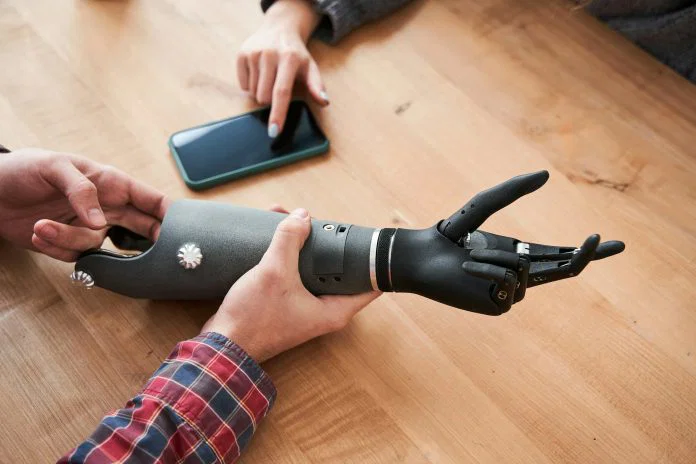
Using a robotic arm or prosthetic hand might seem simple, but it actually requires very precise control. Even basic tasks, like picking up an egg, need the right amount of force. Applying too little pressure causes the egg to slip, while too much pressure shatters it.
For individuals using prosthetic devices or recovering from a stroke, achieving this fine motor control can be especially challenging. One major reason is that they often receive less sensory feedback than when using natural limbs. They may not fully perceive the amount of force they’re applying or how their movements are changing in real time.
Researchers have been working on solutions for years. Some approaches involve vibrations, sounds, or visual cues to substitute for lost sensations. While these methods can be helpful, they typically require additional equipment and still fall short of replicating the feeling of natural touch.
Recently, scientists at the Swiss Federal Institute of Technology Lausanne (EPFL) tested a much simpler idea. Instead of trying to recreate missing sensations, they explored whether providing immediate feedback about success during movement could help the brain learn more effectively.
They conducted five studies with 106 participants, including 18 with chronic stroke. In these experiments, participants followed a moving target on a screen for seven seconds, controlling a cursor by either squeezing a force sensor or contracting their biceps.
During the task, the target’s color shifted continuously based on performance: green meant they were doing well, while red indicated poor control. The system adjusted in real time to keep the feedback meaningful, ensuring the challenge remained appropriate. In some control tests, the colors changed randomly, and participants were told to ignore them.
The results were impressive. Just under 20 training sessions with the color feedback led to immediate improvements in motor control. Even after removing the color cues, participants continued to perform better.
The system proved especially effective when other forms of feedback were limited. For example, when participants could only see the cursor one-third of the time, the benefits of the color feedback were about three times more significant than when they had full visibility.
Similar improvements were observed in tasks involving muscle-controlled interfaces. The less realistic touch feedback participants experienced, the more they relied on the color cues.
Stroke patients also showed progress when visual feedback was restricted, but their gains didn’t last once training stopped. The researchers suggest this could be due to the relatively short training period or the impact of brain injuries on forming motor memories.
The studies also found that individuals more naturally responsive to rewards tended to benefit more from this approach. This indicates that, in the future, it might be possible to predict which patients will respond best to this type of training.
The scientists believe this simple method could be integrated into many existing prosthetic, rehabilitation, and human-machine systems. By leveraging the brain’s innate ability to learn from rewards, a straightforward color change could help users regain control of prosthetics more quickly, easily, and at a lower cost.