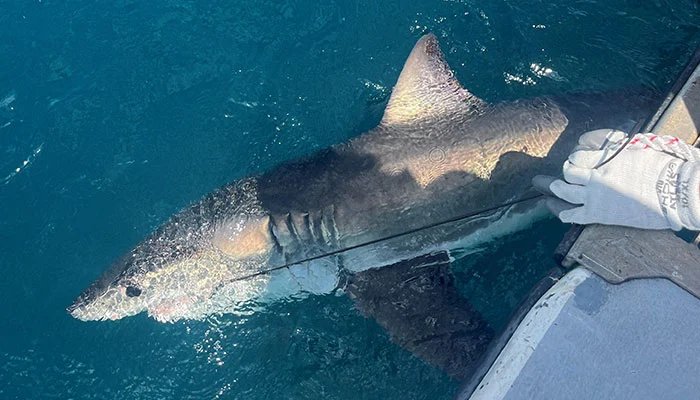
Researchers from the University of Delaware are exploring whether sharks can serve as mobile, real-time ocean data collectors. They attach small electronic sensors, called CTD tags, to sharks—these measure water temperature, salinity (via electrical conductivity), and depth as the animals swim and dive.
The idea is that since sharks are plentiful, widely spread, and easier to access than many protected marine mammals, they could provide valuable data for hurricane prediction. Traditionally, shark tagging has only tracked their movement and habitat use, but now scientists aim to gather data most relevant to hurricane development, like the temperature of the upper ocean layer, which fuels storm strength.
When these highly migratory sharks move closer to coastlines from wintering grounds further out in the Atlantic in May, researchers deploy baited lines about 30 to 40 miles offshore aboard research vessels. Once a shark strikes the bait, the tags are secured to its dorsal fin with materials designed to corrode and fall off naturally over time. Prior to release, each shark undergoes a health check to ensure stress or injury don’t skew data.
The tags transmit data via satellite when the shark surfaces. Because sharks surface regularly, this method allows for near-real-time ocean condition monitoring. The team favors species like shortfin mako, blue sharks, smooth hammerheads, and juvenile great whites, which tend to surface frequently enough for effective data transmission.
The entire tagging operation is swift, usually less than five minutes, and is conducted under strict animal care protocols to minimize stress. The process has been compared to a pit crew working quickly and efficiently in a car race. Notably, the project differs greatly from exaggerated portrayals of sharks in movies—most sharks behave calmly and don’t pose a threat to humans.
If successful, these shark-derived data could enhance hurricane forecasts, providing communities along the U.S. East Coast from North Carolina to Massachusetts with better information on storm strength and progression. While most people are unlikely to encounter sharks in the wild, they are extraordinary animals perfectly adapted to ocean life, and leveraging their natural behavior could lead to beneficial scientific advancements.