China’s exports of household appliances, excluding color TVs, showed signs of recovery during the first half of the year, increasing by 4.6 percent compared to the previous year to reach $71.8 billion, according to customs data. Nonetheless, industry insiders warn that the global economic environment remains tough, and overseas consumer demand has yet to fully bounce back.
The growth rates of various appliance categories presented a mixed picture in the first six months. While cooling appliances, health and environmental products, and small kitchen appliances experienced rapid growth, exports of some larger appliances and traditional low-end categories declined year-over-year.
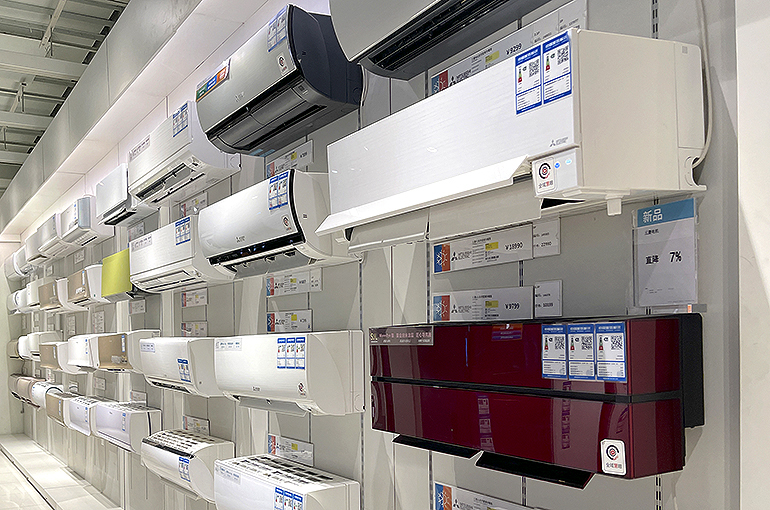
As the top export category by value, air conditioners faced pressure from a high comparison base last year and other factors. The total export volume dropped 9.7 percent in the first half, totaling 51.4 million units. Exports to Europe fell by 4.2 percent to 13.3 million units.
However, an unusually hot summer caused shortages of portable air conditioners in parts of Europe, including several Western European nations. Customs data indicate China’s exports of home air conditioners to the European Union increased by 2.4 percent in the first half compared to the same period last year, reaching $1.5 billion, with export volume rising 4.6 percent to nine million units. Notably, exports of portable air conditioners to the EU surged, with values jumping 66 percent to $250 million and volume increasing 62.9 percent to 2.1 million units.
Global economic conditions remain fragile, and overseas consumers are still cautious about spending, said Yu Xuehui, founder of a small home appliance export platform in Ningbo. Consequently, home appliance exports in the first half should not be viewed as having fully bottomed out or recovered yet.
Leading manufacturers are focusing on expanding in emerging markets and Europe. Recently, Midea established a subsidiary in South Africa, with plans to start manufacturing washing machines there later this year. Additionally, the European Heat Pump Association visited Haier’s headquarters to explore its large heating and cooling business.
Experts note that China’s home appliance export challenges include product diversification, regional disparities, and slowing growth. Exports of traditional air conditioners and low-end small kitchen appliances are declining, while growth increasingly depends on eco-friendly appliances and premium small appliances. The North American market share continues to dwindle, which presses companies to diversify sales channels. A swift return to rapid export growth is unlikely; instead, companies should seize opportunities in emerging markets and prioritize high-value product categories to counterbalance weaker traditional markets and low-end products.
Air conditioner exports faced particular pressure in the first half, according to Li Xuefei, an analyst at China Industrial Online. Orders from the Middle East sharply declined amid geopolitical conflicts, while high inventory levels in Eastern Europe and Latin America dampened new orders. Conversely, demand for portable air conditioners in Western Europe rose due to hot weather, leading to a 70 percent year-over-year increase in shipments. Nevertheless, inventories of split air conditioners remain relatively high.