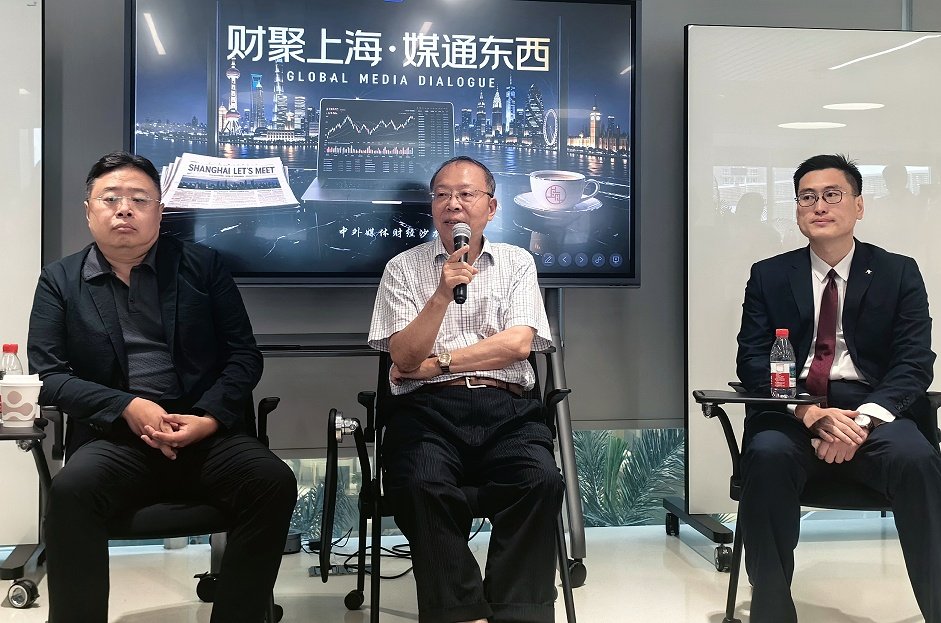
As investment and profits in the hard-tech sectors continue to rise, China is actively seeking a new growth trajectory that emphasizes the use of institutional measures to enable a wider range of traditional industries and consumers to benefit from this expansion. Several experts highlighted this approach during a Global Media Dialogue event held in Shanghai on August 28.
Data shows that investment in China’s high-tech industries increased by 5 percent in the first seven months compared to the previous year. Meanwhile, nationwide fixed-asset investment declined by 6.7 percent.
Emerging industries, particularly those driven by hard technology, now make up approximately 20 percent of the country’s total economy. However, these sectors have a less direct impact on employment compared to real estate and automobile industries, according to Shao Yu, a professor at Fudan University and chief economist at Orient Securities.
The ongoing industrial transformation is not unique to China but reflects a broader global trend as the world’s technology cycle evolves. From a long-term perspective, the global economy still faces a relatively low point, and a breakthrough in technological innovation has yet to fully materialize.
Using the United States as an example, Xu Mingqi, a researcher at the Shanghai Academy of Social Sciences, explained that U.S. economic growth was 2.1 percent in the first quarter and 1.5 percent in the second quarter. While the U.S. remains a leader in artificial intelligence innovation, this has not translated into widespread rapid growth across the entire economy.
China faces a similar challenge. Xu noted that boosting growth across all traditional industries is exceedingly difficult. As a result, investment and development are progressing more in emerging sectors, but workers in older industries often see their incomes lag behind. We are currently transitioning between traditional and new growth engines. Xu estimates that the widespread adoption of AI could still take another decade.
Growth Sharing
Both Shao and Xu emphasized the importance of a dual approach: empowering existing industries and providing support during the economic transition.
At the industry level, Shao recommended that high-tech firms should play a more significant role in revitalizing traditional businesses. By leveraging technological expertise and financial strength, these companies can help traditional firms improve their efficiency through supply chain collaborations.
Regarding support for the transition, Xu pointed out that countries with robust fiscal resources are better positioned to assist industries and workers affected by shifting growth drivers. This can help mitigate the economic disruptions caused by structural changes. China’s relatively strong fiscal and administrative capabilities position it well in this regard, and overall economic growth prospects remain cautiously optimistic.
On the consumer side, Xu suggested that policymakers should prioritize enhancing public services such as elder care and childcare in the short term, alongside reforming the social security systems. Longer-term, adjustments to income distribution and tax policies should also be considered.
As social security coverage improves gradually, many households’ savings reserves—accumulated for emergencies like retirement and medical expenses—could be mobilized and directed toward consumption, further fueling economic activity.