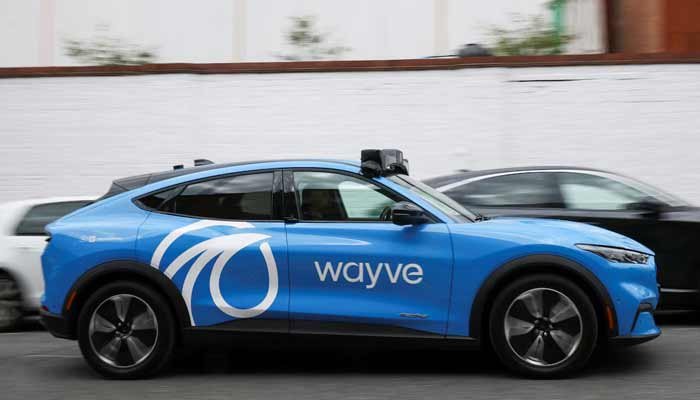
Uber announced that starting Monday, users can register for a chance to ride in London’s first robotaxis once regulatory approval is granted, which is expected in the upcoming months. These autonomous vehicles will rely on AI technology developed by British startup Wayve to navigate the city streets. Initially, trained human operators will be seated behind the wheel, overseeing the system, according to Uber.
While robotaxis are already in operation in U.S. cities such as San Francisco, Phoenix, and Los Angeles, as well as in China, Europe has been slower to adopt this technology due to stricter local regulations and the region’s more intricate historic street layouts.
Uber emphasizes that deploying autonomous taxis is a strategic goal as it competes with rivals to implement advanced driverless technology, which offers benefits like more efficient travel and potential cost reductions.
Kaity Fischer, Wayve’s Vice President of Commercial and Operations, stated in an interview, “This marks the first time the general public in the UK will be able to hail an autonomous vehicle.”
The self-driving vehicles, branded Uber x Wayve, are Ford Mustang Mach-E models equipped with surround cameras and radar sensors that gather data processed onboard. Fischer mentioned that these vehicles have been tested on London roads since 2018.
During a test ride on Friday, Reuters observed the vehicle successfully handling heavy London traffic, including buses pulling in and out, cyclists weaving through cars, and pedestrians crossing streets.
Customers matched with a Wayve autonomous ride will have the option to accept or switch to a traditional driver-operated service, without any additional cost, Uber’s Global Head of Autonomous Mobility Operations, Annie Duvnjak, explained.
The British government indicated in 2025 that it would expedite pilot programs for driverless taxis this year, with a broader rollout possible next year. Before launching, these services must be approved by local authorities, such as Transport for London.
Transport Secretary Heidi Alexander highlighted the potential of self-driving technology to revolutionize UK travel by reducing road accidents, spurring economic growth, and creating highly skilled jobs. She lauded Wayve as a notable success story and expressed confidence in the partnership with Uber.
Meanwhile, Waymo, a subsidiary of Alphabet (Google’s parent company), is also testing autonomous vehicles in London and plans to launch commercial services there this year. Uber and rival Lyft will also test autonomous cars from Chinese tech firm Baidu’s Apollo Go platform in London this year.
Wayve, which teamed up with Uber in 2024, stated that its technology can be adapted across multiple vehicle types, allowing for rapid scaling. The company raised $1.5 billion in February, with new investments from Uber, Mercedes-Benz, Stellantis, and Nissan, bringing its valuation to $8.6 billion.