Japan’s Population Distribution in 2025: A Closer Look at the Seven Major Regions
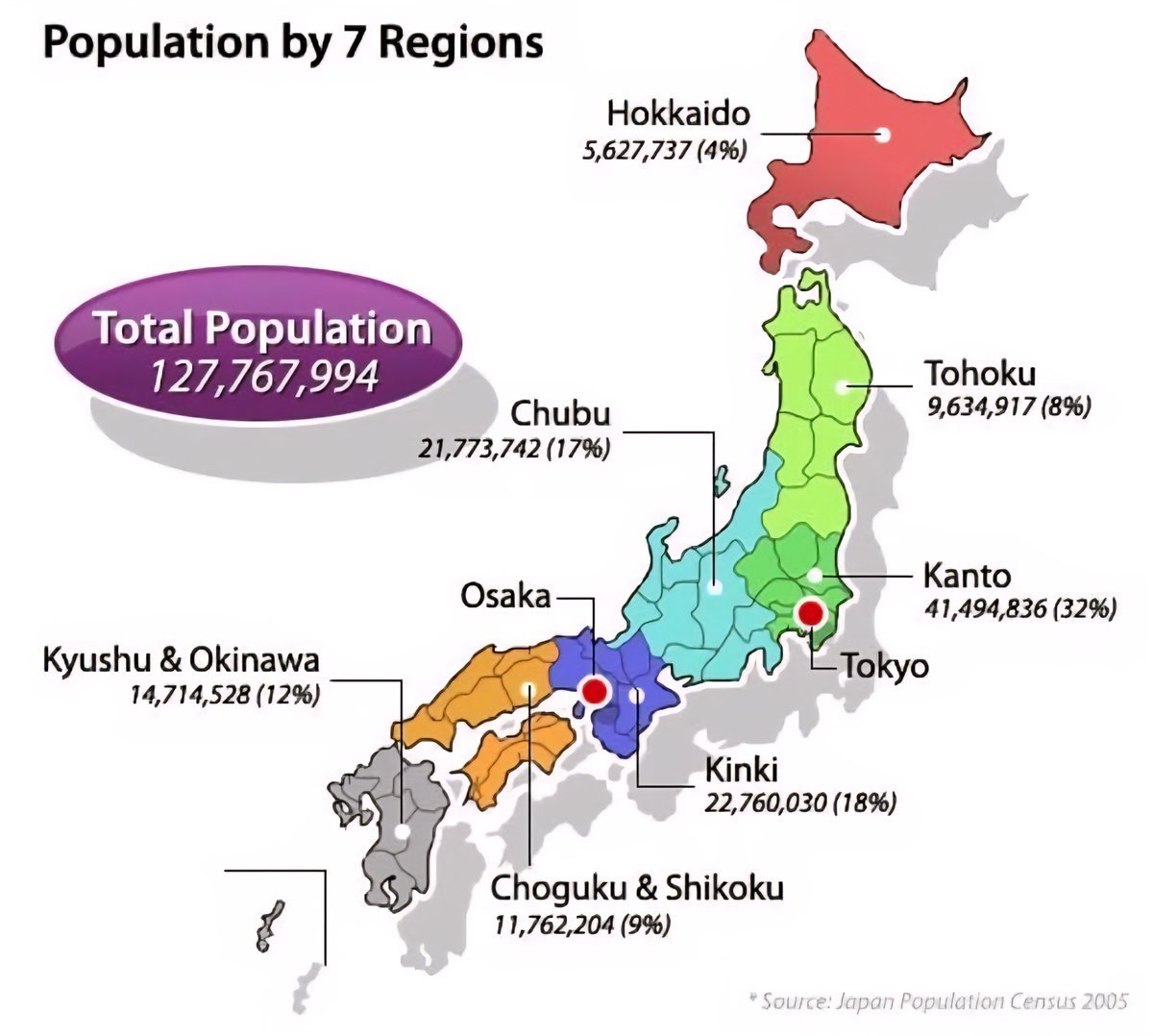
Japan, a nation renowned for its blend of tradition and innovation, continues to experience significant demographic shifts. As of 2025, the country’s population remains concentrated in its major regions, though the distribution has evolved over the past two decades. Here’s a detailed breakdown of Japan’s population by its seven primary regions, highlighting their current demographic significance.
Kanto Region: The Population Powerhouse
The Kanto region remains the most populous area in Japan, with an estimated 43.2 million residents, accounting for approximately 32% of the national population. This region, home to the bustling capital, Tokyo, continues to attract people due to its economic opportunities, educational institutions, and vibrant urban lifestyle. The dense metropolitan area is a core hub for finance, commerce, and innovation, making it a magnet for both domestic and international migration.
Kinki Region: The Cultural and Economic Center
The Kinki region, which encompasses Osaka, Kyoto, Kobe, and other key cities, has a population of approximately 23.5 million. Representing about 17.5% of Japan’s total population, Kinki is renowned for its rich history, cultural sites, and regional commerce. Although its growth has slowed, it still remains a vital economic and cultural nucleus, especially with Osaka’s role as a major industrial and culinary hub.
Chubu Region: The Industrial Heartland
With roughly 22.1 million residents, the Chubu region accounts for nearly 16.5% of Japan’s population. This area includes major industrial cities like Nagoya, renowned for automobile manufacturing and advanced technology. Chubu continues to be a vital manufacturing engine, contributing significantly to Japan’s export economy.
Kyushu & Okinawa: The Southern Growth Center
Home to approximately 15 million inhabitants, this region represents about 11.5% of Japan’s population. Kyushu, known for its volcanic landscapes and unique cultural traditions, and Okinawa, famed for its subtropical climate and tourism, are experiencing steady population growth driven by their appeal as tourist destinations and their expanding educational and healthcare sectors.
Chugoku & Shikoku: The Historical and Agricultural Heartlands
Combined, these two regions are home to near 12 million residents, making up roughly 9% of the country’s population. Chugoku, featuring cities like Hiroshima, and Shikoku, known for its picturesque landscapes and traditional crafts, are witnessing moderate demographic shifts, often characterized by an aging population and community-based revitalization efforts.
Tohoku Region: The Traditional North
The Tohoku region now houses around 9.4 million people, accounting for about 7% of Japan’s population. Known for its rural landscapes, rice paddies, and historic sites, Tohoku faces demographic challenges due to youth migration to urban centers. However, regional initiatives are focused on attracting tourism and local entrepreneurship to stabilize population decline.
Hokkaido: The Northern Frontier
Hokkaido, Japan’s northernmost region, maintains a population of approximately 5.8 million, representing around 4.5% of the nation’s total. While historically challenged by harsh climate and remote location, Hokkaido has seen a minor uptick in migration, especially in its tourist and agricultural industries, thanks to targeted regional development programs.
Japan’s evolving demographic landscape underscores the importance of regional development and urban planning in shaping the nation’s future. As population patterns continue to shift, policymakers are increasingly focusing on sustainable growth strategies to balance urban vitality with rural revitalization. From the bustling streets of Tokyo to the serene landscapes of Hokkaido, each region’s demographic trajectory will play a critical role in Japan’s social and economic evolution through 2025 and beyond.