Imagining a Reimagined South Asia: What If Pakistan Had Divided After 1971?
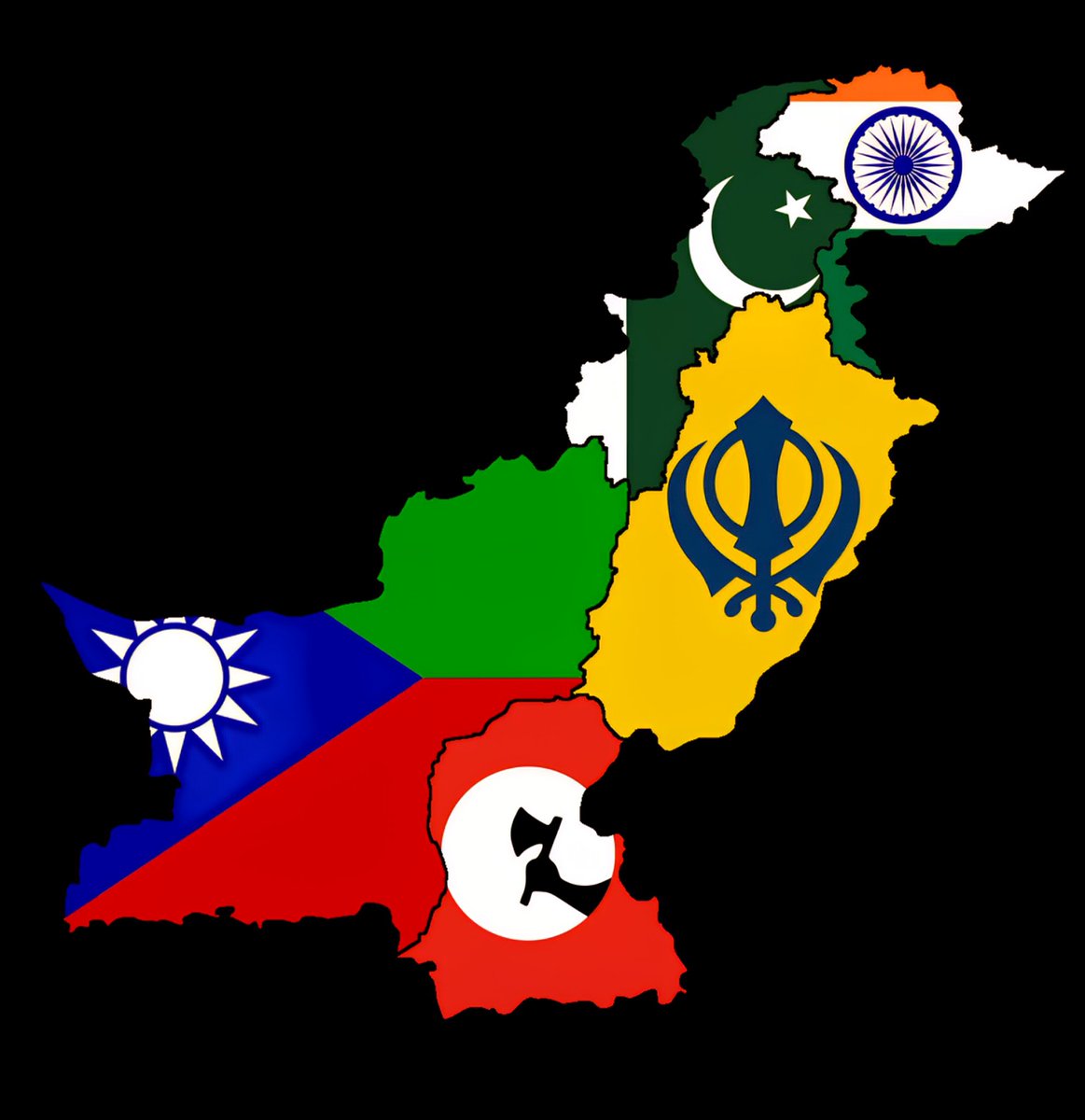
1. The Birth of New Nations in South Asia
Picture a scenario where, following the 1971 conflict, Pakistan didn’t remain a singular nation. Instead, the country fragments into multiple independent states based on ethnic, linguistic, and regional lines. The eastern part of Pakistan, which later became Bangladesh, had already achieved independence in 1971, but let’s consider further divisions within western Pakistan. Some regions might have emerged as separate entities—perhaps a Baluchistan republic, a Sindh nation, or even smaller microstates centered around local tribes and communities.
2. Altered Political Dynamics in South Asia
With multiple independent states in South Asia, the regional political landscape would shift dramatically. Instead of a unified Pakistan, the subcontinent would see a patchwork of smaller nations forming alliances, rivalries, and new diplomatic relationships. India, which would have “annexed” Kashmir in this alternate universe, would be surrounded by several neighboring states, redefining its geopolitical priorities and possibly reducing tensions with Pakistan’s former territories.
3. Kashmir’s Fate in a New Map
In this imagined scenario, India would have extended its control over Kashmir, consolidating the region as an integral part of its territory. The Kashmir conflict would remain a central issue, but with Pakistan divided, negotiations might focus more on regional stability rather than one unified Pakistani stance. The strategic importance of Kashmir would intensify, possibly turning it into a flashpoint among multiple nations with stakes in the region.
4. Impact on Regional Stability and Security
A divided Pakistan might have led to varied security challenges. Smaller nations could face difficulties maintaining stability or defending their borders, especially in a volatile region. The presence of larger neighboring powers like India and China, combined with internal fragmentations, might have emboldened regional conflicts or fostered new ones. International actors may have played different roles, perhaps intervening in regional disputes more frequently to prevent chaos.
5. Economic Consequences of Fragmentation
Economic development in South Asia could have taken different trajectories. Smaller nations typically face more significant challenges in building sustainable economies, infrastructure, and trade relations. Conversely, some new states might leverage regional resources or strategic locations to thrive, transforming the economic landscape. India’s economic position would be affected as well, having to negotiate relationships with multiple smaller neighbors instead of one unified Pakistan.
6. Cultural and Social Impacts
The cultural fabric of South Asia might have become even more diverse with the emergence of multiple countries, each with distinct languages, traditions, and identities. Societies could have become more localized, fostering stronger regional cultural identities but also possibly heightening ethnic tensions. Citizens in these new nations might feel a stronger sense of national pride linked to their regional origins, altering the broader South Asian identity.
7. The International Community’s Response
Global powers would have responded differently to a South Asia split. With multiple nations, international diplomacy would involve more players, each advocating for their own interests. India, with Kashmir in its control, would be under increased scrutiny, while new nations might seek foreign aid, military alliances, or international recognition. The geopolitical landscape would be more complex, with shifting alliances shaping regional and global stability.
Final Thoughts
While this scenario remains purely hypothetical, imagining a divided Pakistan and an annexed Kashmir in 2025 underscores the profound impact historical events can have on regional stability, geopolitics, and cultural identities. As South Asia continues to evolve, understanding the intricacies of its historical conflicts helps us appreciate the complex tapestry of nations and peoples that shape this vibrant region.
Note: This is a fictional reflection created for creative exploration only. It does not depict real-world borders or political positions.