Top Imports of African Countries in 2025
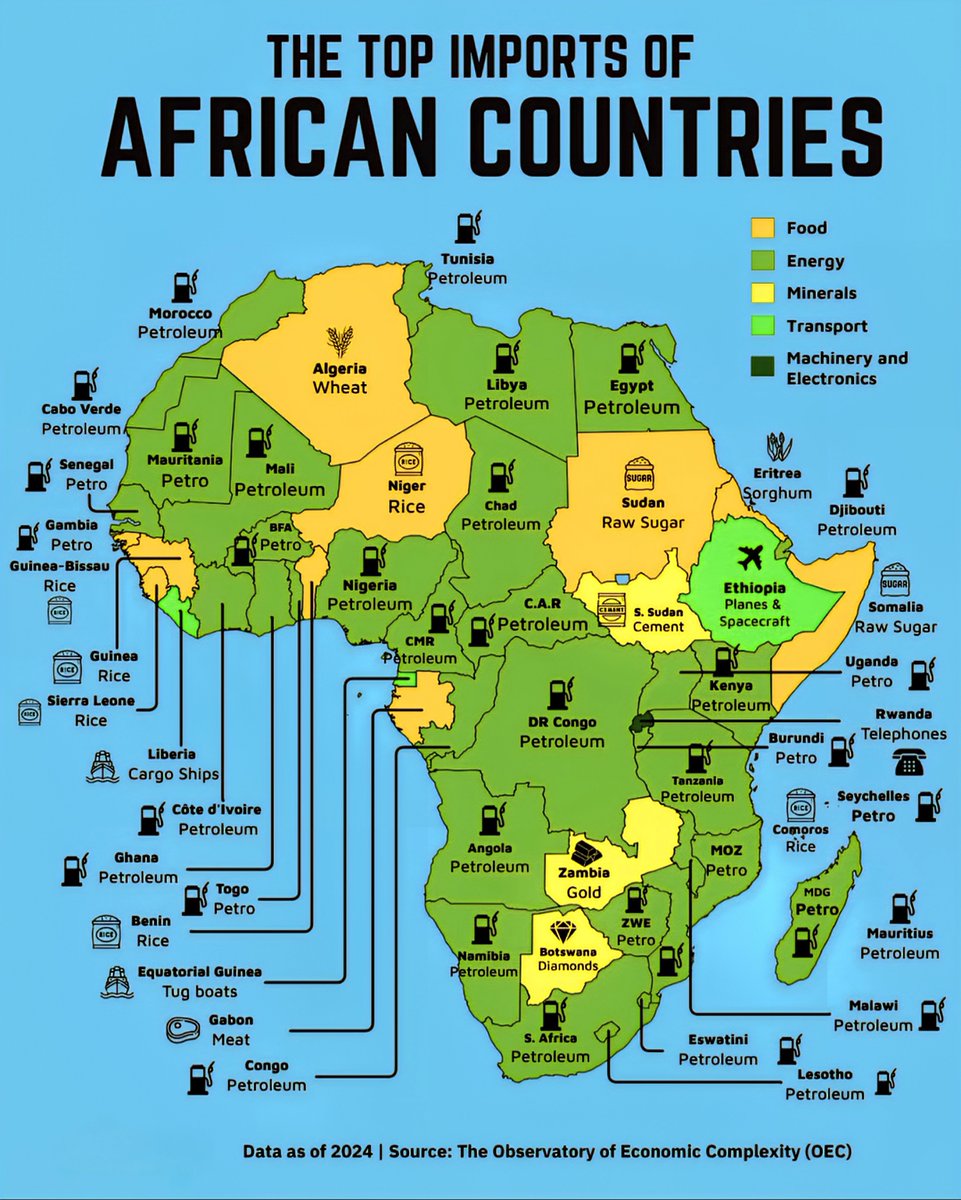
- Algeria’s Leading Import: Wheat
Algeria primarily imports wheat to meet its domestic food needs and sustain its agricultural sector. As a significant importer of cereal grains, Algeria’s reliance on wheat imports underscores the country’s strategic approach to food security amidst domestic production challenges.
- Angola’s Main Imported Good: Petroleum
Despite being one of Africa’s oil producers, Angola still relies heavily on importing petroleum products. This includes refined fuels and related commodities to support its growing energy demands and industrial activities.
- Benin’s Top Import: Rice
Rice remains a staple in Benin’s diet, and the nation imports large quantities to fill gaps in local production. The reliance on rice imports highlights ongoing efforts to bolster domestic agriculture and ensure food stability.
- Botswana’s Most Valuable Import: Diamonds
While Botswana is renowned for its diamond exports, the country also imports diamonds—likely for polishing, grading, and other industrial purposes—reflecting the complex nature of its precious stones industry.
- Burkina Faso and Petroleum
Burkina Faso heavily depends on importing petroleum products, which are vital for transportation, electricity generation, and industrial operations. This tight connection to imported fuel contributes significantly to its economy.
- Burundi’s Petroleum Imports
Burundi’s importation of petroleum fuels is driven by limited domestic energy resources, necessitating a steady supply of imported oil to sustain transportation and power needs.
- Cabo Verde’s Petroleum Dependency
As an island nation, Cabo Verde’s economy is heavily reliant on imported petroleum for transportation, electricity, and everyday consumption, making it one of its top imports.
- Cameroon’s Main Import: Petroleum
Cameroon’s significant import of petroleum products underpins sectors like transportation and industry, illustrating the country’s continued reliance on energy imports.
- Central African Republic’s Petroleum Imports
Given its limited domestic refining capacity, the Central African Republic depends on importing refined petroleum products, crucial for its infrastructure and daily operations.
- Chad’s Petroleum Dependency
Chad, rich in oil reserves but lacking domestic refining, imports large quantities of petroleum to meet the needs of its population and economy.
- Comoros’ Key Import: Rice
As a small island nation, Comoros imports significant rice supplies to satisfy local consumption, demonstrating its reliance on food imports.
- DR Congo’s Petroleum Needs
The Democratic Republic of Congo imports petroleum for transportation and energy, essential for its economic activities and urban centers.
- Republic of the Congo’s Petroleum Imports
Similar to other resource-rich nations, the Republic of Congo relies on importing refined petroleum to support its industries and public services.
- Djibouti: Petroleum at the Forefront
Djibouti’s strategic location and port activities mean imported petroleum fuels are vital for its shipping industry, energy needs, and regional trade.
- Egypt’s Petroleum Imports
Egypt imports refined petroleum to supplement domestic production, powering its vast industrial sector and urban infrastructure.
- Equatorial Guinea’s Tug Boats
The country primarily imports tugboats and marine vessels to support its offshore oil operations and maritime infrastructure.
- Eritrea’s Main Import: Sorghum
Eritrea imports sorghum primarily for food security and livestock feed, essential for its agricultural sector.
- Eswatini’s Petroleum Dependency
Eswatini relies heavily on importing petroleum to supply its transportation sector and energy infrastructure.
- Ethiopia’s Unique Import: Planes & Spacecraft
Ethiopia imports airplanes and spacecraft, supporting its expanding aviation industry and technological advancement initiatives.
- Gabon’s Meat Imports
Gabon imports meat products to supplement domestic agriculture, catering to its culinary preferences and population needs.
- Gambia’s Petroleum Imports
The Gambia depends on imported petroleum for transportation, electricity, and industry, illustrating energy reliance.
- Ghana’s Petroleum Needs
Ghana imports significant quantities of petroleum, vital for its transportation, manufacturing, and power production.
- Guinea’s Rice Imports
Guinea relies heavily on rice imports to satisfy domestic consumption and support local farmers’ growth initiatives.
- Guinea-Bissau’s Food Imports
Rice remains a top import for Guinea-Bissau, addressing food security needs in this small West African nation.
- Côte d’Ivoire’s Petroleum Imports
The Ivory Coast continues to import petroleum products, essential for its industrial growth and urban consumption.
- Kenya’s Petroleum Supply
Kenya imports petroleum to meet escalating energy demands, powering industries, transportation, and households.
- Lesotho’s Petroleum Dependence
Lesotho depends on imported fuels for transportation and electricity generation, given limited domestic energy resources.
- Liberia’s Cargo Ship Imports
Cargo ships are a primary import for Liberia, supporting its shipping industry and trade logistics infrastructure.
- Libya’s Petroleum Imports
Despite its oil reserves, Libya imports petroleum products for refining and distribution within the country.
- Madagascar’s Petroleum Imports
Madagascar continues to import refined fuels to support operational transportation and energy needs.
- Malawi’s Petroleum Consumption
Malawi relies heavily on imported petroleum products, crucial for its transport sector and power generation.
- Mali’s Petroleum Needs
Mali’s dependence on petroleum imports reflects its lack of domestic refining capacity and ongoing energy requirements.
- Mauritania’s Petroleum Importation
Mauritania imports petroleum for transportation and industry, supporting its economic activities.
- Mauritius Skews Towards Petroleum
Mauritius imports petroleum to power its industries, vehicles, and energy infrastructure, despite its small size.
- Morocco’s Petroleum Dependence
Morocco relies on petroleum imports for transportation, manufacturing, and electricity generation.
- Mozambique’s Petroleum Imports
Mozambique continues importing petroleum to satisfy domestic energy consumption and support economic growth.
- Namibia’s Oil Imports
Namibia relies on oil imports for transportation fuels and energy needs, essential for its development plans.
- Niger’s Staple Food Imports: Rice
Rice imports are vital for Niger, addressing food insecurity and dietary needs.
- Nigeria’s Petroleum Import Dynamics
Despite being a major oil producer, Nigeria imports refined petroleum products due to limited refining capacity.
- Rwanda’s Telephones
Rwanda’s main import item is telephones, reflecting growth in communication infrastructure and technological modernization.
- São Tomé and Príncipe’s Petroleum Dependence
This island nation depends on petroleum imports for energy and transportation needs.
- Senegal’s Petroleum Imports
Senegal imports petroleum to support its industrial and transportation sectors, vital for economic activity.
- Seychelles’ Oil Needs
As an island nation, Seychelles imports petroleum for running its transportation and energy infrastructure.
- Sierra Leone’s Rice Imports
Rice remains a key import item, filling domestic production gaps in Sierra Leone.
- Somalia’s Raw Sugar Imports
Somalia imports raw sugar to support its food industry and supply chain.
- South Africa’s Petroleum Supplies
South Africa primarily imports petroleum for its industrial energy needs and transportation sector.
- South Sudan’s Cement Imports
Due to limited local production, South Sudan imports cement for construction and infrastructural projects.
- Sudan’s Raw Sugar Imports
Sudan imports raw sugar for refining and domestic consumption, essential for its food industry.
- Tanzania’s Petroleum Reliance
Tanzania’s economy depends on importing petroleum to fuel its industrial growth and transport systems.
- Togo’s Petroleum Dependency
Togo relies on imported petroleum for transportation, electricity, and industry.
- Tunisia’s Petroleum Imports
Tunisia continues to import petroleum to support its industrial and energy sector needs.
- Uganda’s Petroleum Demand
Uganda relies heavily on imported petroleum to sustain its growing economy.
- Zambia’s Gold Imports
Zambia imports gold, possibly for industrial uses and jewelry manufacturing.
- Zimbabwe’s Petroleum Imports
Zimbabwe depends on importing petroleum fuels to meet national energy requirements.
Source: The Observatory of Economic Complexity (OEC), Data as of 2025