Top Countries Offering the Longest Maternity Leave in 2025
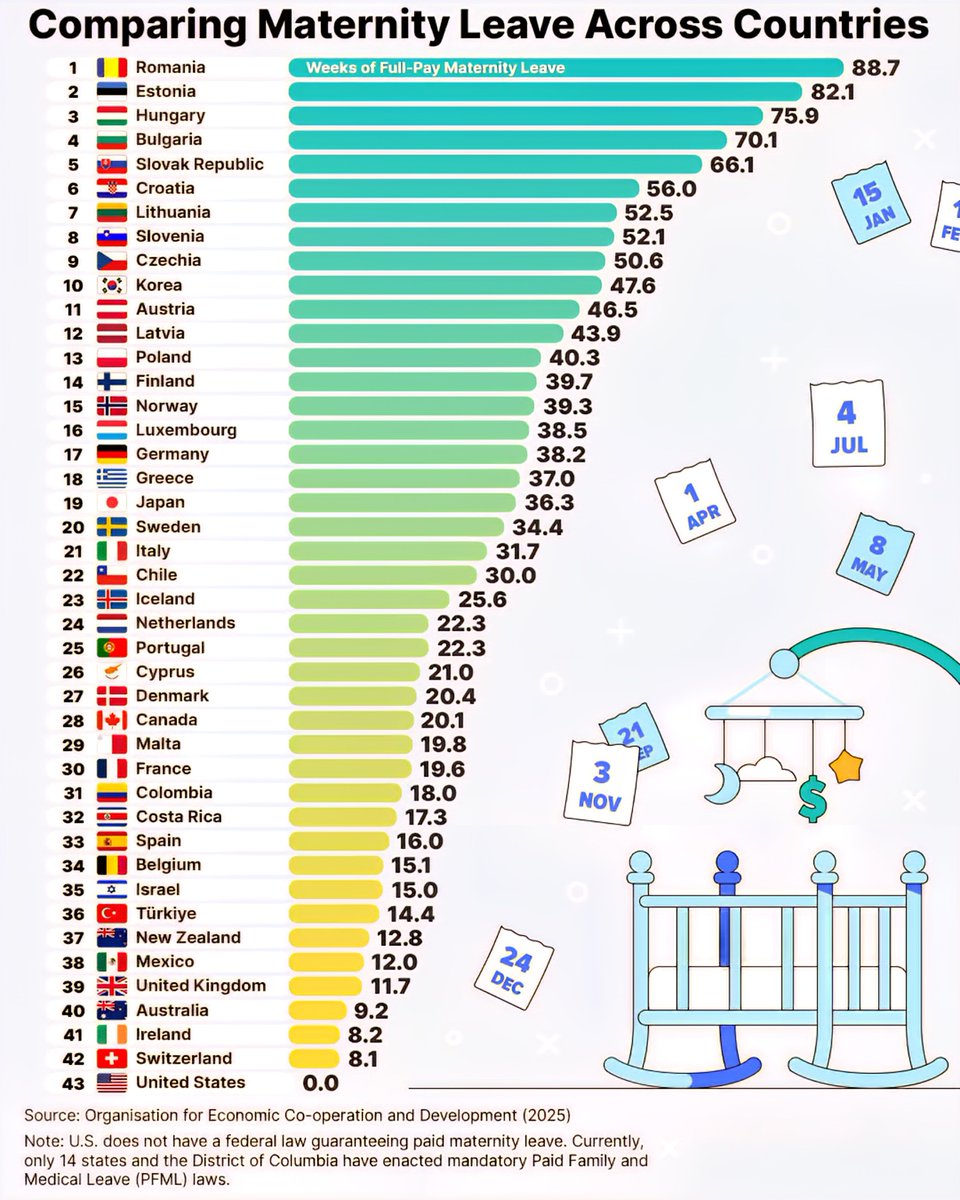
Romania Leads with an Astonishing 88.7 Weeks of Paid Maternity Leave
Romania has once again cemented its place at the top of the maternity leave chart, offering an incredible 88.7 weeks of paid leave for new mothers. This extensive period ensures mothers have ample time to recover, bond with their newborns, and establish a strong foundation for early childhood development. Such generous leave policies underscore Romania’s commitment to family welfare and maternal health, setting a global benchmark.
Estonia and Hungary Continue to Prioritize Family Support
Estonia, providing 82.1 weeks of paid leave, and Hungary with 75.9 weeks, follow closely behind Romania. These countries emphasize supporting mothers during the crucial postpartum period, which is vital for both mother and child’s well-being. Estonia’s progressive policies reflect its recognition of family health as a national priority, while Hungary’s longstanding tradition of family support remains evident in its generous leave policies.
The Balkan States Exhibit Strong Maternity Leave Policies
Bulgaria (70.1 weeks), Slovakia (66.1 weeks), and Croatia (56 weeks) showcase their dedication to family-friendly policies. Notably, Bulgaria has one of the longest paid maternity leave periods in Europe, emphasizing how Balkan nations value the health and stability of mothers and infants. These policies also help reduce gender inequality by supporting women’s re-entry into the workforce post-childbirth.
Baltic Countries Maintain High Standards of Support
Lithuania and Slovenia provide 52.5 and 52.1 weeks, respectively. Latvia (43.9 weeks) and Poland (40.3 weeks) also offer substantial paid leave. These nations’ comprehensive policies reflect their societal emphasis on family welfare, and many have robust social safety nets that help working mothers balance career and family life.
Asian and European Leaders in Maternity Leave
South Korea offers 47.6 weeks, often noted for its evolving family policies, though it remains below some European leaders. Austria follows with 46.5 weeks, demonstrating Europe’s commitment. Countries like Finland (39.7 weeks), Norway (39.3 weeks), and Germany (38.2 weeks) also maintain strong national standards that prioritize maternal health and child development.
The Mediterranean and Nordic Countries Maintain Generous Policies
Greece (37 weeks), Italy (31.7 weeks), and Iceland (25.6 weeks) show diverse approaches but share a focus on maternal and early childhood support. Nordic countries such as Sweden (34.4 weeks), Denmark (20.4 weeks), and Finland emphasize a balanced approach to maternity leave—combining duration with quality of life for mothers.
Lower Ends of the Spectrum: Countries with Minimal Paid Leave
In stark contrast, several nations, including Portugal (22.3 weeks), Cyprus (21 weeks), and Denmark (20.4 weeks), offer moderate paid maternity leave. Notably, Canada’s leave stands at approximately 20.1 weeks, while even in developed countries like the UK (11.7 weeks) and Australia (9.2 weeks), paid leave durations are comparatively shorter.
The United States Stands Apart with No Federal Paid Maternity Leave
The United States remains unique among developed nations, with no federal law mandating paid maternity leave. Some states and districts have enacted their own Paid Family and Medical Leave policies, but overall, new mothers often rely on employer-provided benefits or unpaid leave. This discrepancy highlights ongoing debates around family support policies in the U.S., with many advocating for nationwide reforms.
Summary and Global Trends
The data underscores a clear global trend: European and some Asian countries prioritize extensive paid maternity leave, recognizing its importance for societal health, gender equality, and economic stability. Conversely, countries with shorter or no mandated paid leave often face challenges in supporting working mothers and reducing gender disparities.
As countries continue to develop policies aligned with work-life balance and family well-being, it remains to be seen whether others, especially larger economies like the United States, will adapt their legislation to better support mothers in the future.
Source: Organisation for Economic Co-operation and Development (OECD), 2025.