
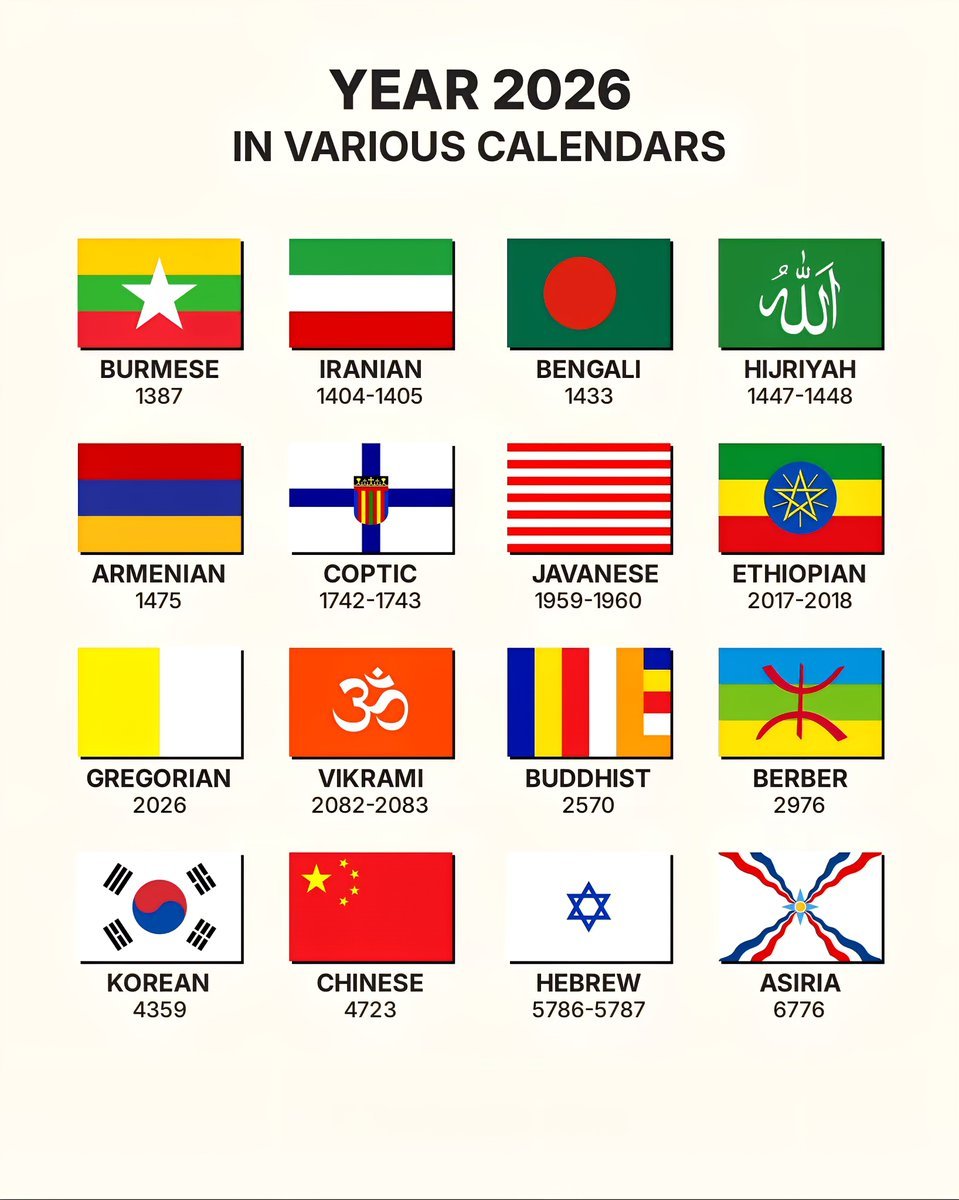
5 Important Calendars and Their Years in 2025
As we step into 2025, it’s fascinating to see how different cultures and religions mark time with their unique calendars. The diversity of these date systems reflects the rich history and traditions across the globe. Here’s a detailed look at notable calendars and what year it is for each in 2025.
Burmese Calendar: Year 1387
The Burmese calendar, used in Myanmar, marks the year as 1387 in 2025. This lunisolar calendar has been in use for over a millennium and closely follows the Buddhist lunar cycles. It is traditionally used for religious festivals, official documents, and cultural events.
Iranian Calendar: Year 1404–1405
Iran’s official calendar is the Solar Hijri calendar. In 2025, Iran is in its 1404–1405 year span. This calendar begins from the Prophet Muhammad’s migration (Hijra) and is notable for its precise alignment with the seasons. It remains the backbone for official affairs and daily life in Iran.
Bengali Calendar: Year 1433
The Bengali calendar, also known as Bangla calendar, marks the year 1433 in 2025. Primarily used in Bangladesh and the Indian state of West Bengal, it is based on solar movements and is integral to agricultural festivals and traditional celebrations.
Islamic Hijri Calendar: Years 1447–1448
In 2025, the Islamic calendar (Hijri) spans from 1447 to 1448. This purely lunar calendar is central to Islamic religious observances, including Ramadan and Hajj. Its months follow lunar cycles, making the year’s length about 354 days.
Armenian Calendar: Year 1475
The Armenian calendar places 2025 in year 1475. Used mainly for religious and national occasions, this ancient calendar has origins that date back to the early Christian era and emphasizes Armenia’s rich heritage.
Coptic Calendar: Year 1742–1743
The Coptic calendar, used by the Egyptian Christian community, is in the years 1742–1743 in 2025. It is based on the ancient Egyptian calendar and plays a significant role in Coptic Christian religious events.
Javanese Calendar: Year 1959–1960
Java’s traditional calendar is in use in Indonesia, placing 2025 in the 1959–1960 era. While the Gregorian calendar is dominant, the Javanese calendar persists for cultural and ceremonial purposes.
Ethiopian Calendar: Year 2017–2018
The Ethiopian calendar is nearly identical to the Coptic calendar, placing 2025 in the 2017–2018 range. It is approximately seven years behind the Gregorian calendar and is used mainly for religious festivals and national events.
Gregorian Calendar: Year 2026
The widely used Gregorian calendar marks 2025 as the year 2026. It remains the standard international calendar, organizing global business, government, and daily life.
Vikram Samvat: Year 2082–2083
In India, the Vikram Samvat calendar currently reads 2082–2083 in 2025. This Hindu lunar-solar calendar tracks religious festivals, especially those related to Hindu traditions, and is still used in many regions across India and Nepal.
Buddhist Calendar: Year 2570
The Buddhist calendar places 2025 in year 2570. It is used predominantly across countries like Thailand, Sri Lanka, and Myanmar, aligning with important religious commemorations.
Berber Calendar: Year 2976
The Berber calendar, marking the year as 2976 in 2025, is used by the Berber (Amazigh) population in North Africa. It has roots in ancient Libyan, Roman, and Islamic influences.
Korean Calendar: Year 4359
The Korean calendar, based on traditional systems, designates 2025 as the year 4359. While Korea officially uses the Gregorian calendar, traditional lunar calendars influence cultural events and holidays.
Chinese Calendar: Year 4723
The Chinese lunar calendar marks 2025 as year 4723. This calendar governs the date of Chinese New Year and is deeply embedded in Chinese cultural and seasonal festivals.
Hebrew Calendar: Year 5786–5787
In Judaism, 2025 corresponds to the years 5786–5787. It is used for religious observances, the Hebrew New Year (Rosh Hashanah), and other Jewish holidays.
Assyrian Calendar: Year 6776
The Assyrian calendar, used by the Assyrian community, is in the year 6776 in 2025. It harks back to ancient Mesopotamian traditions and is vital during cultural and religious celebrations.
Note: The flags and symbols associated with each calendar denote the modern-day country, culture, or religion most closely affiliated with each system. They do not necessarily reflect the historical origins or official legal status of the calendar.
Understanding these calendars offers a glimpse into how diverse human societies measure and celebrate time, honoring their unique histories and spiritual traditions in 2025.