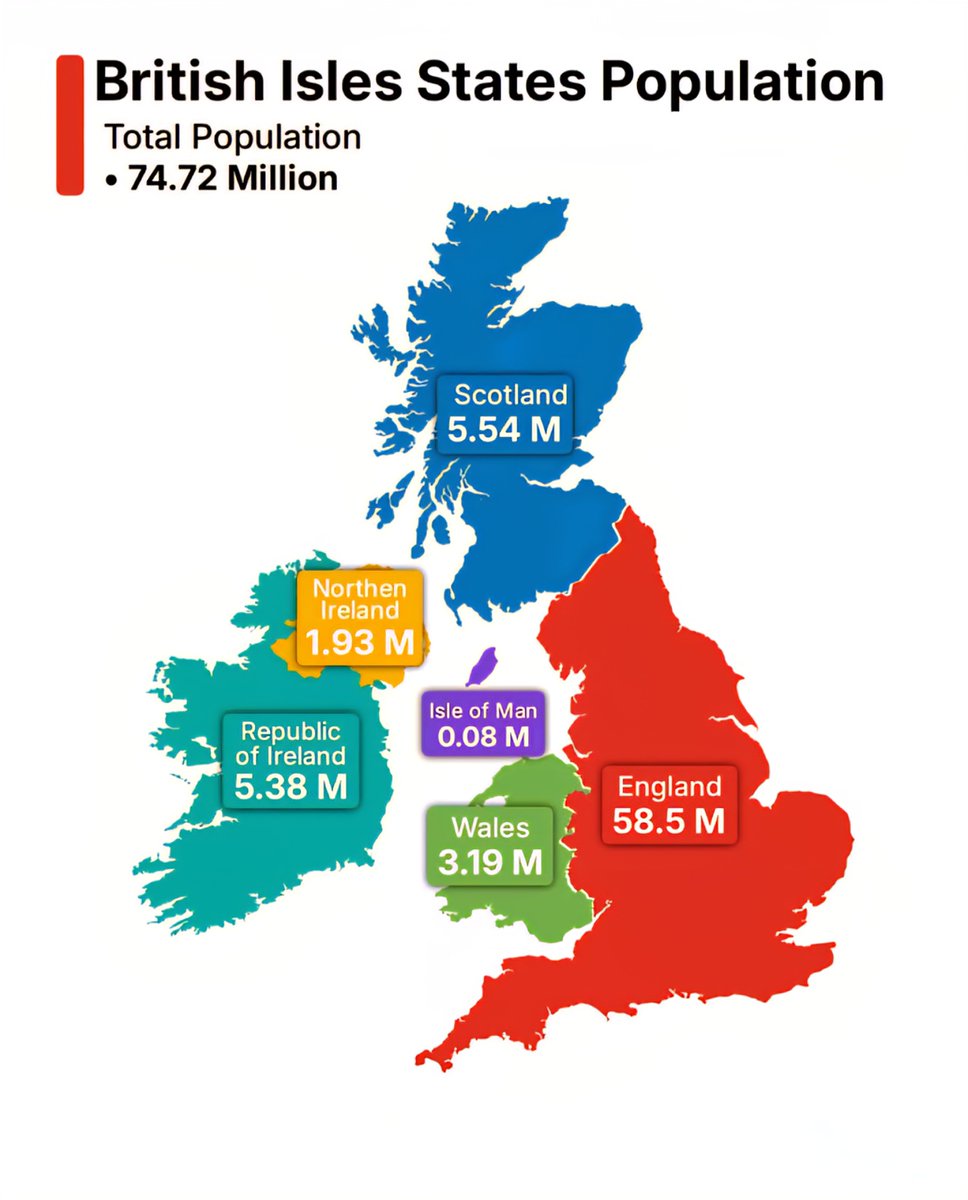
1. The Isle of Man’s Population Reaches 80,000
The Isle of Man, a small island nestled in the Irish Sea, has an estimated population of 80,000 residents. Known for its picturesque landscapes and rich Celtic history, this self-governing British Crown dependency continues to maintain a steady population, attracting both retirees and professionals seeking a tranquil lifestyle. Despite its small size, the island boasts a vibrant community and a thriving economy centered around finance, tourism, and digital industries.
2. Northern Ireland Surpasses Two Million Residents
With a population of approximately 1.93 million people, Northern Ireland remains a key part of the United Kingdom’s demographic landscape. Its capital, Belfast, is a hub of cultural and economic activity, contributing significantly to the region’s growth. Northern Ireland continues to balance its historical heritage with modern development, drawing new residents and startups alike. The area’s demographic trends indicate stability, with recent increases in urban populations and investments in infrastructure supporting continued growth.
3. Wales Maintains Over Three Million Amid a Growing Economy
Home to roughly 3.19 million people, Wales preserves its rich traditions while embracing modernity. Cities like Cardiff and Swansea are experiencing revitalization, with improvements in transportation, education, and healthcare sectors. The Welsh government is actively investing in renewable energy and technology, which are expected to attract young professionals to the region. Additionally, Wales’ scenic landscapes continue to make it a sought-after destination for tourists and new residents alike.
4. Ireland’s Population Approaching Six Million
Ireland now counts approximately 5.38 million inhabitants, reflecting regional growth driven by economic expansion and increased immigration. Dublin, the capital, remains a bustling metropolis with a thriving tech scene and vibrant arts culture. Recent polls suggest that Ireland’s growing job market and high quality of life are drawing new residents from across Europe and beyond, further boosting the nation’s population figures.
5. Scotland’s Population Exceeds Five and a Half Million
With around 5.54 million residents, Scotland continues to be a prominent demographic contributor to the British Isles. Edinburgh and Glasgow are experiencing significant urban development, fueled by investments in technology, education, and tourism. The Scottish government emphasizes sustainability and cultural preservation, making the country a magnet for young professionals and students. Population growth is also supported by Scotland’s active efforts to attract international talent.
6. England Holds the Largest Share with Over Fifty-Eight Million
England remains the most populous country within the British Isles, with a population of approximately 58.5 million. London, as the capital and global financial hub, continues to grow and diversify, inviting people from all over the world. Outside London, cities like Birmingham, Manchester, and Leeds are seeing rapid expansion, fueled by infrastructure projects, technological advancements, and economic opportunities. England’s population is projected to keep rising, bolstered by high birth rates and ongoing immigration.
7. Total Population of the British Isles (2025): 74.72 Million
The collective population of the British Isles has now reached nearly 75 million residents. This growth reflects a complex interplay of natural increases and migration patterns, shaping the socio-economic landscape across the region. Government policies aiming at sustainable development, housing, and public services are crucial in managing this demographic trend. The region continues to be a vibrant mosaic of cultures, histories, and innovations, maintaining its significance on the global stage.
The demographic dynamics across the British Isles are continually evolving, driven by economic, political, and social factors. As 2025 progresses, these regions are poised to experience further changes that will influence their future trajectory.