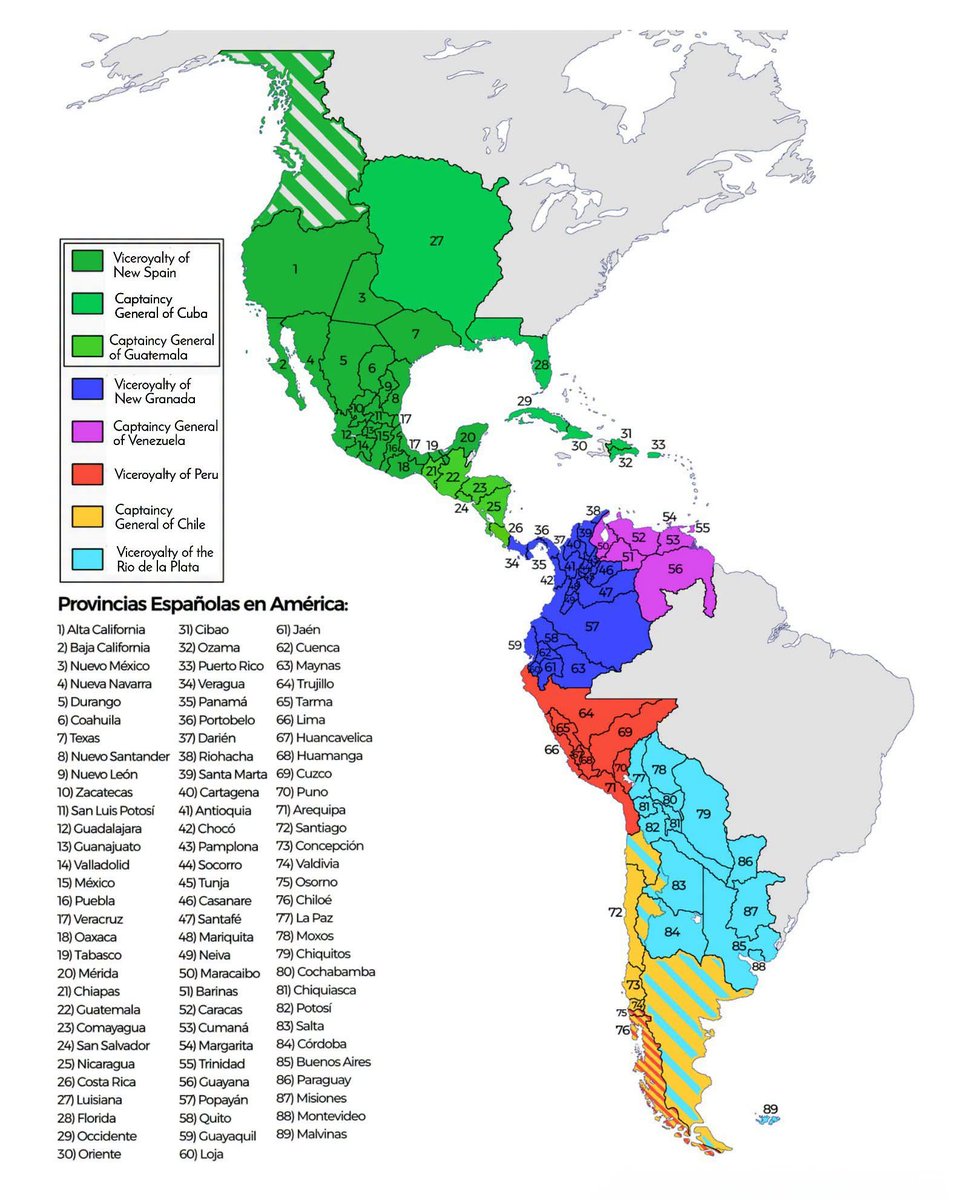
Exploring the 1800 Spanish American Provinces: A Modern Breakdown
The territorial expanse of Spain in the Americas around 1800 was vast, covering numerous regions that today are independent nations or territories. Here’s a detailed look at the key provinces and regions that once formed a significant part of the Spanish Empire during that era.
1. United States Territories Under Spanish Rule
-
Alta California
A sprawling region stretching from what is now Southern California up to the northern territories that would later become part of the U.S. West Coast, known for its missions and presidios. -
Nuevo México
Encompassing parts of present-day New Mexico and Arizona, this area was a vital frontier for Spanish settlement and trade. -
Texas
Originally part of Nueva Vizcaya, Texas was a key buffer zone for Spanish territories against French and later American expansion. -
Louisiana and Florida
These regions, now U.S. states, were once Spanish holdings, with Louisiana being a vital hub for trade and Florida serving as a strategic defense point.
2. Modern Mexican States and Regions
-
Baja California
Located on the Baja Peninsula, this region was crucial for maritime navigation and trade routes. -
Nuevo Santander
Covering parts of northeastern Mexico and southern Texas, it was important for early colonization efforts. -
Guadalajara and Jalisco
Cultural and economic centers, these regions have rich historical roots dating back to the colonial era. -
Guanajuato and San Luis Potosí
Significant for their mining industries, these states played a key role in Santa Maria’s wealth. -
México City and Puebla
The political and religious hubs, these regions were the heart of Spanish colonial administration. -
Chiapas and Oaxaca
Known for their indigenous cultures and natural resources, these regions remained vital parts of Mexico’s southern provinces.
3. Central American Provinces
-
Guatemala and Comayagua
The political and economic centers of Central America during Spanish rule, with Guatemala serving as the regional hub. -
Costa Rica and Panama
Connected to the Spanish main through vital transit routes, these regions were crucial for connections and trade. -
Veragua and Veragua
Regions known for tropical forests and gold mining, important parts of the transit and resource extraction network.
4. Caribbean and Island Territories
- Puerto Rico
A pivotal naval base with a strategic location in the Caribbean Sea. - Darién and Portobelo
Key transit points connecting the Atlantic to Panama, vital for mail, gold, and other resources. - Trinidad and Margarita
Important islands for trade and strategic defense, playing roles in the Caribbean theater.
5. South American Regions
-
Colombia (Cartagena, Santa Marta, Antioquia)
Major ports and cities, vital for maritime trade, and areas of vibrant indigenous communities. -
Venezuela (Maracaibo, Caracas, Cumaná)
Rich in resources like gold and cacao, these areas were economic hubs. -
Ecuador (Quito, Loja, Cuenca)
Known for its highlands and mineral wealth, Ecuador was an essential part of Spain’s South American empire. -
Peru (Lima, Trujillo, Puno, Arequipa)
Centered around the Andes, this was the wealthiest and most influential colony due to its silver mines. -
Bolivia (La Paz, Potosí), and neighboring regions were crucial for silver extraction and economic output.
6. Chile and Argentina
- Chile (Santiago, Valdivia, Osorno)
A long, narrow strip of territory important for its resources, agriculture, and strategic location. - Argentina (Córdoba, Buenos Aires, Salta)
Key areas of settlement, agriculture, and commerce, especially Buenos Aires, which was a growing port and trading hub.
7. The Southern Cone and Beyond
-
Paraguay (Paraguay and Asunción)
A vital inland area, Paraguay was significant for its indigenous communities and agriculture. -
Ushuaia and Malvinas (Falkland Islands)
Remote southern territories serving as strategic outposts and points of interest for colonial expansion.
8. Other Noteworthy Territories
- Paraguay (Asunción)
A crucial inland region in the southern part of South America, known for cattle and agriculture. - Uruguay (Montevideo)
Starting to emerge as a key port city, with growing strategic importance.
Understanding the division and reach of these territories highlights the vastness and complexity of Spain’s American empire in 1800. These regions, rich in resources, indigenous cultures, and strategic importance, laid the foundation for the modern nations we recognize today.
Note: The boundaries and regional designations from 1800 differ significantly from present-day borders, depicting a colonial landscape that has evolved into independent nations over the centuries.