Countries Where Most People Have Never Traveled Abroad in 2025
-
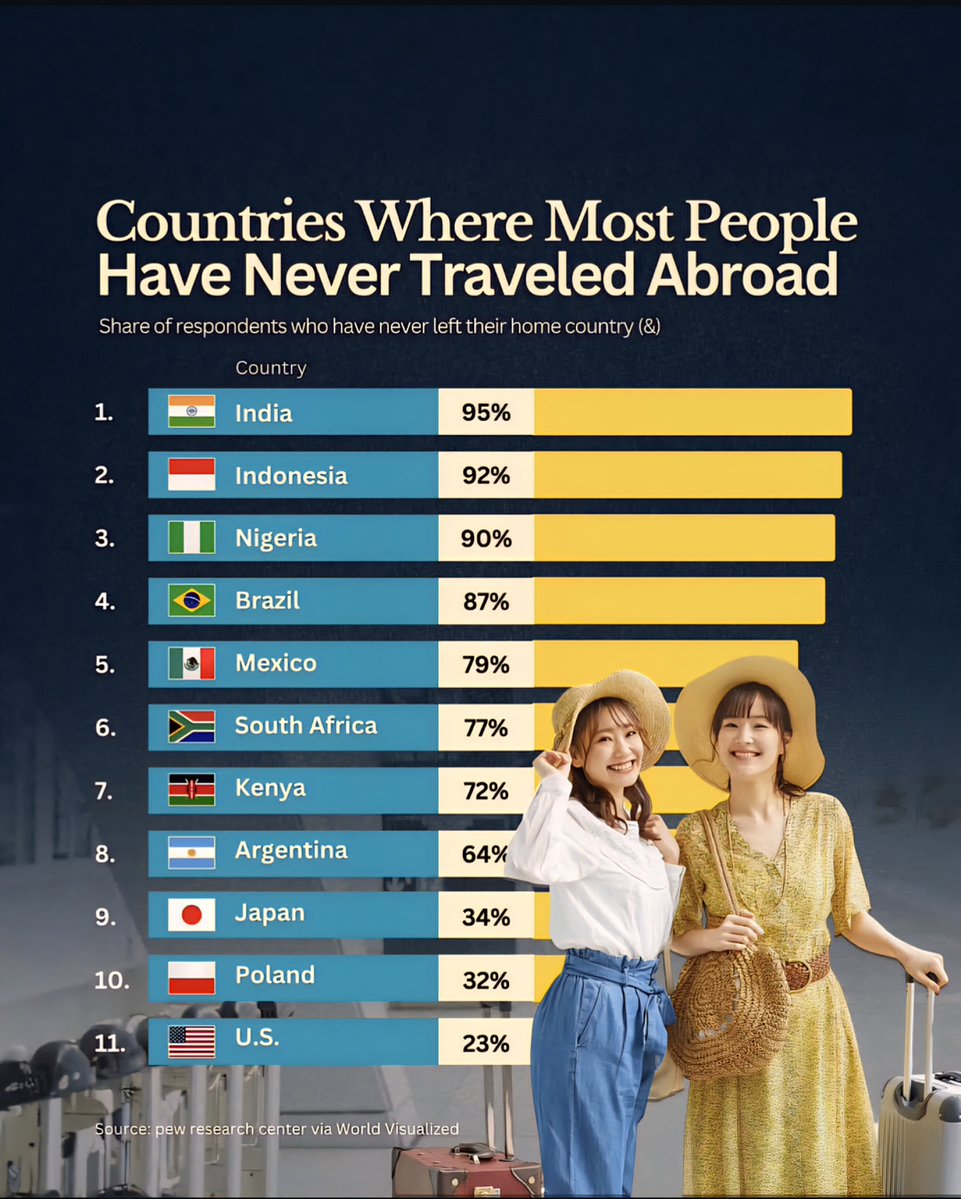
India: An astonishing 95% of residents haven’t traveled outside their borders. Despite being a rapidly developing nation with a rich cultural history, economic constraints and infrastructural challenges continue to limit international travel for most Indians. Many face financial barriers, and visa regulations can also be difficult to navigate, keeping global mobility out of reach for a significant portion of the population.
-
Indonesia: With 92% of Indonesians never having traveled abroad, the archipelago’s vast geography and economic disparities play a crucial role. While tourism is booming in some areas, many ordinary Indonesians do not have the means or opportunities for international travel, often prioritizing domestic needs.
-
Nigeria: At 90%, Nigeria ranks among the countries with the highest percentage of citizens who haven’t ventured outside their country. Political stability, security concerns, and limited economic opportunities contribute to this situation, making international travel a luxury for most Nigerians.
-
Brazil: Nearly 87% of Brazilians have never crossed their national borders. Despite Brazil’s size and diverse culture, economic hurdles and bureaucratic hurdles within the country hinder many from exploring the world beyond.
-
Mexico: About 79% of the Mexican population has not traveled abroad. Although neighboring the United States offers ease of travel for some, many Mexicans face financial and structural barriers that prevent international exploration, especially in rural areas.
-
South Africa: With 77% of its citizens never traveling internationally, South Africa’s financial disparities and infrastructural factors contribute significantly to this statistic. While tourism is a significant industry, access remains unequal and limited for the average person.
-
Kenya: At 72%, many Kenyans are unable to journey outside the country, with economic hardships, visa restrictions, and limited transportation options being common obstacles for international travel.
-
Argentina: Approximately 64% of Argentinians have never traveled abroad. Economic fluctuations over the years have kept international mobility out of reach for many, despite growing tourism in certain regions.
-
Japan: Only 34% of Japanese residents have never left their country, reflecting high levels of international travel openness. The cultural emphasis on education and global engagement fosters a more outward-looking population.
-
Poland: With 32% of Poles never traveling outside their country, increased economic stability and EU freedom of movement have expanded opportunities for international travel among Polish citizens.
-
United States: Surprisingly, 23% of Americans have never traveled abroad. While the US has a highly developed travel infrastructure and a culture of mobility, socioeconomic barriers prevent some citizens from venturing beyond borders.
Note: These statistics are based on data from Pew Research Center, focusing on selected countries as of 2025.
Summary: International travel remains a privilege for many across the globe. Economic factors, political stability, infrastructure, and visa policies heavily influence whether individuals can explore the world. Countries like India, Indonesia, Nigeria, and Brazil have the highest percentages of citizens who have never traveled abroad, highlighting persistent global inequalities. Meanwhile, nations such as Japan and Poland show more openness and higher rates of international mobility. Moving forward, addressing economic and infrastructural barriers could help more people experience the world beyond their borders.
(Images and data sources credited to Pew Research Center, 2025.)