Aldewa Anjasmara Halip’s three-year-old daughter would often cry uncontrollably before attending a daycare in Yogyakarta, Indonesia, leading him to believe she simply didn’t want to go and preferred to stay home and play. However, authorities now say the child was among dozens of children aged 2 to 6 who had been physically abused at Little Aresha daycare.
Thirteen caregivers were detained in late April on suspicions of child abuse and neglect, prompting widespread outrage and demands for increased government oversight in Indonesia’s growing childcare industry. Officials also revealed the daycare was operating without proper licenses.
“I thought she was just being lazy because she didn’t want to go… but it turns out she’s been traumatized there,” said Aldewa, who, like many Indonesians, goes by his first name. His family works at nearby malls.
Police discovered more than 100 enrolled children with their hands and feet restrained during a raid, explained Apri Sawitri, head of child protection at Yogyakarta police’s criminal investigation unit. Some children were chained to doors.
Diyah Puspitarini, a commissioner at Indonesia’s child protection agency, told Reuters that many of the children had been routinely slapped and pinched. Caregivers admitted to the police that such physical punishments were intended to make the children more manageable.
All 13 suspects are women, including the owner, principal, and caregivers. The authorities have withheld their full identities, instead using initials as per Indonesian legal practice before a case goes to trial. Attempts to contact the suspects or their lawyers have been unsuccessful, and Little Aresha’s listed phone number is no longer in service. None of the accused has publicly addressed the allegations.
This case marks the largest reported incident of child abuse in Indonesia and has received extensive media coverage, viral social media discussions, and condemnations from advocacy groups and politicians.
The government has pledged to enhance oversight, strengthen regulations, and improve coordination between national and regional authorities. Minister for Women’s Empowerment and Child Protection Arifah Fauzi emphasized that Yogyakarta’s case should trigger a nationwide review to ensure all childcare centers adhere to the highest child protection standards.
—
Little Aresha is among the more costly daycare options in Yogyakarta, a city of nearly 4 million people and a popular tourist destination. It charged about 1 million rupiah ($55.74) monthly—more than the average income of around 3.2 million rupiah—according to Diyah.
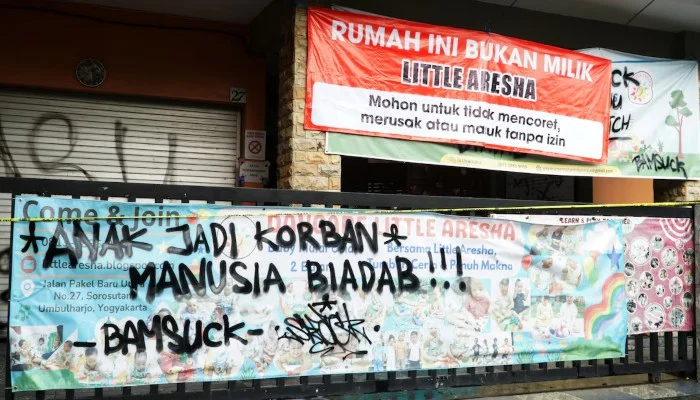
Since the scandal became public, the center’s premises have been vandalized with graffiti and offensive messages. Diyah explained that the abuse allegations surfaced after a staff member blew the whistle. Investigators found that children were frequently restrained under the principal’s orders to handle larger numbers with fewer staff members, often resulting in overcrowded conditions—up to 30 children in a 3-by-3 meter room. Caregivers were untrained, each overseeing around 10 children, violating unofficial staffing guidelines that recommend one caregiver per four kids.
In Indonesia, penalties for child abuse and neglect include up to five years in prison and a fine of 100 million rupiah ($5,574). Operating a daycare without a license breaches the national education law and can lead to a maximum 10-year prison sentence.
Operating since 2018, Little Aresha advertised services for children as young as two months, with banners displaying rainbows and playground scenes. Indonesia has thousands of daycare centers, though the concept is still relatively new in a culture where extended family caregiving remains common.
Minister Arifah noted that the government lacks accurate figures on the total number of daycare facilities and is now calling for all centers to register. Many operate under varied legal frameworks—some are integrated into early childhood programs, others are community or home-based, and many remain unregistered.
Diyah’s agency has urged authorities and community leaders to conduct routine inspections and increase standards for caregiver qualifications and infrastructure. The police also found a child tied to a door during the raid, and a mother, Imedia Dwi Anjani, reports she had previously noticed bruises and bumps on her son, who has delayed speech and cannot describe what happened.
She expressed outrage over the abuse, saying, “Everything they’ve done is despicable.” Authorities expect to conclude their investigation by late June, after which they will refer findings to prosecutors for formal charges.