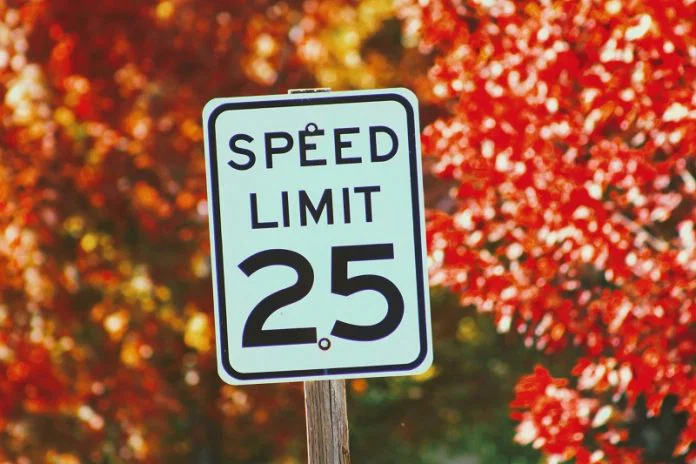
Driving at the posted speed limit alone could save Americans billions of dollars annually in fuel costs while significantly reducing greenhouse gas emissions, according to a recent study conducted by researchers at the University of Minnesota Twin Cities.
Published in Communications Sustainability, the study highlights how adhering to legal speed limits can have a substantial impact nationwide. The researchers estimate that if drivers consistently stay within posted speed limits, the United States could conserve approximately 6.7 million gallons (around 25 million liters) of fuel each day.
This change would also lead to a reduction of about 57,000 metric tons of carbon dioxide emissions daily and save drivers roughly $22 million in fuel expenses each day. The findings specifically focus on light-duty vehicles fueled by gasoline or diesel—such as passenger cars, SUVs, and pickup trucks—which make up about 14.6% of the country’s overall energy consumption.
Bharat Jayaprakash, a doctoral student in the Department of Mechanical Engineering and the study’s lead author, explained that it’s been well understood that higher speeds increase fuel consumption. However, this research is pioneering in estimating the total potential savings in fuel and money across the entire nation through simple adherence to speed limits.
To arrive at these conclusions, the team analyzed more than 120 million real-world vehicle trips across the U.S. and integrated this data with detailed road maps, speed limit information, and elevation data from the U.S. Geological Survey. They utilized advanced computer models to assess how varying driving speeds influence fuel use under actual driving conditions.
An encouraging discovery was that slowing down would have a minimal effect on travel time—adding less than one minute to the average daily commute. As a trade-off, drivers would benefit from lower fuel consumption, reduced expenses, and fewer emissions.
Professor William Northrop, the study’s corresponding author, pointed out that although modern gasoline vehicles are more fuel-efficient and powerful than ever, drivers often travel well above the speed limit—burning more fuel in the process. Lowering speed proves to be one of the easiest ways to boost fuel economy without needing to purchase new vehicles or wait for electric cars to become mainstream.
The researchers suggest that adjusting driving habits offers a quick, affordable method to cut fuel use and emissions—especially important as fuel prices fluctuate and the transition to electric vehicles continues gradually. Future research will delve into the impacts of aggressive acceleration and other driving behaviors on fuel consumption and pollution. They also plan to gather detailed driving data using specially equipped electric vehicles to better understand how everyday driving patterns influence energy use and emissions on a large scale.
The team believes that combining smoother driving with modest speed reductions could unlock even greater savings in fuel, costs, and greenhouse gases.