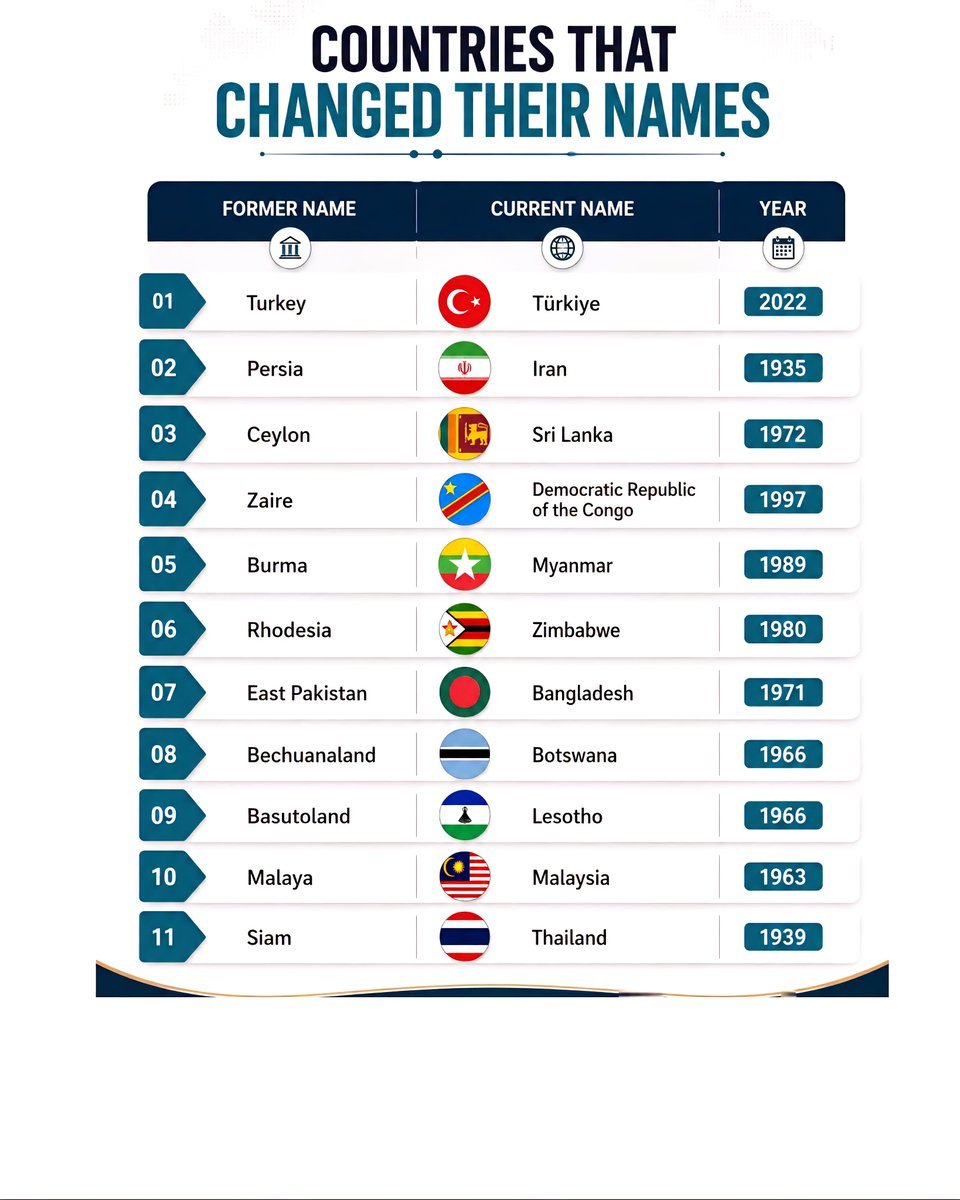
Countries That Have Changed Their Names: A Look at Recent and Historic Rebrandings
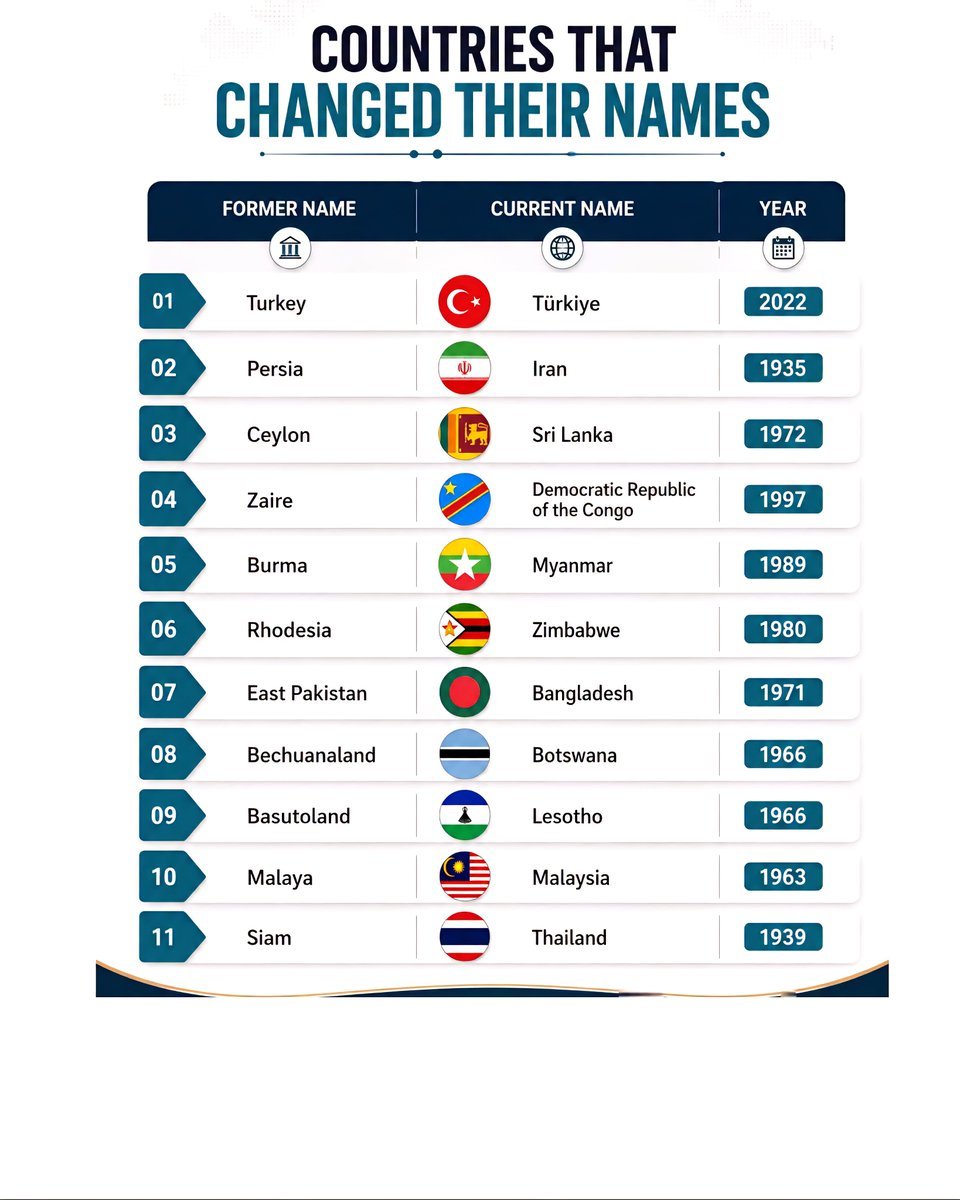
1. Turkey Rebrands as Türkiye (2022)
In 2022, Turkey officially adopted the name “Türkiye” in international settings, aligning its global identity with its native pronunciation and cultural roots. The change was formalized through government decrees and reflected an effort to reinforce national pride and cultural heritage on the world stage. This rebranding also aimed to distinguish the country from the bird “turkey” and to promote a cohesive image consistent with its language and traditions.
2. Persia Becomes Iran (1935)
Back in 1935, Persia, the historic name known worldwide, was officially renamed Iran, which means “Land of the Aryans” in Persian. This change was initiated by the Iranian government to emphasize the country’s indigenous identity and modernize its international image. The shift from Persia to Iran marked a turning point in national identity, asserting sovereignty and cultural nationalism during a period of increased modernization efforts.
3. Ceylon Transforms into Sri Lanka (1972)
In 1972, the island nation formerly known as Ceylon adopted the name Sri Lanka, meaning “Resplendent Land” in Sinhalese and Tamil. The change was driven by moves toward independence and a desire to shed colonial remnants. The new name symbolizes sovereignty, cultural pride, and a fresh national identity, helping to unify its diverse populations under a shared heritage.
4. Zaire Becomes the Democratic Republic of the Congo (1997)
After decades of political upheaval, Zaire was renamed the Democratic Republic of the Congo in 1997. This rebranding signified a break from dictatorial rule under Mobutu Sese Seko and aimed to restore a sense of national unity and democratic governance. The new name also reflects the country’s vast natural resources and historic roots in Central Africa.
5. Burma Rebrands as Myanmar (1989)
In 1989, the Burmese government officially changed the country’s name to Myanmar. This move was part of broader political and military reforms, aiming to reflect the country’s diverse cultural landscape. However, the change remains controversial, with some nations and groups continuing to recognize the name “Burma” due to political disagreements.
6. Rhodesia Becomes Zimbabwe (1980)
In 1980, the southern African nation formally transitioned from Rhodesia to Zimbabwe following independence. The new name, meaning “House of Stone,” was chosen to represent resilience and strength. This change marked the end of colonial rule, symbolizing liberation and a new chapter of governance under Robert Mugabe’s leadership.
7. East Pakistan Turns into Bangladesh (1971)
Following a brutal liberation war, East Pakistan declared independence and became Bangladesh in 1971. The name, derived from the Bengali language, embodies the country’s cultural and linguistic identity. This change represents the culmination of years of struggle for self-determination and national recognition.
8. Bechuanaland Becomes Botswana (1966)
The landlocked country, formerly Bechuanaland, gained independence in 1966 and adopted the name Botswana. The new name is rooted in the Tswana language and signifies the people’s heritage. Botswana’s peaceful transition and stable government have made it a model of progress in the region.
9. Basutoland Becomes Lesotho (1966)
In the same year as Botswana, Basutoland gained independence and became Lesotho, meaning “the land of the Basotho people.” The name highlights the country’s cultural identity and a desire for self-rule, establishing a monarchy with its unique national character.
10. Malaya Renamed Malaysia (1963)
The federation of Malaya expanded in 1963 to include Sabah, Sarawak, and Singapore, forming Malaysia. The rebranding from Malaya to Malaysia represents the union of diverse territories and cultures under a single national identity, promoting unity and modernization.
11. Siam Rebrands as Thailand (1939)
In 1939, Siam officially changed its name to Thailand, meaning “Land of the Free.” The change was part of nationalist efforts to foster a unified identity and eliminate colonial influences. Thailand remains the only Southeast Asian country never colonized, emphasizing independence and sovereignty.
Summary
Country name changes often mirror political shifts, independence movements, cultural pride, and efforts to modernize national identities. From ancient transformations like Persia to contemporary updates like Türkiye, these changes reveal the evolving narratives and aspirations of nations worldwide in the 21st century.
Note: Names and dates reflect historical and recent official changes up to 2025.