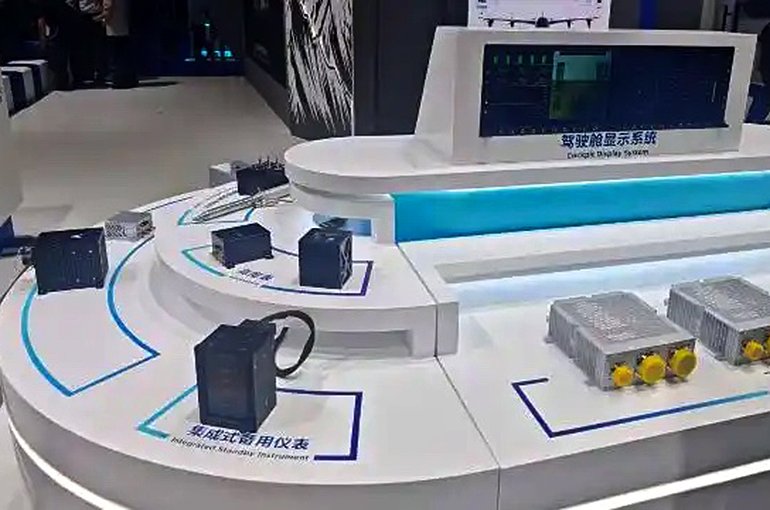
China’s rapidly growing low-altitude economy is attracting an increasing number of global suppliers seeking new business opportunities while also enabling domestic companies across the industry value chain to expand into international markets.
“The level of investment in China’s low-altitude economy is massive. Just look at the number of new market entrants to understand the extent of this growth,” explained Fabio Ortalli, an executive at a European aerospace engineering software provider, during the recent 2026 International Advanced Air Mobility Expo.
In addition to confirming previous partnerships with Chinese firms, Ortalli expressed his hope to discover more potential clients and collaborators at the expo, including electric vertical takeoff and landing (eVTOL) aircraft manufacturers, display system providers, universities, and research institutions.
Many Chinese companies participating in the exhibition are keen on overseas suppliers due to their advanced technologies, experience with U.S. and European airworthiness certifications, and well-established international distribution channels.
Global Interest
Understanding the growth prospects within China’s low-altitude aviation supply chain, an increasing number of international suppliers of low-altitude systems and parts, such as Ortalli’s firm, are attending the expo to explore business opportunities and forge new partnerships.
“China’s strong focus on hydrogen energy is like a magnet for us. We’re hopeful to find practical applications for our products here,” shared Martin Schaefer, operations director at UK-based hydrogen fuel cell manufacturer Intelligent Energy.
This year marked Intelligent Energy’s debut at the expo, where they displayed their full range of IE-SOAR™ hydrogen fuel cell solutions for commercial drones. These systems are designed to power material handling equipment, commercial and industrial drones, data centers, and aviation products.
Traditionally, the company’s products have been primarily sold in the United States and Europe. However, driven by the rapid growth of China’s low-altitude industry and the chance to integrate into the local supply chain ecosystem to serve both Chinese and global markets, the company is now looking to enter China.
Going Global
As Chinese eVTOL manufacturers continue to secure international orders and preliminary purchase agreements, their upstream suppliers are also expanding their global footprint.
“Competition among Chinese eVTOL firms is gradually spreading into overseas markets. Many are establishing a presence in the Middle East, Southeast Asia, and even in Europe, the US, and Africa. Suppliers must keep pace,” said Teng Fei, marketing director of the low-altitude economy division at AVIC Civil Aircraft Onboard Systems. Suppliers need to grow alongside aircraft manufacturers by developing international after-sales services and technical support capabilities.
According to Teng, Chinese low-altitude aviation component suppliers hold two main advantages over their international competitors. First, they provide a comprehensive product range, making them more resilient during market fluctuations. Second, their offerings deliver better cost performance, allowing them to customize products and services to meet the diverse needs of startups in the sector.
Overseas aircraft manufacturers are increasingly interested in collaborating with Chinese suppliers, noted Mao Weiwei, marketing director at Aviage Systems and chief growth officer of AvioNova. They are attracted not only by cost advantages stemming from China’s integrated supply chain but also by the long-term growth potential of the Chinese market.
In 2025, China’s low-altitude economy was valued at approximately CNY1.5 trillion (USD 221.6 billion), according to the Civil Aviation Administration of China. The country hosts nearly 20,000 drone operators, with annual eVTOL orders exceeding CNY30 billion (USD 4.4 billion).