Category: AI

  • AI in Schools Sparks Debate: Half of Parents Worry About Kids Relying Too Much

    Concerns Rise as AI Technology Becomes a Part of School Environments, with Half of Parents Worried About Overdependence

    The integration of artificial intelligence into classroom settings has sparked a lively debate among educators, parents, and experts alike. While some see AI as a powerful tool to enhance learning experiences, a significant number of parents express apprehension about its increasing presence in their children’s education.

    Recent surveys indicate that approximately 50% of parents are growing increasingly concerned that their children may become overly reliant on AI tools for schoolwork and everyday learning tasks. Many worry that this dependence could hinder the development of critical thinking skills, creativity, and independent problem-solving abilities.

    Educational institutions are exploring various ways to incorporate AI technology, including virtual tutors, essay-writing assistants, and personalized learning platforms. Proponents argue that these tools can offer tailored support, making education more engaging and accessible. However, critics caution that overuse might diminish students’ capacity to think independently or retain information without technological aid.

    Parents’ concerns are also fueled by the rapid pace of technological change, coupled with uncertainties about how AI use might affect their children’s social interactions and emotional development. Some worry that students could become less engaged with peers or become passive consumers of information rather than active learners.

    As schools continue to adopt AI-driven solutions, experts emphasize the importance of balancing technological integration with traditional teaching methods. Striking this balance is seen as essential to ensure that children reap the benefits of advanced learning tools while maintaining their foundational skills and independence.

    Community discussions and parental feedback are expected to continue shaping policies around AI use in education. Ultimately, the goal remains to harness AI’s potential responsibly, ensuring it complements—rather than replaces—human-led instruction and the vital skills students need for the future.
  • OpenAI Power Shift: Veteran Joshua Achiam Leaves, White House Policy Expert Joins

    In a significant shakeup within OpenAI’s leadership, veteran security expert Joshua Achiam has stepped down from his role, marking the end of an impactful tenure at the organization. Achiam, known for his extensive experience in safety and security measures, leaves behind a legacy of efforts aimed at ensuring responsible AI development.

    His departure comes amid a broader strategic reorganization at OpenAI, which has been increasingly focused on refining safety protocols and navigating the complex landscape of artificial intelligence regulations. As part of this transition, the company has brought in a new figure with high-profile Washington experience—a policy strategist who previously played a key role in shaping U.S. government AI policies.

    This addition underscores OpenAI’s commitment to aligning its technological advancements with regulatory frameworks and the evolving political climate. It also highlights the increasing importance of policy expertise within the organization, as AI companies face mounting scrutiny from lawmakers and rights advocates.

    Industry insiders see the move as a reflection of OpenAI’s broader efforts to balance innovation with safety, reinforcing the view that responsible AI development is now at the forefront of the company’s priorities. The departure of Achiam and the entrance of the new policy expert points to an ongoing shift toward integrating comprehensive safety measures with strategic policy engagement, aiming to position OpenAI as a leader not just in technology, but also in governance and ethical standards.

    As OpenAI continues to evolve amidst a rapidly changing regulatory environment, this leadership change signals a pivotal moment in its journey toward responsible AI deployment—one that is attentive to both technological potential and societal impact.

  • Step Star Will Launch World’s First Smart Body Phone

    A groundbreaking breakthrough in mobile technology is on the horizon as Jieyue Starry announces the upcoming launch of the world’s first intelligent physique phone. This innovative device promises to redefine the way users interact with their smartphones by integrating advanced artificial intelligence and human-centric design features.

    Scheduled for release soon, the new smartphone aims to combine cutting-edge smart capabilities with a focus on personalized user experience. Industry insiders suggest that the device will employ sophisticated sensors and AI algorithms to adapt seamlessly to individual needs, making it more than just a communication tool but an extension of oneself.

    This development marks a significant milestone in the tech industry, emphasizing the growing trend toward smarter, more adaptive mobile devices. As the company prepares for the launch, anticipation is building among tech enthusiasts and consumers eager to explore how this pioneering technology will deliver a more intuitive, responsive, and human-like smartphone experience.

    With the world’s first intelligent physique phone, Jieyue Starry is positioning itself at the forefront of innovation, potentially setting new standards for future mobile devices and redefining user expectations in the digital age.

  • Self-Developed Architecture and Fully Domestic Processors:  
Muci GPU Orders Full, Hard to Get a Card | Phoenix News

    Self-Developed Architecture and Fully Domestic Processors: Muci GPU Orders Full, Hard to Get a Card | Phoenix News

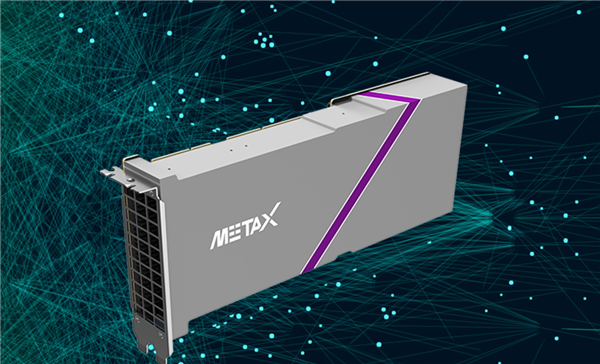
    Amid the rapid growth of China’s domestic AI industry, there’s a significant surge in demand for AI computing power, leading to shortages of GPUs. MuXi, a leading player among China’s four major GPU manufacturers, announced today that demand for their products has become so high that acquiring their GPUs has become extremely difficult—some orders are now scheduled to be fulfilled only after next year.

    Sun Guoliang, Chief Product Officer and Senior Vice President of MuXi, stated that some product orders have already been scheduled into 2024 and beyond. The company’s flagship MXC600 chip series, which has been produced on a large scale this year, is at the center of this demand.

    Market conditions are reflecting two contrasting trends: a shortage of accessible AI computing power versus overcapacity in some specialized areas. Sun noted that currently, the most sought-after resource is versatile, easy-to-use, stable, and reliable AI computing power—so much so that it’s difficult to obtain a single unit. Conversely, there’s an overabundance of computing resources tailored for niche, outdated architectures, or specific, less general-purpose models, highlighting a segmented market imbalance.

    The MXC600 chip, MuXi’s latest high-performance AI training and inference processor, exemplifies the company’s advancements. According to the company’s official website, the chip is built on MuXi’s proprietary GPU architecture. It boasts substantial improvements in computational power and accuracy, but more importantly, signifies the first fully domestically produced chip. From design to manufacturing, packaging, and software support, the entire supply chain is now rooted entirely in China.

    This breakthrough underscores not only MuXi’s technological prowess but also marks an important milestone in China’s pursuit of自主可控 (autonomous and controllable) high-end GPU chips. In May, the China Information Security Evaluation Center and the National Confidentiality Technology Evaluation Center announced that the MXC600 had successfully passed security and reliability assessments, solidifying its position as a secure and dependable product suitable for critical national sectors like government, finance, telecommunications, energy, and transportation.

    Looking ahead, MuXi shared plans for its next-generation flagship, the C700. Currently under development, the C700 aims to significantly outperform its predecessor in computing, storage, communication, and energy efficiency—approaching the capabilities of NVIDIA’s high-end H100 series. The project was approved in April 2025, with core design and verification largely completed. The team is now fine-tuning performance and optimizing physical implementation using advanced domestically produced processes.

    This ongoing innovation highlights MuXi’s dedication to developing self-reliant Chinese GPU technology that not only meets national standards but also pushes the frontier of semiconductor independence in China.

  • Perplexity AI Coding Tool Revealed, Engineers Using It

    A new AI-powered coding tool developed by Perplexity has been revealed, marking a significant step in the company’s technological advancements. According to reports, the company’s own team of programmers has already started integrating this innovative tool into their daily workflows. This move underscores Perplexity’s commitment to leveraging artificial intelligence to enhance software development efficiency and precision.

    The tool, which was developed in-house, aims to streamline coding processes, reduce errors, and accelerate project timelines. As AI continues to reshape the tech industry, Perplexity’s latest offering demonstrates its dedication to staying at the forefront of innovation. Employees have already begun utilizing the system to support various programming tasks, leading to positive feedback on its performance and usability.

    Industry analysts suggest that such internal adoption not only boosts productivity but also helps refine the technology further, tailoring it to meet the specific needs of Perplexity’s development team. With this, the company positions itself as a forward-thinking leader in AI-assisted software development, setting the stage for broader application and potential industry impact.

  • College Grads Might Need to Work as AI Nannies

    Recent discussions among educators and students suggest that the landscape of employment for recent university graduates may soon be shifting dramatically. As artificial intelligence continues to advance at an exponential rate, there is growing speculation that AI might soon require human supervision, effectively turning some graduates into caretakers or monitors for these intelligent systems.

    This emerging reality stems from the rapid development of AI technologies, which are becoming increasingly sophisticated and autonomous. While these systems promise to revolutionize industries and improve efficiency, they also come with a set of challenges that human oversight remains essential. Experts warn that without proper human management, AI could lead to unforeseen consequences, such as errors, biases, or even safety risks.

    In response, some are jokingly suggesting that future graduates might find themselves in roles more akin to “AI babysitters” — ensuring that these machines perform correctly and ethically. This shift could redefine traditional employment paths, emphasizing roles that merge technical knowledge with responsibility for AI systems.

    Universities and employers are now contemplating how to prepare students for a job market where collaboration with AI is routine. Skills such as critical thinking, ethical decision-making, and technical literacy are becoming more valuable than ever. Students, meanwhile, are encouraged to develop adaptability and problem-solving abilities that enable them to work alongside these intelligent systems effectively.

    While it remains to be seen how these changes will unfold, one thing is clear: the future workforce may need to embrace roles that were once considered purely technological, blending human judgment with machine capabilities to navigate a new era of automated intelligence.

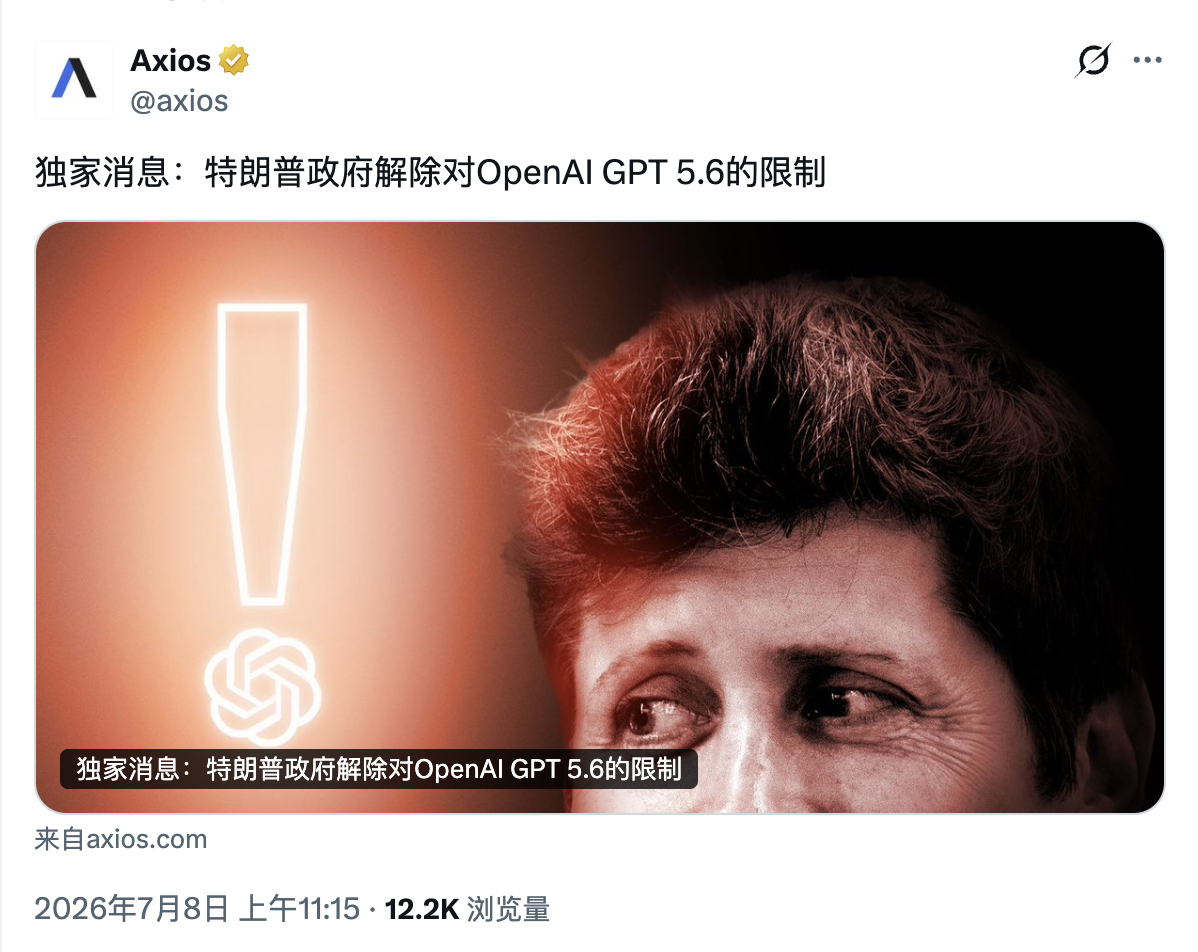
  • Trump Admin Lifts Limits on OpenAI GPT-5.6, Expected Release This Week

    Trump Admin Lifts Limits on OpenAI GPT-5.6, Expected Release This Week

    According to Axios on July 8th, the U.S. Department of Commerce has officially approved OpenAI’s broad deployment of its latest large language model, GPT-5.6. This move marks the end of the restrictions previously imposed under the Trump administration, which had limited the model’s export and usage. OpenAI is expected to finalize its preparations within this week and then publicly release the model.

    Last month, due to national security concerns, the U.S. government instructed OpenAI to adopt a phased release approach, initially restricting access to selected entities approved by the government. OpenAI openly stated that this phased rollout was not their preferred method. Sources familiar with the matter revealed that the testing and evaluation process leading up to the approval was overseen by the AI Standards and Innovation Center, a division of the Department of Commerce.

    This decision to lift restrictions on GPT-5.6 is not an isolated case. In June, the Department of Commerce prohibited foreign buyers from purchasing Anthropic’s Mythos 5 and Fable 5 models, effectively forcing those products off the market. However, last week, the ban on Fable 5 was reversed, and users regained access just a day after the restriction was lifted.

  • DeepSeek, Zhipu Reveals Self-Developed Chip

    DeepSeek and Zhipu have made headlines with their recent announcement of a self-developed chip. This significant development marks a major milestone for both companies, highlighting their commitment to advancing technological innovation in artificial intelligence and chip manufacturing.

    The companies revealed that their new chip is designed to enhance the efficiency and performance of AI applications across various industries. By developing this hardware in-house, DeepSeek and Zhipu aim to reduce reliance on external suppliers and accelerate advancements in AI computing capabilities.

    Industry experts see this move as a strategic effort to tighten control over hardware components, ensuring better integration and optimization tailored to their specific AI models. The self-developed chip is expected to support more powerful and energy-efficient AI systems, potentially opening doors to new applications and markets.

    As the AI landscape becomes increasingly competitive, DeepSeek and Zhipu’s investment in custom chip technology underscores their ambition to take a leading role in shaping the future of intelligent computing. Observers will be watching closely to see how this development impacts their product offerings and overall industry dynamics.

  • Say No to AI Crawlers! Cloudflare Launches AI Traffic Control, Websites Reclaim Data Rights

    In an effort to combat unwanted bot traffic and protect website integrity, Cloudflare has announced the launch of a new AI-powered traffic management feature. This innovative tool is designed to identify and restrict malicious AI-driven bots that often flood websites, ensuring legitimate users can enjoy a smoother and more secure online experience.

    The new functionality marks a significant step in Cloudflare’s ongoing efforts to maintain safe digital spaces. By leveraging advanced artificial intelligence, the platform can now differentiate between genuine human visitors and automated bots more accurately than ever before. This not only helps prevent malicious activities such as data scraping, spam, and unauthorized access but also restores a degree of control to website owners.

    One of the key benefits of this development is that it allows websites to regain valuable training data—a vital resource for improving AI models. Previously, aggressive bot traffic often resulted in contamination of data pools, impeding the effectiveness of AI training processes. With Cloudflare’s new traffic management system in place, only legitimate content is included in training datasets, strengthening the overall performance of AI algorithms.

    Industry experts view this move as a noteworthy advancement in the ongoing battle against automated cyber threats. By actively curbing AI bot interference, Cloudflare not only enhances security but also promotes a healthier ecosystem for digital innovation. This development underscores the importance of intelligent traffic control in an increasingly automated online landscape, offering website administrators greater confidence and control over their digital assets.

  • Chinese Humanoid Robot Production May Hit 100,000 Units This Year

    This year, the production of humanoid robots in China is expected to surpass 100,000 units. Industry experts highlight that advancements in technology and increasing market demand have driven a significant boost in manufacturing capacity. These robots, designed to perform tasks typically carried out by humans, are becoming more sophisticated and accessible across various sectors, including healthcare, retail, and hospitality. The surge in production reflects China’s growing influence in the global robotics industry and signals a promising outlook for the future of automation in the region. As manufacturers continue to innovate and scale up their operations, the coming months are anticipated to see even greater integration of humanoid robots into everyday life.

  • Kevin Kelly, the Father of Silicon Valley Spirit, Joins WAIC to Discuss Agentic OS Evolution

    Kevin Kelly, often regarded as the founding father of the Silicon Valley spirit, is set to make a notable appearance at WAIC (World Artificial Intelligence Conference). During the event, he will engage in an in-depth discussion with Huawei about the future development of Agentic OS, an innovative operating system that aims to redefine human-computer interaction.

    Kelly, renowned for his visionary insights into technology and digital culture, is expected to share his perspectives on the evolving trajectory of Agentic OS. This system represents a significant step toward creating more autonomous, intelligent, and interconnected devices, aligning with Kelly’s long-standing emphasis on the transformative potential of technology.

    The upcoming dialogue underscores the collaborative efforts between industry leaders like Kelly and Huawei to explore new horizons in AI and operating systems. As the industry continues to push boundaries, Kelly’s participation highlights the importance of visionary thinking in shaping the next generation of digital experiences. Attendees at WAIC can look forward to gaining valuable insights into how autonomous systems might evolve and influence everyday life in the near future.

  • CCTV Reveals “AI Spinning” Industry: Fake Content Generated with One Click, Scam Pays Over $18,000 in 2 Months

    Recent investigations have shed light on a covert industry surrounding “AI spinning,” a technique used to rework existing content into seemingly original articles. A major Chinese state broadcaster revealed how these operations operate, showcasing a troubling trend where automated tools are employed to produce “pseudo-original” material at scale.

    According to the report, individuals and organizations are leveraging advanced artificial intelligence systems to generate rewritten versions of articles with minimal human input. This process, commonly known as “AI spinning” or “AI washing,” involves a simple click that transforms existing content into what appears to be new material, circumventing plagiarism detection efforts.

    Alarmingly, some operators have exploited this method to claim government subsidies intended for genuine content creators. Evidence suggests that within a span of just two months, certain entities managed to manipulate the system to secure over 18,000 yuan in platform subsidies. This not only highlights vulnerabilities within the subsidy distribution framework but also raises broader concerns about the integrity of online content and the potential for fraud.

    Experts warn that such deceptive practices threaten the authenticity of information across digital platforms, making it harder for users to discern credible sources from manipulated content. Industry insiders emphasize the need for stricter verification and monitoring mechanisms to prevent abuse of subsidy programs and uphold content quality.

    As the digital content landscape continues to evolve, vigilance remains crucial to combatting deceptive AI-based practices that undermine trust and drain resources meant for legitimate creators. Authorities and platform administrators are being urged to strengthen oversight and develop more sophisticated detection tools to combat this emerging menace.

  • A-shares Filing Withdrawn? Zhizu: False Report, Suspected of Malicious Hype

    Recently, reports surfaced suggesting that the registration process for A-share company guidance had been withdrawn, sparking widespread speculation and concern within financial circles. However, industry insiders have come forward to clarify the situation, emphasizing that these reports are misleading and unfounded.

    According to a statement from Zhigao Securities, the company behind the original reports, the information circulating about the withdrawal of the A-share guidance registration is simply not true. They described the reports as a misrepresentation of facts that could potentially fuel unnecessary market volatility. The firm also expressed suspicion that the false information might be part of deliberate malicious speculation aimed at manipulating stock prices.

    Experts point out that such rumors can have serious implications, undermining investor confidence and distorting the normal functioning of financial markets. They warn against jumping to conclusions based on unverified sources and stress the importance of relying on official channels for updates relating to stock listings and regulatory approvals.

    The incident underscores the need for heightened vigilance among investors and regulators alike, as misinformation can lead to unpredictable market movements and unfair advantages for those involved in spreading false news. As of now, there has been no official announcement from regulatory authorities regarding any changes in the registration status of A-share companies involved in guidance procedures.

    Market analysts continue to advise caution and encourage investors to exercise due diligence and verify information before making any financial decisions. The situation is still developing, but for the moment, the consensus remains that these reports are baseless and should not influence current market assessments.

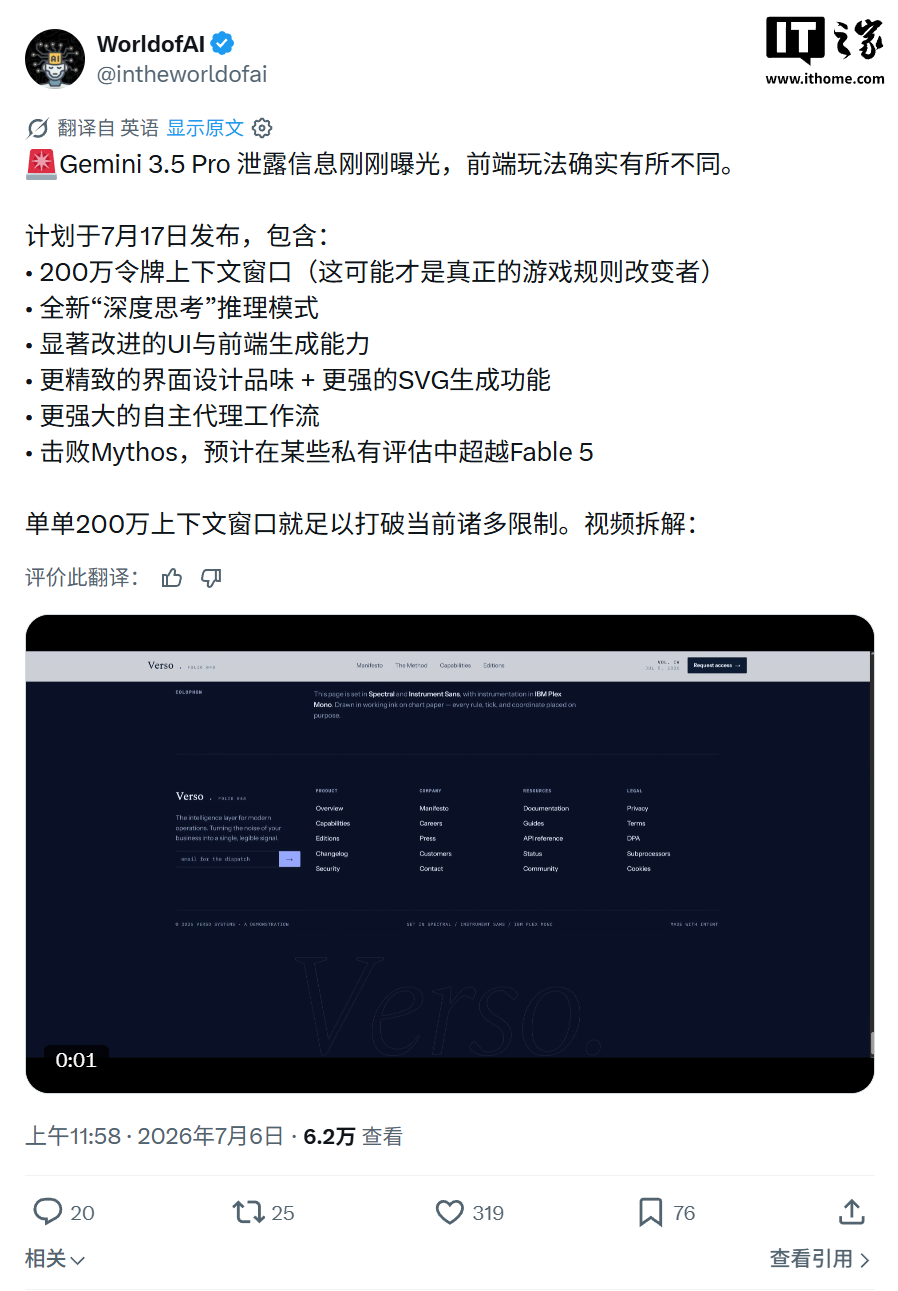
  • Google Gemini 3.5 Pro Reveals 2 Million Tokens, AI Outperforms Claude Fable 5

    Google Gemini 3.5 Pro Reveals 2 Million Tokens, AI Outperforms Claude Fable 5

    According to reports from IT Home on July 7, a prominent insider known as @HarshithLucky3 shared noteworthy details on the X platform regarding Google’s upcoming AI advancements. The insider indicated that Google is planning to unveil its latest model, Gemini 3.5 Pro, on July 17. This new iteration is expected to feature an impressive context window supporting approximately 2 million tokens and will introduce a novel “deep thinking” reasoning mode designed to enhance computational and logical capabilities.

    Sources suggest that Gemini 3.5 Pro is tailored for complex workflows involving intelligent systems. Its development centers around enabling advanced action execution, managing subordinate AI agents, programming functionalities, multi-modal content generation, and handling long-duration tasks. Compared to the currently available Gemini 3.5 Flash, this model aims to take on more sophisticated reasoning and execution roles, positioning itself as a higher-tier solution in Google’s AI ecosystem.

    In addition, the insider shared what is purportedly a screenshot from LMSYS Chatbot Arena, demonstrating Gemini 3.5 Pro’s performance in a coding challenge. The task involved generating an SVG graphic of a minimalist, isometric punch card machine. The results indicate that Gemini 3.5 Pro outperformed Anthropic’s Claude Fable 5 High, showcasing its superior generative capabilities.

    Further, two comparative videos were released illustrating Gemini 3.5 Pro alongside Claude Fable 5’s front-end interface. Observers noted that Gemini appears to have a more refined interface design, enhanced SVG generation functions, and a more robust autonomous workflow, hinting at a significant upgrade in user experience and technical prowess.

    As the release date approaches, anticipation grows about how Gemini 3.5 Pro will impact the AI landscape, especially considering its targeted application in complex and multimodal intelligent systems. Google’s push into advanced reasoning models signals a shift toward more capable and versatile AI tools designed for demanding computational and creative tasks.

  • UN Hosts First Global AI Governance Forum, Guterres Calls for Unified Rules

    The United Nations hosted its inaugural Global AI Governance Dialogue, bringing together policymakers, industry leaders, and experts from around the world to discuss the future of artificial intelligence regulation. UN Secretary-General António Guterres delivered a compelling call for the development of unified regulatory frameworks to manage the rapidly advancing technology.

    During the virtual forum, Guterres emphasized the importance of establishing international standards to ensure AI benefits humanity while minimizing associated risks. He highlighted concerns about ethical considerations, data privacy, and the potential misuse of AI in areas such as misinformation and cybersecurity. The Secretary-General urged countries to collaborate more closely, stressing that unilateral approaches are insufficient in addressing the complex challenges posed by AI.

    Participants at the dialogue identified key priorities, including transparency, accountability, and inclusive governance, to foster responsible AI development. The event underscored the urgent need for a global consensus to guide innovation in a way that aligns with human rights and sustainable development goals.

    This gathering marks a significant step toward creating a cohesive international strategy for AI oversight, with many experts advocating for binding agreements and common regulatory principles. As AI continues to influence every aspect of society, the international community’s collective action is deemed essential to harness its transformative potential ethically and safely.

  • Mix Yuan 3 Official Version Gets High Score, Tencent All-in-One Safe to Use

    Game enthusiasts can breathe a sigh of relief as the official release of the third generation of Hun Yuan 3 has garnered high praise. The latest version has impressed both critics and players alike, showcasing notable improvements in performance and user experience.

    Tencent’s comprehensive suite of services and games, often referred to as the “Tencent ecosystem” or “full set,” can now be confidently used without concerns over compatibility or stability issues. With the new Hun Yuan 3 proving its reliability and robustness, Tencent users can enjoy a seamless gaming experience alongside their other digital activities.

    This positive reception marks a significant milestone for the developers and Tencent’s broader ecosystem, reinforcing the platform’s reputation for stability and quality. As gamers and users adopt the updated version, expectations are high for continued enhancements and innovative features in future iterations.

  • AI Limit Is $200; Musk Won’t Support Boris

    Elon Musk has announced that his AI development efforts will be limited to a budget of $200. This decision has sparked discussions across the tech community, especially given Musk’s prominent role in artificial intelligence ventures. Interestingly, despite his involvement in various innovative projects, Musk has made it clear that he will not be providing financial backing for Boris, a new AI initiative led by Boris Johnson, the former UK Prime Minister.

    Sources close to the situation reveal that Musk’s decision stems from a desire to focus on certain projects, keeping expenditures within a strict cap. The $200 limit is seen as a symbolic gesture, emphasizing the importance of prudent spending amid rising concerns over AI safety and ethical considerations.

    Meanwhile, Boris Johnson’s AI project has been gaining attention, but it appears that Musk’s financial constraints mean he will not be participating in its development or funding. This stance underscores the growing caution among tech leaders about spreading investments too thin, especially in the rapidly evolving AI landscape.

    In the broader context, Musk’s decision highlights a shift towards more measured investments in AI technology, prioritizing quality and safety over aggressive expansion. As the industry continues to grapple with complex ethical questions, the financial boundaries set by influential figures like Musk could shape future research and development strategies.